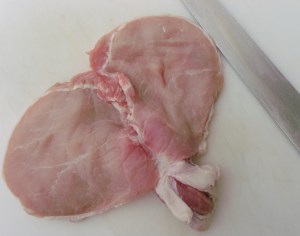
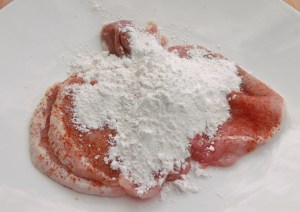
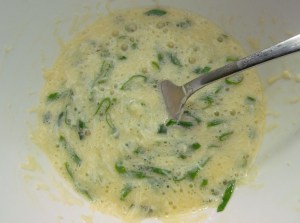
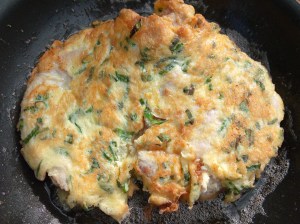
Sautéing

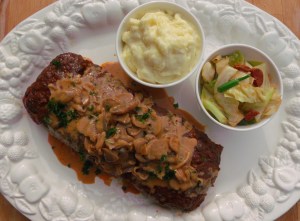
Falscher Hase (Fake Rabbit)

“Meatloaf With Sautéed Cabbage, Horseradish Potatoes And Mushroom Cream”
>

Falscher Hase (Fake Rabbit) (Meatloaf)

>

There is a little story about the origin of the name Falscher Hase.
(Also: Hackbraten, Faschierter Braten, Heuchelhase)
(It might be funny now, but back then it was not funny at all, since it tried to cover-up the poverty and embarrassment of ordinary folks who were too poor to put a meal  on the table of which they could be proud of)
You see, not too long ago there was a time in Germany, Baden-Wuerttemberg in particular, when ground meat was not considered a proper entrée. It was ok for burgers (buletten), which were mostly consumed as a vesper (snack), served cold with bread and mustard.
But meatloaf was perceived as nothing to be proud of, an inferior dish only served when there was no money for a real cut of protein. Usually, it contained hard-boiled eggs in the center and sometimes blanched carrots, celery and bell peppers, not to make the meatloaf prettier but to further stretch the budget, since eggs and veggies were even cheaper than ground meat.
>


>
So, in order to trick casual visitors or passersby to think there is a more prestigious piece of roast in the oven or on the table, “Hase” (Rabbit) was the usual answer to the question what smells so great at lunch or dinner time. This was a time before A/C and long notices before one went to visit one’s neighbor for a chat. Kitchen windows were always open, especially while cooking, everybody stopped by for a quick chat, either the passerby talking to the person inside or the person inside talking to the passerby. After all, before TV came along, leaning on the window and seeing the world go by was some of the choice entertainment as well as the main local news source – who walks with whom, who has new clothes, whose clothes are not properly ironed, how does this or that look……. 🙂
>

>
Of course, everything has changed considerably since then (at least in our “advanced, modern” part of the world, what with tv, the internet, and so forth, a/c which requires closed windows and therefore less personal contact with our neighbors. etc…….. 😦
However, to get back to the dish at hand, if one is able to prepare a good meatloaf, one can and should be proud if this once “inferior” dish. Unfortunately, it is not easy to find a good meatloaf around here, neither in restaurants or in many homes.
Therefore,  I give you this recipe which has been in my repertoire for 50 years. It was one of the very first things I learned to cook as an apprentice when I was 14 years old and I have done it with minor variations ever since. 🙂
>
Bon Appétit !   Life is Good !
>
>
>
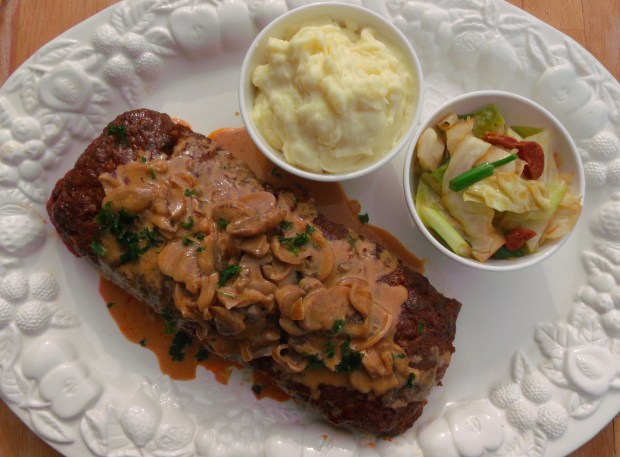
Falscher Hase (Fake Rabbit) (Meatloaf)

>

Falscher Hase (Fake Rabbit) (Meatloaf)

>

Falscher Hase (Fake Rabbit) (Meatloaf)

>
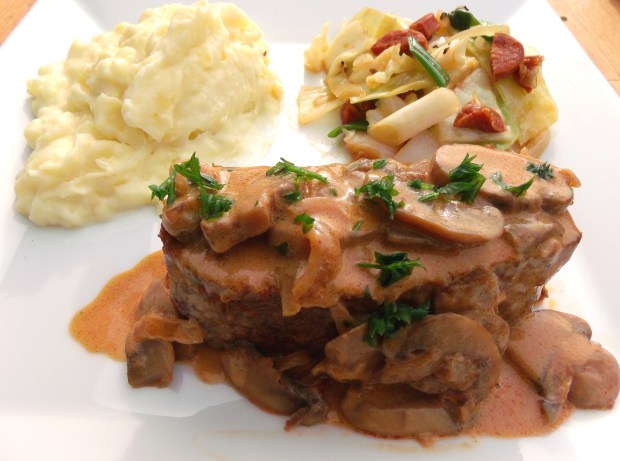
Falscher Hase. Fake Rabbit. Meatloaf

Falscher Hase (Fake Rabbit) (Meatloaf)


>

>
>
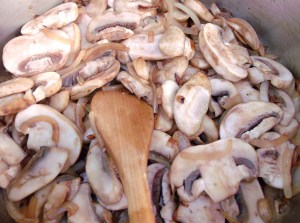
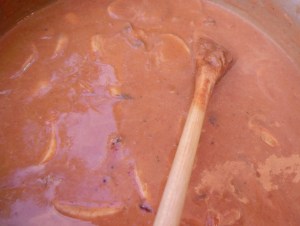
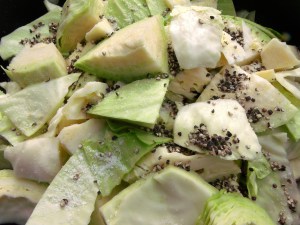
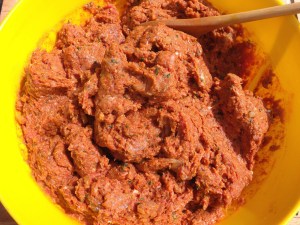
Preparation :
To read instructions, hover over pictures
To enlarge pictures and read instructions, click on pictures
>
>
>


>
>
P.S.
Each meatloaf serves 10-12.
Potatoes and cabbage – 5 servings each
>
>

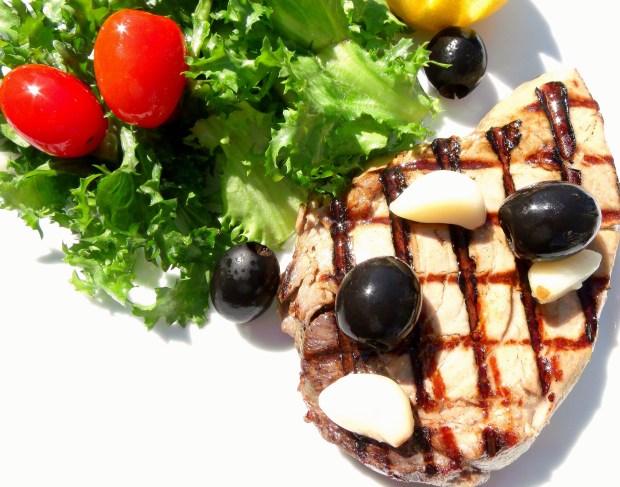
Grilled Tuna Steak, Garlic Confit With Black Olives And Greens In Raspberry Vinaigrette


<
Fresh grilled tuna steak might seem a tad old-fashioned these day’s, but when it is so yummy, who cares ? 🙂
This dish, and the memories it evoked, mentally transported me back to the shores of the Mediterranean, where this would be a traditional, light lunch – a few, simple but fresh and fragrantly seasoned ingredients, enjoyed with good company and a few glasses of wine, then, a short Siesta and on to a wild night about town 🙂
Well, in my case it was iced tea instead of wine, then a walk with Bella instead of a siesta and afterward a good movie instead of a wild night about town. 🙂
But, nevertheless, great food and a wonderfully relaxing evening.
>
Bon Appétit !   Life is Good !
>
>
>


Grilled Tuna Steak, Garlic Confit With Black Olives And Greens In Raspberry Vinaigrette

>
>
Mediterranean Fish Seasoning:

  • 3tablespoons dried rosemary
  • 2tablespoons ground cumin
  • 2tablespoons ground coriander
  • 1tablespoon dried oregano
  • 2teaspoons ground cinnamon
  • 12teaspoon salt

Mix ingredients well. This mix seasons 4 to 6 steaks.
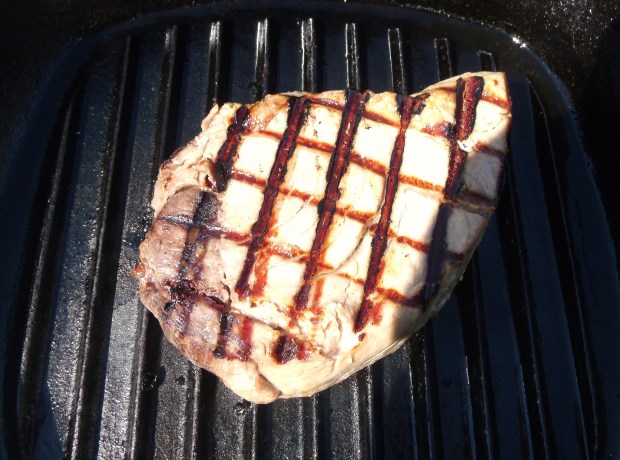
Brush tuna with olive oil, season liberally with the spice mix, grill until temperature reaches your preference.
Saute confit and black olives in EVO, add to steak.
Serve with a salad of your choice.
>
Click here for  Garlic Confit  on  ChefsOpinion
>
>
>
>
Grilled Tuna Steak, Garlic Confit With Black Olives And Greens In Raspberry Vinaigrette

>
Grilled Tuna Steak, Garlic Confit With Black Olives And Greens In Raspberry Vinaigrette

>

Grilled Tuna Steak, Garlic Confit With Black Olives And Greens In Raspberry Vinaigrette

>

Grilled Tuna Steak, Garlic Confit With Black Olives And Greens In Raspberry Vinaigrette

>
>
>

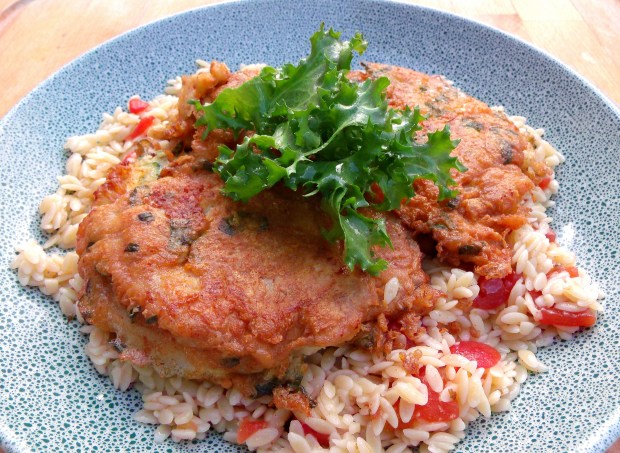
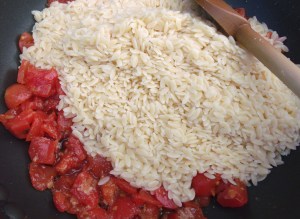
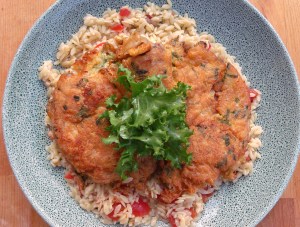
Pork Chop “Parisienne” With Orzo Al Pomodoro

Pork Chop “Parisienne” With Orzo Al Pomodoro

This wonderful dish is comfort food at its finest. (Obviously, pork chop is alway’s a hit with most folks, and so is pasta, so there is probably no argument here).
However, this dish up’s the ante another step by prepping the chop “à la parisienne”, as well as transforming the simple orzo into a flavorful and beautiful pasta dish, which I would be happy to eat all by itself without the chop or any other embellishment 🙂
.
Please note:
#1:
  Eating the orzo with a spoon rather than with a fork will double the pleasure of eating it) 🙂
#2:  Eating the orzo with a spoon rather than with a fork will most likely double the size of your belly 😦
>
Bon Appétit !   Life is Good !
>
>
Click here for more  Pork  on  ChefsOpinion
>
Click here for more  Pasta  on  ChefsOpinion
>
>
>

Pork Chop “Parisienne” With Orzo Al Pomodoro

>

Pork Chop “Parisienne” With Orzo Al Pomodoro

>

Pork Chop “Parisienne” With Orzo Al Pomodoro

>
>
>
Preparation :
To read instructions, hover over pictures
To enlarge pictures and read instructions, click on pictures
>
>
>


>
>
>
>

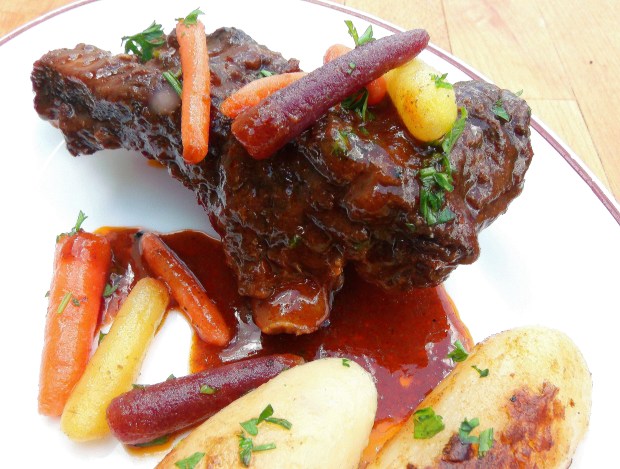
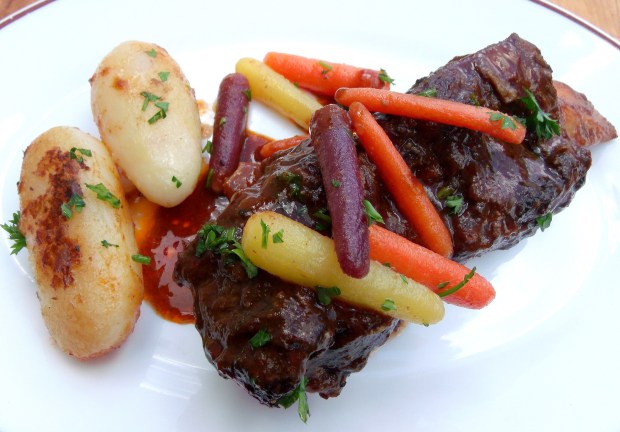
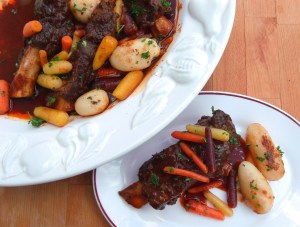
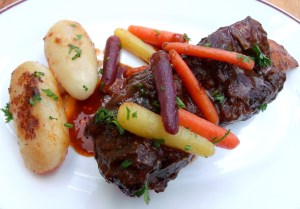
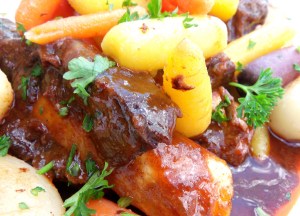
Braised Beef Back Ribs With Glazed Baby Rainbow Carrots

>
All chef’s, once in a while :

WTF did I come in here for ??? 🙂


>
>
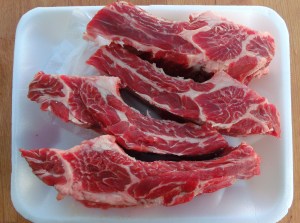
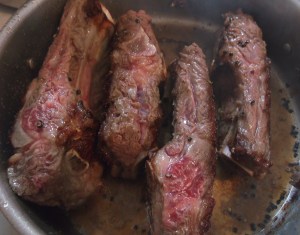
Once in a while, I come across an unbelievable food bargain that I just MUST buy; these ribs are a typical example.
I had to go downtown Miami this morning, so on the way back home, I stopped at my Argentinian butcher in Hialeah to get some empanadas for lunch. There I saw these beautiful beef ribs for $ 3.95, which is less than a pack of chicken wings of equal weight will cost me at my neighborhood grocery store – go figure 😦
So, I had the empanadas for lunch, then started the ribs for a full-fledged, big and yummy dinner 🙂
(My butcher’s empanadas are as close to Argentinian empanadas as can be, nothing like the crappy ones one can usually get around here. After all, he is Argentinian)
But now let’s talk a bit about today’s beef rib dinner.
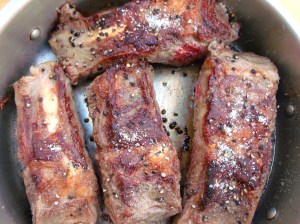
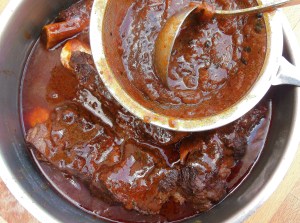
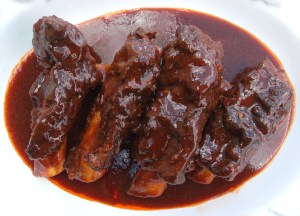
If you look at the pics of the preparation below, you might notice that the ratio of onions to meat is very high, about 2 to 1 in quantity. The reason is that since I usually don’t use red wine (or any other alcohol) in my cooking anymore, I like to add additional flavor and color by increasing the amount of caramelized onions and add some apple cider. It does not replace the red wine taste, but rather substitute one great flavor with another one. Also, instead of using flour to thicken the sauce, once the meat is tender, I remove it and set it aside, then push the onions through a fine mesh sieve and simmer the sauce another few minutes to thicken it.
And there you have it – another day, another wonderful meal 🙂
>
Bon Appétit !   Life is Good !
>
>
Click here for more  Beef Ribs  on  ChefsOpinion
<
Click here for  Pork Ribs  on  ChefsOpinion
>
>

Braised Beef Back Ribs With Glazed Baby Rainbow Carrots

>

Braised Beef Back Ribs With Glazed Baby Rainbow Carrots

>

Braised Beef Back Ribs With Glazed Baby Rainbow Carrots

>

Braised Beef Back Ribs With Glazed Baby Rainbow Carrots

>
>
>
Preparation :
To read instructions, hover over pictures
To enlarge pictures and read instructions, click on pictures
>
>
>


>
>
>
>

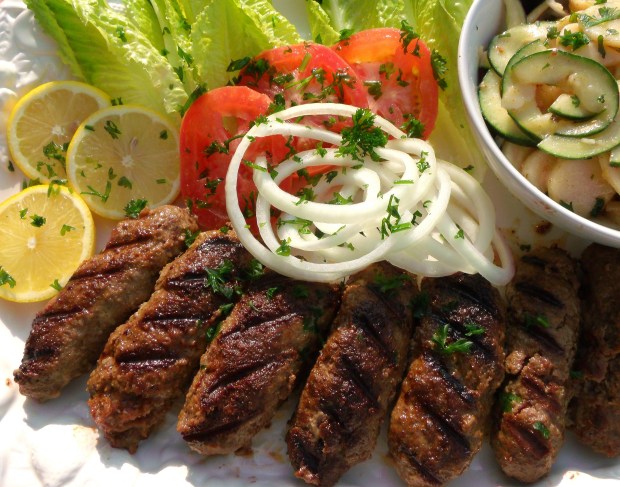
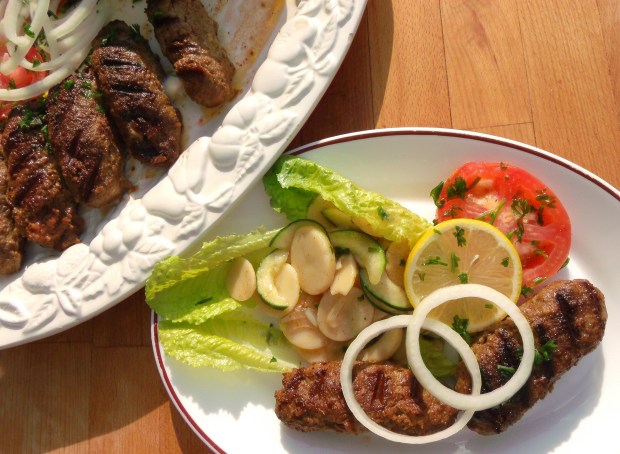
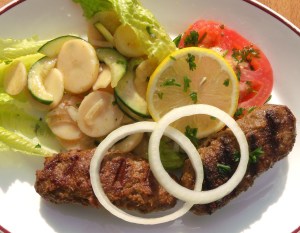
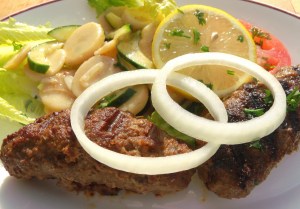
Ćevapi (Cevapcici)

Ćevapi (Cevapcici)

>
>
A few  years after I was born, the German “Wirtschaftswunder” (Economic Miracle) was in full swing (I wonder if my existence helped?), and Germany was in need of a new, different kind of army – an army of workers, to fill all the open labor-positions. It was the time (1955) when Germany invited millions of “Gastarbeiter” (Guest Workers) to come and make their luck and life in Germany. Mostly poor, working class people from Italy, Spain, Greece, Turkey, Portugal and eventually, in 1968, Yugoslavia, took a chance and started a new life in this new promised land, first alone, working very hard, saving money, learning the language and customs and then, usually a couple of years later, having their family join them and slowly but surely integrating themselves and their families, and most of them eventually becoming Germans. (Passport, language, customs, and all) 🙂
I don’t want to go into the political, economic and social results of this enormous “Völkerwanderung” (Human Migration), but rather talk about the effect it had on the culinary landscape.
Up until then, there were basically three culinary styles in Germany –
“Deutsche Hausmanskost”, which translates into plain home cooking
“Deutsche Koch Kunst”, or German Culinary Arts, meals that are as pleasing to the eye as to the palate,  primarily available in upper-class restaurants, hotels, and delicatessens.
“Traditional French Cuisine”, also mainly available in upper-class restaurants, hotels, and delicatessens.
Of course, this all changed rapidly with the influx of millions of people cooking the traditional food of their countries of origin, and within a few short years one could easily find a Turkish doner shop, Italian pizzeria, Greek taverna, Spanish tapa restaurant, Portuguese cervejaria or Yugoslavian restaurant serving food from all over Europe, first in the big cities, but eventually even in the smallest of villages.
(Incidentally, nowadays you are more likely to find an ethnic restaurant than a typical “German Gasthaus” (German Tavern) in most places 😦
Securely wedged in my memory are the Cevapcici of that time. Up ’til then, we did not know “Burgers”. We had either buletten or meatloaf, typically served hot with mashed potatoes or pasta and mushroom sauce, or served cold with bread and mustard.
So when Cevapcici came along, they were pretty special and exotic to our palette and view.
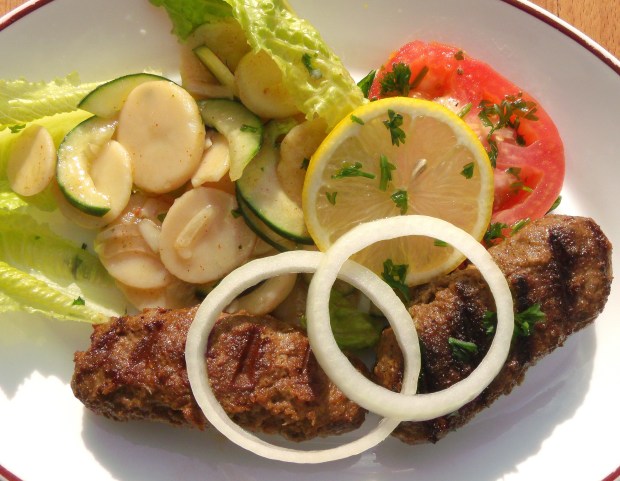
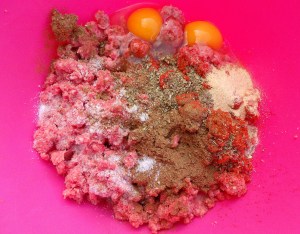
Spiced with plenty of garlic, oregano and cumin among other seasonings, they tasted and looked very different to anything made with ground lamb (or any other ground meat) we’d seen up to then.
They were usually served with rice and salad or with some type of flatbread and salad, often accompanied by a yogurt sauce and raw onion rings.
Again, at the time, this was pretty new and exotic for most of us 🙂
So when I got this ground lamb yesterday, I was looking forward to preparing and eating, for the first time in many years, this wonderful dish.
I am happy I did because I enjoyed every morsel of it (and so did Bella) 🙂
>
Bon Appétit !   Life is Good !   (And full of memories) 🙂
>
>
Pls note:
Replace the lamb with beef, or pork or a mixture of both if you prefer.
Cevapcici can be grilled, sauteed, baked (roast) or fried. However, do NOT overcook them or you are left with a dry stick of coal-like substance 😦
See the pic of the close-up of the meat. Well done but VERY juicy and tender 🙂
>
Click here for  Potato Salad Recipe   (Add sliced, seeded cucumbers if desired)
>
>
>

Ćevapi (Cevapcici)

>

Ćevapi (Cevapcici)

>

Ćevapi (Cevapcici)

>

Ćevapi (Cevapcici)

>
>
>
Preparation :
To read instructions, hover over pictures
To enlarge pictures and read instructions, click on pictures
>
>
>


>
>
>
>

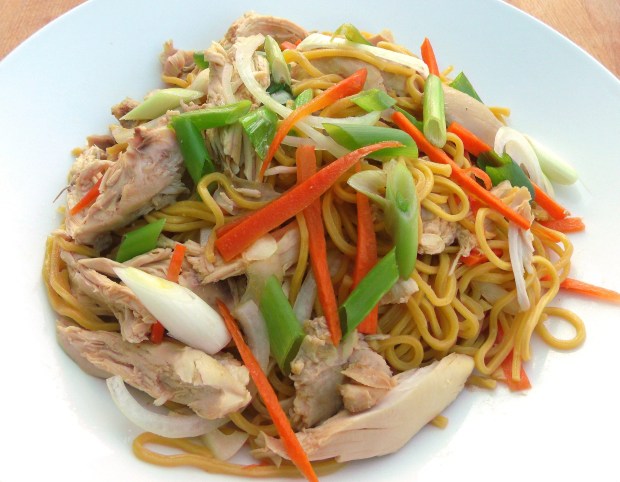
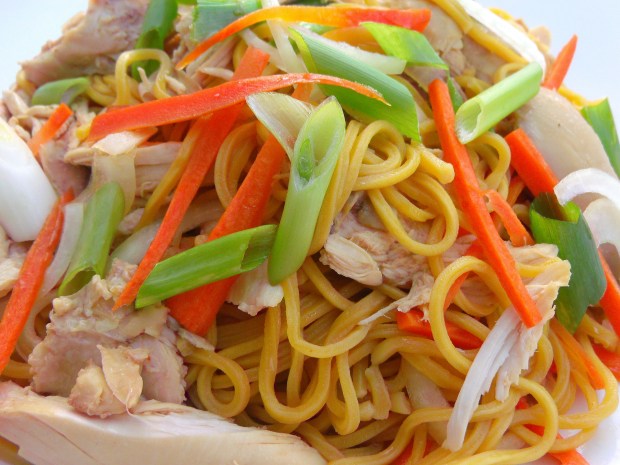
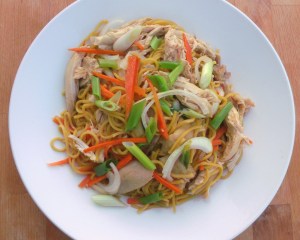
Convenient Food (Pansit/Pancit)


Convenient Food (Pansit / Pancit)

>
>
Having visited the  Philippines  in the mid-to late 70’s often, and then lived and worked there for 4 years during the early 80’s, my eating habits have been strongly influenced by its wonderful food, especially the appreciation of fresh, well-seasoned vegetables and a myriad of exotic fruit.
While there are too many favorite dishes to mention, three groups of dishes stand out –
Roasted pork in its many forms,
Vegetable dishes with steamed rice in great variations,
– and, of course,
Pancit, in its countless, tasty incarnations. 🙂  (See a list of many different pancit at the bottom of this page)
.
In Filipino cuisine, pancit or pansit are noodles. Noodles were introduced into the Philippines by the Chinese and have since been adopted into local cuisine. The term pancit is derived from the Hokkien pian i sit (Chinese: 便ê食; Pe̍h-ōe-jī: piān-ê-si̍t or Chinese: 便食; pinyin: biàn shí) which literally means “convenient food.” (Wiki excerpt)
.
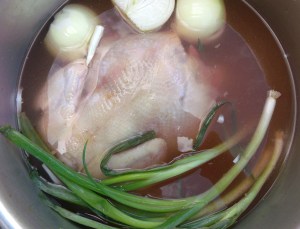
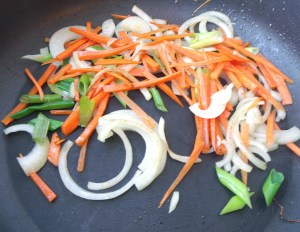
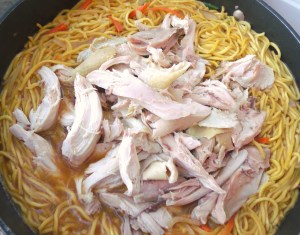
My version today is a typical “homestyle pansit”, in that one uses pansit noodles with some protein (optional) and some vegetables, whatever one finds in the market that day. (When I was living there, regular folks bought all food that was not dried, fresh in the market every day. Few working -class families could afford a fridge, never mind a freezer. By the way, it was the same when I was a small kid back in Germany, my mom got her first fridge when I was about 6 years old. We did, however, have a freezer, albeit only during winter time –  it was the shelf in front of our kitchen window which during the rest of the year held plants and flowers 🙂  
>
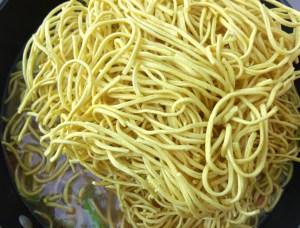
The great convenience of pancit noodles is that you cook them right in the stock you are using. The noodles will keep their “al dente” texture even if you add a bit too much stock or if you cook them a minute longer as you should. They will soak-up all the stock and its flavor, as long as they have simmered for a few minutes and then rest in the stock until done. Convenience food ! 🙂
>
Bon Appétit !   Life is Good !
>
>
Click here for more  Pinoy Food  on  ChefsOpinion
>
>
>


Convenient Food (Pansit / Pancit)

>

Convenient Food (Pansit / Pancit)

>

Convenient Food (Pansit / Pancit)

>
>
>
Preparation :
To read instructions, hover over pictures
To enlarge pictures and read instructions, click on pictures
>
>
>


>
>
Wiki excerpt:

  • Buko Pancit (coconut strips are substituted for noodles, a specialty of Quezon province)
  • Pancit Abra (common in Northern Luzon particularly in the province of Abra)
  • Pancit Alanganin
  • Pancit ni Juli
  • Pancit Alahoy
  • Pancit Batchoy
  • Pancit Bato is local to the Bicol Region; especially the town of Bato in Camarines Sur.
  • Pancit Bihon Guisado
  • Pancit Bihongundoy
  • Pancit Cabagan
  • Pancit Canton (Lo mein and chow mein)
  • Pancit Canton Ilonggo
  • Pancit Chami (Lucena City, Quezon)
  • Pancit Estacion (Tanza, Cavite)
  • Pancit Habhab (Lucban, Quezon)
  • Pancit Kilawin (a variety pancit originated from Rosario, Cavite. In lieu of pancit noodles, shredded unripe papaya fruit is used cooked with vinegar and fish. Usually partnered with Dinuguan dish)
  • Pancit Kinalas (Naga City, Camarines Sur)
  • Pancit Lanu (San Vicente Street in San Pedro, Laguna)
  • Pancit Lomi (Batangas)
  • Pancit Lucban
  • Pancit Luglog
  • Pancit Malabon
  • Pancit Mami (round egg noodles)
  • Pancit Mayaman (Guinayangan, Quezon)
  • Pancit Miki (round egg noodles)
  • Pancit Míki-Bíhon Guisado (round egg noodles + bihon)
  • Pancit Olongapo (Pancit Miki with Sarsa sauce. Miki cooked in tradition added with sarsa a thickened chicken and pork broth, darkened a little with soy sauce of choice)
  • Pancit Molo (wonton soup with wonton wrappers added to the broth, serving as its “noodles”)
  • Pancit Moròng
  • Pancit Palabok
  • Pancit Pula (variation of Pancit Miki from Batangas City)
  • Pancit Pusit
  • Pancit Sotanghon
  • Pansit Sabaw (Pansit Miki with soup)
  • Pansit Tuguegarao or Batil Patong
  • Pansit Sinanta (also from Tuguegarao, consists of flat egg noodles, bihon, clams and chicken, with broth colored with annatto)

Pancit bihon (bijon)

Pancit bihon (aka bijon) is the type usually associated with the word “pancit“, very thin rice noodles fried with soy sauce some citrus, possibly with patis, and some variation of sliced meat and chopped vegetables. The exact bihon composition depends on someone’s personal recipe but usually, Chinese sausage and cabbage are the basic ingredients in a pancit bihon.

Pancit palabok and pancit luglug are essentially the same dish, the difference being primarily in the noodles used in the recipe. Luglug uses a thicker noodle than the traditional bihon of a pancit palabok. Both pancit dishes use a round rice noodle (often specifically labeled for pancit luglug or palabok) smothered with a thick, golden shrimp sauce or other flavored sauce, and topped with:

  • Shrimp, (the size and shell-on or shell-off depending on preference)
  • Crushed or ground pork rind
  • Hard-boiled egg (sliced into disks or quartered lengthwise or chopped)
  • Tinapa (smoked fish) flakes
  • Freshly minced green onion

Pancit palabok/pancit luglog and pancit canton are communal comfort food, and can be found at nearly all Filipino potluck parties. They are best made and eaten in batches for they are easily consumed.

Pancit sotanghon is a cellophane noodle soup with a chicken broth base. It may include some kind of meat and vegetable. A typical sotanghon is made with calamansi, sliced straw mushrooms, slivered dark-meat chicken and green onion.

Batil patong is not commonly known outside of Tuguegarao in the province of Cagayan in Northern Luzon, Philippines. It is an unusual noodle dish with a sauce based on soy and “cara-beef” beef broth. It is served with two piquant side dishes: a cup of egg-drop soup made with the same cara-beef broth; and a dish of chopped onions, vinegar or calamansi, chili peppers, and soy sauce. The noodles are usually wheat-based and are topped with ground cara-beef, pork liver, mung bean sprouts, and poached egg from whence the name batil patong literally “scrambled and placed on top” is thought to be derived. Sometimes, other vegetables, crushed pork-rind cracklings or chorizos are also added on top.

Pancit Lomi Originally from Batangas, Pancit Lomi is usually sold in eateries across the province. With the mobility of the Filipinos; however, other people got wind of pancit lomi and now you will see different lomihans (eateries with just lomi) whipping up their own pancit lomi, panciterias (eateries specializing in pancit) adding it in their menu, and carinderias (which are usually offering the usual viands and not pancit) starting to offer it alongside its other rice-based meals.

Seaweed pancit

Tiwi, Albay residents created a new pancit made from seaweed, which has health benefits. It is rich in calcium and magnesium and the seaweed noodles can be cooked into pancit canton, pancit luglug, spaghetti, or carbonara.

>
>
>
>

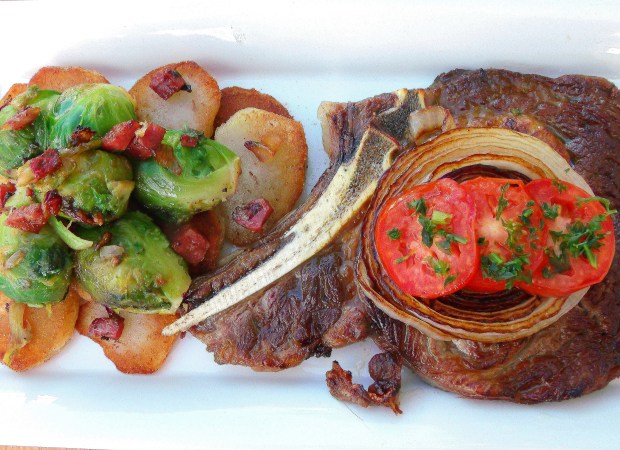
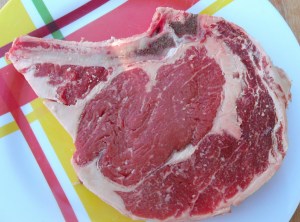
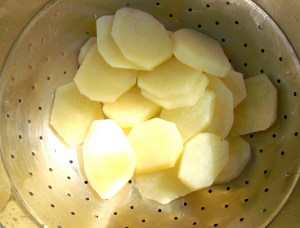
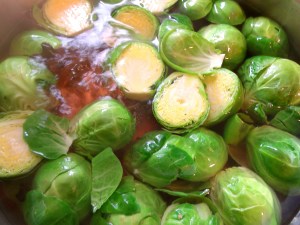
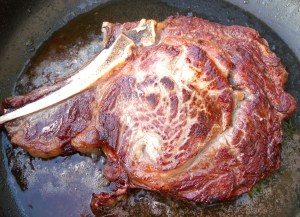
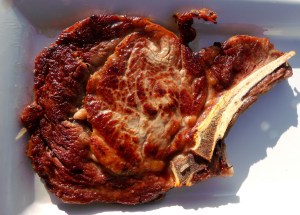
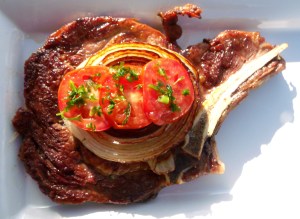
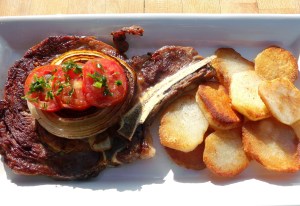
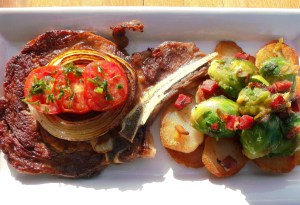
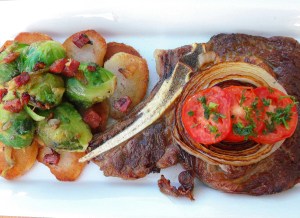
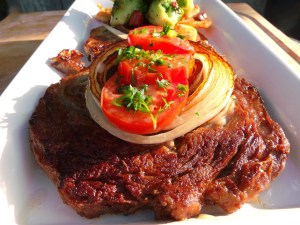
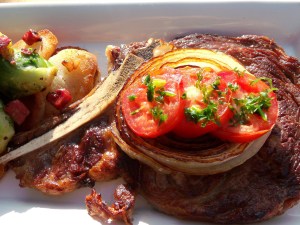
Bone-In Rib Eye With Sautéed Potatoes And Brussel Sprouts

Bone-In Rib Eye With Sautéed Potatoes And Brussel Sprouts

>
>
A  dish like this demonstrates to the foam and tweezers-camp cooks why good, old-fashioned, well-established and expertly prepared great food will never die!
Give me this over a plate of  “edible earth, foraged spring moss, chocolate covered ants topped with wheat-grass foam”, anytime ! 🙂
But then again, maybe that’s just me……?
>
Bon Appétit !   Life is Good !
>
>
Click here for more  Steaks  on  ChefsOpinion
>
>
>

Bone-In Rib Eye With Sautéed Potatoes And Brussel Sprouts

>

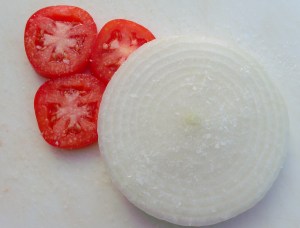
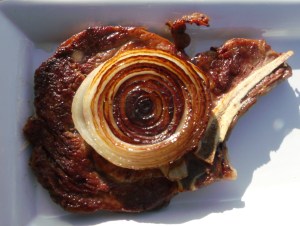
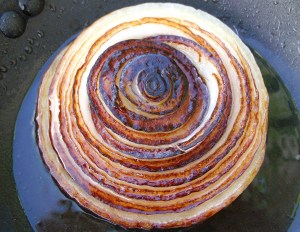
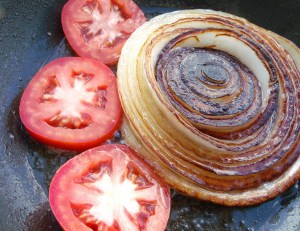
Caramelized Onion Slice

>

Bone-In Rib Eye With Sautéed Potatoes And Brussel Sprouts

>
>
Preparation :
To read instructions, hover over pictures
To enlarge pictures and read instructions, click on pictures
>
>


>
>
>
>

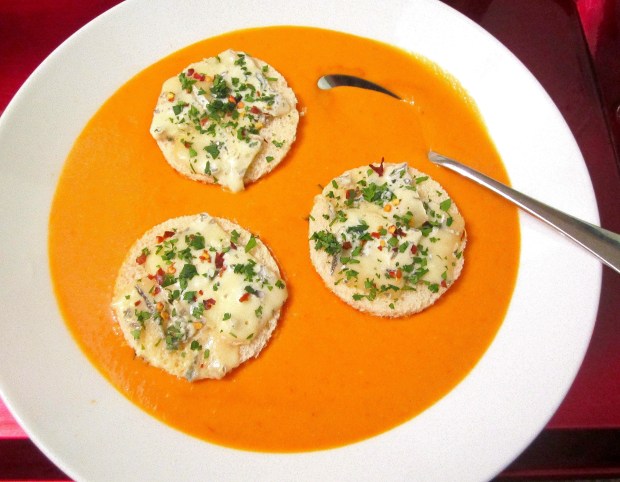
Tomato Bisque with Gorgonzola Croûton

Tomato Bisque with Gorgonzola Croûton

>
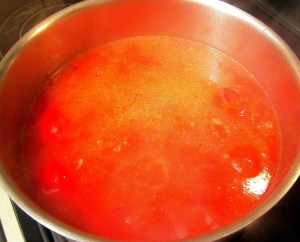
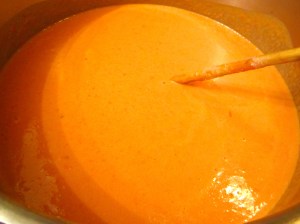
Dinner  tonight was dictated by three factors :
# 1 – I had a big craving for soup.
# 2 – I had a lot of slightly over-ripe, soft tomatoes in my fridge.
# 3 – I was too lazy to prepare anything that kept me in the kitchen more than 15 minutes.
This bisque was the perfect solution. It only took a few minutes to chop the veggies, and once they were on the stove simmering away, all that was left to do until it was time to purée the soup after a couple of hours slowly simmering away, was to cut a few slices of white bread, butter them lightly on both sides, top it with some thin slices of gorgonzola and bake them for a few minutes in a 375F oven until the cheese melted and the underside of the bread was lightly toasted, then remove and let cool to room temperature, sprinkle with chili flakes and chopped Italian parsley. Done !
Total prep time for the soup and croûtons – about 15 to 20 minutes.
Total time from start to finish – about 2,5 hours. (The longer you simmer the soup, the more the tomato-taste intensifies ).
Enough soup for today’s dinner and tomorrow’s lunch. Good Stuff 🙂

>
Bon Appétit !   Life is Good !
>
>
Click here for Tomato Bisque Recipe  on  ChefsOpinion
>
Click here for more  Soup  on  ChefsOpinion
>
>

Tomato Bisque with Gorgonzola Croûton

Tomato Bisque with Gorgonzola Croûton

>
>


>
>
>
>

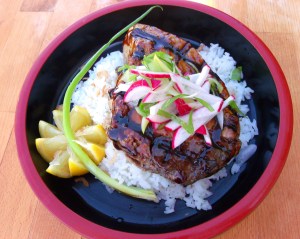
Old Fashioned Hoisin Glazed Grilled Tuna Steak

Old Fashioned Hoisin Glazed Grilled Tuna Steak

>
>
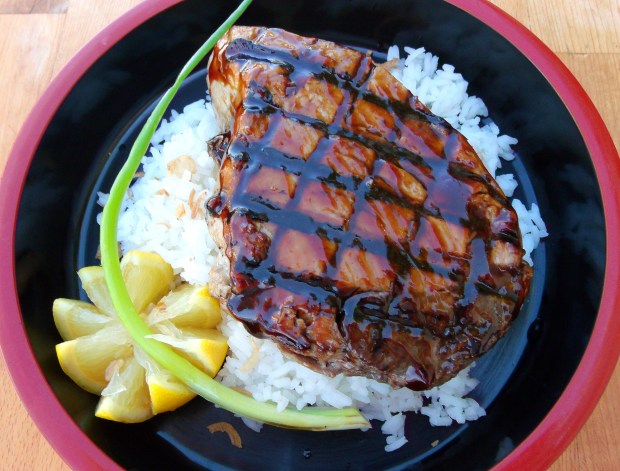
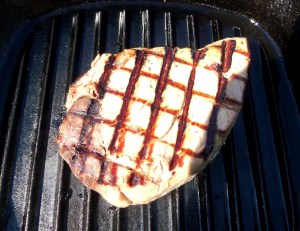
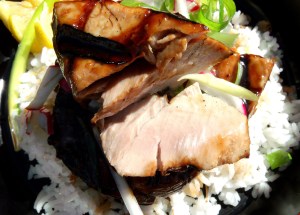
If  you wonder why I call this dish “old fashioned”, the answer is simple: “It is fully cooked but still juicy”, which is undoubtedly one of the most difficult things to master in good cooking and unfortunately a part of our craft lost to the majority of today’s cooks/ chefs.
In order to cook any food item, especially seafood and poultry, the cook/chef has to take into consideration the carry-over heat of the food item, which will depend on the thickness, cooking temperature, texture, and the time it takes the food from the time it is removed from cooking equipment in the kitchen to being served on a plate and starting to be eaten by the customer. Get this wrong and your dish is ruined! 😦
Old fashioned, because once this was an absolute necessity for any cook to master in order to be rightfully employed in a professional kitchen, while nowadays, sadly, cooks who perfectly have mastered this most important skill are the exception. (Hence, all the undercooked or overcooked meat, seafood, and even vegetables). It is so much easier to rather just “pan sear” a piece of fish than to perfectly cook it. While there certainly is a place and time for sashimi, and one has to admire the chefs who serve it perfectly, the majority of the fish quality served in most restaurants, homes, supermarkets, etc, make this way of serving fish a ridiculous way of trying to cover-up the cooks/chefs inability to cook the fish and other food perfectly.
NO raw fish has the beautiful texture and is as juicy as a perfectly cooked fish! NONE !
And don’t even get me going on half cooked pork or chicken breast 😦
But enough of this, let’s get back to the dish at hand. Instead of the more common teriyaki glaze, I glazed the tuna with hoisin sauce, which was even better, at least for my personal taste.
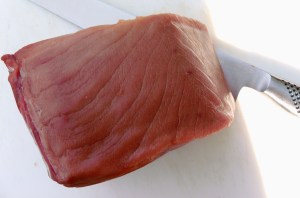
If you look at the pictures, you will notice that I have not removed the “blood line” from the fillet. When preparing tuna for myself, I always cook the filet with this dark flesh attached. When I was still preparing food in restaurants, I removed this part because the flavor is very strong and some folks don’t like it. (Bella does, so no questions asked at our house 🙂  (Also see note below)
>
Bon Appétit !   Life is Good !
>
Click here for  Steamed Rice Recipe (Fan)  on  ChefsOpinion
>
>
P.S.
“That dark, nearly black area on the side of your tuna or swordfish steak is nothing bad or unhealthy, although you may not like it’s strong flavor. It is a muscle that is rich in myoglobin, a blood pigment. But lest that sound creepy to you, bear in mind that myoglobin is the same iron-containing pigment that makes red meat red.You can leave it in when you cook the fish: the stronger flavor of that small area will not affect the taste of the rest of the fish.”
>

>
>
>

Old Fashioned Hoisin Glazed Grilled Tuna Steak

Old Fashioned Hoisin Glazed Grilled Tuna Steak

Old Fashioned Hoisin Glazed Grilled Tuna Steak

>

>

>
>
>
Preparation :
To read instructions, hover over pictures
To enlarge pictures and read instructions, click on pictures
>
>
>


>
>
>
>

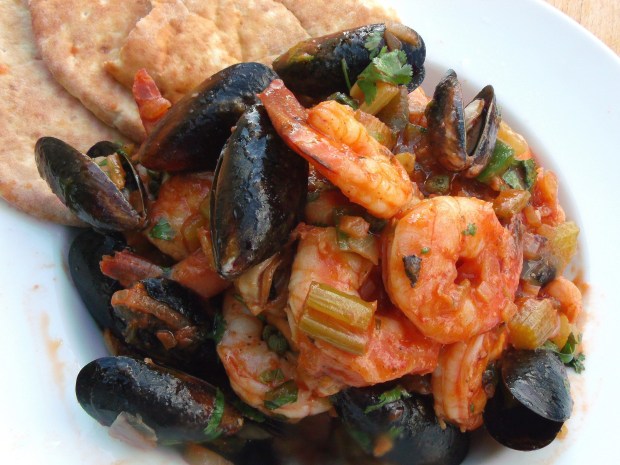
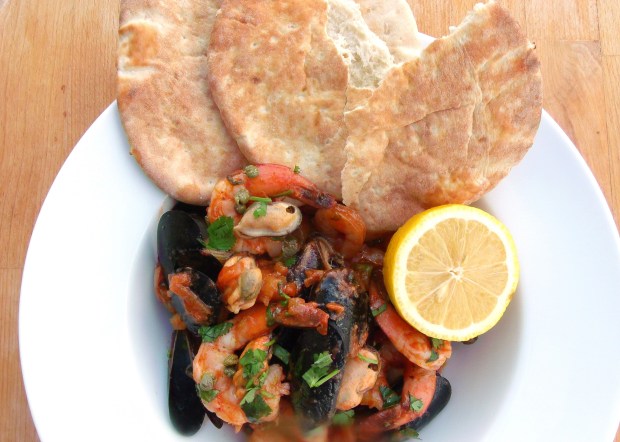
Catalan Shrimp & Mussels Stew

Catalan Shrimp & Mussels Stew


>
Chances
 are that if you love seafood and have traveled in Spain, especially in the provinces of Barcelona, Girona, Lleida, and Tarragona, you have at one point or another had an encounter with the dish featured here. It represents the philosophy of both old and new cooking styles one finds all over this area and in fact, in most parts of the Mediterranean coastline – a few first-class ingredients cooked without fuss and pronto- Life is Good !
A wonderful meal, ideally shared with great company and a glass (or two) of the local wine, and, if on top of that you are lucky enough to sit in a cozy little restaurant by the sea, life is as good as it gets.
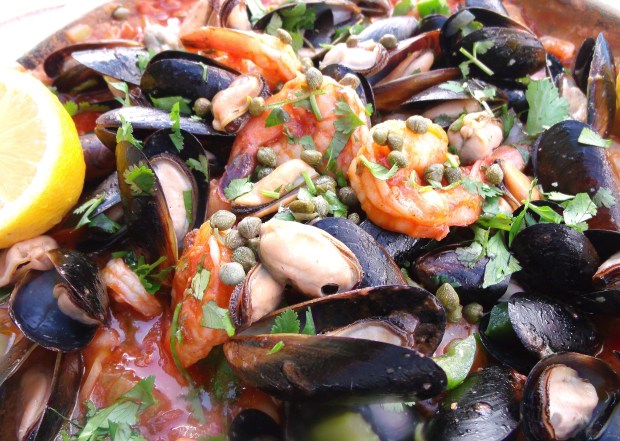
Somebody gifted me with a small bag of mussels on Sunday, which by itself would have made a great appetizer. But because I always have shrimp in the freezer (today I had two different types,  small/ peeled,/ tail-off and large/ tail-on), and because I wanted to have something a bit more substantial for dinner, I thought this seafood stew would do the trick. And indeed, it did 🙂
Great taste, easy on the eyes and a snap to prepare, both Bella and I were completely happy with the way this turned out 🙂
>
Bon Appétit !   Life is Good !
>
P.S.
Since I don’t drink/use alcohol, I have started to use apple cider as a substitute where wine is called for.
Works out great for most dishes, both in the food and with the food 🙂 Cheers !
>
Click here for more  Seafood  on  ChefsOpinion
>
>
>

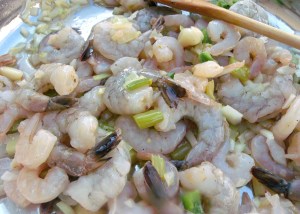
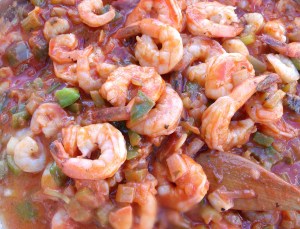
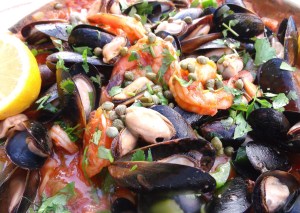
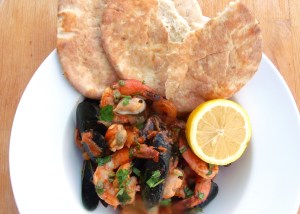
Catalan Shrimp & Mussels Stew

>

Catalan Shrimp & Mussels Stew

Catalan Shrimp & Mussels Stew

>

Catalan Shrimp & Mussels Stew

>

Catalan Shrimp & Mussels Stew

Catalan Shrimp & Mussels Stew

>
>
>
Preparation :
To read instructions, hover over pictures
To enlarge pictures and read instructions, click on pictures
>
>
>


>
>
>
>