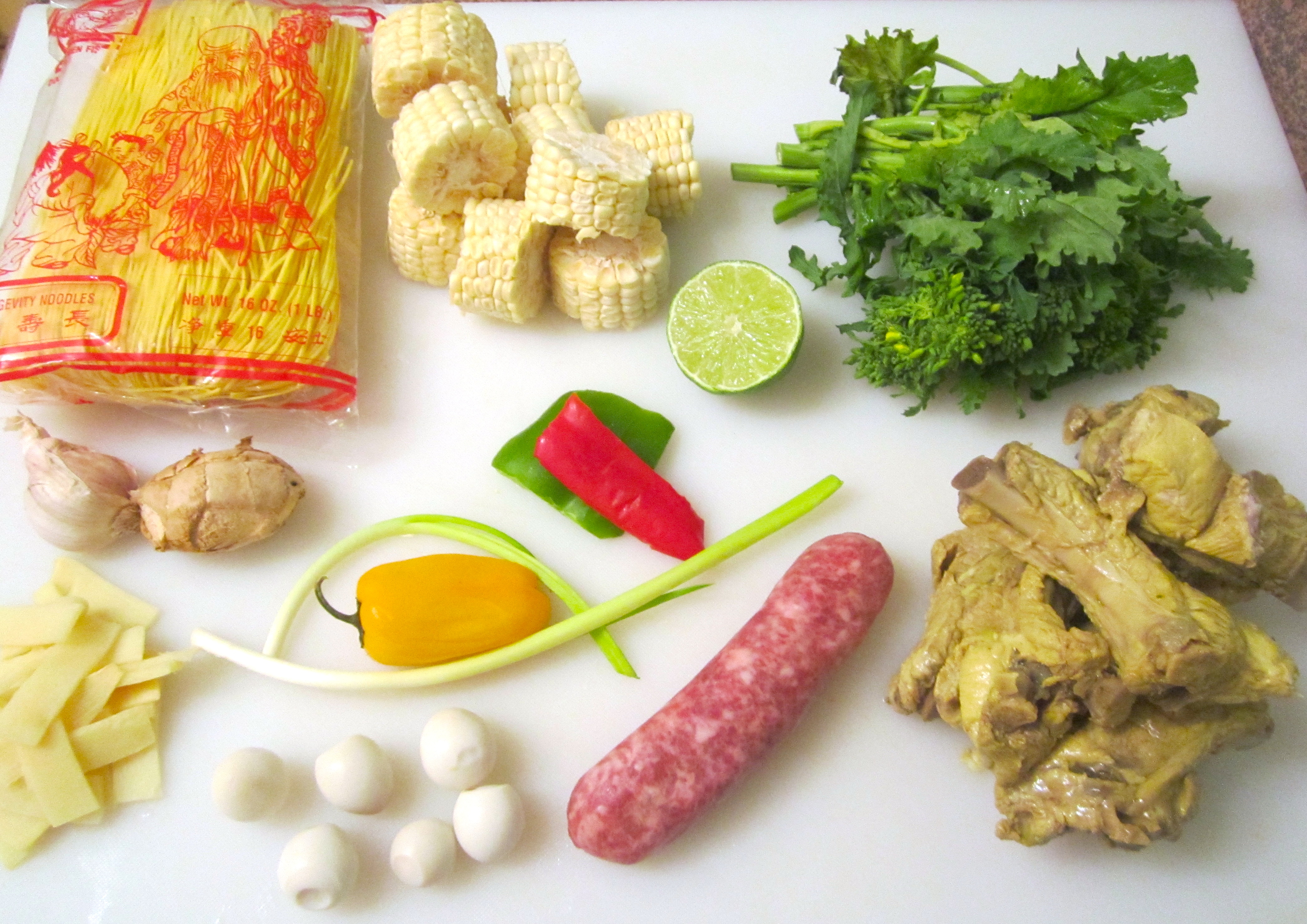
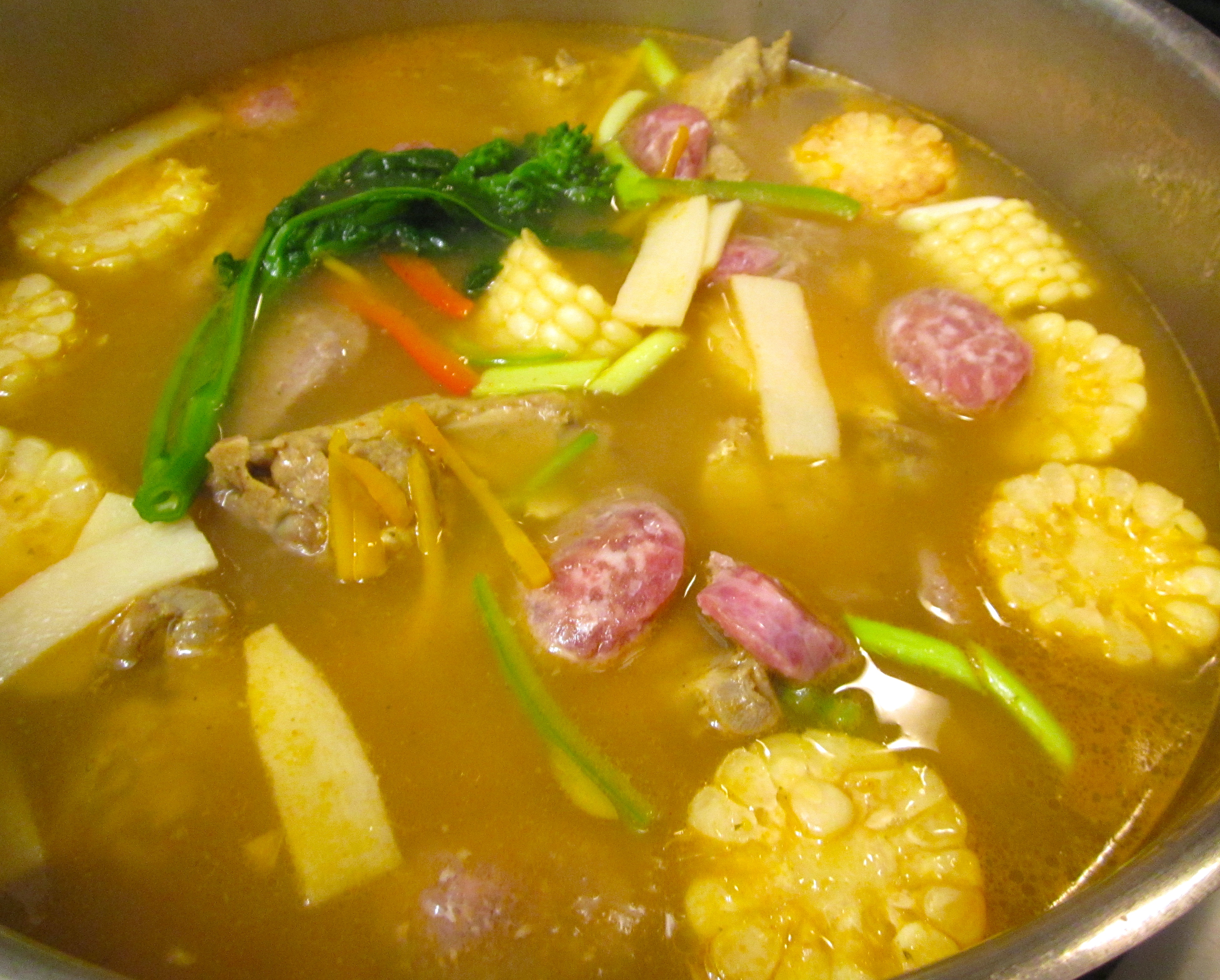
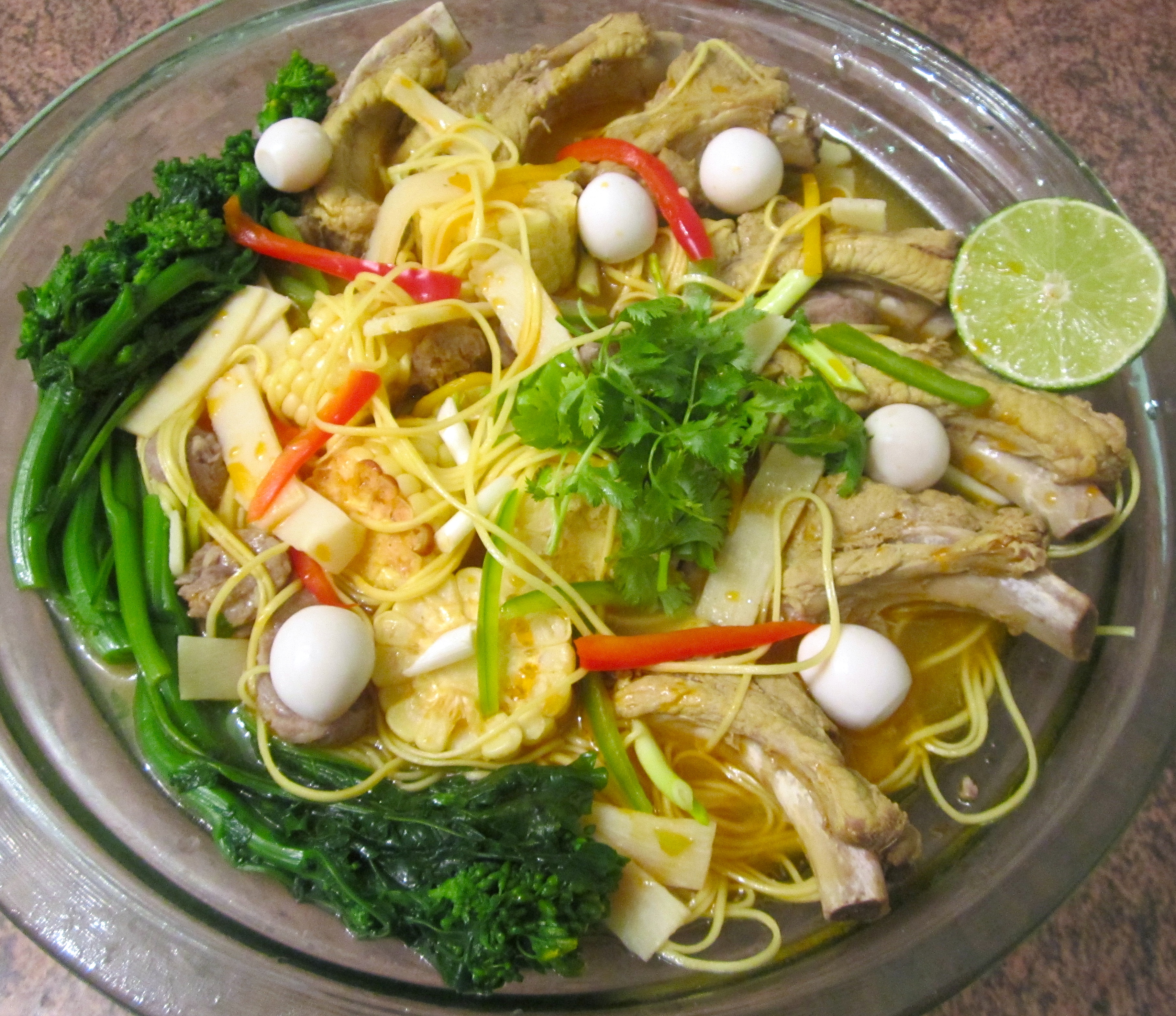
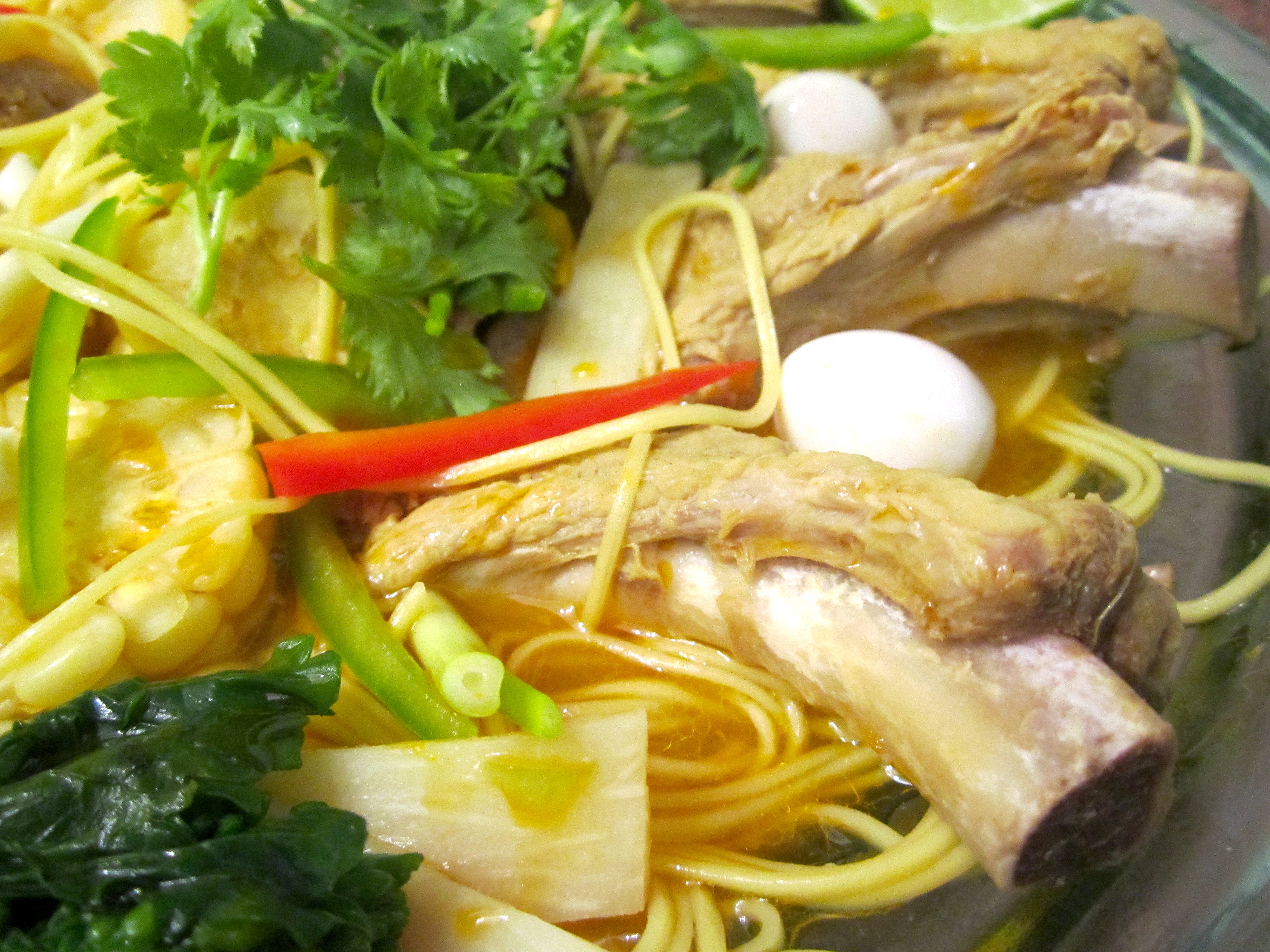
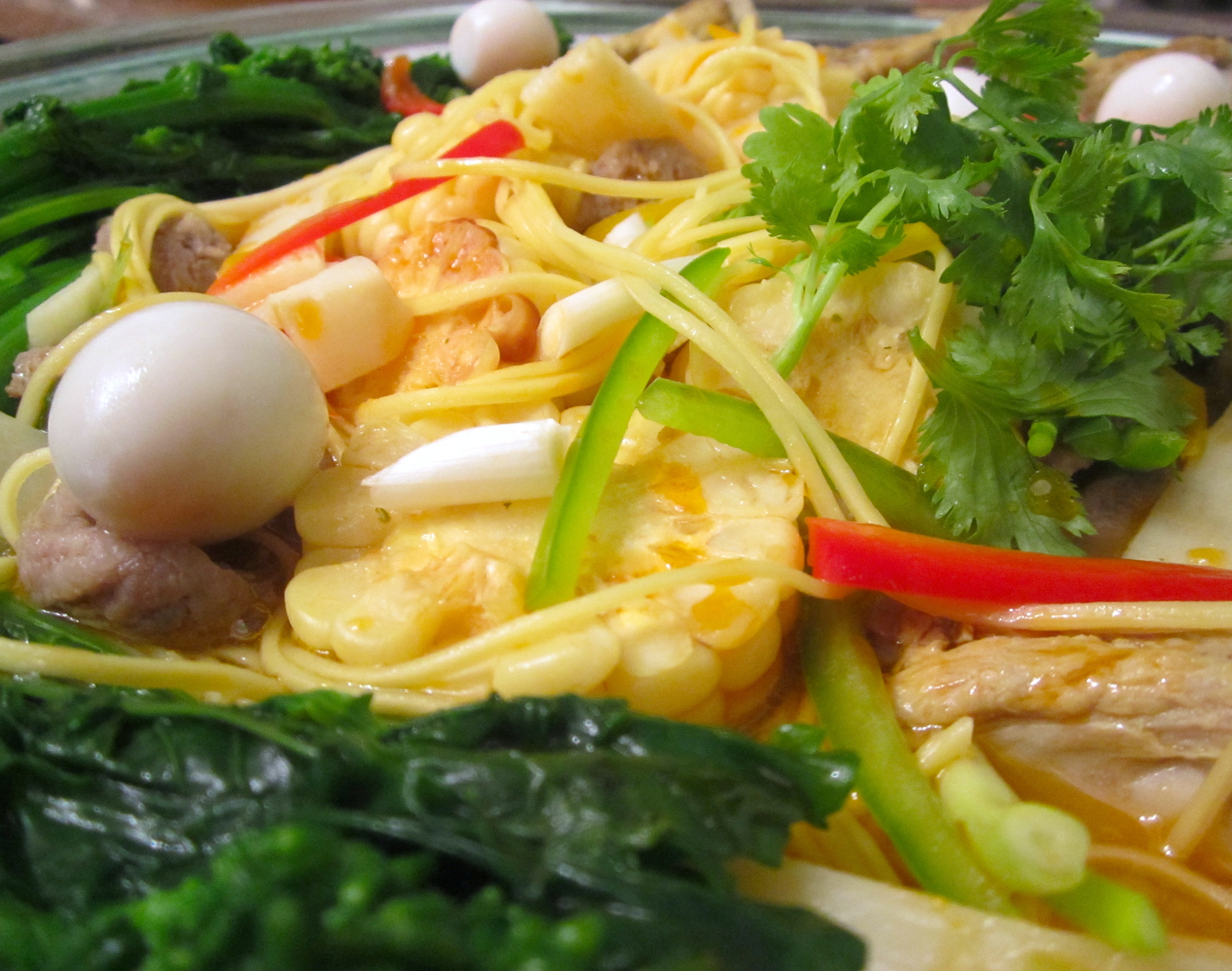
Simmer ribs until tender, add corn, simmer until tender.
Add garlic paste, grated ginger, salt and cayenne pepper.
Add sausage, peppers, chili, scallions, rabe and quail eggs.
Bring to simmer, remove from heat. Adjust seasoning.
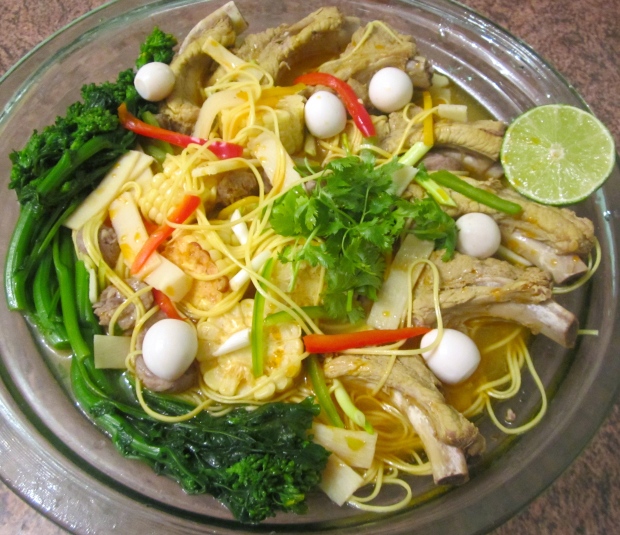
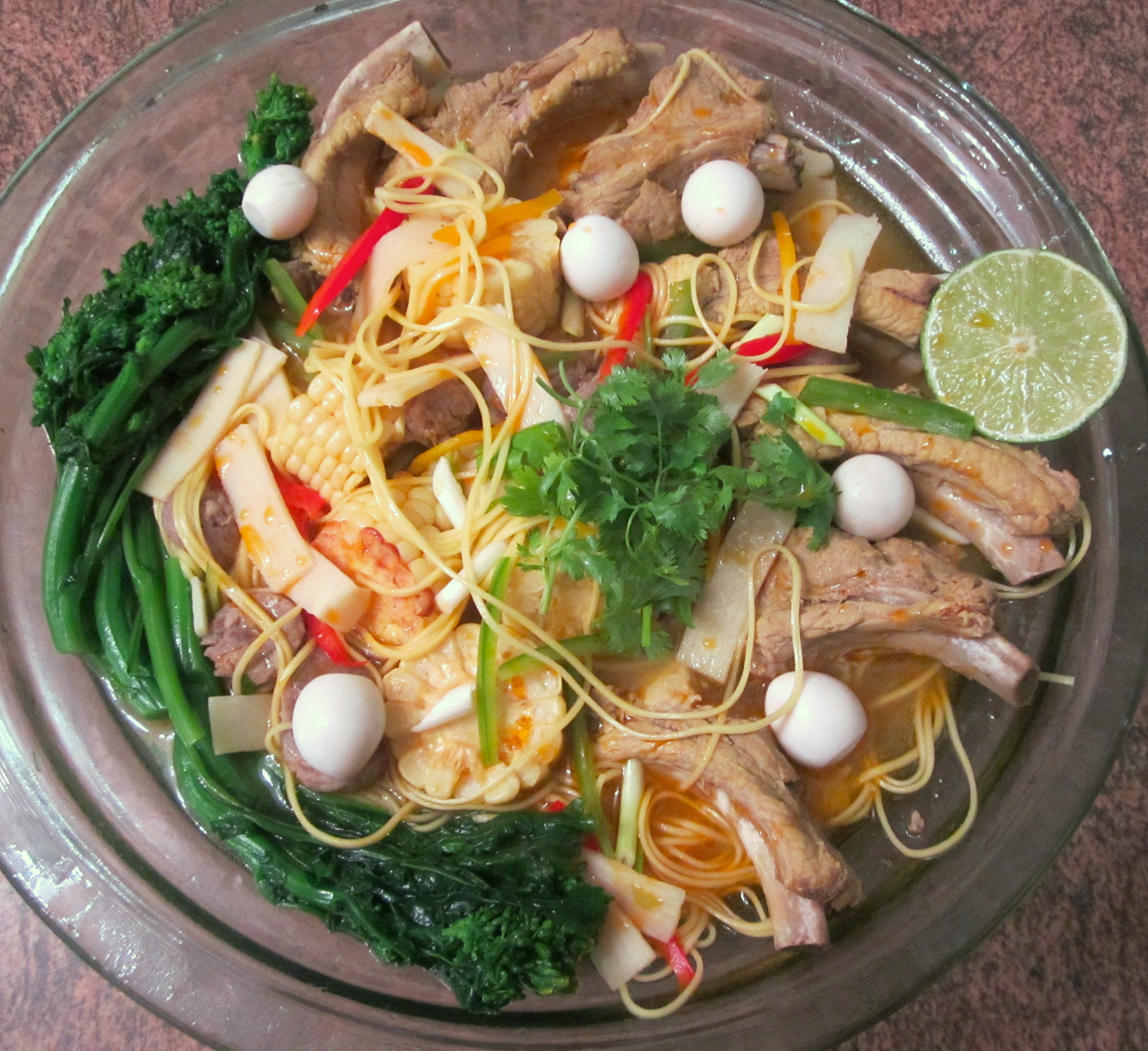
To plate, place noodles in bottom of bowl, ladle soup on top,
Sprinkle with cilantro, serve with chili oil and soy sauce.
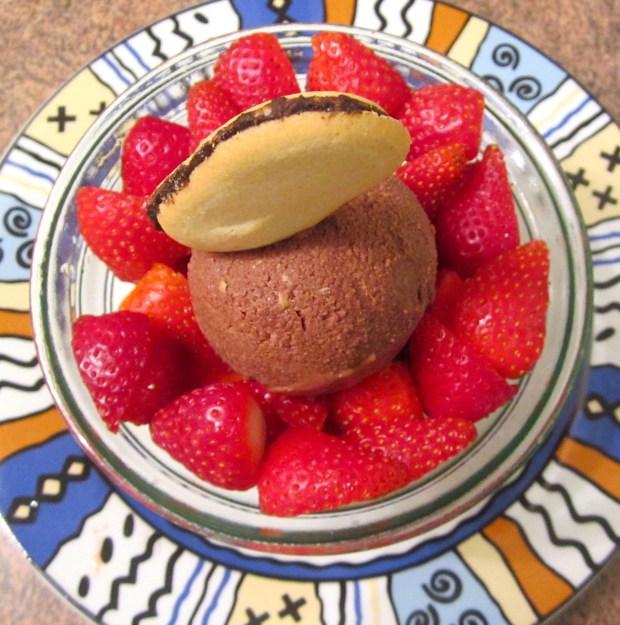
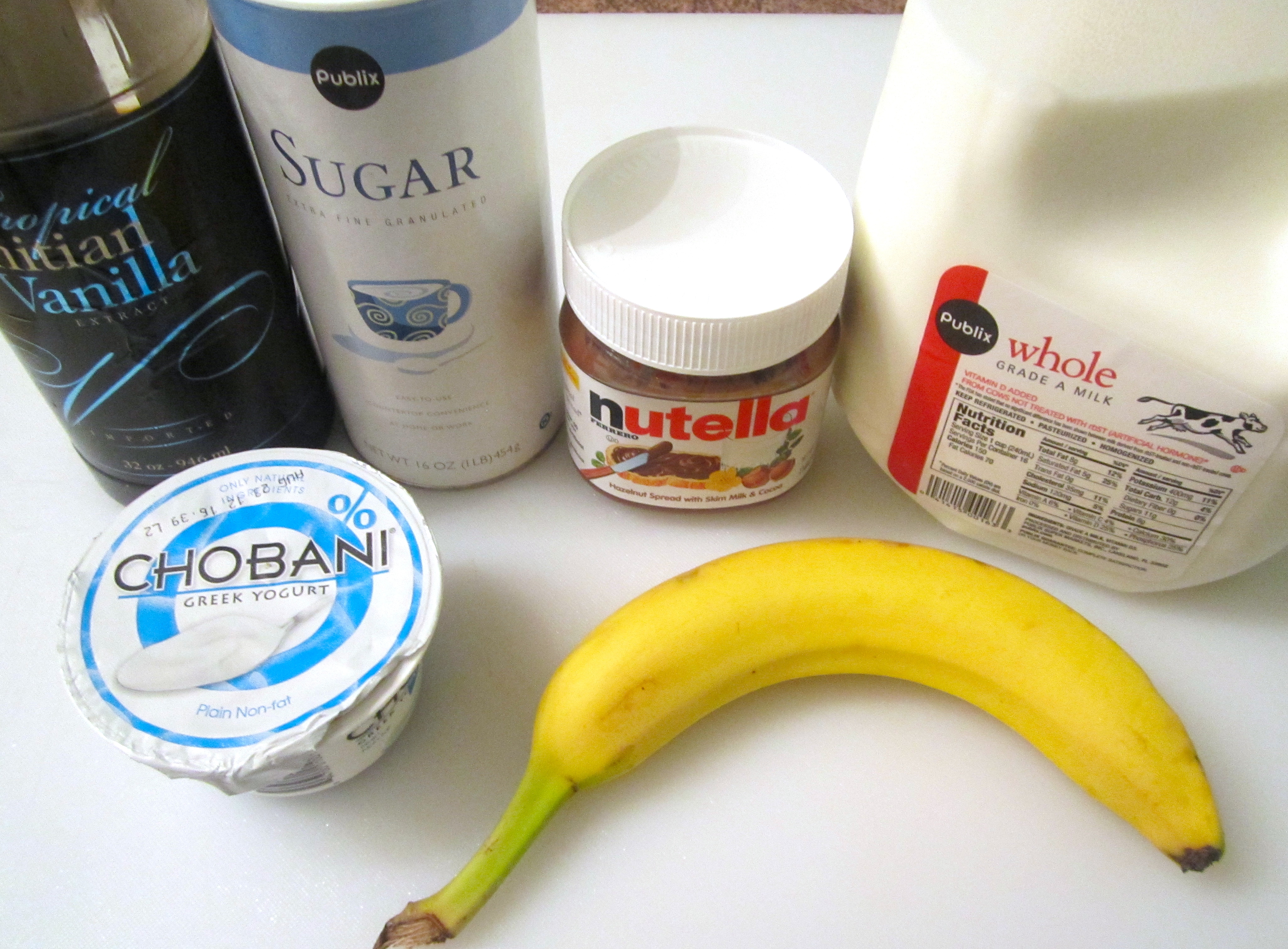
Whisk all ingredients except banana until smooth.
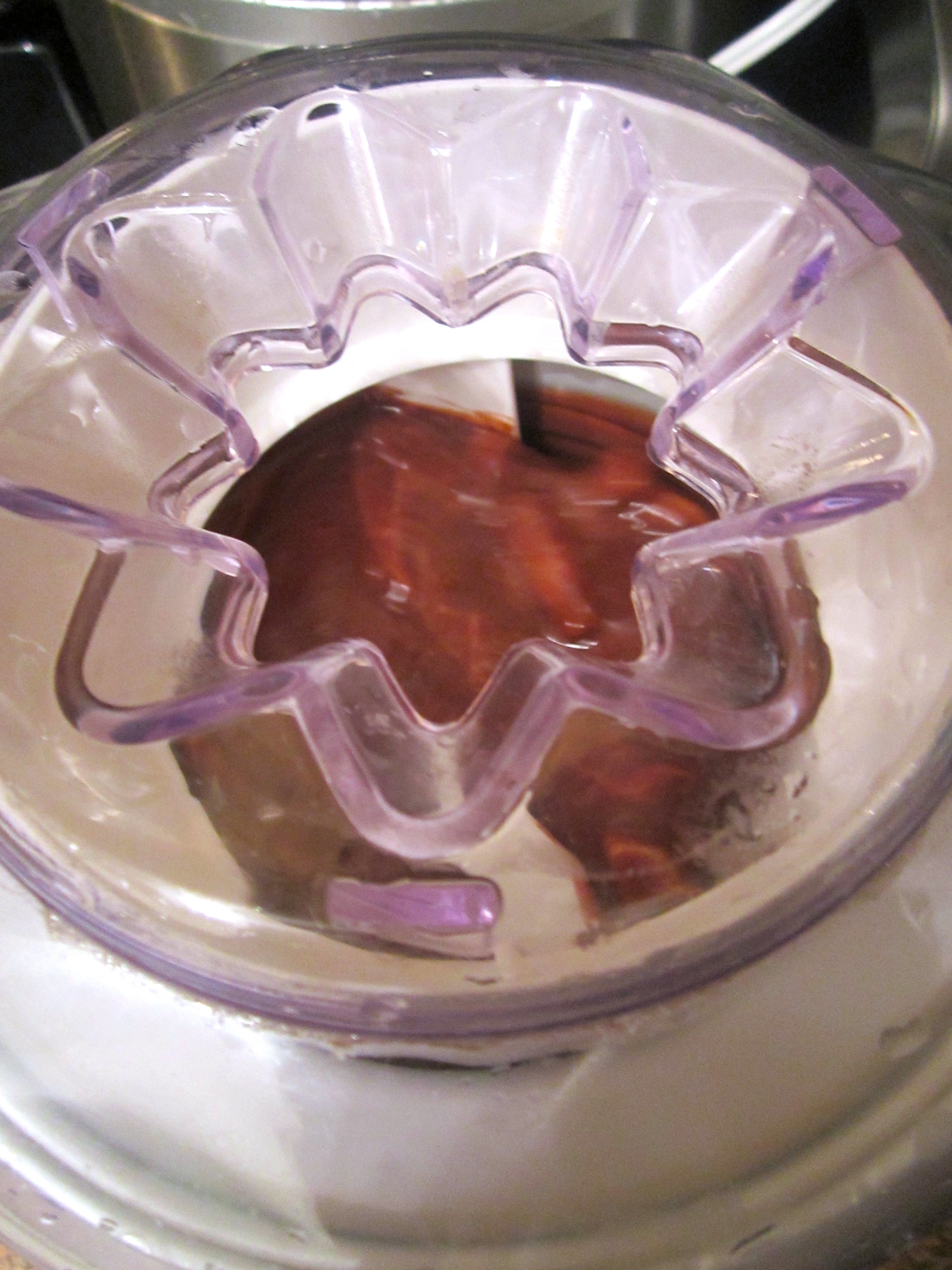
Transfer to ice cream maker, add banana.
Churn until starting to get firm.
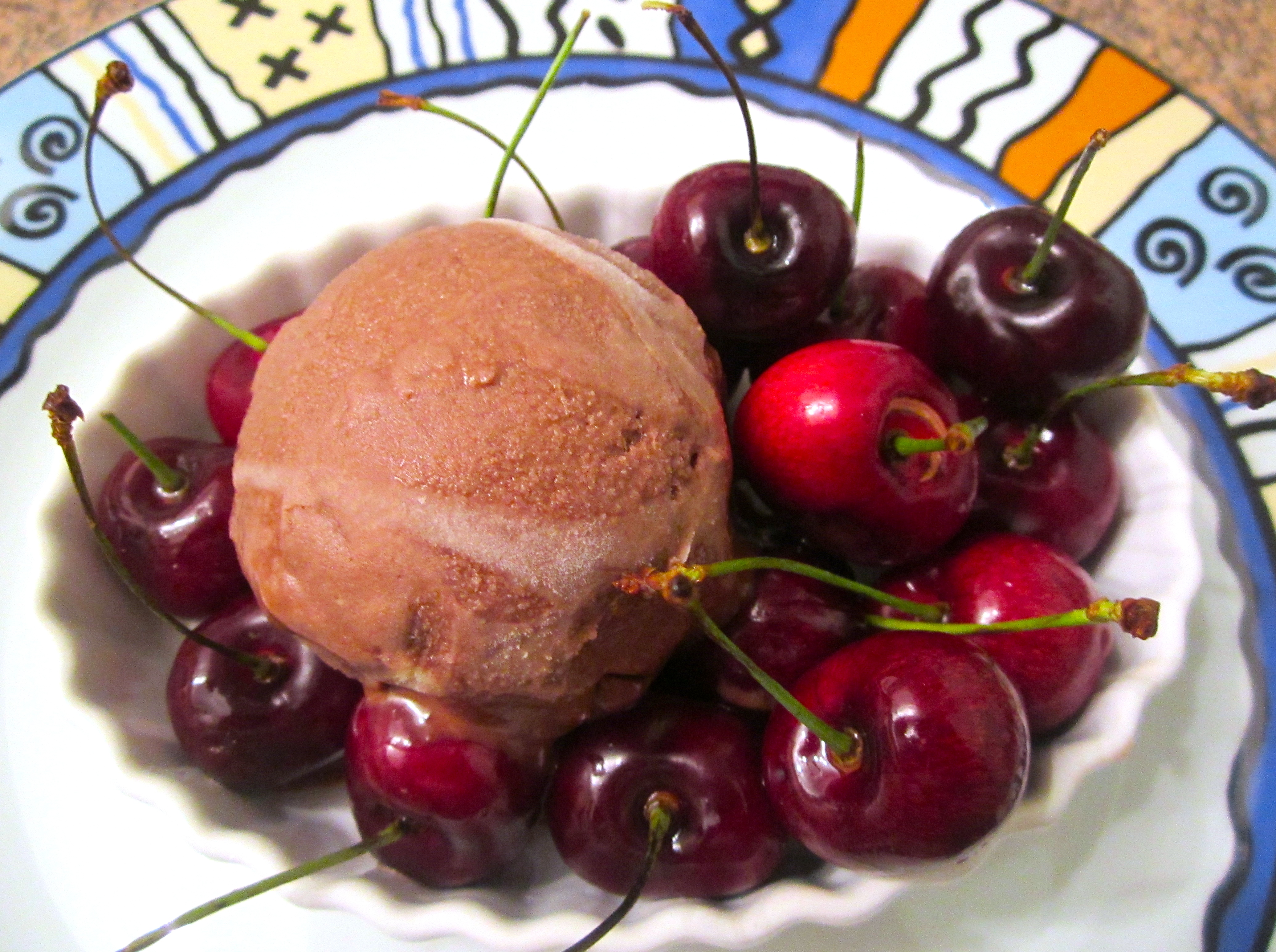
Transfer to airtight container, cover, freeze overnight.
I know this might seem simplistic and unsophisticated to some foodies
and professional chef”s, but believe me, this stuff is so rich and tasty,
it put’s many a sophisticated ice cream to shame 🙂
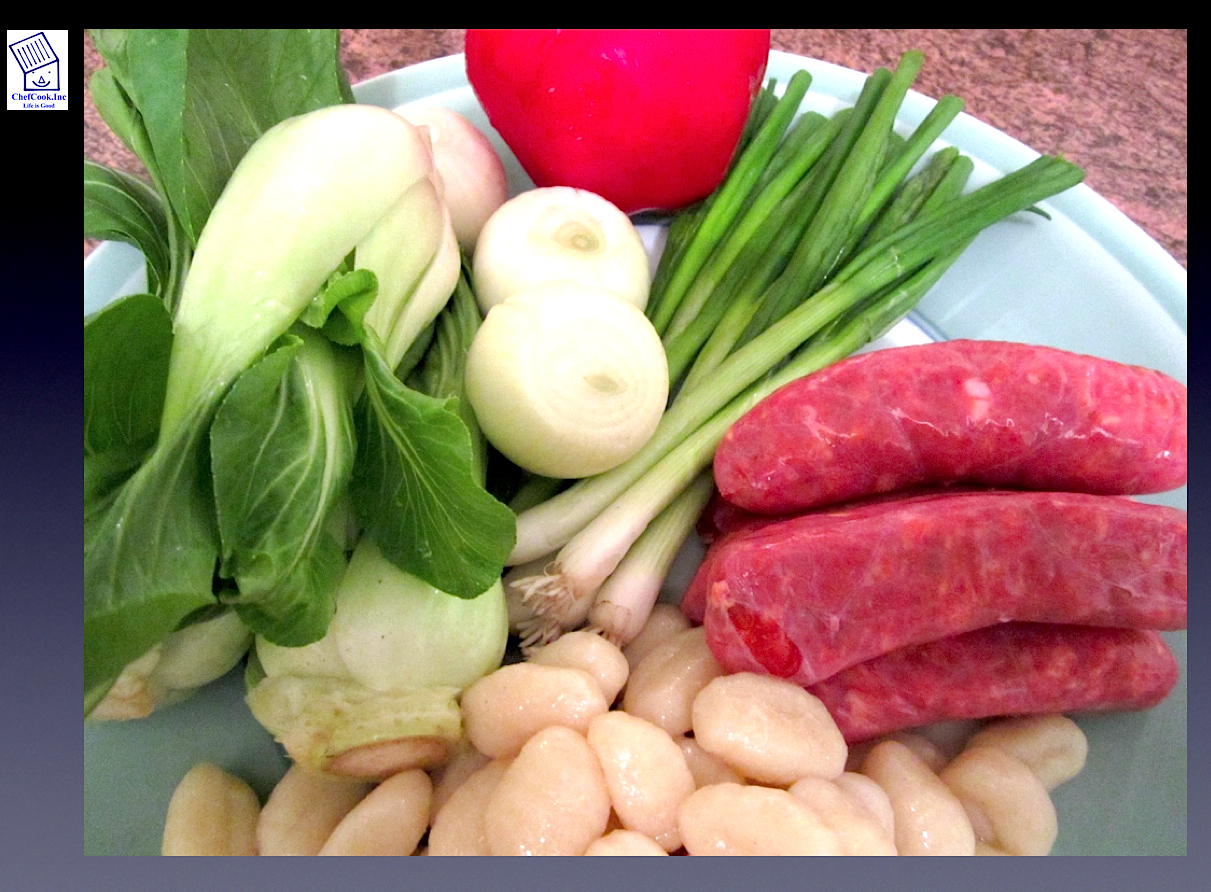
. . Today’sfusion confusion dinner 🙂
Whatever you want to call it, this is a wonderful concoction, worthy of an original name.
How about ” Boknocchi ” or ” Gnocchibok “? Gnocchoy ? 🙂 .
Sautee sausage in oil until starting to brown, add onion and garlic,
sautee until translucent, add peppers and bok choy, saute one minute,
add gnocchi, wine and seasoning and – Voila !
This recipe lends itself for you to be creative !
Asian style : Substitute gnocchi with rice or egg noodles and
add asian seasoning such as soy, sesame oil, ginger, etc.
Indian style : Substitute gnocchi with diced potatoes and
add indian seasoning such as garam masala, lots of fresh coriander etc.
Use your imagination !
. .
I was so fed-up !
I only go to the supermarket once or twice a week, so I buy a bunch of food and then decide later during the week what I will cook with it.
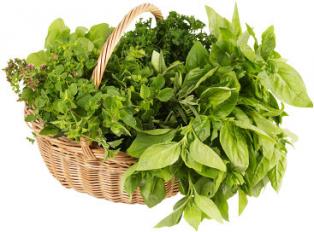
This works out fine with almost everything, except with herbs. I used to buy at least five or six different kind of fresh herbs once a week, but no matter what,
there was alway’s stuff to throw away after a few day’s in the fridge. I hate to throw food in the garbage, so now I am happy to have found a solution :
Freeze dried Herbs 🙂
Since I alway’s tried to use fresh herb’s in my food, I don’t really have much experience with the dried stuff. However, I came across some awesome items which I use now all the time.
In salads, soups, stews, sautees, you name it, I now usually use a good amount off freeze dried herbs, usually the LITEHOUSE brand, which I find superior to all others I have tried so far.
They taste, look and smell just like the real deal.
As for salad dressings,they sure have come a long way from their awful beginnings. (Sure you can still get any number of crappy dressings at a supermarket near you),
but here is what I have used and liked lately : .
So please don’t think I like dried herbs and ready made dressings better than freshly made. If I have a practical choice, I still prefer the fresh herb’s and homemade dressings over dried and bottled products; But sometimes it is just more clever and sensible to use what you can better control and therefore avoid waste.
Please note that I have no affiliation whatsoever with the LITHOUSE brand, I am just a big fan of their products 🙂
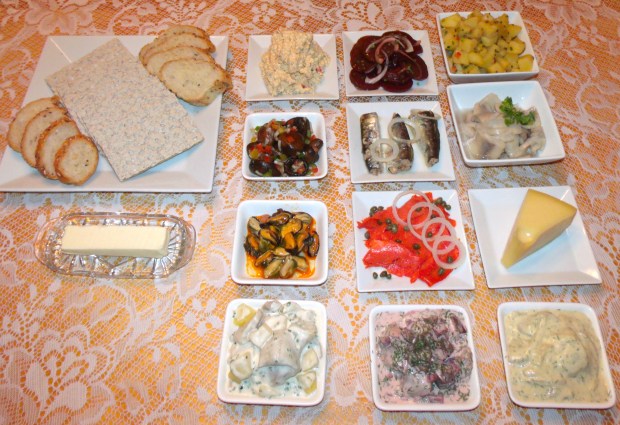
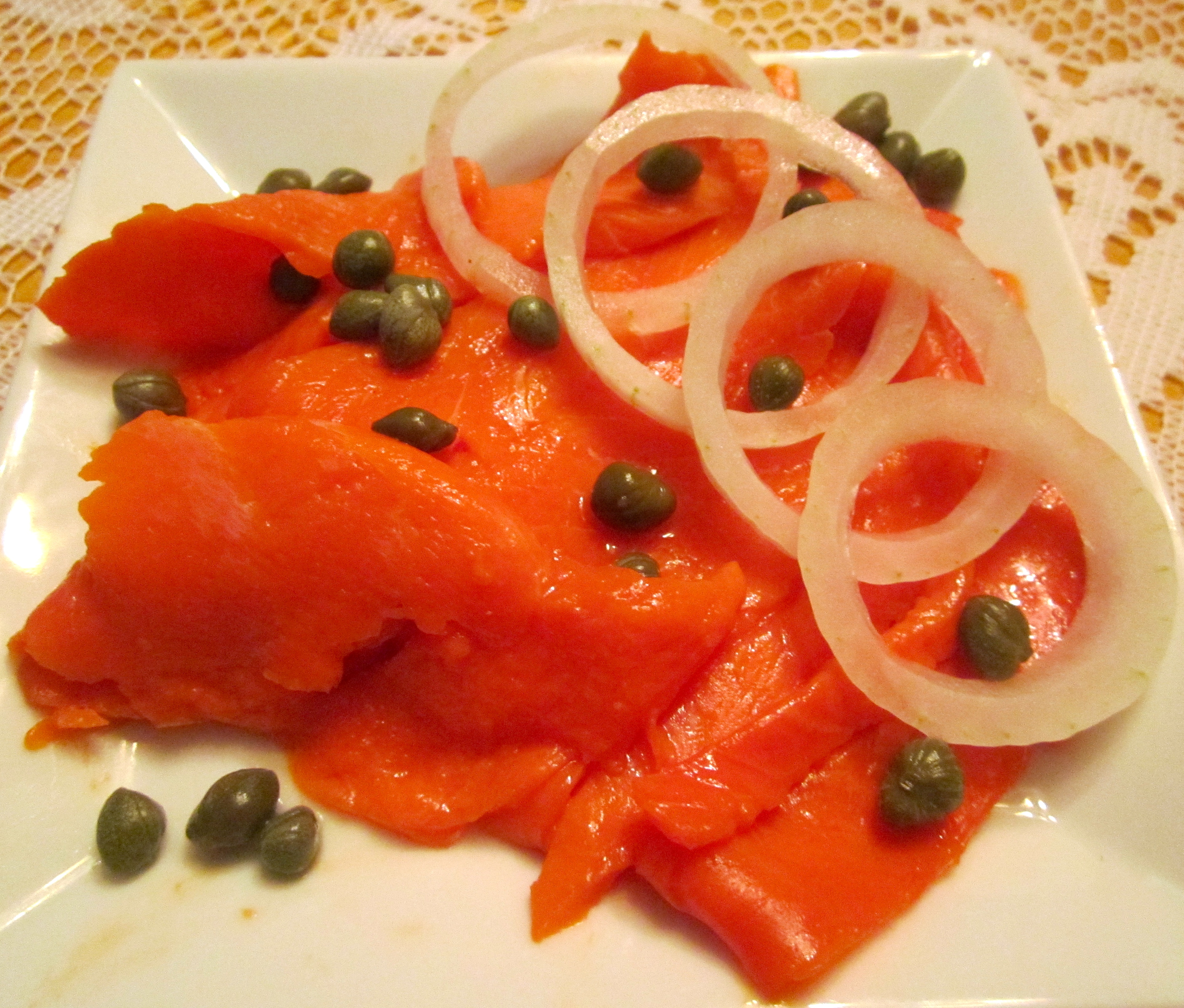
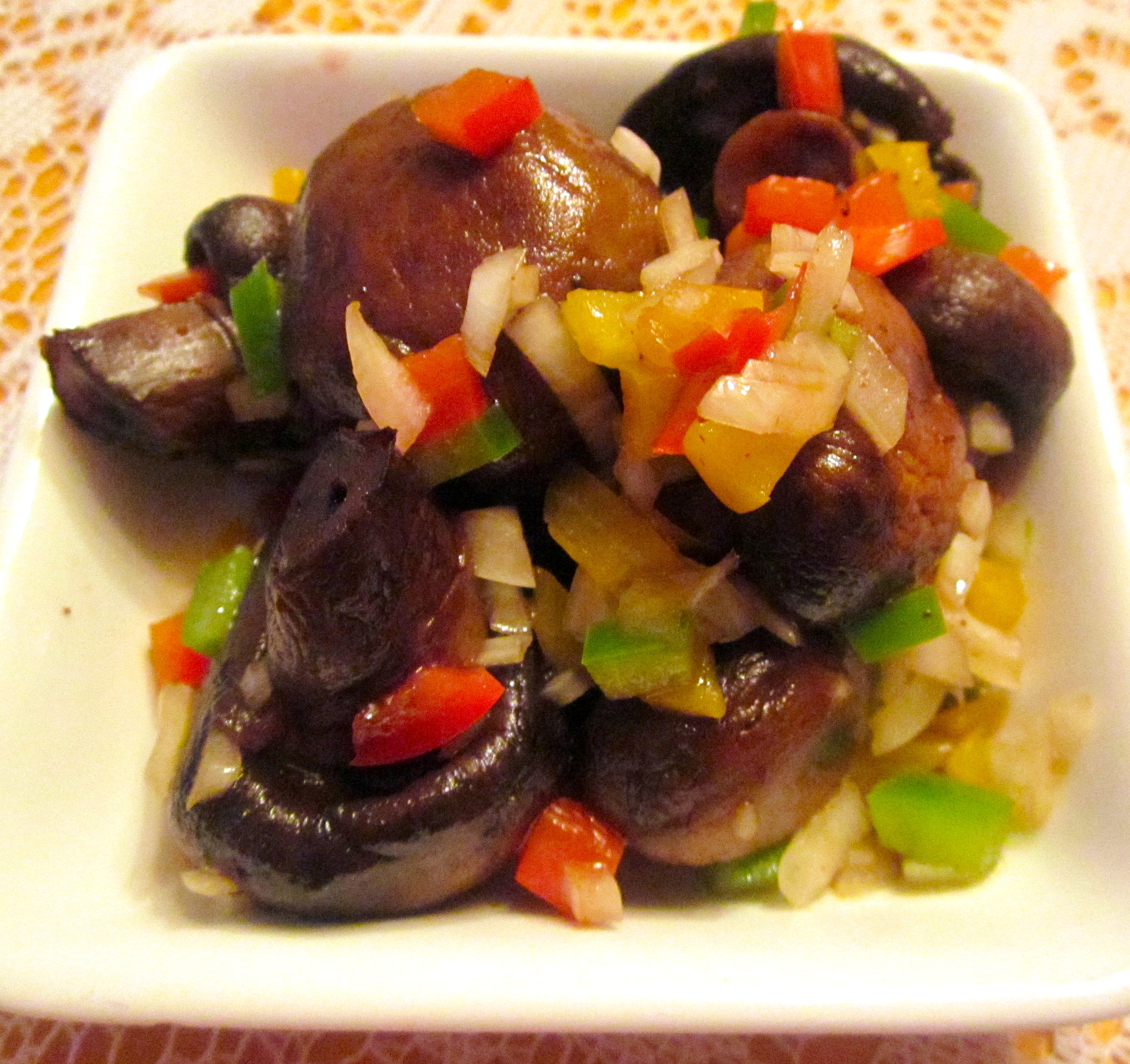
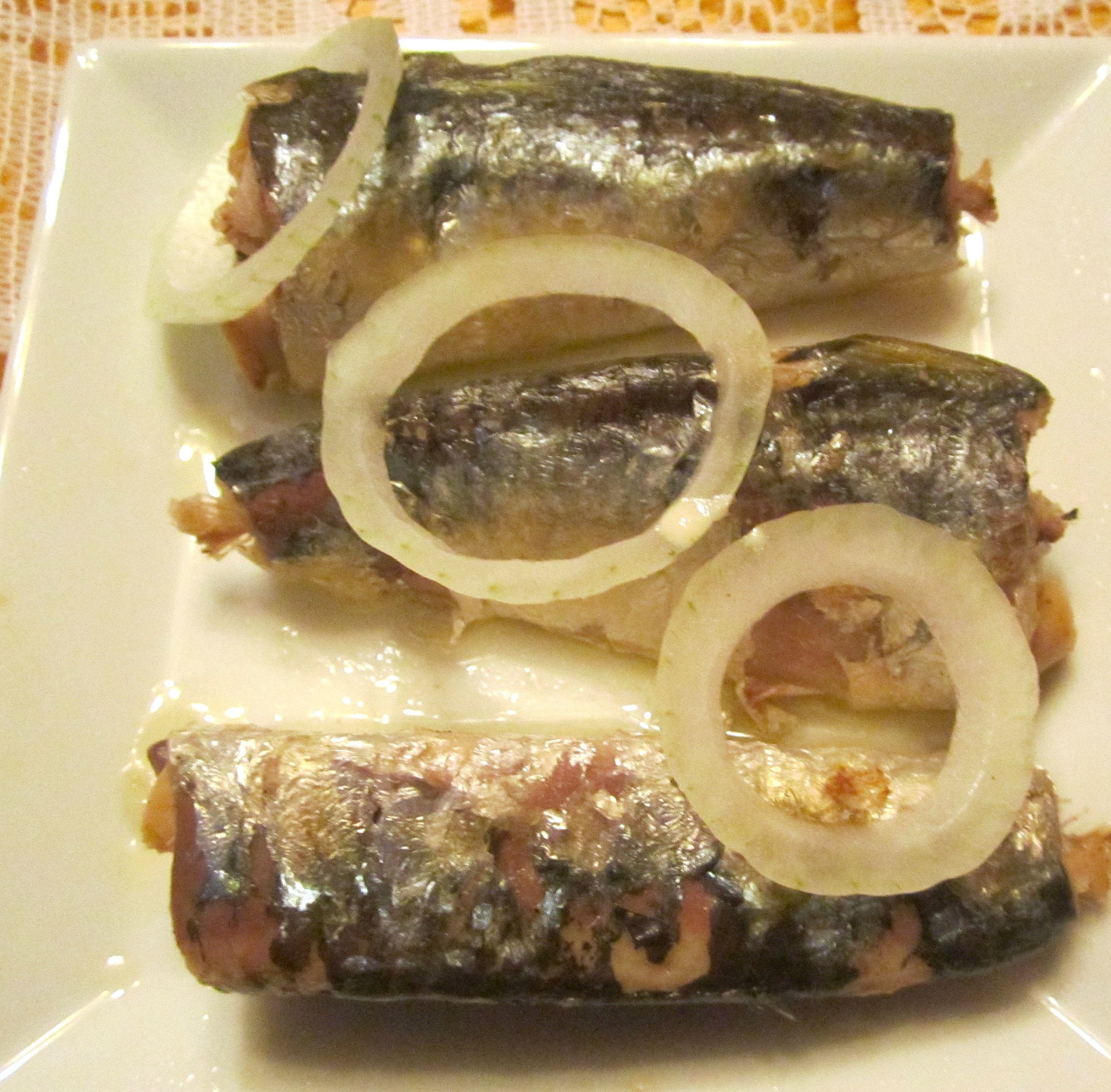
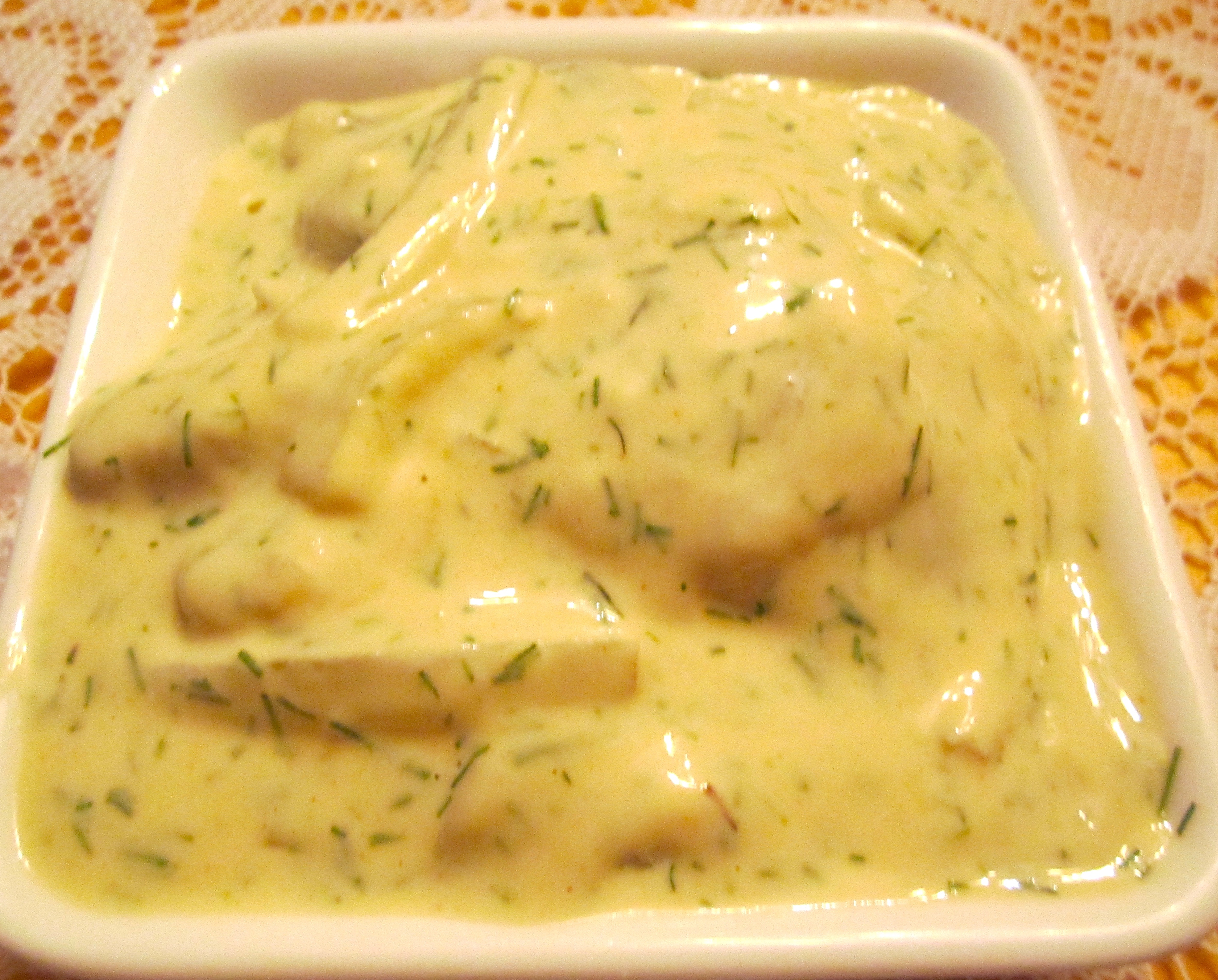
. . Where else than in my house can you find a Smörgåsbord for one ?
Smörgåsbord is a scandinavian buffet, usually consisting of seafood,
meats, starches, preserves, bread’s; sometimes using both hot and cold dishes,
sometimes, for a more simple version, cold dishes only.
Here is the version I enjoyed for dinner last night : . .
What the heck !?
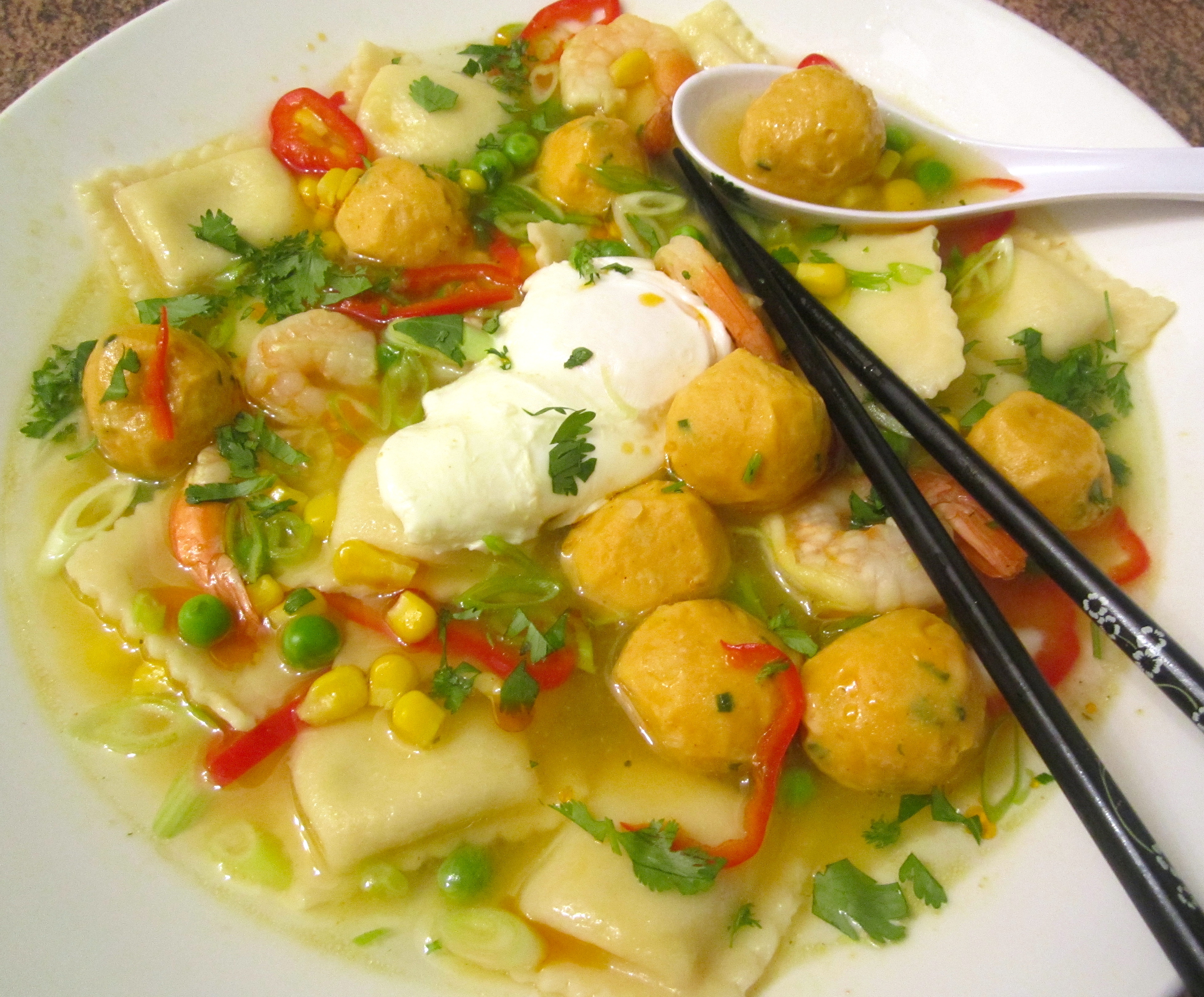
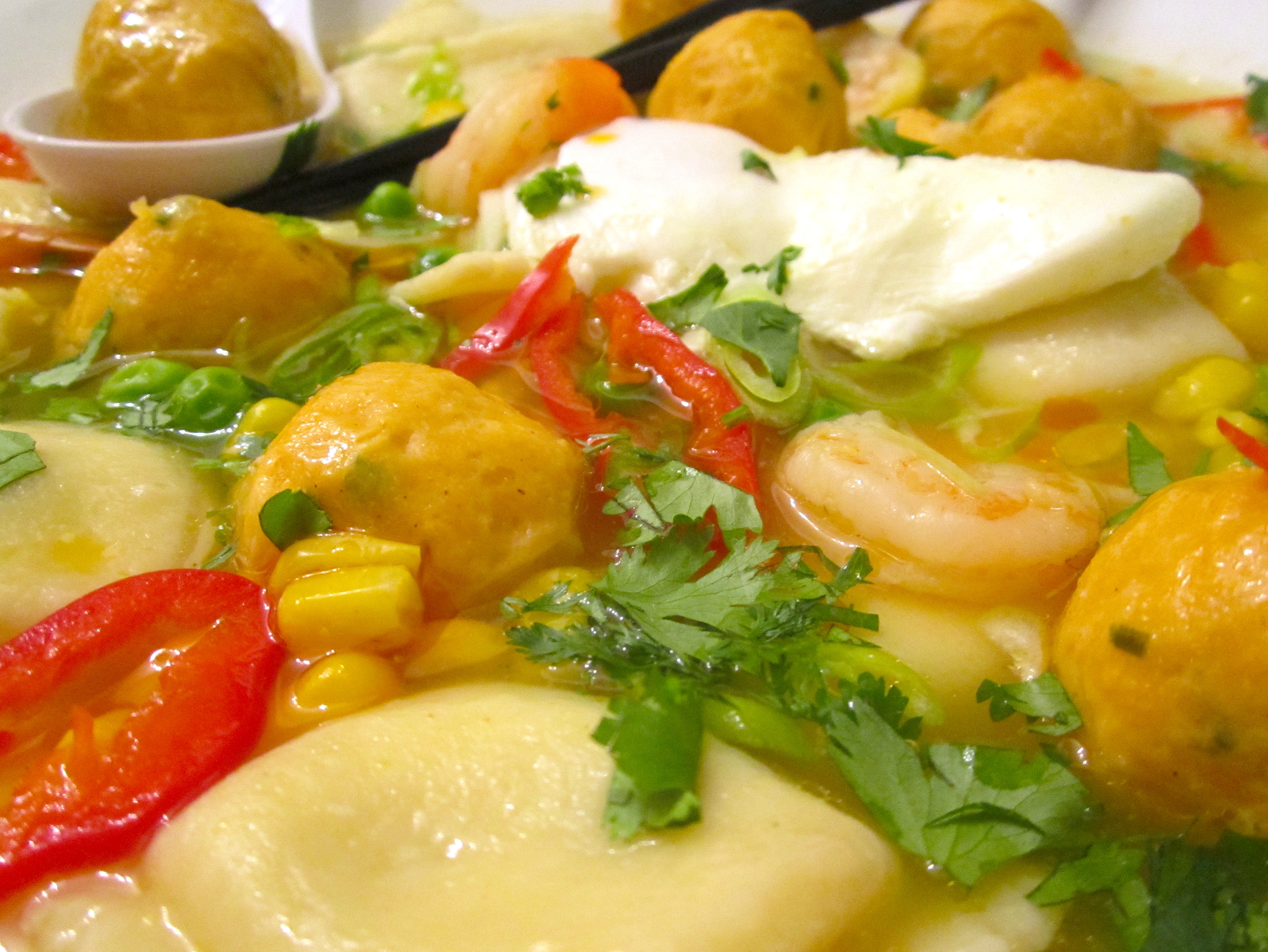
Soup with fish dumplings, shrimp ball’s, shrimp, vegetables, chili and poached egg ?
Well, it might sound’s a bit much but it is absolutely delicious, the flavors and textures
go very well together to form a wonderful, multi-facetted dish. . .
.
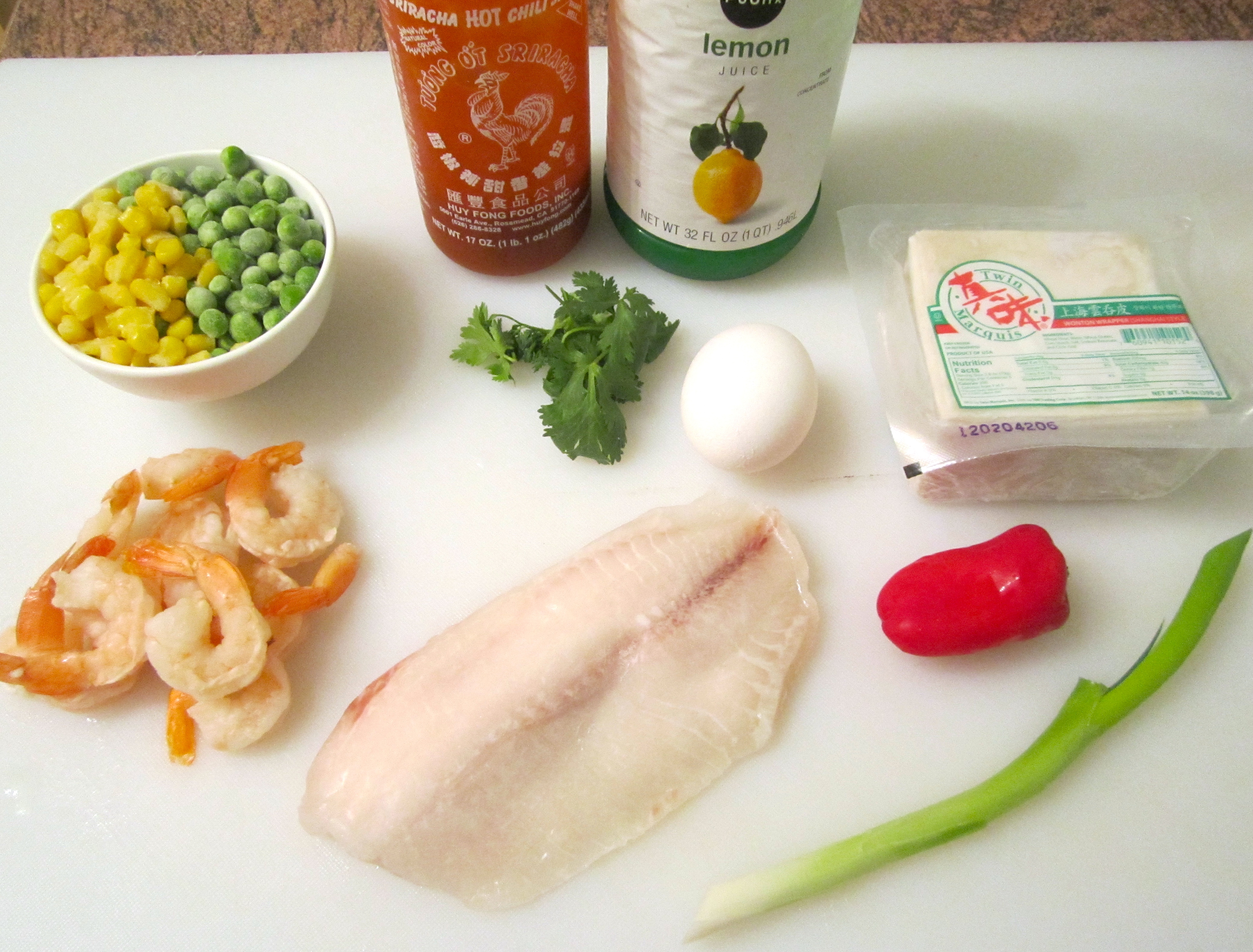
Ingredients:
Shrimp, pre cooked, peeled, deveined, half of them tail removed White fish, such as haddock, tilapia, cod Peas, frozen
Corn, frozen Won ton wrappers, Red chili, sliced
Scallion, sliced
Cilantro, coarsely chopped
Whole egg for poaching Egg white for fish dumplings and shrimp balls Fish stock substitute with chicken stock if preferred
Ketchup
Maggi
Salt, cayenne pepper, lemon juice to taste
Method :
Dumplings :
Chop the fish coarsely, add a bit of egg white, salt, cayenne pepper, mix.
Add half a teaspoon to a wrapper, moisten the edges with water.
Top with another wrapper, flatten and cut with a crinkle wheel cutter or a raviolini stamp.
Shrimp balls :
Chop the tailless shrimp to a fine paste. Add sriracha, salt and a bit of ketchup,
Mix and form into small ball’s.
Cook fish dumplings and schrimp balls in salted water until floating,
transfer to salted ice water.
Egg :
Poach in lightly salted water for 3 1/2 minutes, transfer to salted ice water.
Soup :
Bring stock to simmer, add corn and simmer for two minutes.
season with salt, sriracha soy sauce and maggi seasoning.
Add fish dumplings and shrimp balls’, shrimp balls, chilis, green peas and poached egg.
When heated through, plate and sprinkle with scallion and cilantro
. . Sometimes a very simple dish does very satisfying things to you.
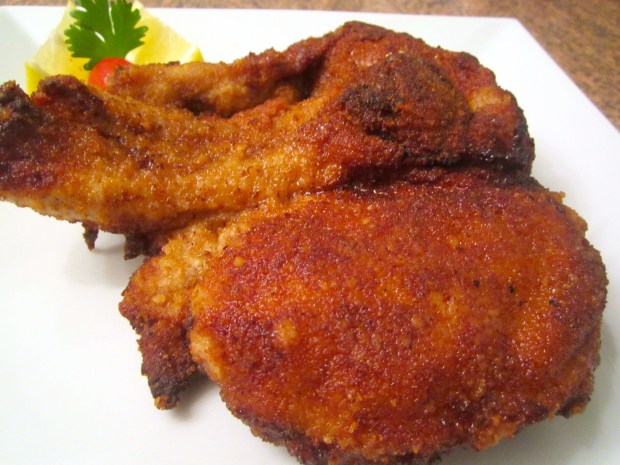
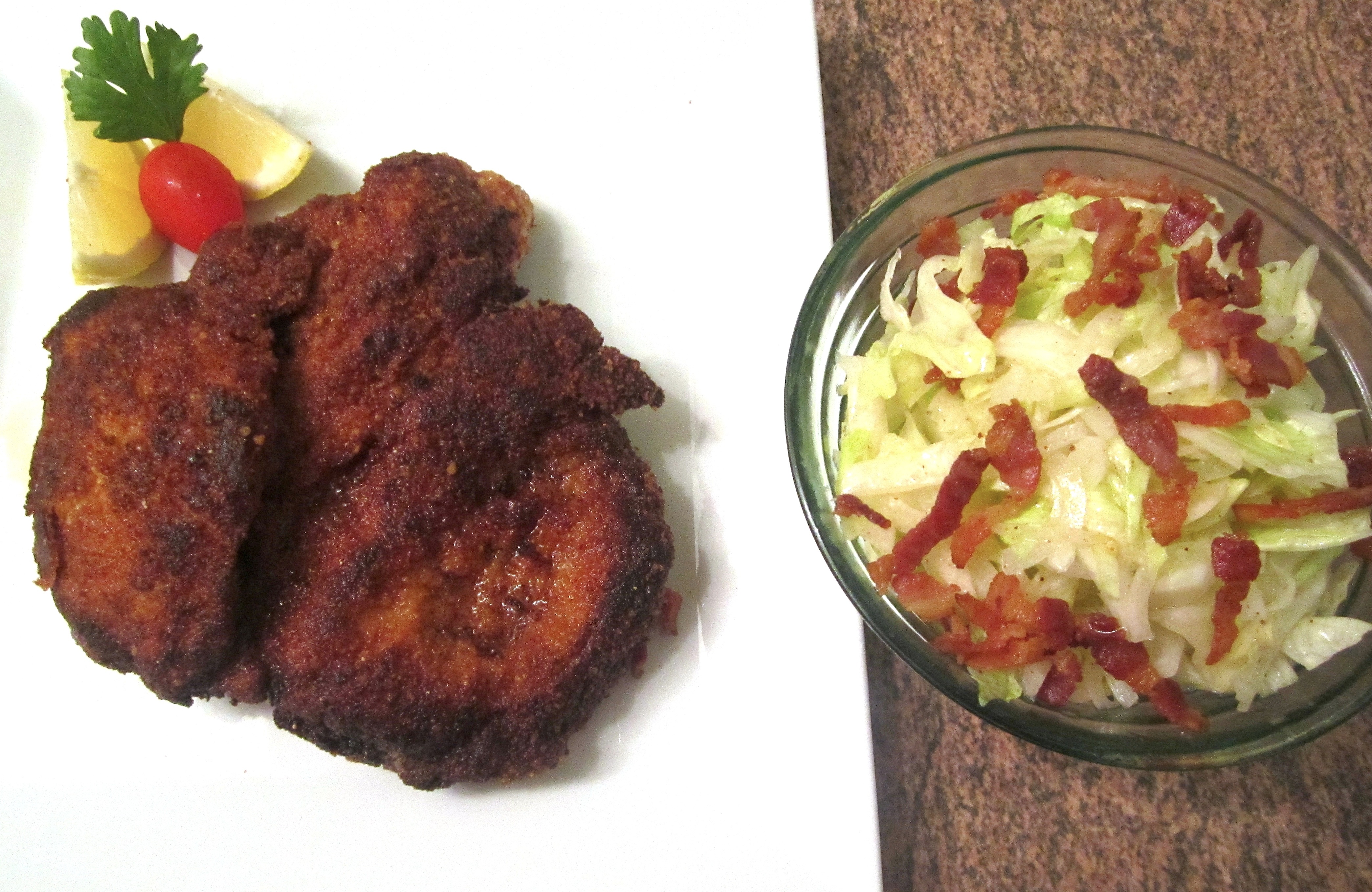
Last night that’s exactly what happened to me when I had this dish of simple comfort food :
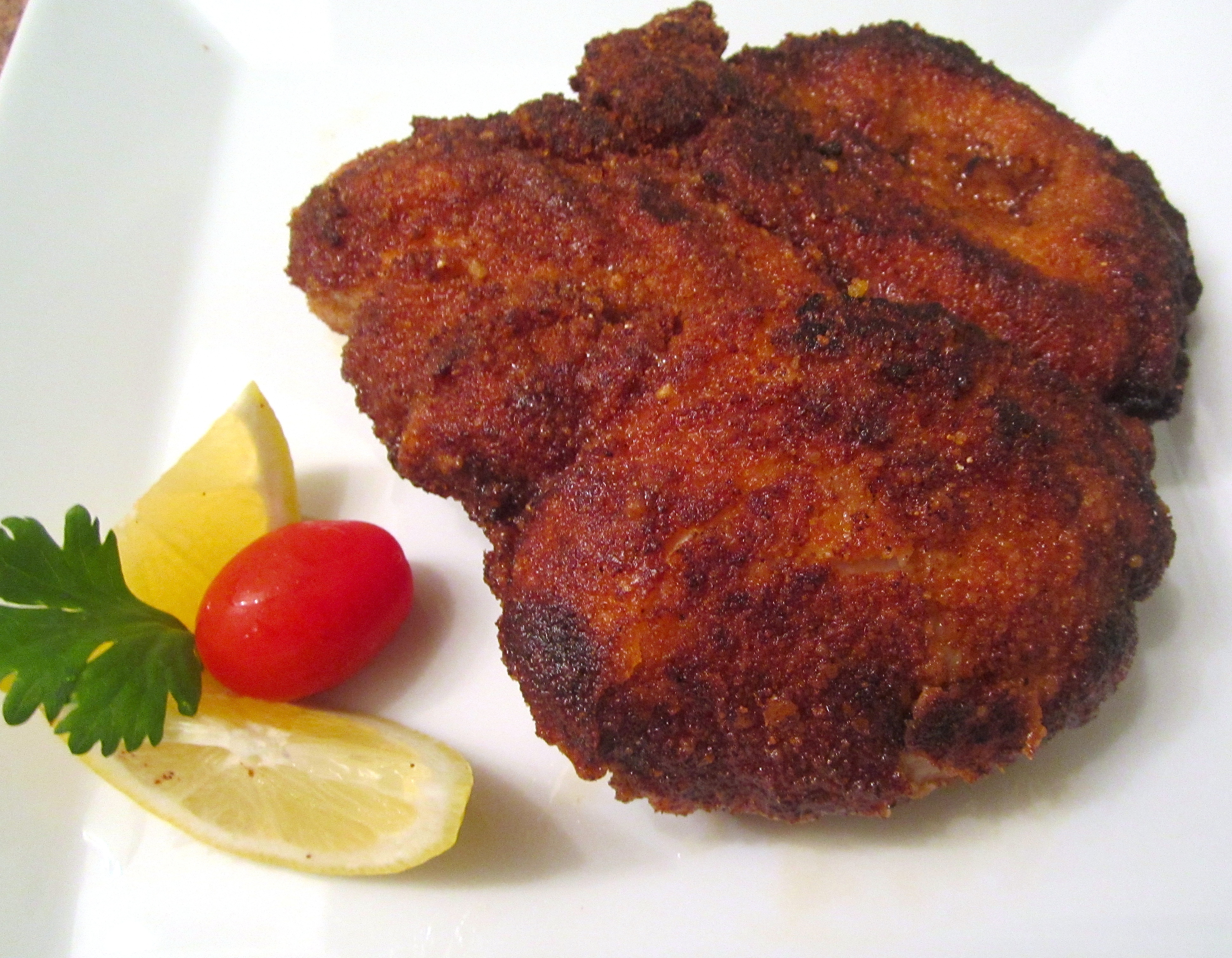
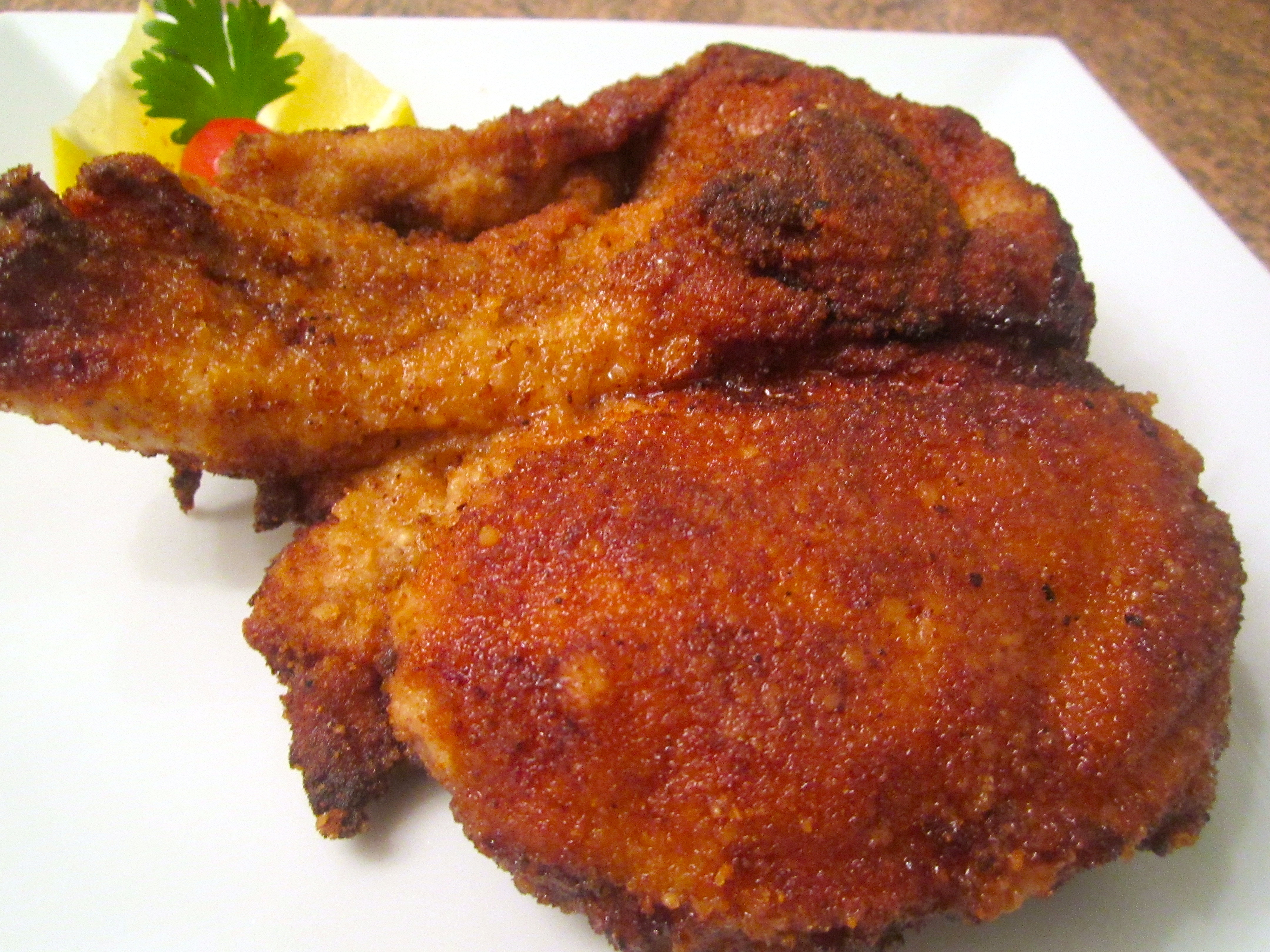
Instant happyness and warmt in the belly that said : Life is Good ! . Butterflied Breaded Pork Chop with Lettuce and crispy bacon in Dijon vinaigrette. > >
Originally posted by Russ Ito on Salon Piquant Re-blogged with permission of Ross Ito >
The best thing about The Food Network in the summer is that you only have to watch 10 minutes of any show, and you’ll know what 95% of the programming that night will be: BBQ. The mind-numbing monotony of these shows is astonishing: Hour after hour devoted to this pit versus that smoker. After a few minutes, it’s all a blur of: rubs, rings, and burnt ends; of mops, barks, and slaws. And geographically, it’s as if The Food Network doesn’t know that the Louisiana Purchase happened: The coverage is stuck in the South-east and Deep South, as if no one west of the Mississippi ever cooks meat over fire.
As someone who grew up in a Japanese household, I’ve never been a big fan of “traditional,” American BBQ, finding it far too dense and cloying. I much prefer the lighter styles of BBQ from Asian cuisines, including: Japanese, Korean, Chinese, Vietnamese, Thai, and Indian. All of these cultures are part of American society – and make great BBQ, but they never appear in TFN’s summer programming. Perhaps TFN thinks they’re too exotic to appeal to their audience, or maybe it’s more ideological. .
The imu — the original “pit BBQ.” How about it TFN?
.
The Taliban wing of the BBQ cult would, no doubt, sniff that the Asian approach is: “not true BBQ.” To them, BBQ means: “low and slow,” long cooking over low heat. By their reckoning, most Asian “BBQs” are just “grilling,” i.e., fast cooking over high heat. OK, fair enough, but even if you accept that, the Polynesians were slow-roasting whole pigs in hand-dug pits for centuries (maybe millennia) before anyone started warming up a pit in Kansas City or Charlotte. So why don’t you ever see that on TFN?
And does it really matter? Isn’t it just rhetorical? Every culture has its own way to cook meats over fire, whether that’s in an imu, on a grill in a hibachi, or on a skewer in a tandoor – and all of these are part of American cooking! Jacques Pépin often talks about the diversity of American food choices as something that still excites him about food here versus in his native France: “One day you can have Turkish, the next Vietnamese, the next Italian, the next… Ethiopian! It’s great!” BBQ/grilling isn’t the mono-culture TFN would have you believe; it’s as diverse as American culture itself. It’s time TFN woke up!
So come on, TFN, break out of your comfort zone, and mix it up! There’s a lot of great BBQ happening west of the Mississippi, and guess what? Those states are all part of the union, too! Asian flavors are part of the American palate, so include them!
Of course, TFN isn’t going to listen to my ravings. They’ll pack this summer’s schedule with hour after hour of rubs and mops, and familiar arguments over briskets versus pork shoulders. I’ll watch ten minutes, and know I’m not missing anything. And besides, I’ll be spending most of July watching the Tour de France, anyway!
these days’ the word BBQ means different things to different people.
I have lately come to the conclusion that to the majority of folk’s BBQ describes a social gathering of one or more people, the main purpose is to cook out in the open, enjoy the weather, food and company. (Even BBQ restaurant’s used to cook their food outside).
Since each region, restaurant, family and grill cook swears that their version (smoking, grilling, open fire, covered grill, etc) is the gospel, describing BBQ as a cooking method seems rather futile to me .
However, I had many a chef getting his / her knickers in a twist discussing what BBQ actually and REALLY means, so I just accept whatever is the explanation of the day.
( Even the origin of the word Barbecue seems to have different proponents ).
If I take my classical french training into consideration, you have the cooking methods :
Grilling (never covered), Smoking (always covered) Jerking ( a combination cooking metod, since we grill, smoke and steam at the same time) and “the way of Life BBQ”, where we use any cooking method traditionally employed in our area and / or backyard, invite a bunch of friend’s and family over and have smoked, grilled, jerked food, maybe a barrel of beer and lot’s of fun.
BBQ – happy cooking outside, whichever way, as long as you are having fun ! 🙂
Please give us your opinion in the poll below.
Beef and Corn on a Charcoal BBQ grill (Photo credit: Wikipedia)
Some chicken, pork and corn in the barbeque (Photo credit: Wikipedia)
English: a typical offset bbq smoker (Photo credit: Wikipedia)
English: Image of a propane smoker in use. Diagrams the elements. (Photo credit: Wikipedia)
English: Preparing grill for grilling, grill with flames and cones. Česky: Příprava grilu pro grilování, gril s plameny a šiškami. (Photo credit: Wikipedia)
English: Chicken wings being cooked slowly over charcoal ashes. (Photo credit: Wikipedia)
English: “Little Chief” food smoker, popular in the Pacific Northwest for home smoking of fish and meat (Photo credit: Wikipedia)
Pork steaks cooking over a charcoal fire (Photo credit: Wikipedia)
English: A barbecue on a trailer at a block party in Kansas City. Pans on the top shelf hold hamburgers and hot dogs that were grilled earlier when the coals were hot. The lower grill is now being used to slowly cook pork ribs and “drunken chicken”. (Photo credit: Wikipedia)
Can’t claim credit for this cooking, my friend Paul was responsible. (Photo credit: Wikipedia)
This is a traditional asado. The picture shows ribs grilled in the traditional Argentinean way. The meat is on top of the grill and the charcoal or wood at low fire under the grill. (Photo credit: Wikipedia)
Deutsch: Bratwürste auf einem Grill (Photo credit: Wikipedia)
Español: Cocinando carne para hamburguesa al grill. (Photo credit: Wikipedia)
Barbecue (Photo credit: Johann Richard)
The smoking setup – left (Photo credit: ntang)
Pork ribs being smoked (Photo credit: Wikipedia)
Cooks remove racks of herring from a traditional smokehouse (Heringsräucherei) (Photo credit: drakegoodman)
. .
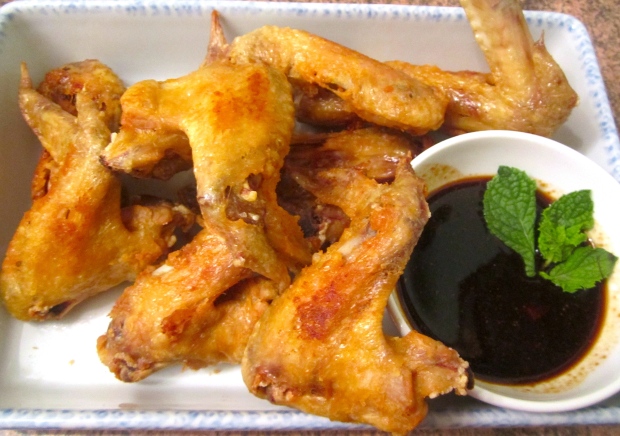
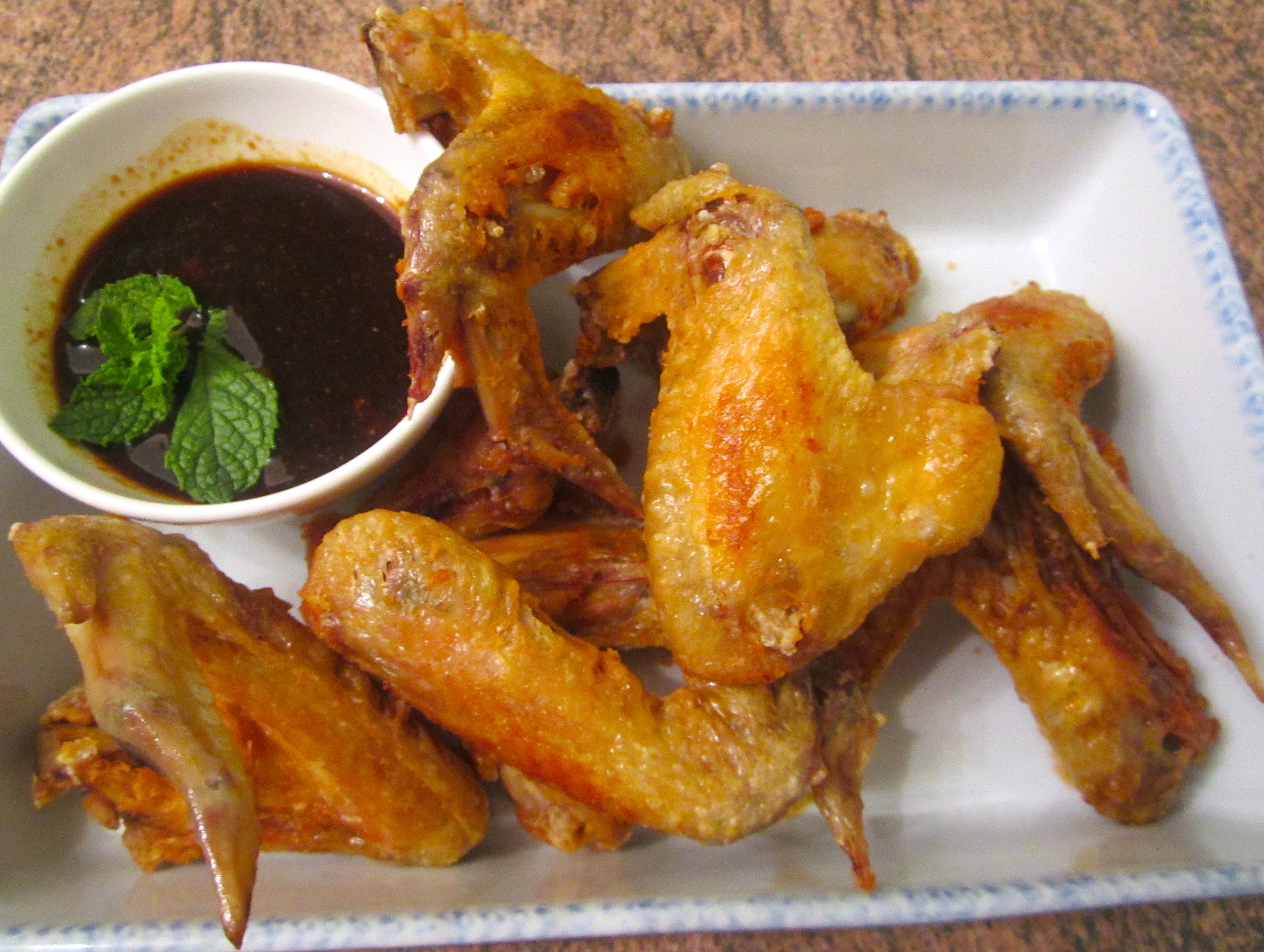
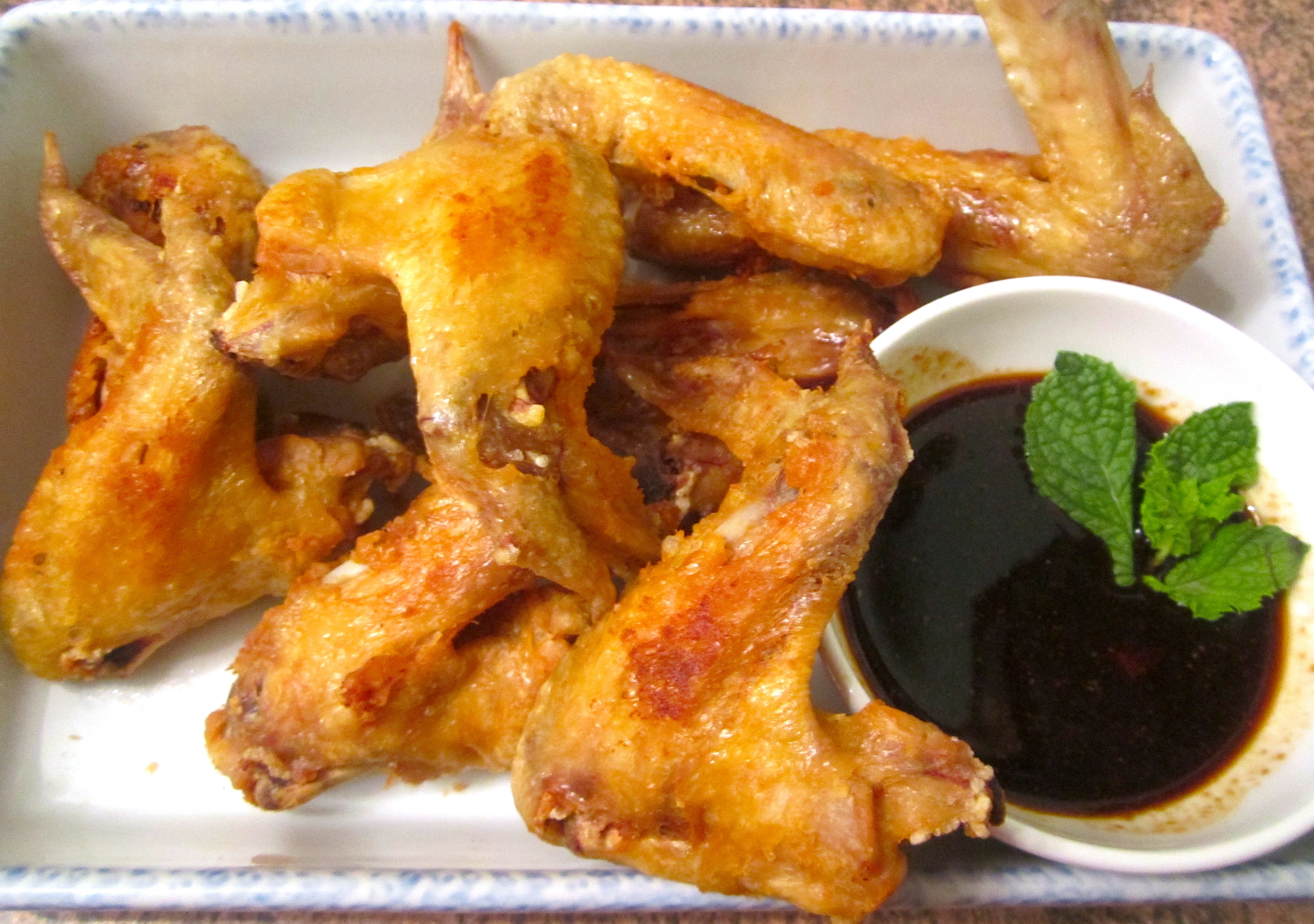
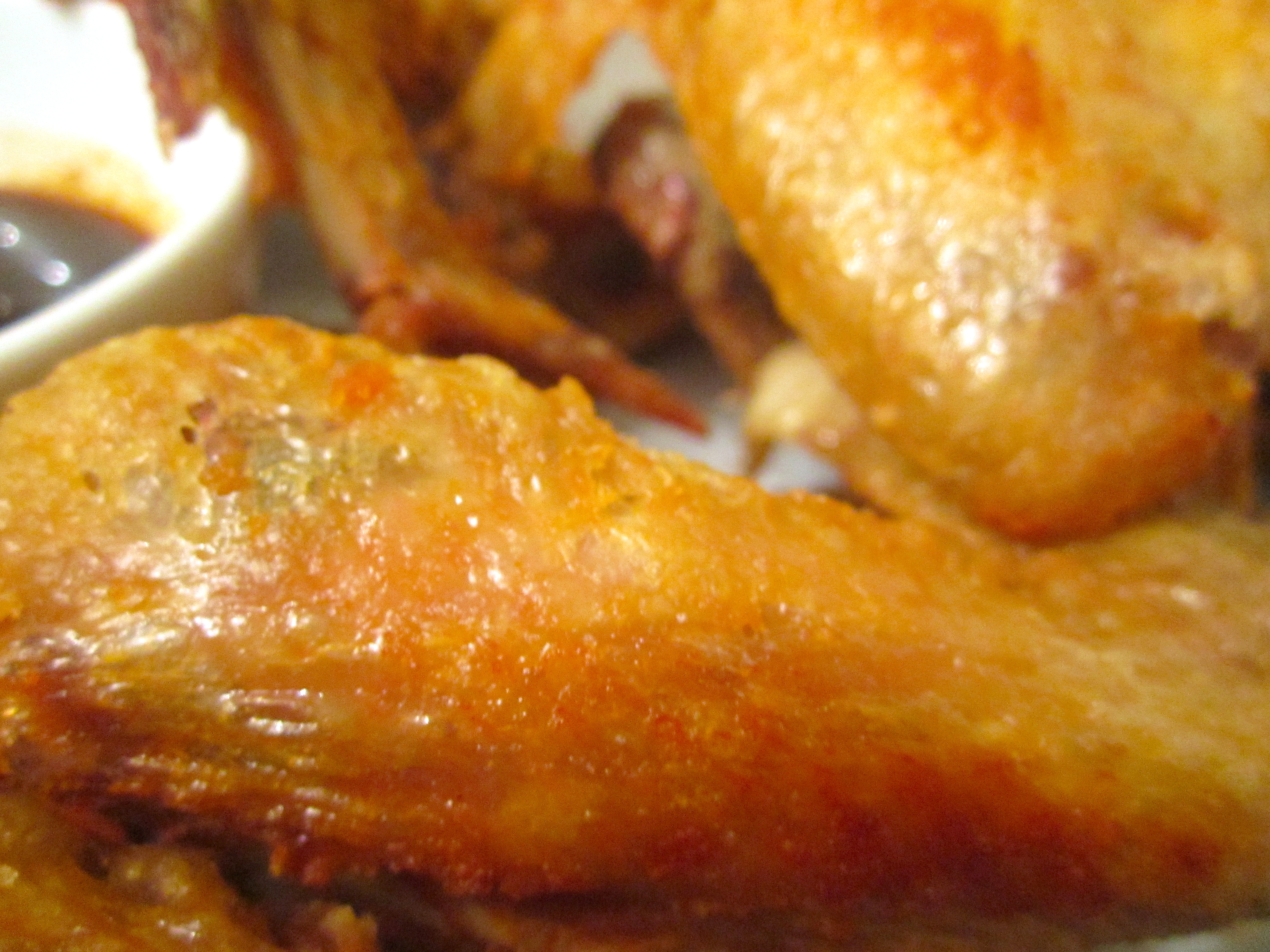
I love chicken wings !
But then again, who doesn’t ?
What I don’t like are the over-greasy, over-sauced,
limp skinned wings you get in so many joints.
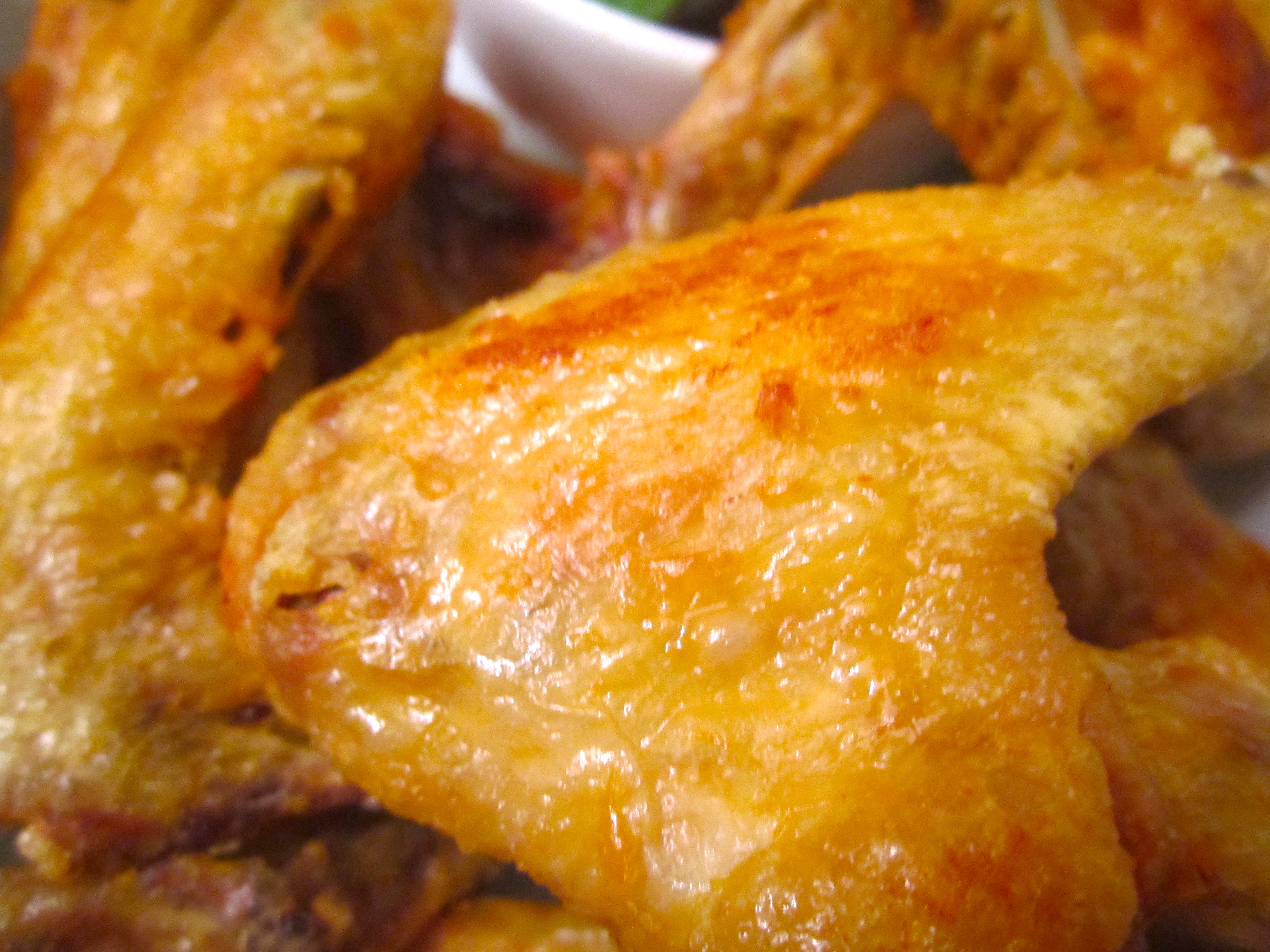
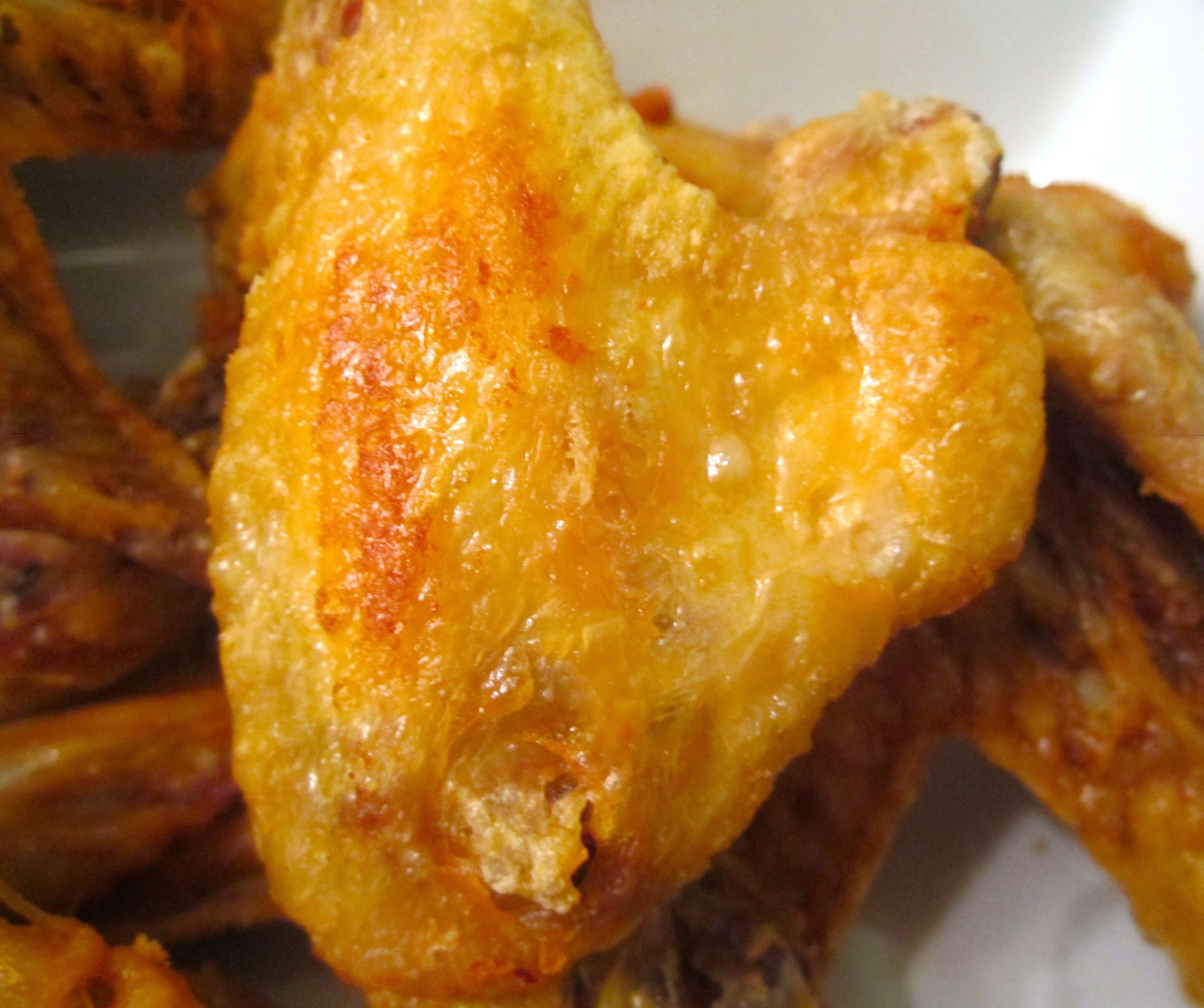
I love my wings crispy, VERY crispy.
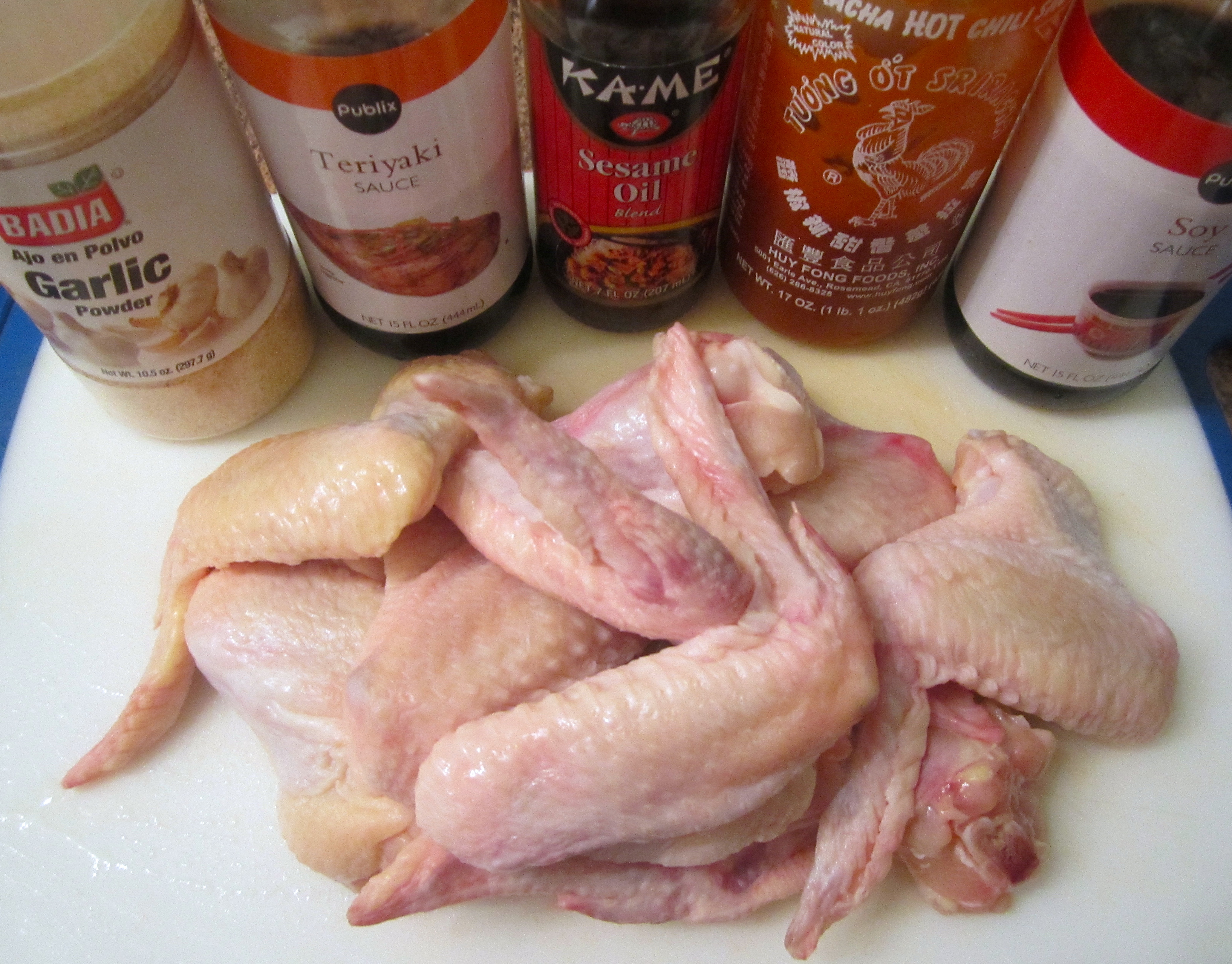
Here is what I do in order to achieve that:
Simmer the wings in seasoned oil at 220 F for 5 minutes,
remove from heat and let wings cool in oil.
Remove wings from oil, reheat the oil to 375 degrees.
Fry until VERY crispy.





















 ChefsOpinion