texture

Spaghetti With Walnut, Cashew & Cilantro Pesto, Dried Cranberries And Pecorino Romano

;
;
Dear Friends,

I had to think long and hard what I’ll do without Maria. I came to the conclusion that she would not have wanted me to give up life at this point (I was close, but thanks God for Bella…).
I am aware that the pain of losing her will never go away, but I will have to take care of Bella and myself in order to honer the memory of Maria.
Since Maria was the biggest fan of “ChefsOpinion”, I have decided to start posting again and hope that she still enjoys reading it wherever she is and sharing the dishes with me in spirit.
I hereby dedicate all future posts to Maria and our love for each other, our love for sweet Bella and our love for good food everywhere 🙂

;
Todays lunch had all the usual ingredients of my cooking style :
Lot’s of taste, texture and simplicity.
:

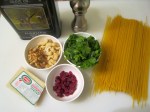
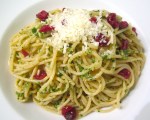
Spaghetti With Walnut, Cashew & Cilantro Pesto, Dried Cranberries and Pecorino Romano

Spaghetti With Walnut, Cashew & Cilantro Pesto, Dried Cranberries and Pecorino Romano

:


:
:
Ingredient’s :

Spaghetti,   cooked al dente, some cooking liquid reserved
Walnuts,   shelled
Cashew nuts,   shelled
Olive oil,
Cilantro,
Cranberries,   freeze dried
Pecorino romano,   finely grated
Kosher salt,
Black pepper,

Method :

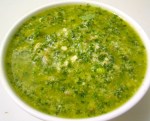
In a blender blend nuts, olive oil, cilantro, salt, pepper and cheese until your preferred texture is reached, If too thick, add more oil, if too thin, add a bit more cheese. Remove from blender and add the cranberries. Let steep for at least two hours.
Mix with freshly cooked and drained spaghetti and a small amount of the cooking liquid. If required, add more cheese and/or cooking liquid.
To serve, sprinkle with more cheese and freshly grated black pepper.

Bon Appetit !   Life is Good !  (Mostly, Sometimes  🙂

:
:
:
:

“Fondue” Au Fromage Sec

.
.
Good  Read’s. Good Eat’s. Good Drink’s. Good Company = Good Times.
>

The title of this dish,  “Fondue Au Fromage Sec”,  is tongue in cheek, but the dish itself is a knock-out: A great  snack, a simple dinner, or fun party food.
I have prepared this often over the years, but I never really gave it a proper name.
So when I made it this sunday afternoon,  I wanted to finally give the dish a proper, clever ?  name. Hopefully, I succeeded ?
I love a good cheese fondue , and this dish has most ingredients of a “fondue au fromage” , (but not the texture, because instead of being liquid, it is “dry”.
Let me know if you disagree and think you ‘ve got a better name for it 🙂
But then, nevertheless, follow the recipe and you will agree that the dish itself is an outstanding snack or party staple or even , if served with a side of greens, a meatless dinner good enough to shine on it’s own.

.

Fondue Au Fromage

Fondue Au Fromage “Sec”


.


..
.
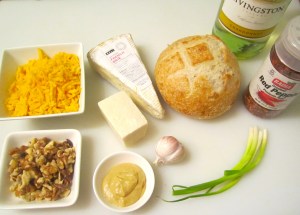
Ingredient’s :

Sour dough bread,   scored criss cross 3/4 down to the bottom crust
Brie cheese,   cut into cubes
Asiago cheese,   diced
Cheddar cheese,   shredded
Roasted garlic paste,
White wine,
Scallions,   thinly sliced
Walnuts,   shelled
Dijon mustard,
Chili flakes,
Butter,   melted

Method :

Open the slit’s of the scored bread with your fingers. Drizzle with melted buter, then white wine. Add a bit of the mustard to the bits of cheese. Stick one piece of brie and one piece of  asiago cheese into each of the cavities. Add cheddar cheese into the cavities as well as on top of the bread. Bake at 375F until cheese melts. Remove from oven,  sprinkle walnuts and chili flakes on top, return to oven until the bread starts to crisp up and is heated through all the way. Remove again from oven, sprinkle with finely sliced scallions and serve hot.

Enjoy !   Live is Good !

.
.

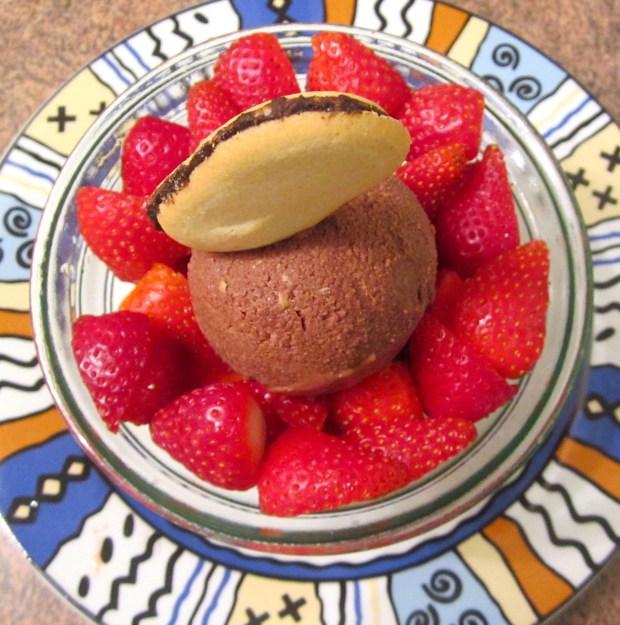
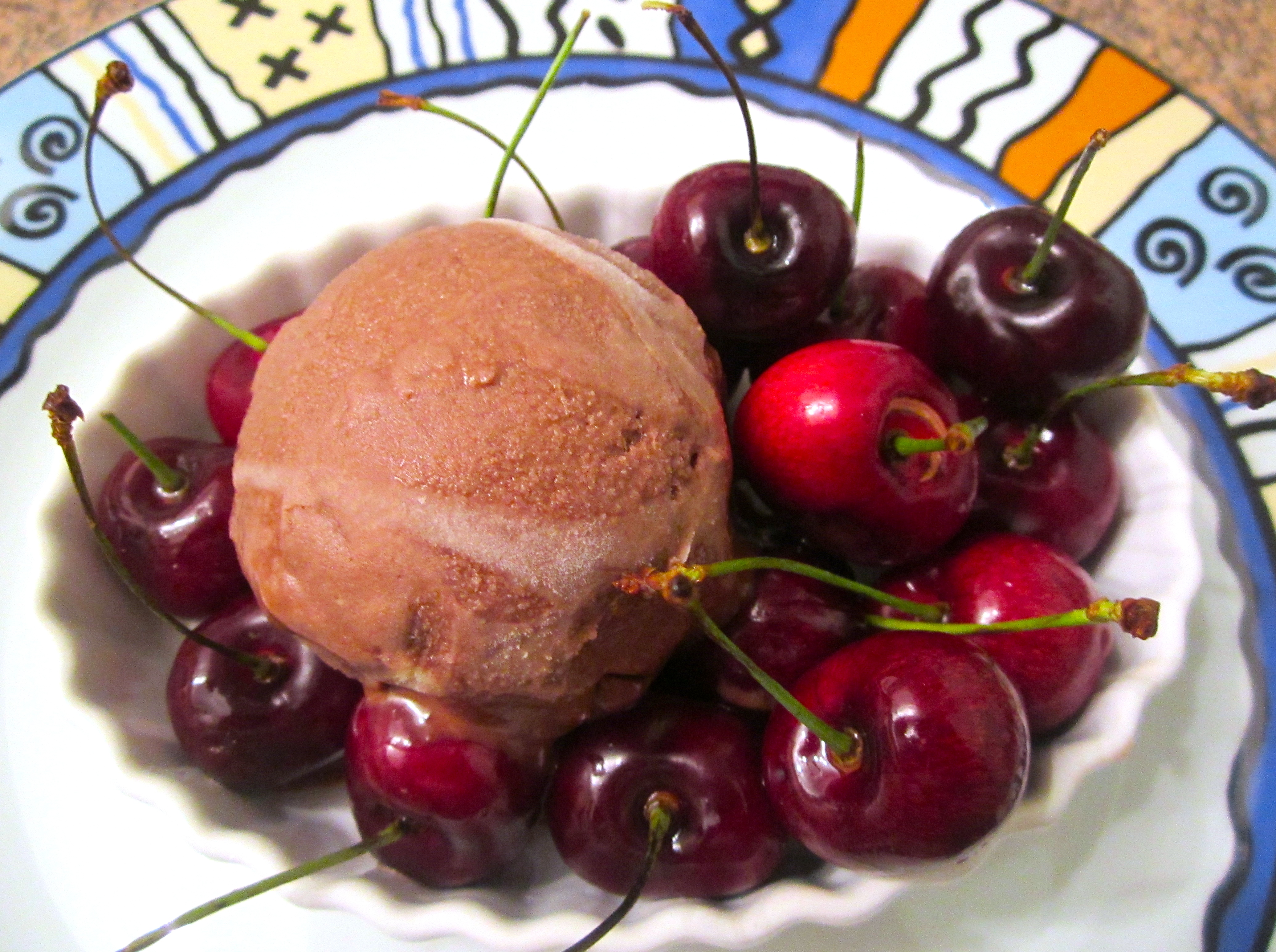
” Nutella & Banana Ice Cream “

.
.
Here is the world’s easiest and arguably best ice cream  :
.

.


.

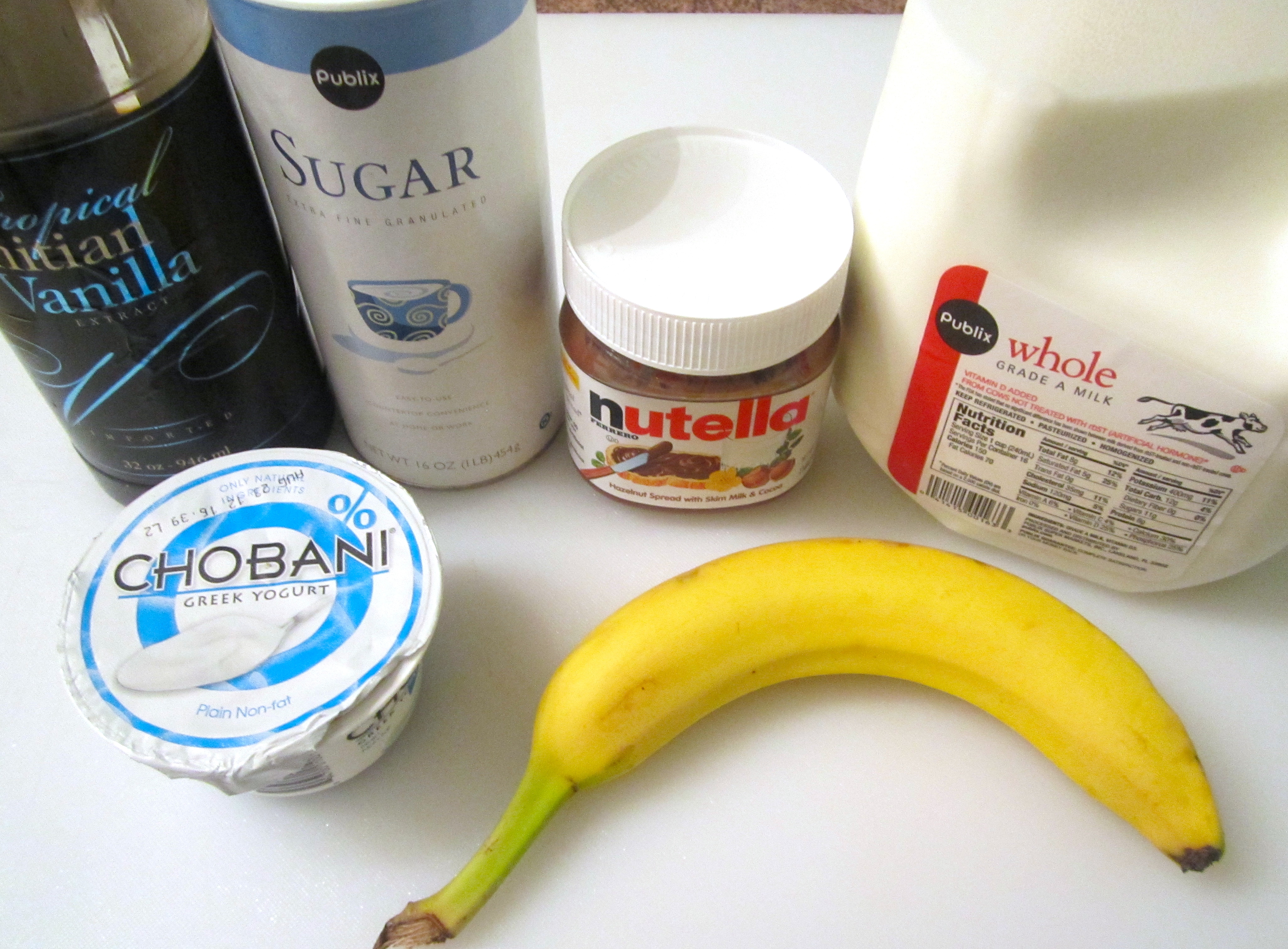
Ingredients :

Nutella,                   2 cups
Yoghurt,                  1 cup
Milk,                        2 cups
Sugar,                      1/4  cup
Vanilla extract,     1/4 tspn
Lime juice,              1 tspn
Banana,                   1 ea, finely diced

Method :

Whisk all ingredients except banana until smooth.
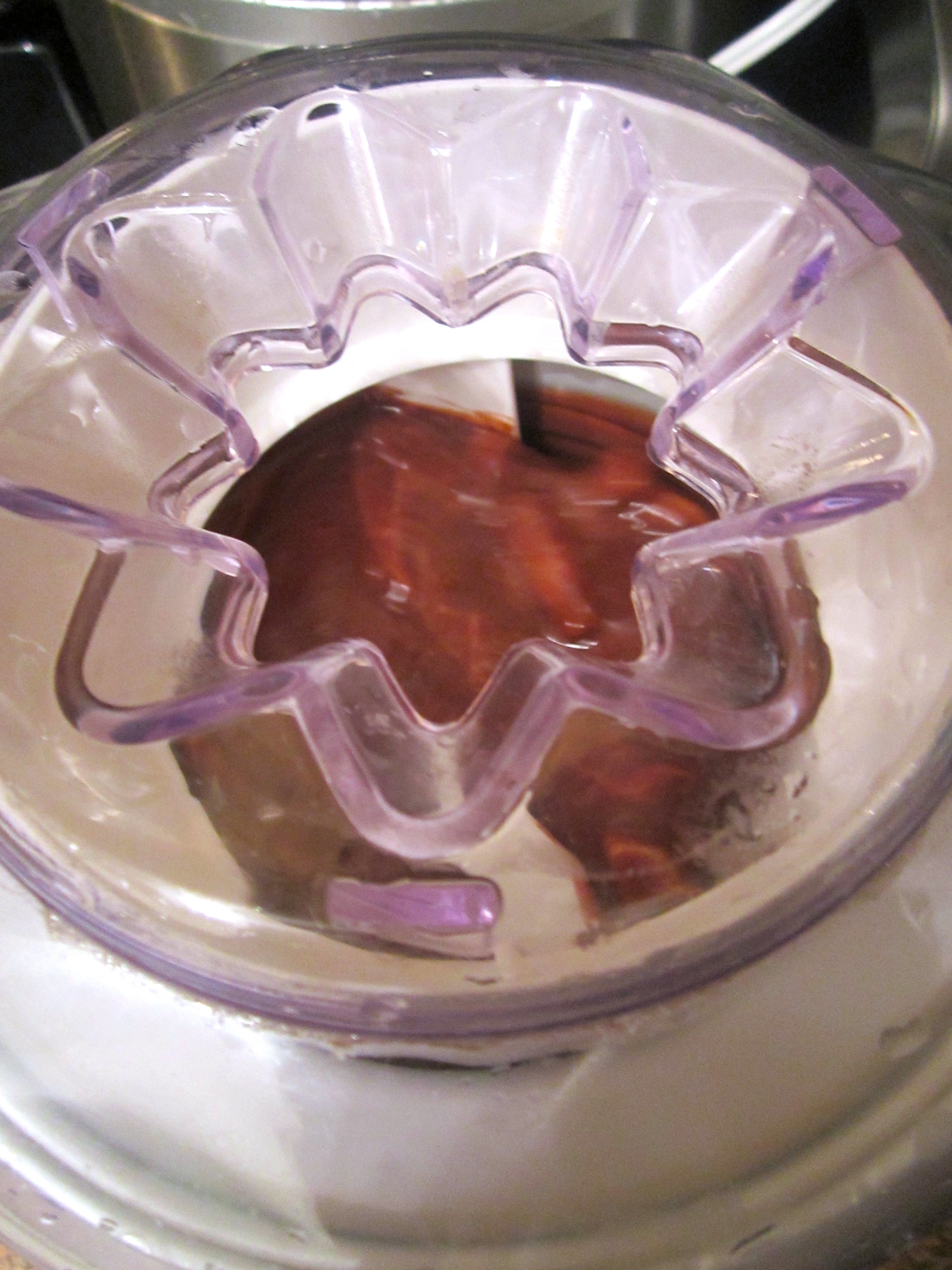
Transfer to ice cream maker, add banana.
Churn until starting to get firm.
Transfer to airtight container, cover, freeze overnight.

I know this might seem simplistic and unsophisticated to some foodies
and professional chef”s, but believe me, this stuff is so rich and tasty,
it put’s many a sophisticated ice cream to shame     🙂

Bon Appetit !   Life is Good !
.
.

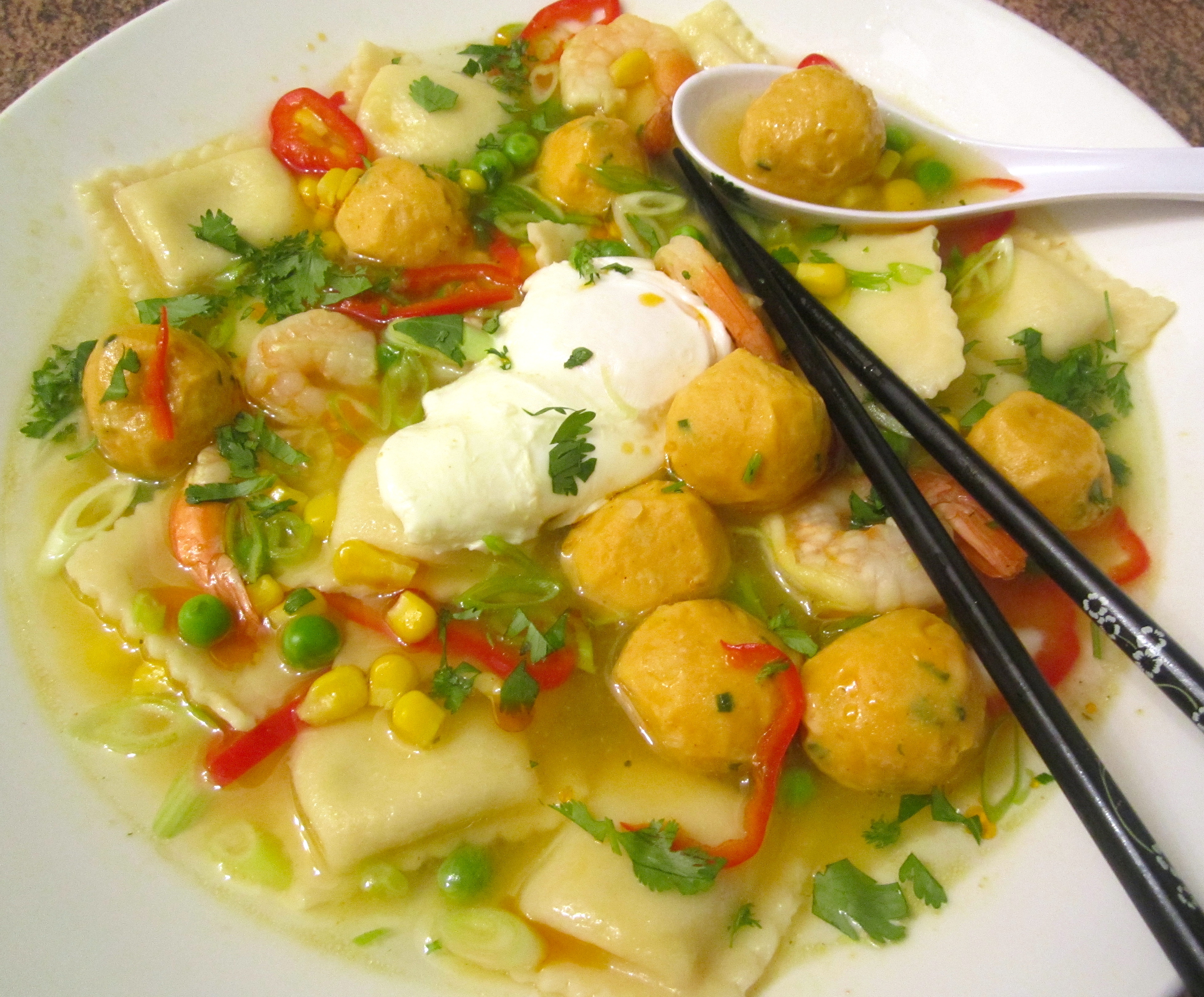
” Fish Dumpling & Shrimp Ball Soup With Poached Egg “

>

>

What the heck !? 
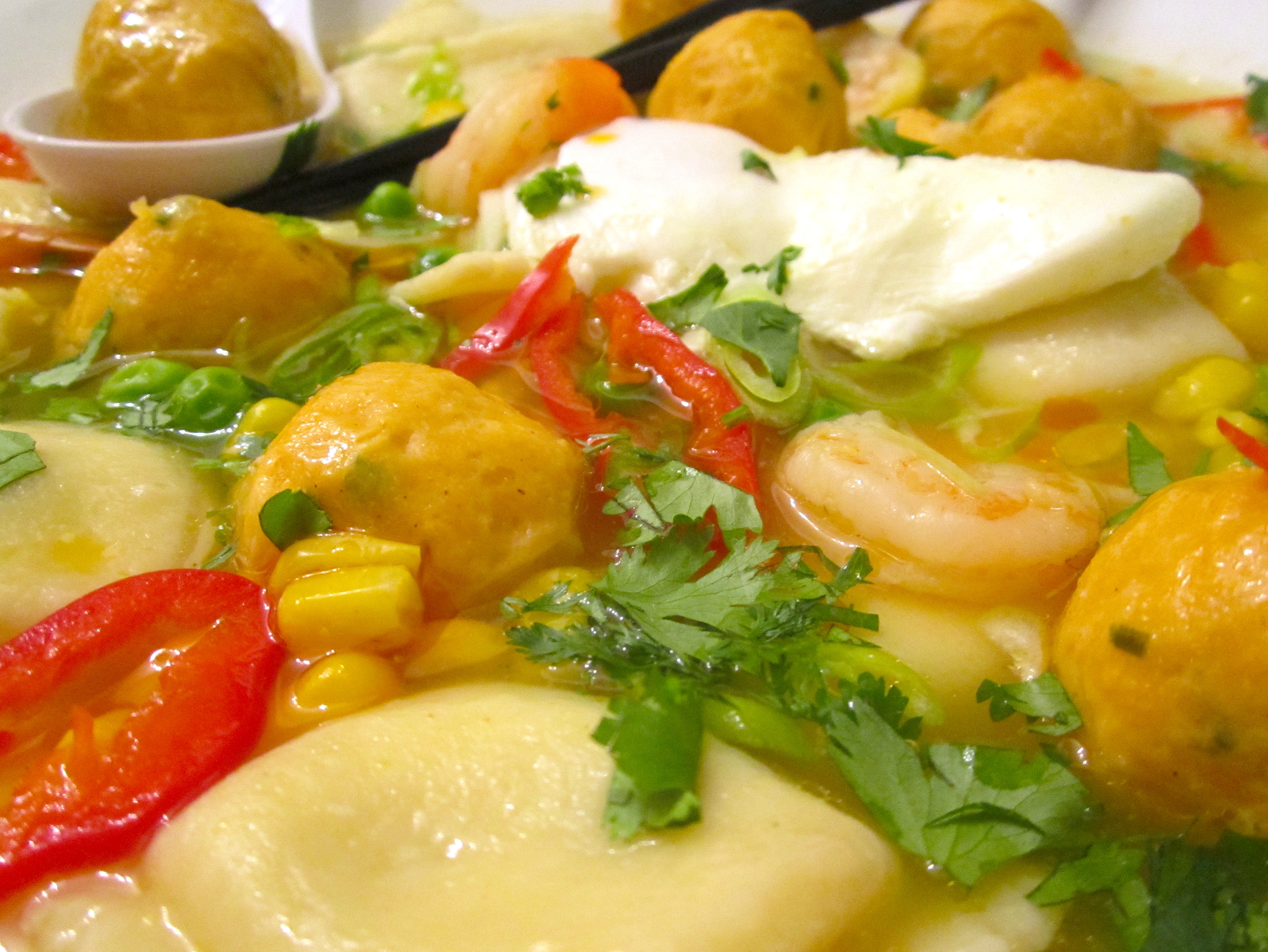
Soup with fish dumplings, shrimp ball’s, shrimp, vegetables, chili and poached egg ?
Well, it might sound’s a bit much but it is absolutely delicious, the flavors and textures
go very well together to form a wonderful, multi-facetted dish.
.

.


.
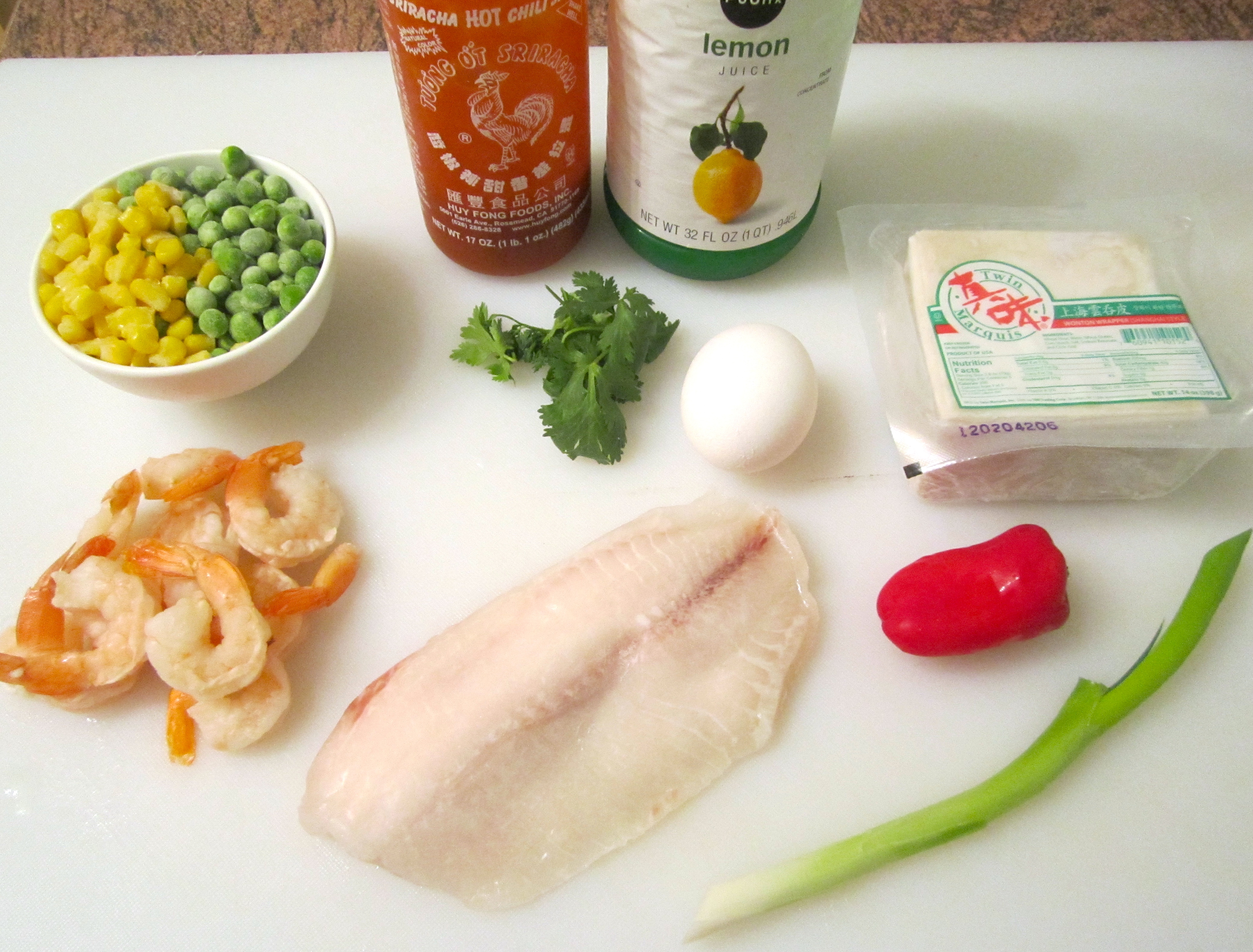
Ingredients:

Shrimp,                           pre cooked, peeled, deveined, half of them tail removed
White fish,                     such as haddock, tilapia, cod
Peas,                                frozen
Corn,                               frozen
Won ton wrappers,
Red chili,                       sliced
Scallion,                        sliced
Cilantro,                        coarsely chopped
Whole egg                     for poaching
Egg white                      for fish dumplings and shrimp balls
Fish stock                     substitute with chicken stock if preferred
Ketchup
Maggi
Salt, cayenne pepper, lemon juice to taste

Method :

Dumplings :
Chop the fish coarsely, add a bit of egg white, salt, cayenne pepper, mix.
Add half a teaspoon to a wrapper, moisten the edges with water.
Top with another wrapper, flatten and cut with a crinkle wheel cutter or a raviolini stamp.

Shrimp balls :
Chop the tailless shrimp to a fine paste. Add sriracha, salt and a bit of ketchup,
Mix and form into small ball’s.

Cook fish dumplings and schrimp balls in salted water until floating,
transfer to salted ice water.

Egg :
Poach in lightly salted water for  3 1/2 minutes, transfer to salted ice water.

Soup :

Bring stock to simmer, add corn and simmer for two minutes.
season with salt, sriracha soy sauce and maggi seasoning.
Add fish dumplings and shrimp balls’, shrimp balls, chilis, green peas and poached egg.
When heated through, plate and sprinkle with scallion and cilantro

Bon Appetit !   Life is Good !

>

>

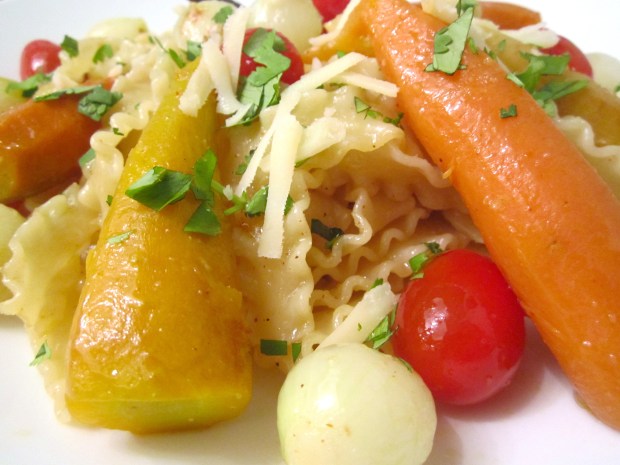
” Mafaldine Primavera “

Parmigiano-Reggiano cheese, the true "par...

Parmigiano-Reggiano cheese, the true “parmesan” (Photo credit: Wikipedia)

.
.
Whenever I come across fresh mini veggies I tend to buy them and use them in a simple pasta dish such as this one.
No need for heavy sauce or other distraction from the freshness of the vegetables and the goodness of the pasta.
Pasta, vegetables, butter and / or olive oil, garlic, cheese and herbs all come together to be enjoyed in this simple yet most delicious dish.
Replace vegetables with any fresh vegetables you find at the market or whichever ones you might prefer.

>


>


.
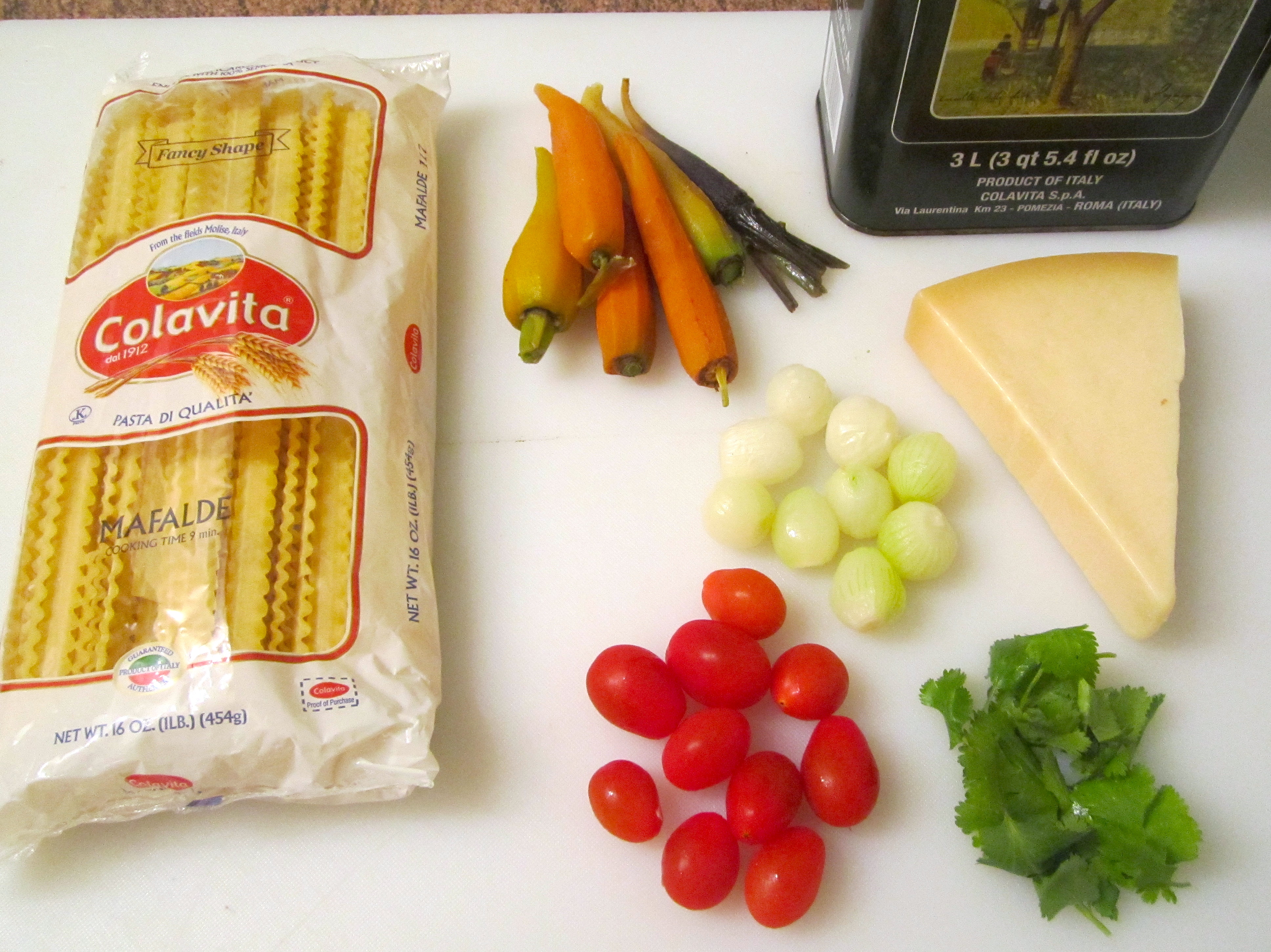
Mafaldine Primavera:

Ingredients:

Mafaldine,                             cooked al dente, strained, some of the cooking water reserved
Rainbow carrots,                 simmered until done but still crispy
Pearl onions,                         simmered until done but still crispy
Cherry tomatoes,
Butter,                                    can be substituted with 50 or 100% olive oil
Parmigiano reggiano,          grated
Fresh herbs,                          parsley / cilantro / basil / oregano, all or your preference only
Garlic,                                     paste
Salt, pepper,                          to taste

Method:

Cook Mafaldine in boiling water until al dente, strain, reserve some of the water.
Saute garlic, carrots and pearl onions and garlic in butter or olive oil until garlic becomes fragrant but without changing color.
Add pasta, tomatoes, more butter or olive oil, most of your cheese, half of the herbs, some of the pasta water and salt and pepper.
Toss carefully so not to break up the vegetables or Mafaldine.
If consistency is to watery, add more cheese and toss again. If consistency is to heavy, add more of the pasta water.
Plate and sprinkle with more herbs and cheese.

Bon Appetit !   Life is Good !

.

.

” Sadza ne Nyama ye Huku ” Zimbabwean Porridge with Chicken Stew

.
.
Last night’s Zimbabwean style dinner.

If you don’t read the name of the dish but only the recipe, you might think I was dining on portuguese food. That’s because portugal had a large influence on shaping the traditional Zimbabwean cuisine. I don’t want to go into the political/ historical aspect of that time, so let’s just stick to the food. Chicken stew with tomatoes has been cooked in many countries around the world for centuries,and so has corn, which was introduced to Zimbabwe ( formerlySouthern Rhodesia), by the Portuguese way back then. Fried cornmeal is still a very popular side dish in Portugal and so is chicken stew with tomatoes. Since I did not have white corn meal in my pantry, I used yellow corn meal. Different color, same texture, taste and pleasure  🙂
.

.


.

Excerpts from ifood.tv :
Sadza

” Sadza or sadza re chibage is an African version of porridge produced from cornmeal, mielie meal or maize meal and water. It forms the essential carbohydrate portion of African meals and is consumed in different forms in almost every African region. Due to the large variety of cultures and languages in the African subcontinent, the dish has a variety of names. For example, the local shona name for the porridge is Sadza in Zimbabwe while the local tribal Ndebele name for the same dish is isitshwala. In South Africa, the same dish is referred to as Mielie Pap while the Zambians refer to it as Nshima.  The dish is given another name in Eastern Africa including the states of Kenya and Tanzania where it is named Ugali. In the tiny state of Malawai, it is referred to as Sima. Furthermore, a large variety of cooking techniques are used along with different recipes to make the same dish.

History

Originally, a porridge made from millet formed the essential carbohydrate component of every African meal. Millet was a staple crop in the continent and it was easy to grind to produce millet flour. However, Kenya started actively growing corn which was exported to every state in the African continent. The grain was then ground to produce cornmeal and used to make a thick porridge which slowly replaced millet porridges in meals.

Ingredients and Preparation

White corn meal or mielie meal is now commonly used to produce the sadza but a few versions do use yellow cornmeal too. Yellow cornmeal is commonly referred to as KENYA as it was originally imported from Kenya. If mealie meal cannot be found, cream of wheat, or Pillsbury Farina flour can be used.  The actual method of preparation varies considerably but modern methods add the mielie meal to the water to mix it well. This paste is then poured into boiling water and cooked on a high heat continuously. As the sadza thickens, more mealie meal may be added. The sadza is done when the mixture pulls away from the pot and forms a ball. Traditionally, salt is not used to season the dish.

Serving

Sadza is prepared and served in a communal bowl from which each diner can serve himself. It can also be served in separate individual bowls from where diners pinch up small amounts, roll them into balls and then dip them into meat sauces, gravies, soya chunks, pumpkin leaves, sugar beans, spring beans or vegetable stews for consumption.

Popular Variations

Krummelpap is a South African version of Sadza prepared by ” ……….   Read more HERE
.

Sadza:

4 cups water

1 teaspoon kosher salt

2 1/2 cups white cornmeal

1. Pour three cups water and the salt into a large pot and bring to a boil. Combine 1 1/2 cups of cornmeal with the water, stir well and set aside.

2. Reduce heat of boiling water to medium low and add the cornmeal and water mixture, stirring constantly. Cook for two to three minutes.

3. Slowly shake in the remaining cornmeal, mixing all the while. Stir constantly as the mixture begins to thicken and pull away from the pot, approximately one minute. Immediately transfer to a separate bowl and use a wooden spoon to shape it into a round shape. Allow the sadza to cool slightly, then carefully use your hands (wet them if necessary) to pull off bits of the sadza, shape if desired, and serve with the stew.


Chicken Stew
:

2 yellow onions, diced, divided

2 tablespoons fresh minced ginger, divided

3 cloves garlic, minced

3 pounds vine tomatoes, seeded and chopped

1/4 teaspoon cayenne pepper

1/2 teaspoon black pepper, plus 1/4 teaspoon to season the chicken

1 1/2 teaspoons chili powder, plus 1/4 teaspoon to season the chicken

1 1/2 teaspoons kosher salt, plus 1/2 teaspoon to season the chicken

2 pounds chicken thighs, boneless and skinless, cut into 1″ pieces

1/4 cup chopped fresh parsley

1 bunch scallions, chopped

Vegetable oil

1. Coat a large, shallow pan with about two tablespoons of oil over medium high heat. Once hot, add two-thirds of the garlic to the pan and cook for about one minute. Toss in three-quarters of the onions and two-thirds of the ginger, cooking until the onions turn translucent, approximately 3-5 minutes.

2. Turn the heat up to a high flame and stir in the cayenne, black pepper, chili powder and salt. Cook another 2-3 minutes. Add the tomatoes and cook for 10-15 minutes, mashing them down every once in a while. Reduce the heat to low and simmer another 10-15 minutes, continuing the mash the tomatoes.

3. While the tomatoes cook down, pull out a separate, heavy pot. Coat the bottom with another two tablespoons of oil. Once hot, toss in the remaining onions, ginger and garlic and cook until the onions have turned translucent, approximately 2-3 minutes. As the onions and seasonings cook, season the chicken with the extra black pepper, chili powder and salt. Add the chicken to the pan and brown for approximately 3-4 minutes. Turn off the heat and set aside.

4. After the tomatoes have stewed, carefully scrape them into the cooked chicken. Add one cup of water, turn the heat to low and cover. Simmer for 20-25 minutes. Stir in the parsley and scallions and cook another 5 minutes.
>
Bon Appetit !   Life is Good !

.

.

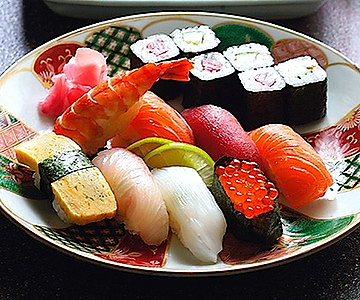
I Don’t Like Sushi ! I Adore Sushi Rice !

Image Source : Recipefinder

.

I don’t like seaweed, raw fish or artificial crabmeat.

My wife on the other hand loves what she calls sushi and I call crap.
Because of her love for the stuff, we go relatively often for her to enjoy it. Now, because she prefers the little strip mall joint’s around where we live, that’s where we usually go. I am fully aware that there are a few outstanding quality sushi places around, but you won’t be getting your fix there for $15 to $25, which is about average around here per person for a meal of “rice and stuff “as I call it. So at this point I would be happy with a bowl of perfect sushi rice with some smoked mackerel. I make that for myself at homes many times..
The problem is, it is hard to come by good sushi rice at most sushi places, especially the ones in strip mall’s, usually labeled something like : “Sushi Thai”, “Sushi Chinese”, “Sushi anything
If you can not attract enough customers with the quality of your sushi and have to add other, completely different ethnic cuisines to your restaurant, chances are there is something wrong. The biggest problem in my humble opinion is the fact that most customers have never had excellent or even good  “sushi”. What they usually had is a roll of badly seasoned rice, with more inferior quality ingredients added, then pressed into a dense roll or chunk of rice, , which then will proceed to be dunked into a soy / substitute-wasabi bath which covers whatever little taste and texture there was of rice and other ingredients in the first place. It will also soggy up the toasted nori, which is supposed to be crispy when it hit’s your mouth.

But, that’s a good thing, because now everybody is happy !
1)
The owner of the restaurant: The has sold a lot of cheap rice and some artificial crabmeat, canned mayo, third class mostly wrongly labeled raw and many times contaminated fish,
( stomach flu anyone? ) Which gives him a food cost of maybe 10 – 15 % . If that much!
2)
The customer : He got exactly what he or she expected. Never been exposed to the real stuff, there is no way of knowing what crap (as far a sushi goes) was just consumed. But, the customer is full, (all that tightly squeezed rice), and feels sooo sophisticated, having just demonstrated his or her foodie-ness by eating raw fish with Chopsticks, for all to see.
3)
The supplier, of which many, as recent surveys prove, have mislabeled part or all of their supply in order to get a higher price for a inferior product.

As for the raw fish, condiments and sauces, those will require a separate post.

In the meantime : Fresh? Frozen? Never been frozen? Safely handled? Yeah, right!
I believe most folks would not put raw fish I their mouth if they would understand the dangers associated with it and amplified a thousand fold by uneducated and / or careless food workers.

The FDA has never created a category of “sushi grade fish.” It’s a marketing gimmick. The FDA has created regulations governing
fish that is to be served raw:
# (A) Except as specified in ¶ (B) of this section, before service or sale in ready-to-eat form, raw, raw-marinated, partially cooked, or marinated-partially cooked fish other than molluscan
shellfish shall be:

* (1) Frozen and stored at a temperature of -20°C (-4°F) or below for 168 hours (7 days) in a freezer; or

* (2) Frozen at -35°C (-31°F) or below until solid and stored at -35°C (-31°F) for 15 hours.

(B) If the fish are tuna of the species Thunnus alalunga, Thunnus albacares (Yellowfin tuna), Thunnus atlanticus, Thunnus maccoyii (Bluefin tuna, Southern), Thunnus obesus (Bigeye tuna), or Thunnus thynnus (Bluefin tuna, Northern), the fish may be served or sold in a raw, raw-marinated, or partially cooked ready-to-eat form without freezing as specified under ¶ (A) of this section.

Now for the good part:

If the customer is happy with a belly full of ordinary rice and some other stuff for meal that usually cost’s around $15 to $20, good for him / her.
You usually get what you pay for when it comes to sushi, and the fact is that most so called sushi places outside of Japan are Crap (when it comes to sushi) However, if you don’t know the real stuff and you are happy what you get for the money, more power to you.
Here are a few tip’s to achieve good quality sushi :

1)

One of the most important element of sushi-making is the cooking of the rice. It’s so important, in fact, that future sushi chefs in Japan spend the first two of their seven years of formal training learning to master this step. If possible, buy only the best quality Japanese short-grain sushi rice.
Other types of rice contain lower levels of amylose (the sugar found in rice grains) and will not achieve the required sticky texture.
Here are some of my favorite brands:  Kokuho Rose and Nishiki, but you can also opt for Koshihikari Premium or Tamanishiki.
If they are not available in your area, buy them online, it’s certainly worth the extra money and time .

2)

Sushi rice is processed for packaging with added rice starch powders (and sometimes talc), so it’s essential to wash off this residue before cooking to avoid ending up with a pasty, goopy mess.

Start by measuring the rice according to your recipe.
Next, transfer the rice to a fine-mesh sieve. Set the sieve inside a large mixing bowl that you’ve placed in your sink, and run cold water over the rice until the water reaches the top of the sieve. Turn off the tap and swish the rice around in the sieve until the water becomes cloudy. Lift out the sieve, drain the cloudy water, and return the sieve to the bowl, refilling it with fresh water.
Repeat this rinsing process three or four times until the remaining water is 90 percent clear, and then let the rice drain for 15 minutes.
This may seem like a lot of advance work, but Japanese legend says there are seven gods living in each rice grain,
So, treat your rice with respect !

3)

When it comes to cooking sushi rice, there’s a fine line between perfectly puffed grains and edible glue. Here is a guideline :
(The amount of minutes and liquid might vary slightly, depending on the brand of rice you are using). I recommend you experiment with different brands to find out which is your favorite, then make a few test batches and note down precisely the measurements, times and heat settings. If you’re using a rice cooker, just place the washed and drained rice into the cooker along with the appropriate amount of water, turn it on, and you’re all set. If you’re using a pot, follow a 1-to-1 ratio for sushi rice to water and bring the mixture to a boil. Once it has reached a boil, cover the pot with a tight-fitting lid, reduce the heat to the lowest possible setting, and cook the rice for 15 minutes. After 15 minutes, turn off the heat entirely and let the rice sit and steam in the pot, covered, for 10 more minutes. Whatever you do, do not peek!
Although we have a electric rice cooker at home, I always use a heavy pot.

4)

Shari-zu, a blend of sugar, salt, and rice vinegar, is the key to perfectly seasoned sushi rice. When stocking ingredients, remember to select unseasoned rice vinegar (steer clear of the pre-seasoned variety) so you can control the amount of sugar and salt. To make enough shari-zu for 2 cups of raw sushi rice, whisk together 4 tablespoons unseasoned rice vinegar with 8 teaspoons sugar and 1 teaspoon salt until dissolved. I know of some chefs who add a big amount of kombu to their shari-zu, which for me is wrong in so many way’s. Kombu is kelp, it has a strong sea-flavor. (Sea flavor – fish flavor). I don’t want anything I eat to smell strongly like fish, the least my sushi rice, which should taste slightly sweetish, slightly vinegary and otherwise just like rice,  but definitely not fishy !

Transfer the cooked sushi rice to a hangiri (a Japanese cedar rice tub) or a wooden bowl. A stainless steel or glass dish will also do the trick, but wood is best because it absorbs moisture from the rice. Use a rice paddle or wooden spoon to spread out the rice and break up any big clumps, and then drizzle it with the shari-zu. Fold the rice over itself to fully incorporate the shari-zu, but be careful not to mash the grains. Traditionally, you would have an assistant fanning the rice as you fold it (you can use an electric fan), but whether or not you have a helping hand, the goal is to continue folding the rice until it stops releasing steam. Once you’ve reached this point, cover the rice with a damp towel as you prepare your fillings.

5)

Less is always more when it comes to fillings, so as you plan what to wrap up in your roll, think minimal and trade America’s all-you-can eat mentality for a refined and balanced Japanese aesthetic. Thin strips of cucumbers, scallions, daikon radishes, avocado, and other veggies are suitable for sushi, as are prepared seafood such as crabmeat, smoked salmon, cooked wild shrimp, and cooked eel. You’ll want a total of about 1 pound of fillings to make 10 maki (roughly 1/4 pound each of crabmeat, avocado, salmon, and cucumbers, for example). Cut ingredients into long, thin strips about the size of a pencil.

6)

Sushi-making is a fun and creative process that works best in a well-organized work space. Begin by wrapping a bamboo sushi-rolling mat in plastic wrap, for efficient cleanup later. Set aside halved sheets of nori on a waterproof surface, and place a platter or plate nearby to serve as a clean landing spot for your finished rolls. Mix up some pungent wasabi by combining 2 tablespoons of wasabi powder with just enough water to make a thick paste. Finally, fill a small bowl with warm water and add a splash of unseasoned rice vinegar. This mixture, known as te-zu, is used to dip your hands in before handling the rice. Don’t skip the te-zu step, or you’ll end up with rice-coated hands, making it hard to cleanly roll out your sushi.

7)

Once you’ve set up your sushi-making station, begin preparing your first roll by laying your rolling mat in front of you with the bars parallel to the table’s edge. With a dry hand, lay a half sheet of nori on the bottom edge of the mat, dip both hands into the te-zu, and shake off any excess (your hands should be only slightly damp). Pick up a handful of rice about the size of a tennis ball and gently spread it over the nori without smearing or mashing the rice too firmly. Spread the rice evenly, especially the left and right edges. For an extra kick, run a tiny dab of wasabi paste along the center of the rice.

Place one to three types of fillings horizontally beside the wasabi, remembering not to overfill your maki. Roll the mat and the nori up and over to lock in the fillings then release the mat and use it again to finish rolling the remaining nori. Once you’re ready to serve your rolls, dampen your knife (a sharp chef’s knife works well) with te-zu. The vinegar mixture will prevent your knife from sticking to the rice as you then cut the rolls into 1-inch slices.

8)

Sushi should always be made and enjoyed fresh. Seasoning sushi rice with shari-zu actually thwarts bacterial growth by altering the rice’s pH, so freshly made rolls can sit out for a few hours, but don’t push it. Refrigeration can destroy sushi’s delicate flavors and textures, so try to prepare your rolls as close to serving time as possible. Nori gets soggy quickly once rolled around damp rice, so sushi chefs will always make maki last. If you absolutely must refrigerate your sushi maki, do so before cutting, and cover the rolls tightly with plastic wrap.

So, wether you like “rice with stuff” or the finest “sushi”, there is a place and a price for you  🙂
Economical (cheap) does not alway’s mean lower quality, but it usually does. Labor cost plays a big part in the equation. A very good sushi chef can make a very good salary and is not easy to find outside of Japan, definitely never for minimum salary. That’s why your sushi chef’s name is usually Pepe, Fritz, James or Chang, who mostly work for much lower salaries as properly trained sushi chefs. After all, hey can be perfectly trained for their job of making “rice with stuff ” in a few day’s, it is easy to take some rice, squeeze the heck out of it so it is easy to handle, roll it up and slice it.
The “Art” of making sushi is on a totally different level of culinary accomplishment. You can feel each grain of rice as it is in your mouth, the taste of the rice very subtle so as not to cover the taste and texture of all the other first rate ingredient’s. Since the rice is perfectly seasoned, there is no need to add soy sauce to it since it then would be too salty. The right amount of wasaby has been added already by your expert chef. That leaves you with the choice of adding a bit more wasabi for your own specific preference, as well as a bit of soy sauce to the fish only !  You will do that by holding the nigiri upside down with your finger and lightly dipping the fish into the sauce. I you would use chopsticks, the rice of the nigiri would most likely fall apart and the protein or vegetable fall of. Therefore it is almost necessary to use your fingers when having nigiri.

Bon ! Appetit !   Life is Good !
.
.

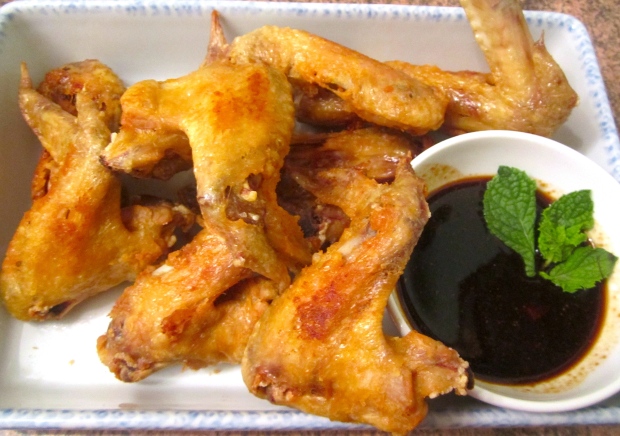
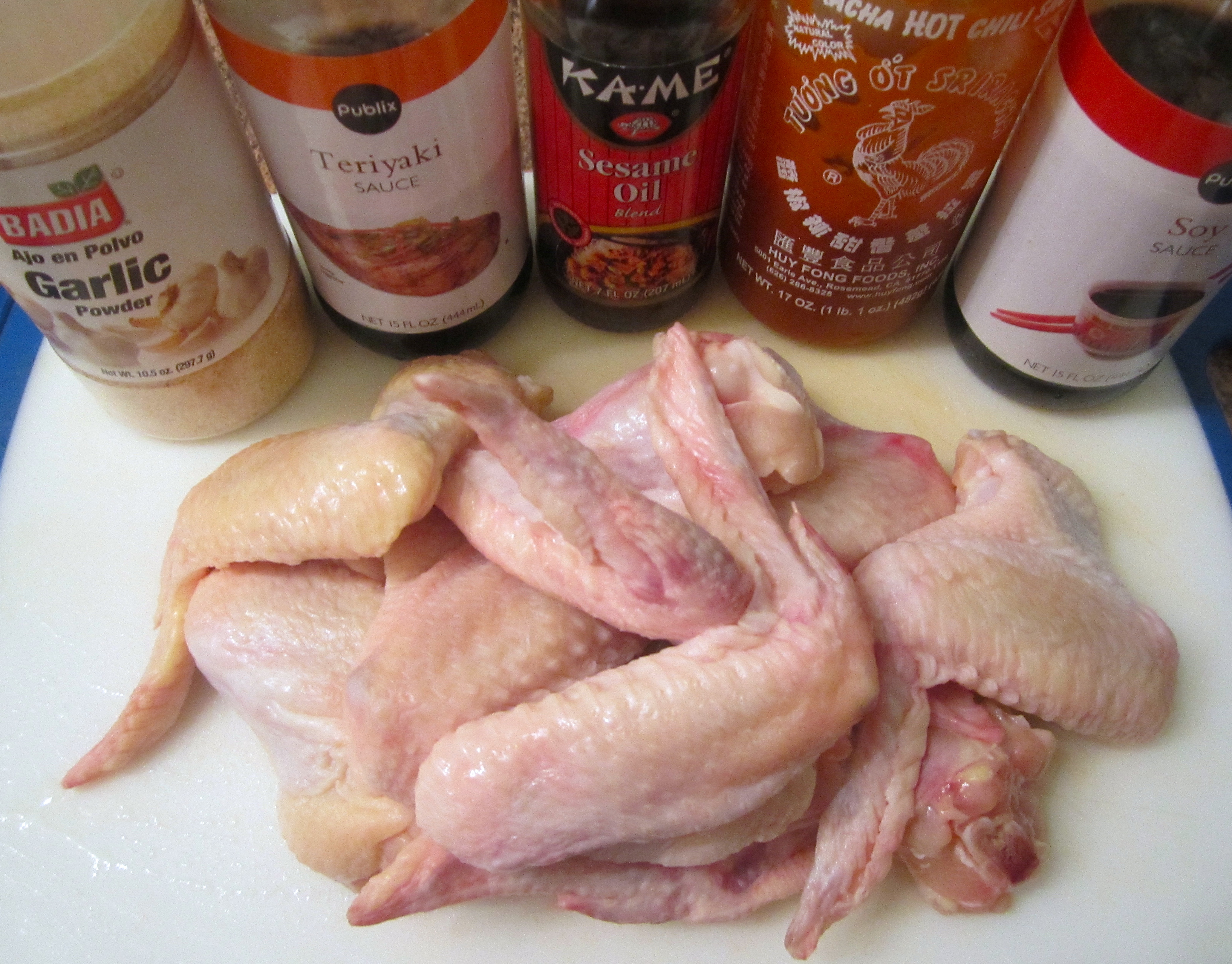
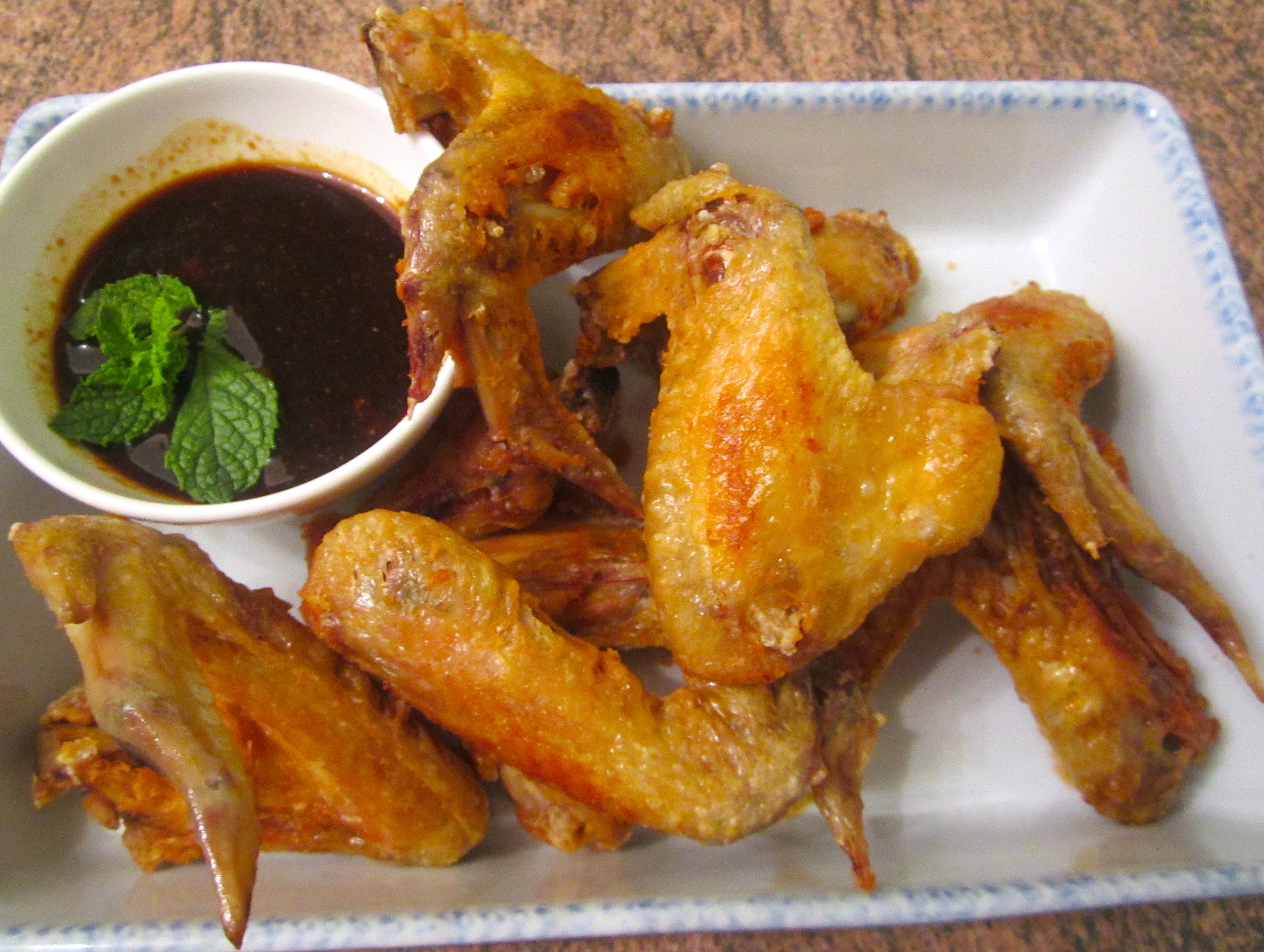
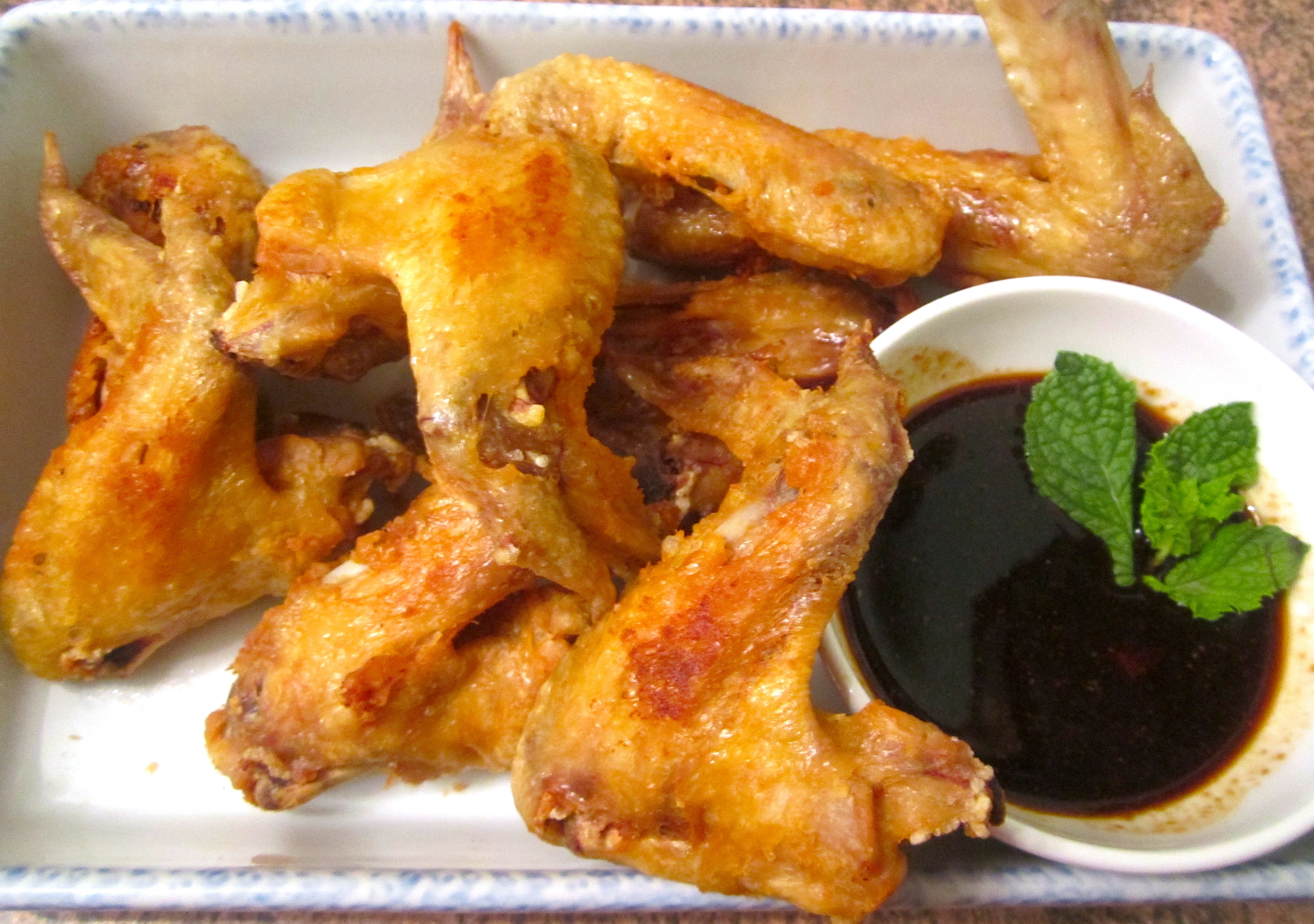
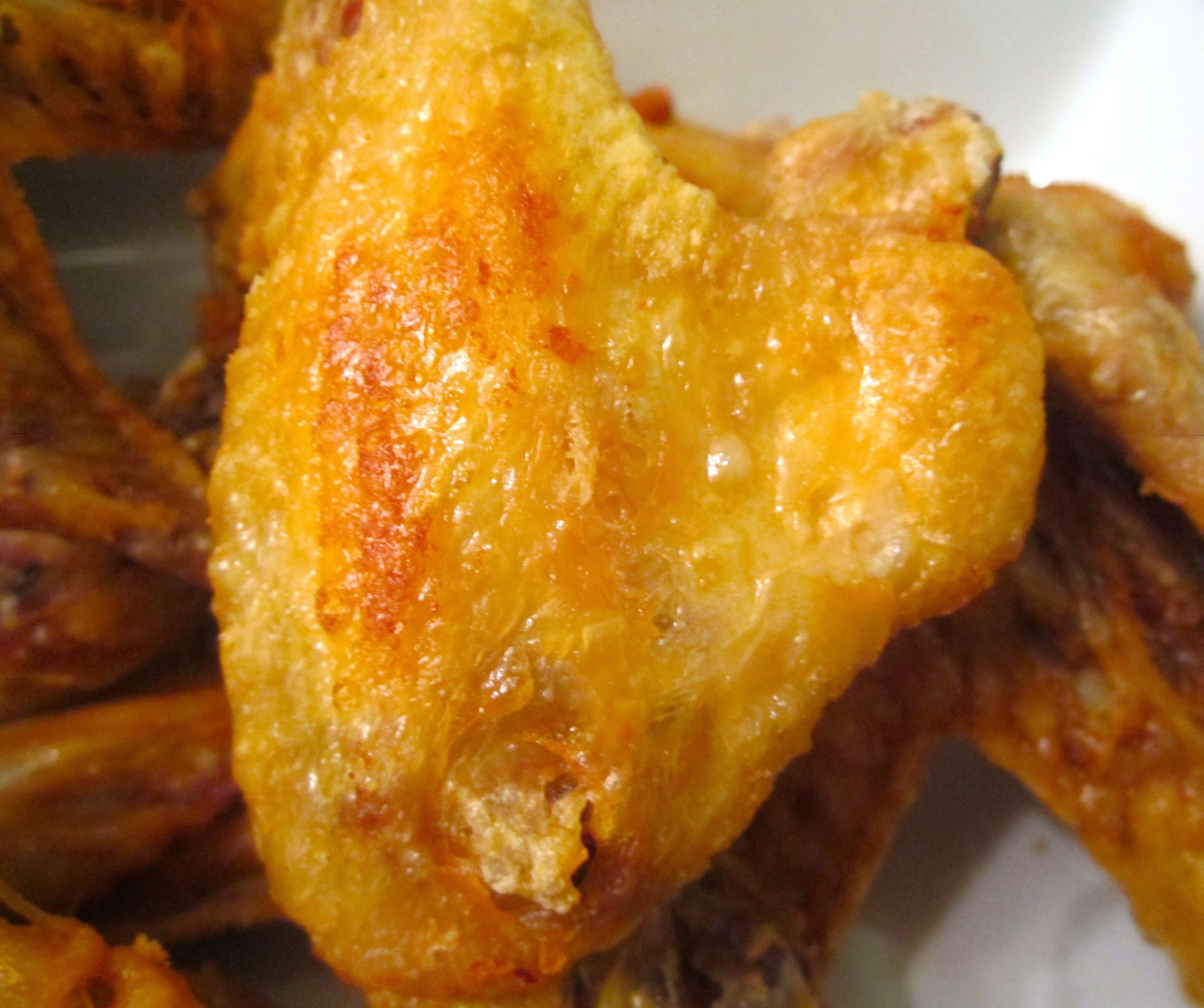
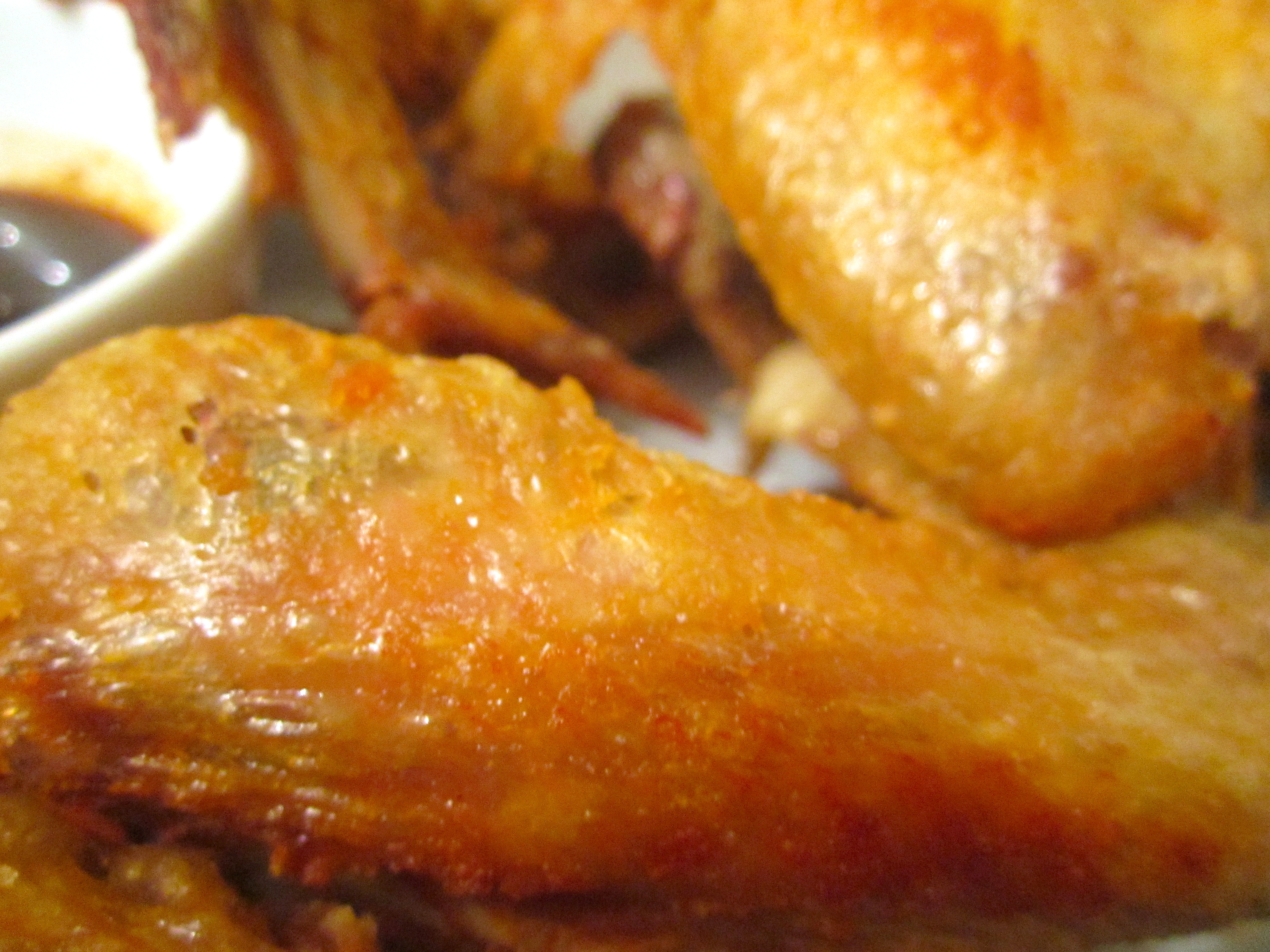
“ VERY Crispy Chicken Wings ”

.
.
I love chicken wings !
But then again, who doesn’t ?
What I don’t like are the over-greasy, over-sauced,
limp skinned wings you get in so many joints.
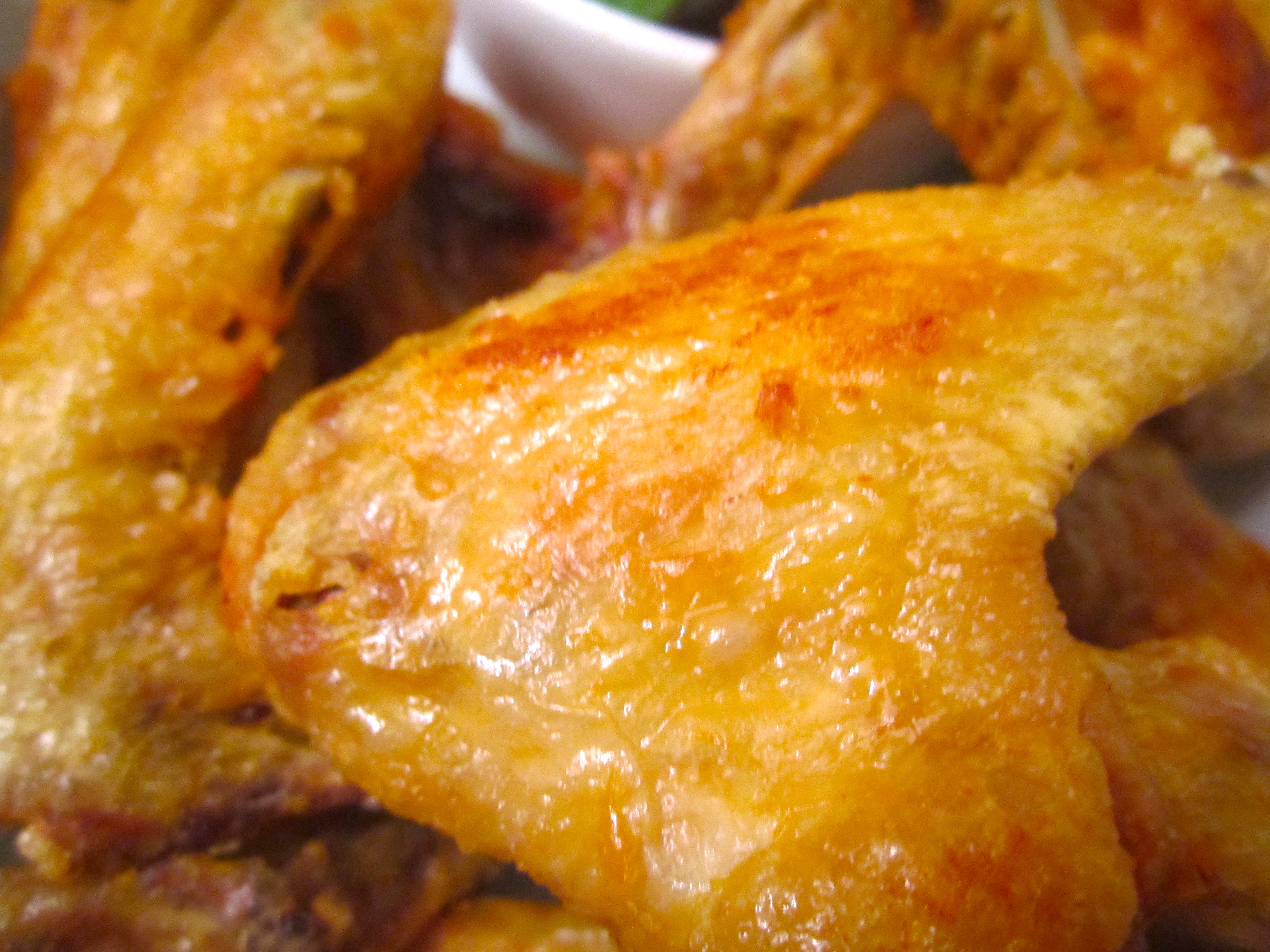
I love my wings crispy, VERY crispy.
Here is what I do in order to achieve that:
Simmer the wings in seasoned oil at 220 F for 5 minutes,
remove from heat and let wings cool in oil.
Remove wings from oil, reheat the oil to 375 degrees.
Fry until VERY crispy.

Serve with dipping sauce of your choice.
.

.

Bon Appetit !    Life is Good !
.
.

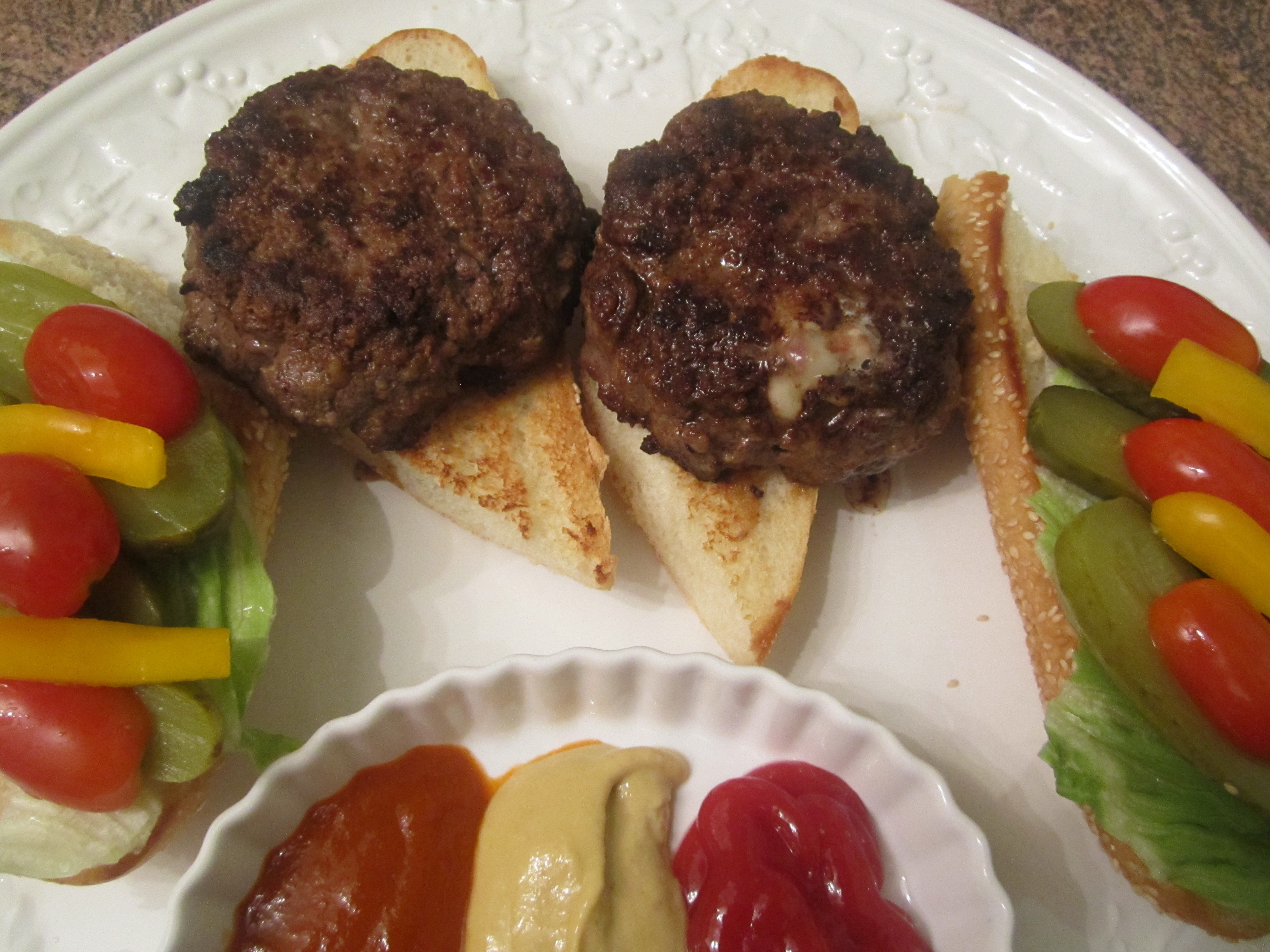
” No Frikadelle Tonight – It’s Beef Burger Time ! “

>

>

Tonight I will hopefully convince everybody that you can love
both, a good frikadelle and a good beef burger.
As usual, I will put my own twist on it.
Here we go :
.


.
.


.
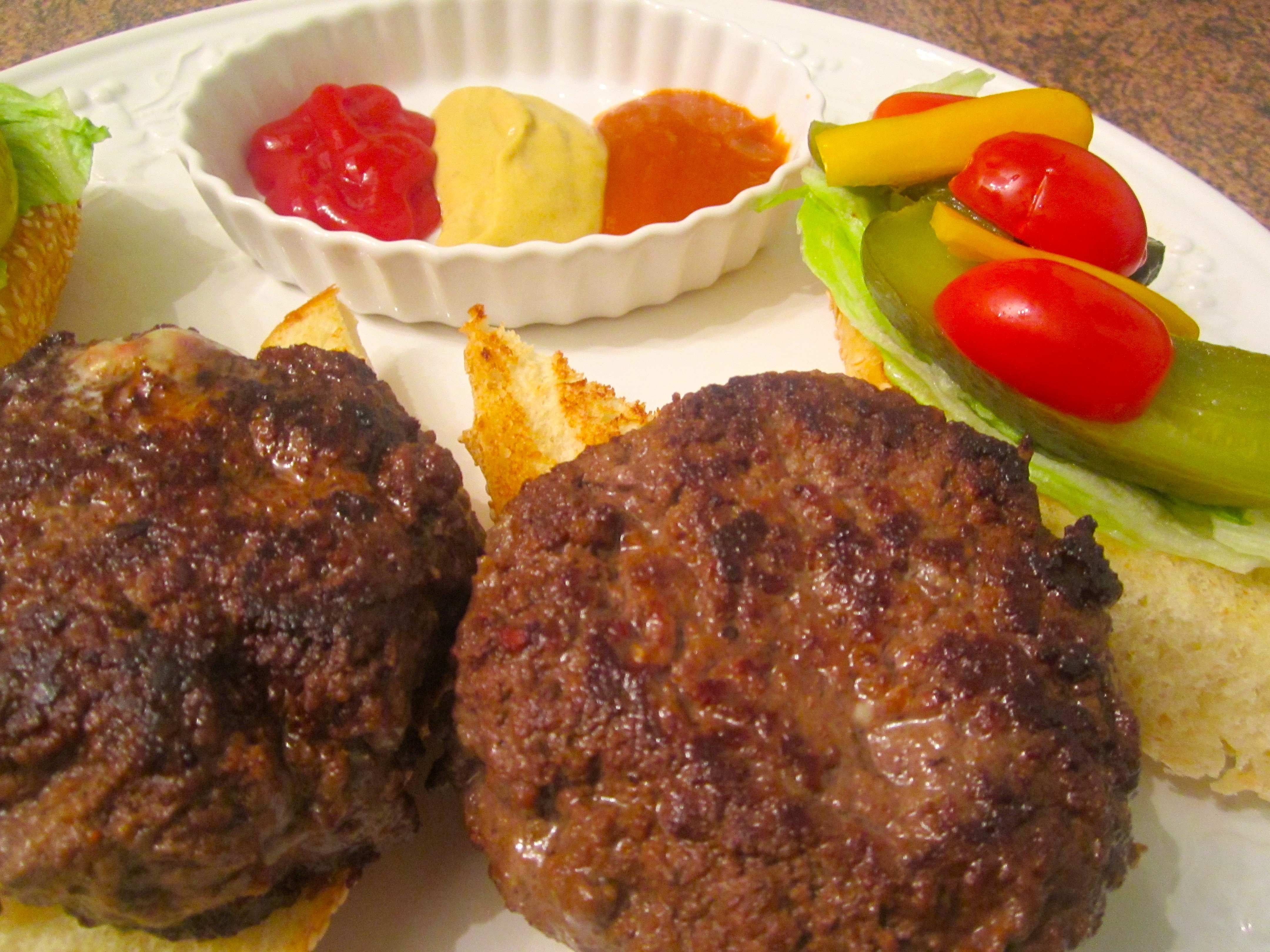
Cheeseburger My Way “
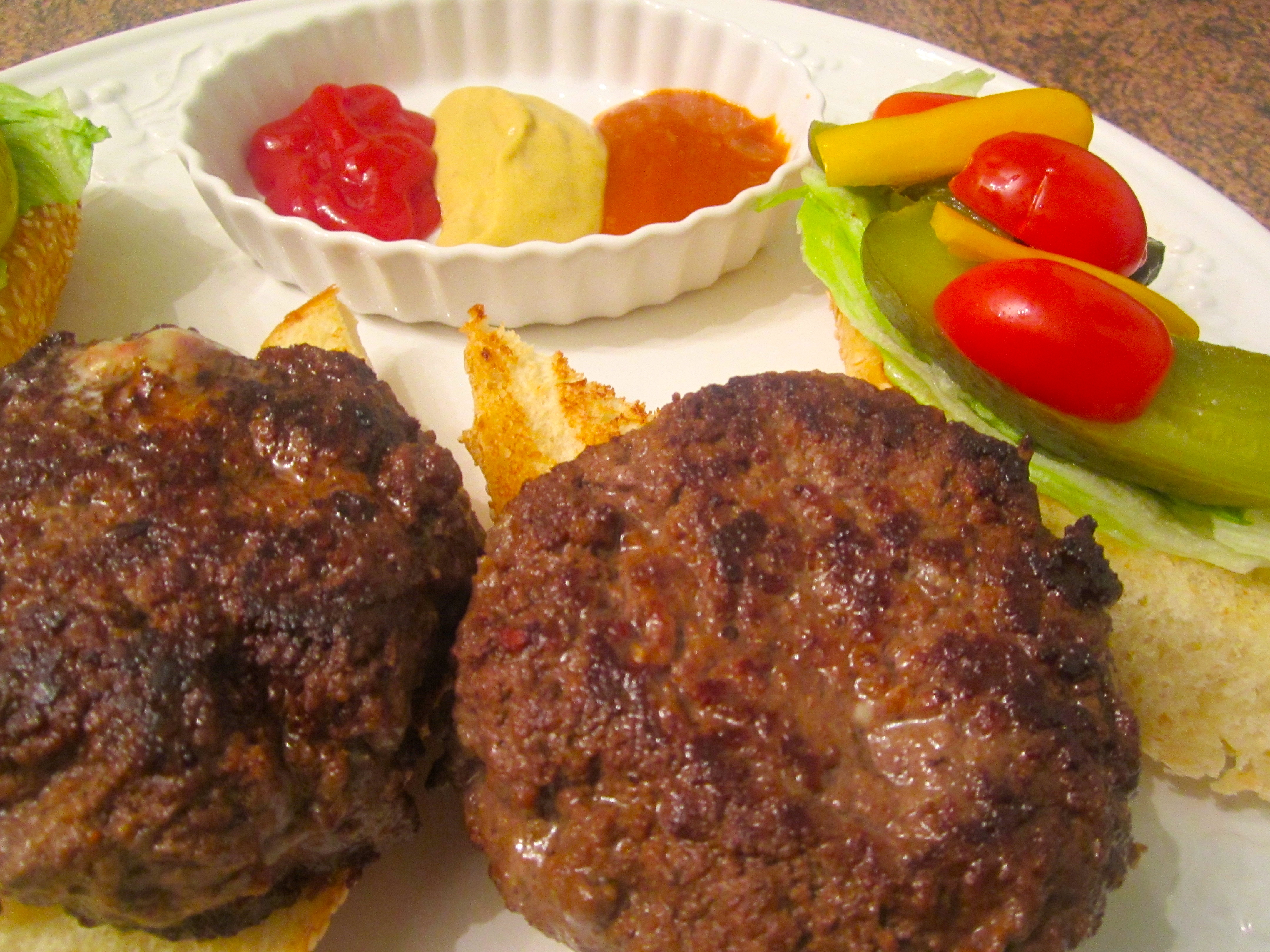
As you know, in order to get all the benefits of good quality ground beef, you must choose the best quality meat and handle it as little as possible. In this case I took two 14 oz striploin and grinded them at home with my cuisine art. In order to keep the meat from drying out, I made a  pepper jack cheese and butter sandwich, which I then encased with the meat and shaped it loosely, avoiding to press it too much as to keep the texture of the meat loose and tender. The flavor added by the melting butter and cheese to the beef while it cooks takes the whole thing up three notches.
.
Cut hoagie rolls or bun of your choice in half, spread generously with Butter and broil cut side until golden. Set aside.
Carefully spread the beef out on a cutting board in a ¾ # layer without squeezing it.
Sprinkle with kosher salt, black pepper and a dash of garlic powder.
Lightly mix without squeezing it.
Divide into four parts.
Put one part of the beef on a cutting board, top with the cheese / butter sandwich,
cover with another part of beef and form a loose patty.
Repeat with rest of ingredient’s.
Sautee in olive oil until it almost reaches the required doneness.
Discard oil, add two tablespoon of butter and sautee until butter starts to brown.
Let rest on absorbent paper for five minutes before serving.
Use garnish of your choice. For dipping I use ketchup, dijon and sriracha.

>

Bon Appetit ! Life is Good !
.

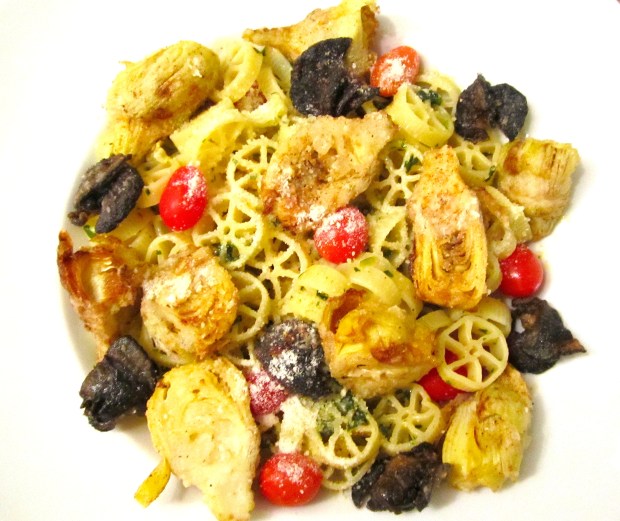
” Rotelle, Artichokes, Snails & Grape Tomatoes “

.
.
A  few months ago I had one of these “whatever is in the cupboard” moment’s.
Low and behold, some of my favorites : Pasta, snails, artichokes.
The wonderful result of this :
.
.
Personally I think it looks great, and best of all, it tastes even better. 
That and the different textures made it an outstanding dish           🙂
.
Boil the rotelle, strain, reserve some of the cooking water.
Make a mixture of cornstarch, flour, salt, garlic powder and lemon-salt.
Dredge the snails in the mix and fry at 375 degrees until crisp on the outside,
but moist and plum on the inside.  Reserve on absorbent paper.
Fry the artichokes and reserve the same way.
Saute finely chopped garlic and onion in olive oil until opaque.
Add rotelle, a good amount of soft (not melted) butter, finely grated
parmesan cheese, tomatoes and some of the cooking water to the pot
and stir until a sauce forms that coats the pasta lightly.
Season with salt and pepper.
To serve, place pasta on bottom of plate or bowl, top with snails and
artichokes and sprinkle with parmesan and chopped parsley.

Bon Appetit !   Live is Good !
.

.