I would like to share this with all of you in order to :
a) Help my friend Daryl to get more opinions about his new project.
b) Find out how popular traditional diners are?
c) Find out what attracts today’s customers to a traditional diner?
Please, instead of commenting on the individual group pages, go to “ChefsOpinion”
and post all your comments directly in the comment box and / or participate in the poll.
Thank you all 🙂
Image Source: Alta CollectiblesVintage Reproduction
Hello Hans,
I like to hear what your followers think about American Diners.
My next location is an all stainless-steel diner built in 1950 in Elizabeth, NJ by the O’Mahoney company. It’ll be attached to new-construction that will house the kitchen and a second dining room. The menu will be built on New England and American cookery with a high comfort-factor, but, leaning on contemporary taste and sensibilities for quality and flavor.
My question is in two parts: 1. Location – This is a question asked as work on this project progressed: how does the location of a vintage diner impact or limit the curb-appeal of the restaurant. In our opinion, traditional pre-fab diners are deeply perceived by the public as stand-alone operations. With this in mind, a vintage diner can be positioned in a strip-mall/plaza development in such a way connects it to be connected to the new construction and allows the vintage diner to stand proud of the new construction, giving it the appearance of a stand-alone. 2. Menu – Diners, in their time, offered food that was highly contemporary. Their ingredients and methods were of the essence of their age and, in the process, a style was born. The strength of diner’s cookery style heritage is so strong that to open a diner without including some of that style is commercially risky. So, if you had a vintage diner on your hands, what would you do to bring the classic dinner menu into the 21st centaury to meet the expectations of today’s guests?
I’d also like the leave open the topic of “Diners” in general. I’ve been working on this project for about 8-eight months and I have yet to talk to anyone, another professional or a novice, who does have a reaction to the idea of a Diner. So, let me know your thoughts!
. . Saturday –
Sleeping in, letting Bella out the back door instead of walking around the block at 4.00am, watching the news and a movie at 7.00am, how wonderful.
The crowning moment of the morning, as usual, is having a “breakfast of champions”, while watching a good movie and knowing that for two day’s the world consists of joy and tranquility.
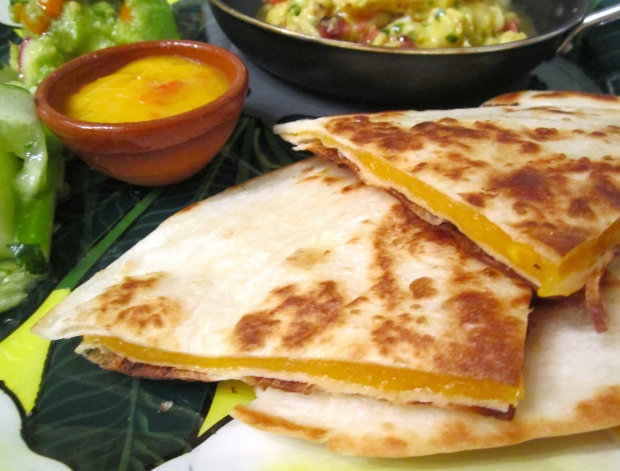
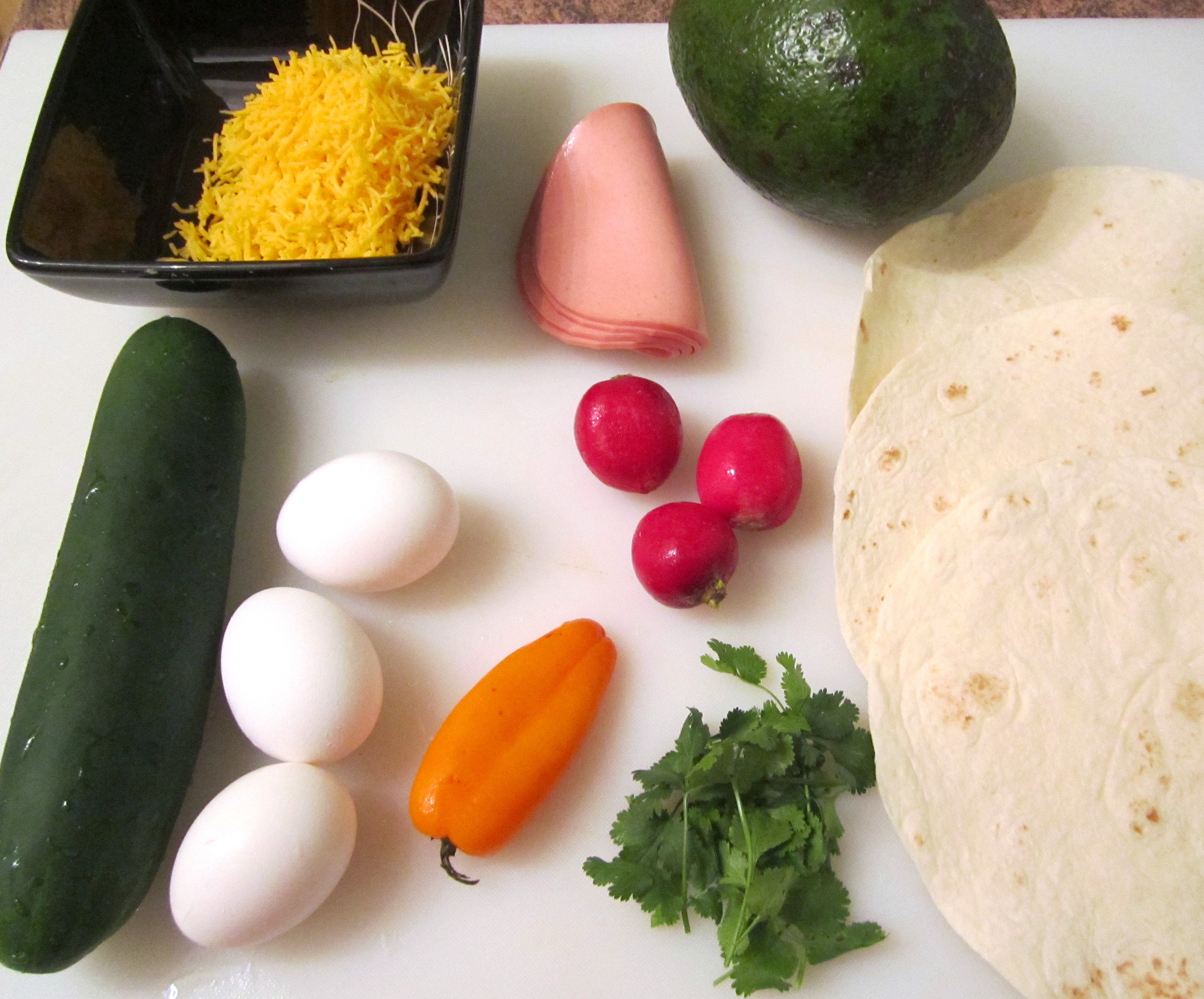
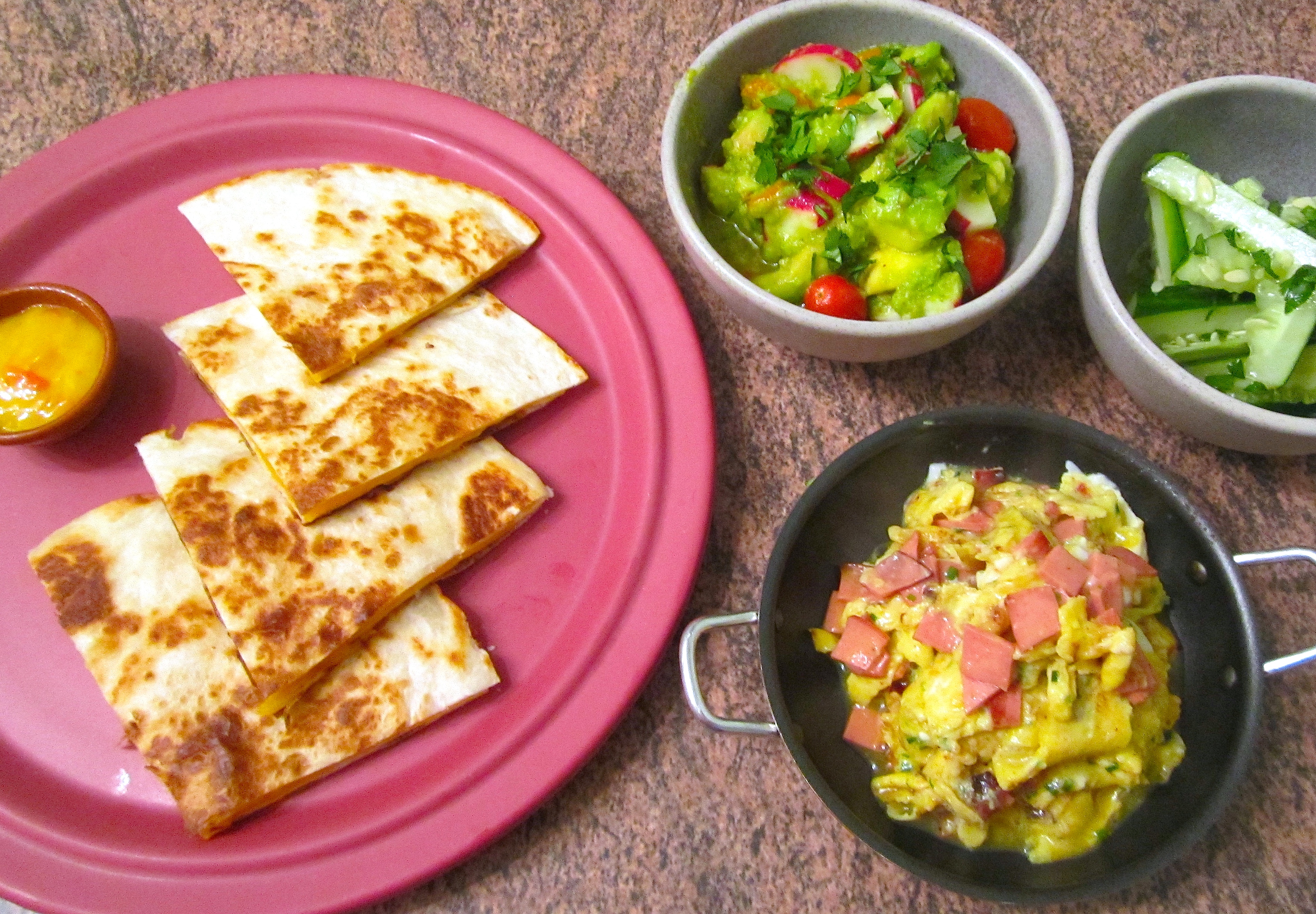
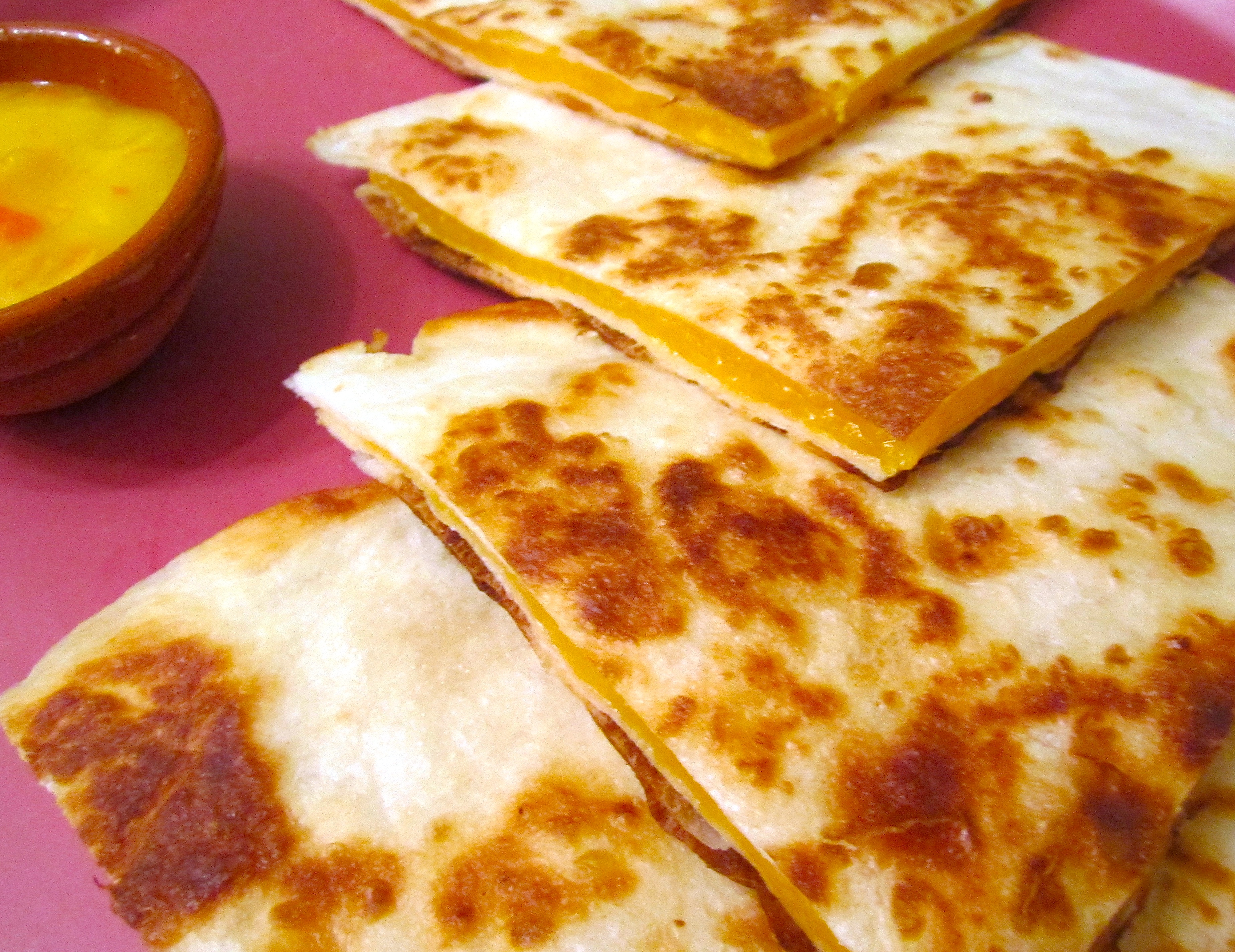
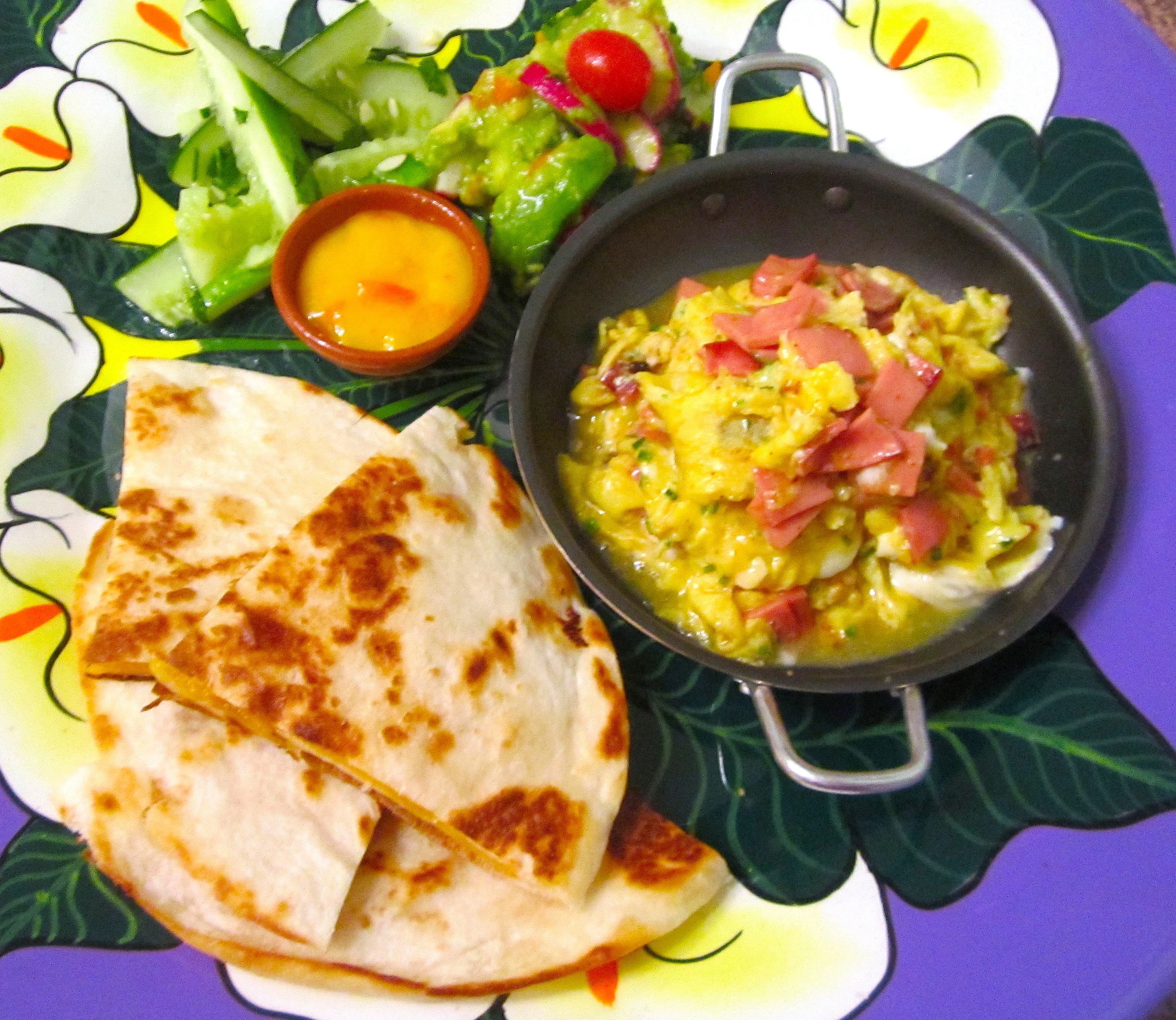
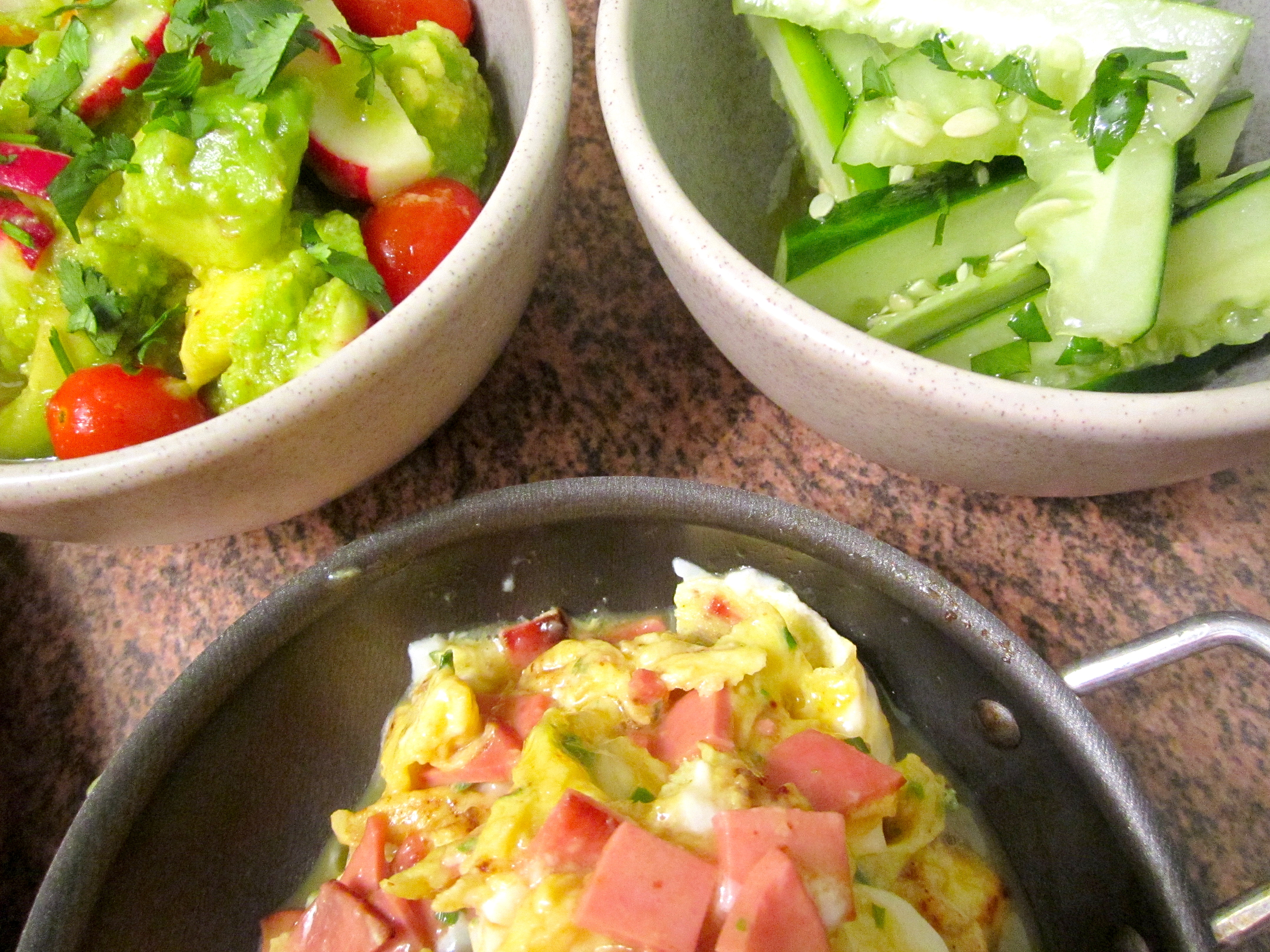
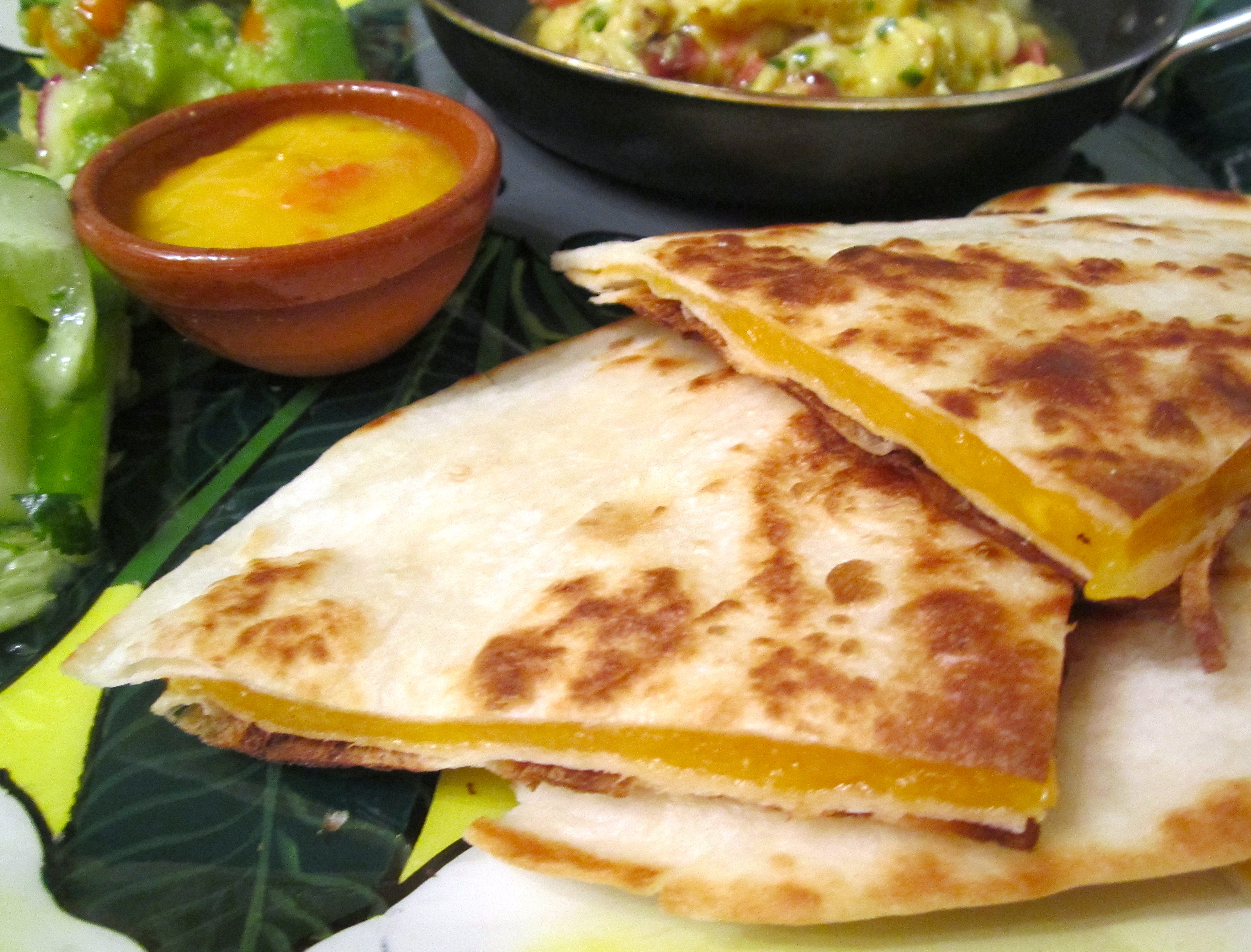
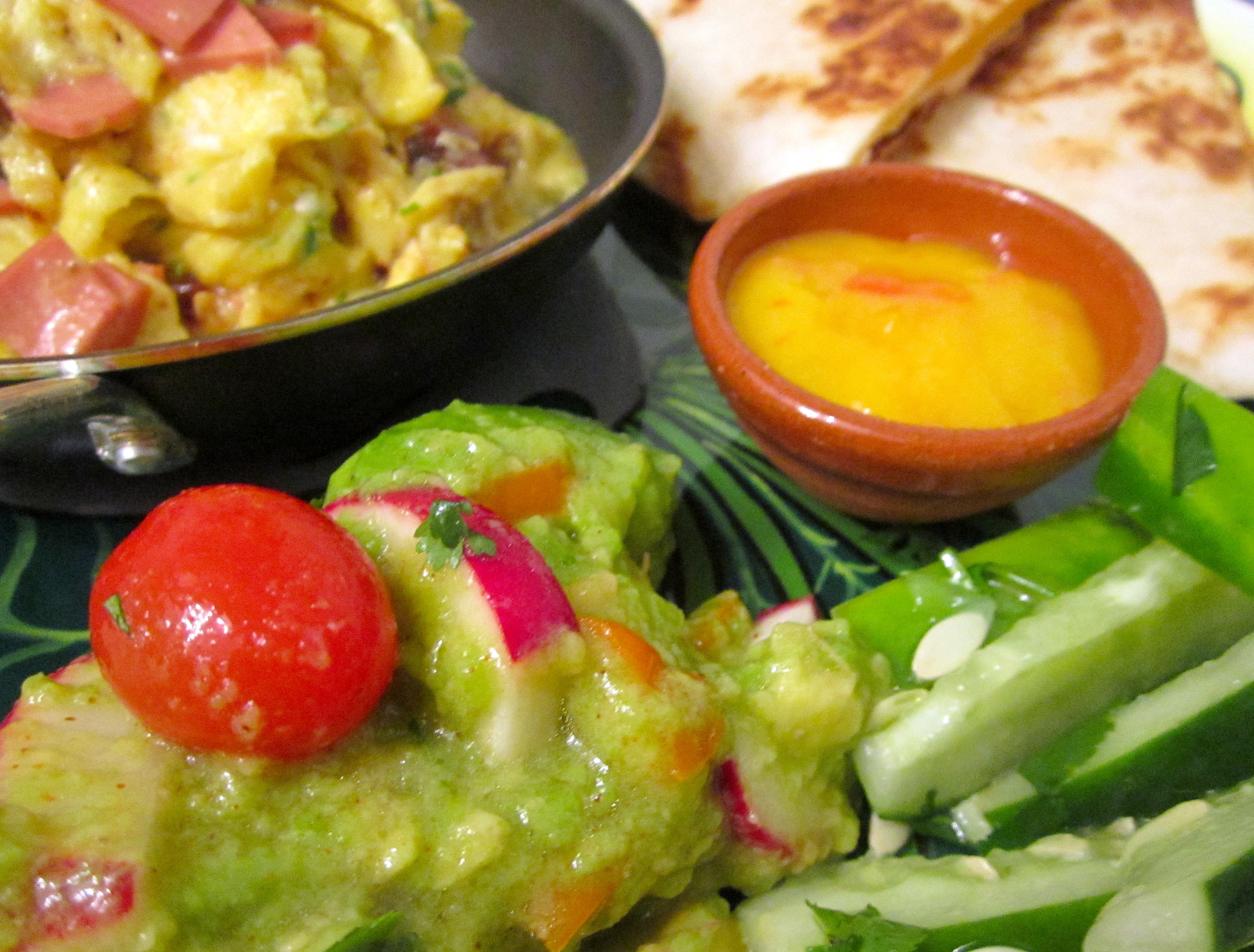
This morning I fancied Quesadillas, scrambled eggs with bologna, guacamole, pickled cucumbers and scotch bonnet sauce. (The movie – Blue Velvet)
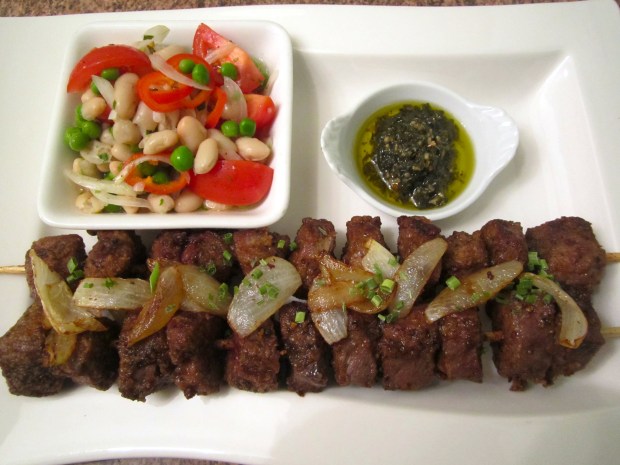
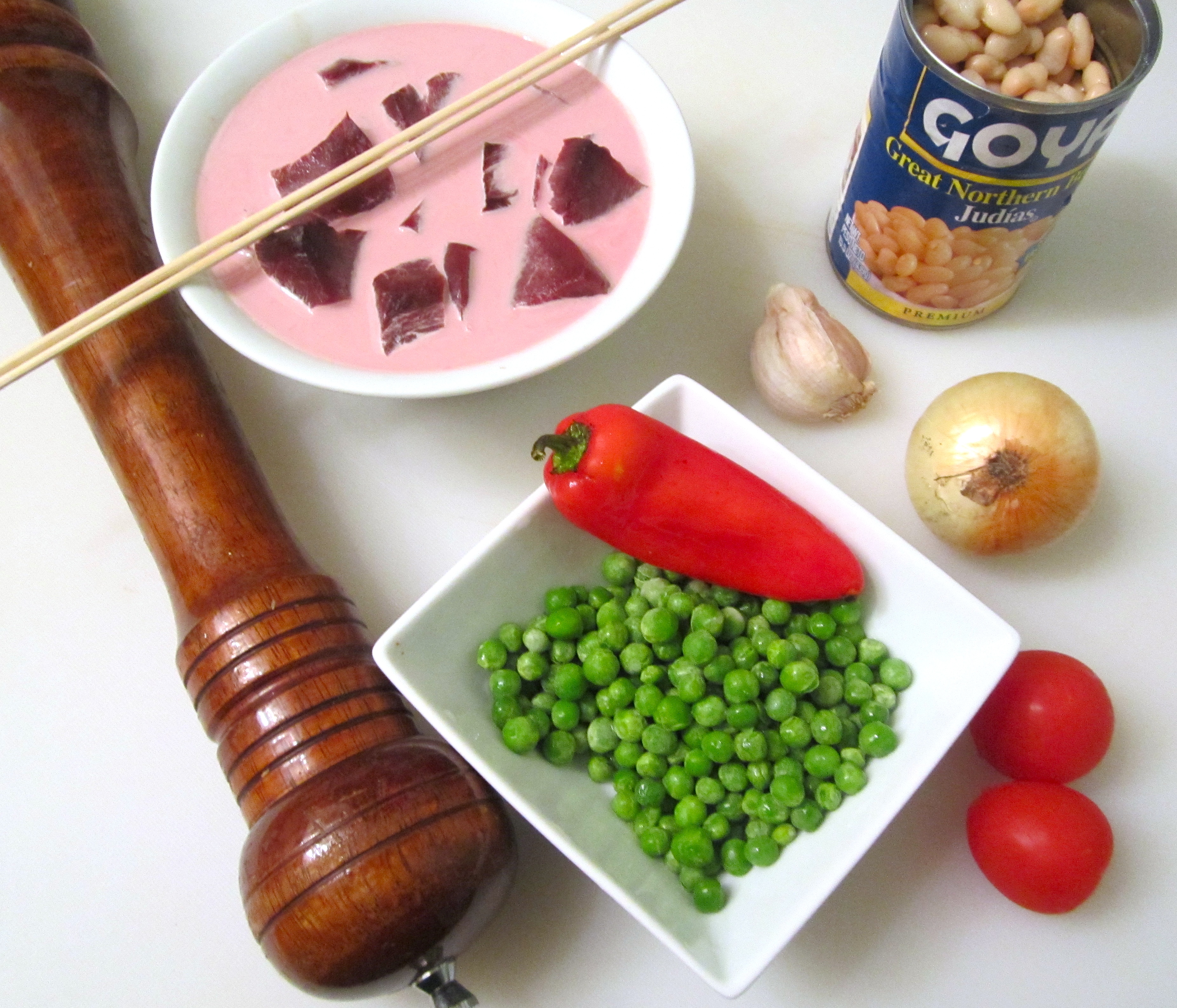
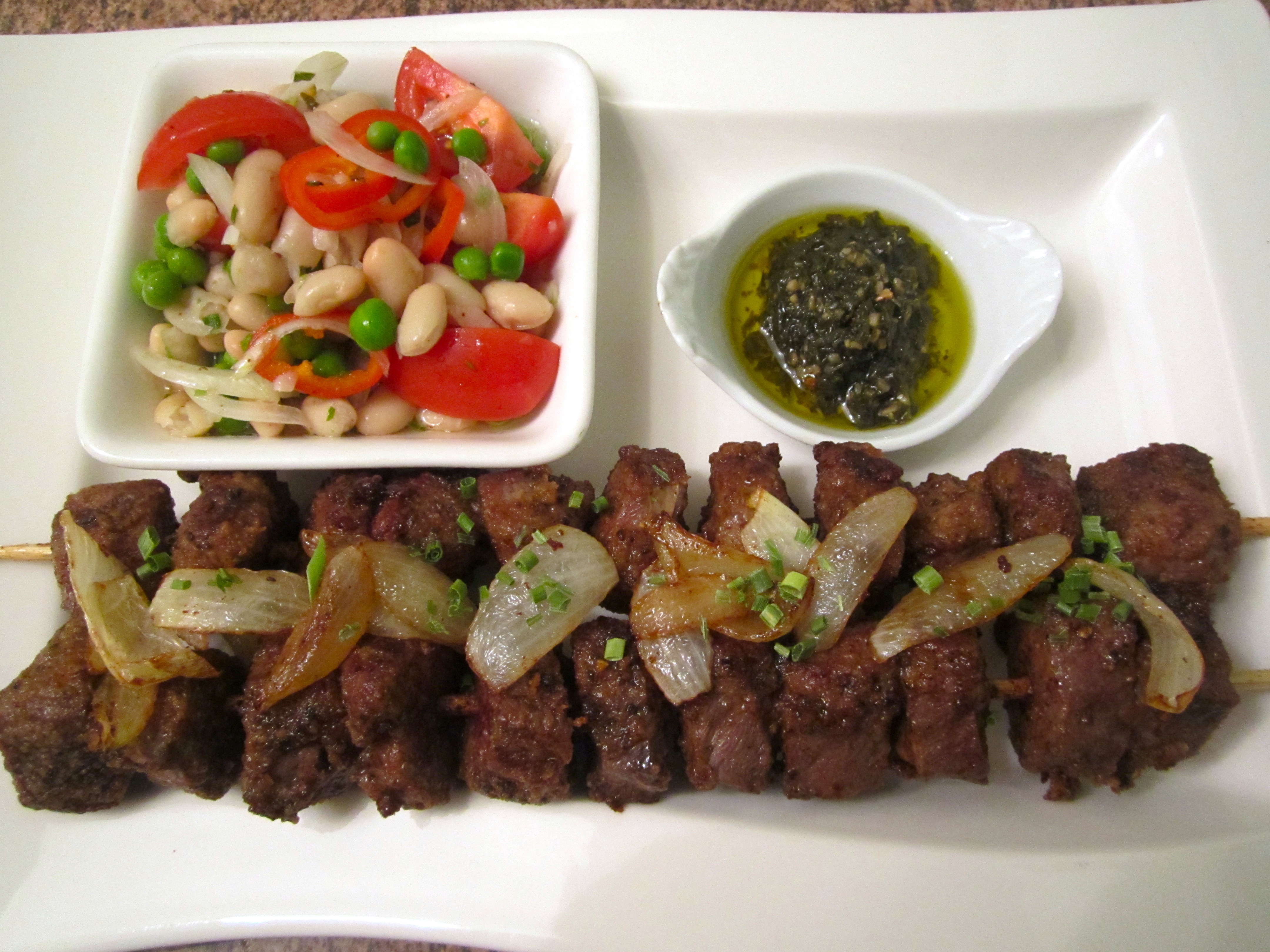
” beef heart skewers with spicy bean salad and chimichurri.
I had expected a whole lot of negative comments on cooking with offal.
To my surprise, most comments were positive and encouraging.
Many readers welcomed the opportunity to see food which is hard to find
in other publications these days.
(Never mind the fact that one food critic called a group of seattle chefs :
” Innovative and daring for using the whole animal in their kitchen’s “) . Daaahhhh.
Real chef’s have never stopped doing that, just as real, experienced food lovers have
never stopped searching for it and enjoying it whenever available.
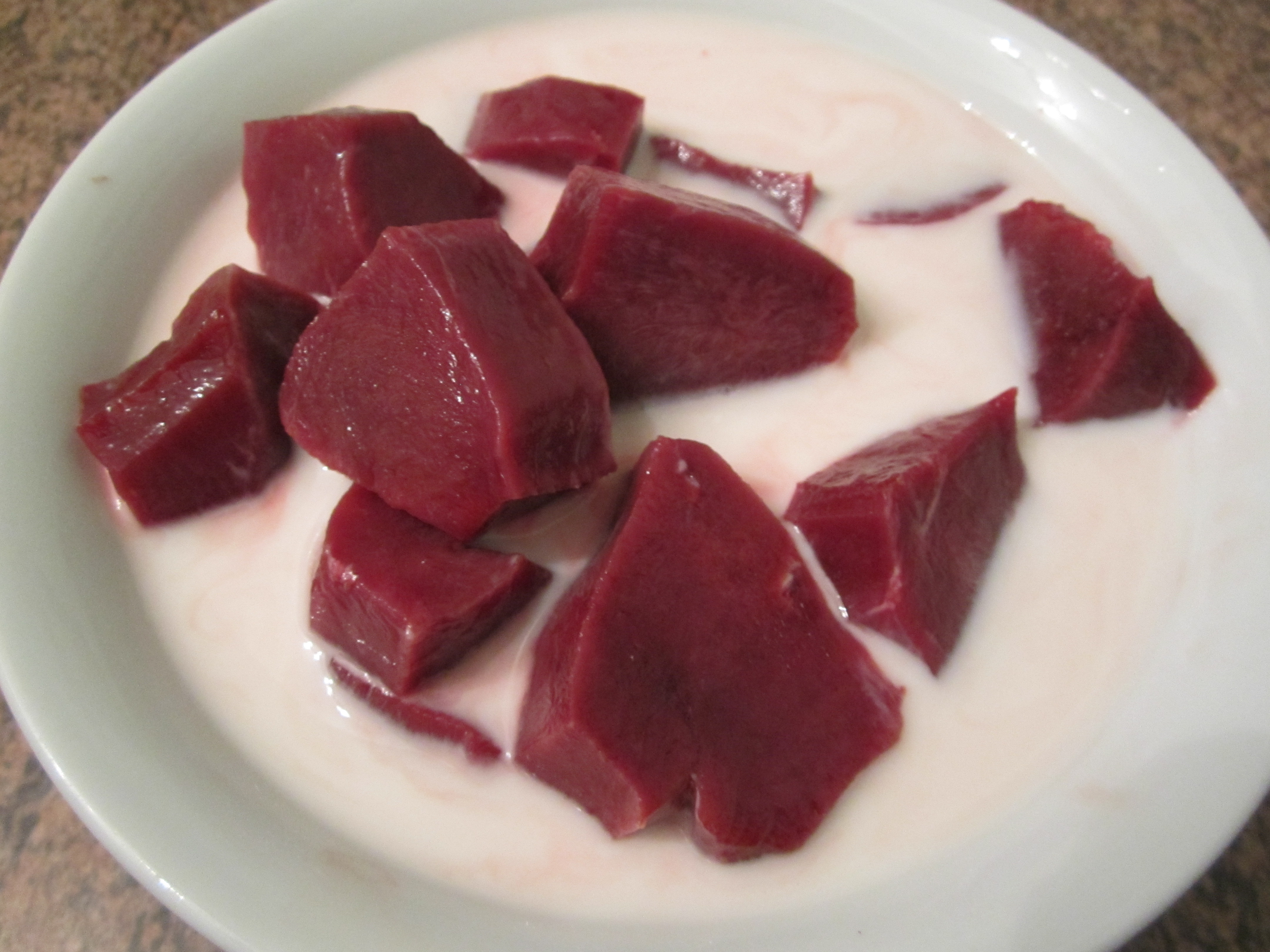
So here it is, Beef Heart Shashlik .
It may be an acquired taste, but once you do have acquired it, ……. 🙂 . .
Season meat and onions liberally with pepper and garic powder,
dredge skewers in corn starch, shake of excess corn starch and saute
(grill if you prefer) until crisp on the outside, still light pink in the center.
When almost done, add onions to the pan and saute until meat has
desired temperature and onions start to caramelize. Sprinkle heart with
kosher or sea salt, drizzle with lemon juice, remove to absorbent paper.
Season onions with salt, pepper and garlic powder, remove to absorbent paper.
Serve with any salad and condiment / sauce, such as chimichurri,
horse raddish, spicy salsa, mustard, etc. .
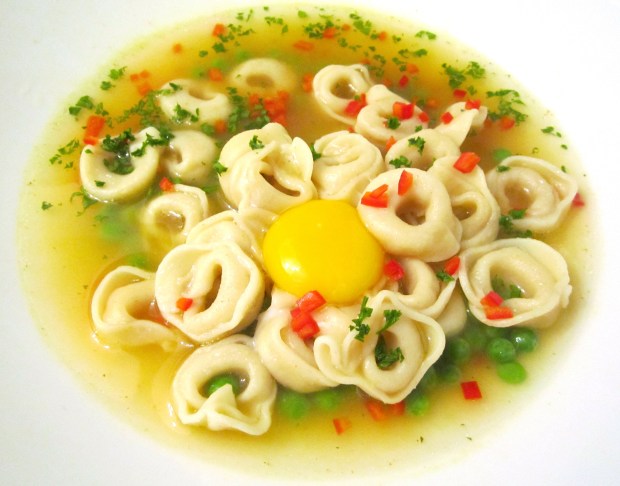
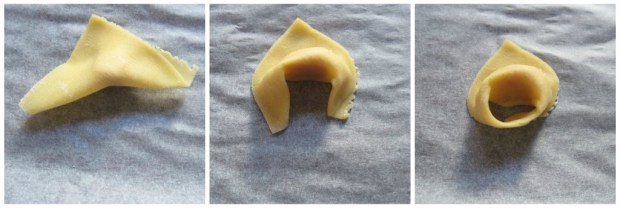
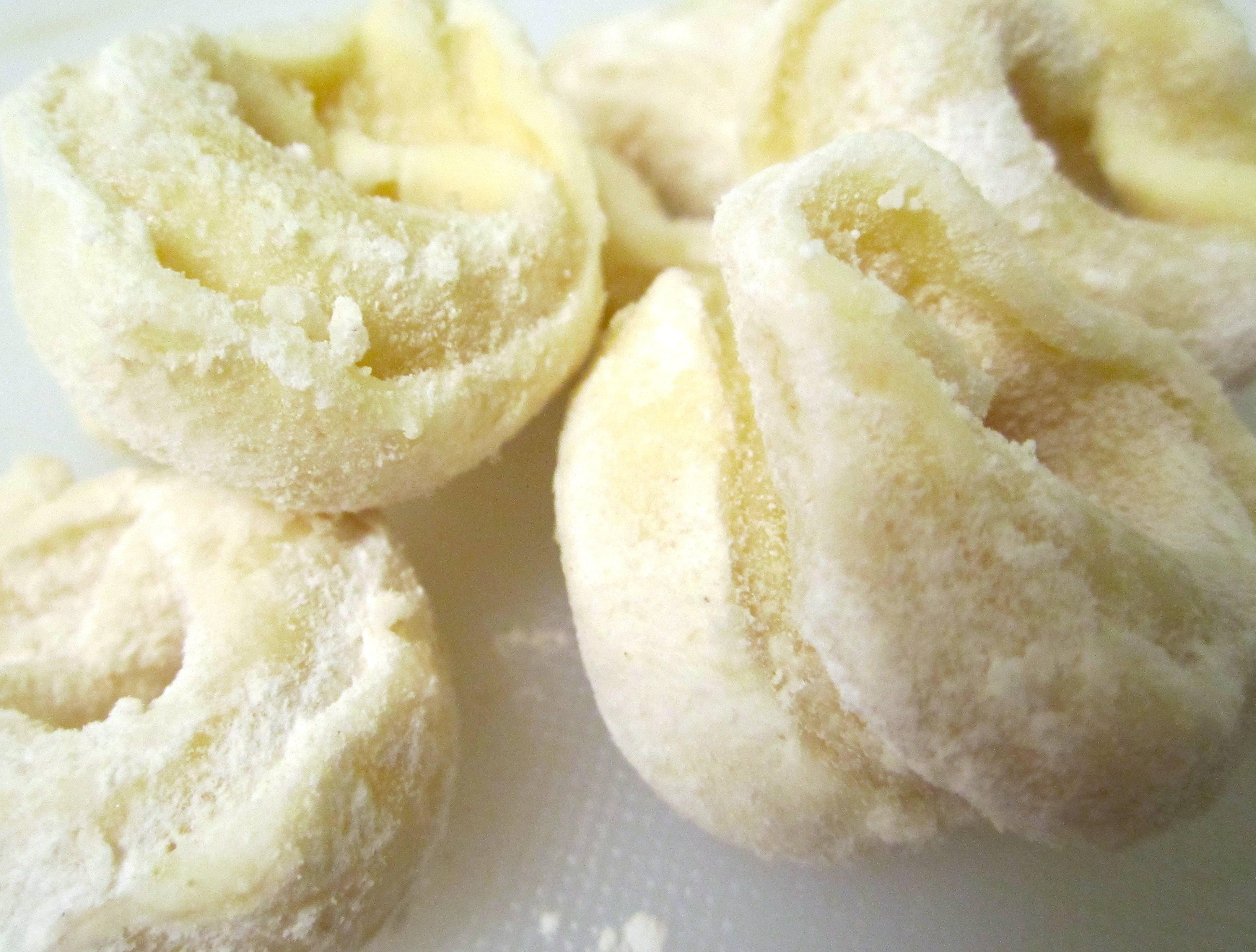
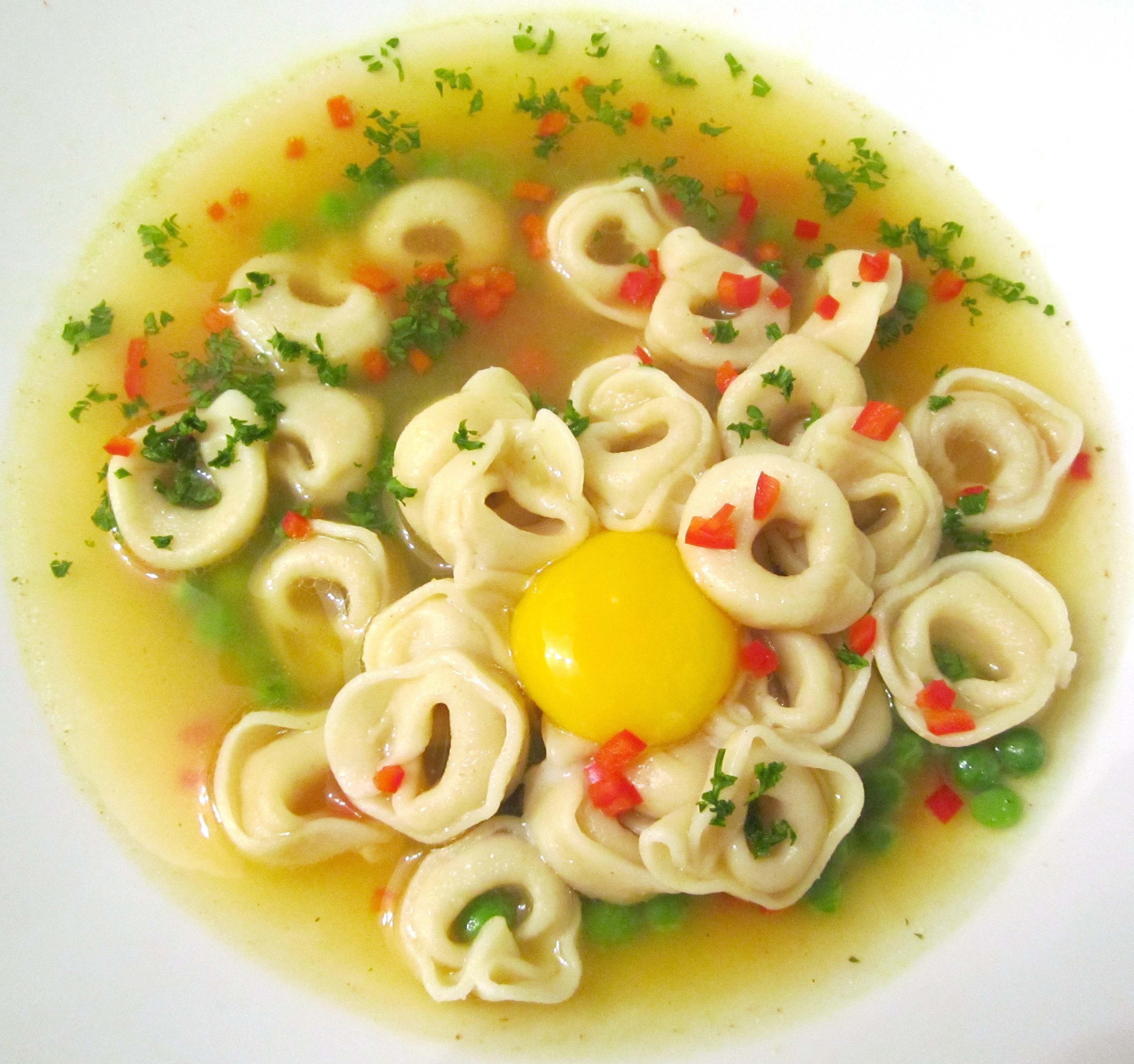
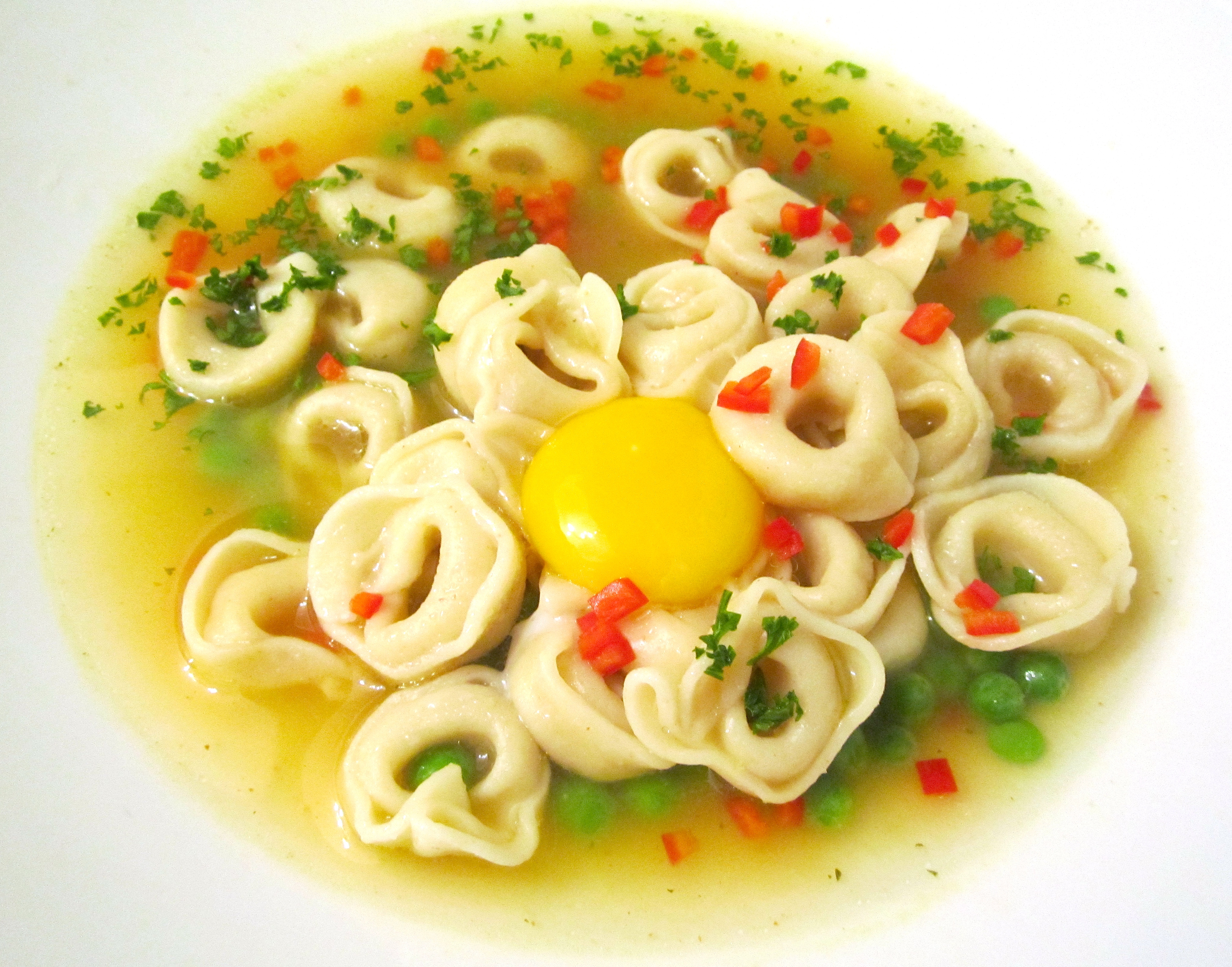
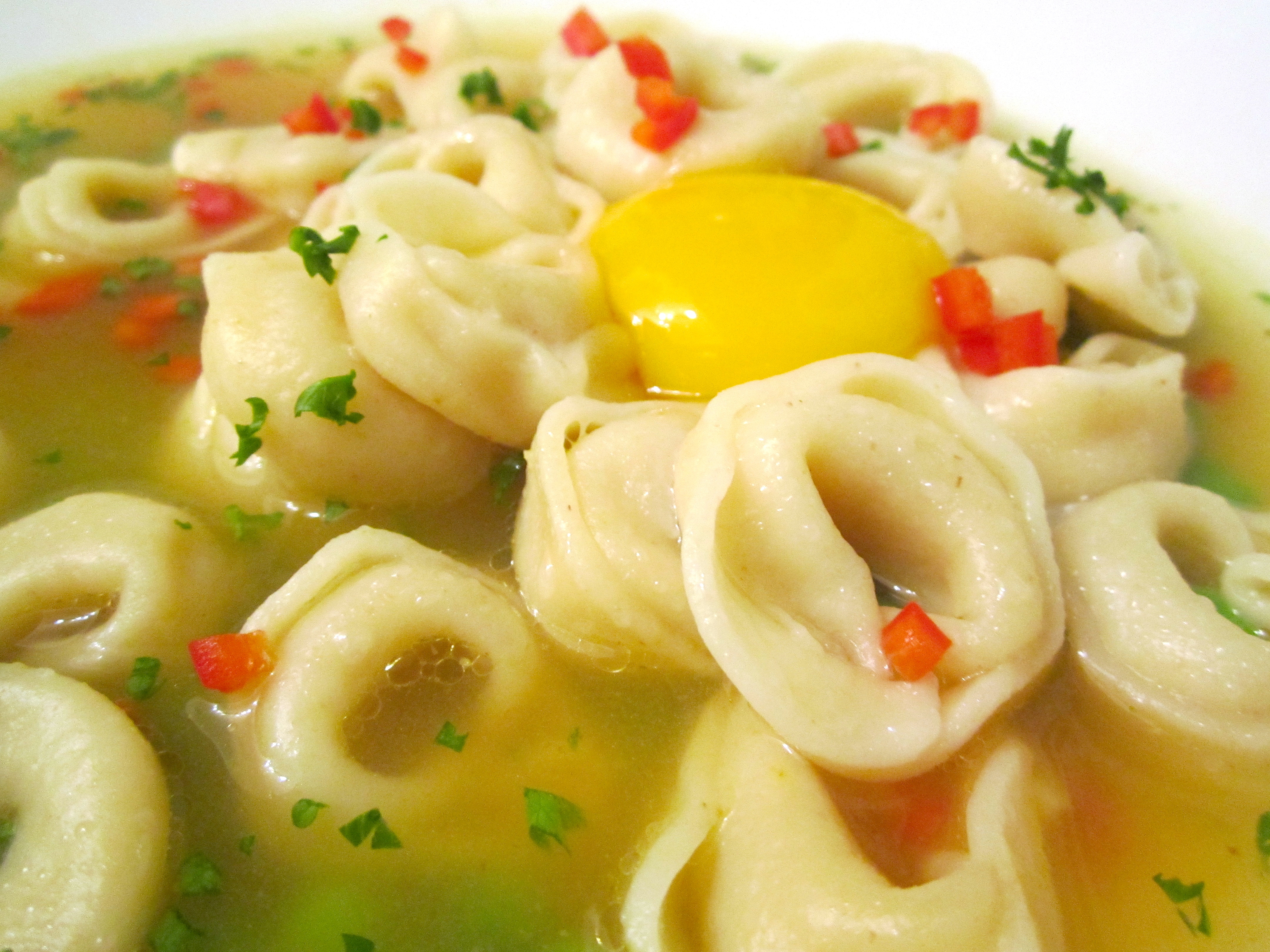
> > When I was growing up in germany in the 5o’s, newly arrived immigrant workers who had started new restaurants featuring their own countries food, had opened up a whole new world of culinary delights to regular folk’s who could not afford to go to the more established restaurants. These restaurants were usually too expensive for the working class people. However, it was much more affordable to dine at one of the myriad of quickly sprouting ethnic restaurant’s, opened by families who had recently immigrated to Germany, which at the time was in dire need of workers to the fill hundreds of thousands open job’s during the “Wirtschaftswunder” years. I remember the first time I saw and had the opportunity to savor such exotic treats as pizza, gyros, cevapchichi, tortellini, shashlik, paella, baklava, gelato, etc, etc. It was a time of constant culinary adventure for our family. We tried to experience as many new dishes as possible and had a wonderful time exploring food we never before had heard of, much less seen or eaten. Like I said, there was a time (a few years after WWII ) when even pizza was new and exotic to us. One of my greatest favorites was “tortellini in brodo”. Here is my version of this great soup : >
>
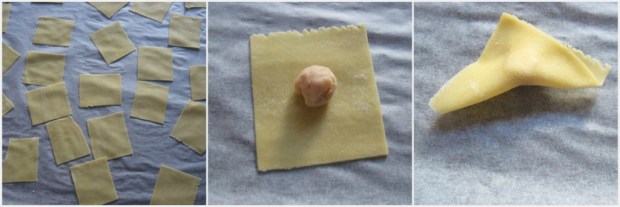
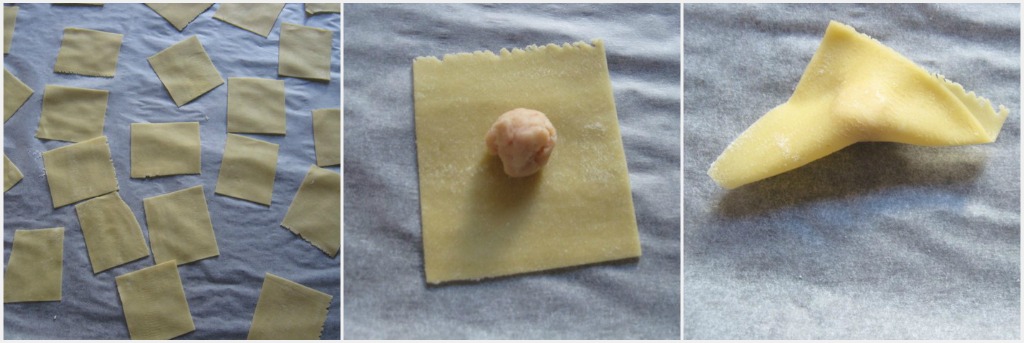
This Image Source: BrowsingRome
>
This Image Source: BrowsingRome
.. I have made these tortellini with frozen won ton wrappers instead of a regular pasta dough. The wontons wrappers cook much faster then regular pasta dough, so for the filling I used chopped cooked shrimp, mixed them with egg white, white wine, salt and pepper .
. . What does it take to earn one, two, and three michelin stars? .
Image Source: BlogHer
.
Well, when I read this story by Julien Vaché on HUFFPOST, I thought of an article I wrote a few months back about “passion“.
After dealing with thousand’s of young cooks and culinary students, as well as with young “chef’s” and many so-called “culinary educator’s”, all of which proclaim a deep passion for the culinary profession, it did not take me long to realize that the word “passion” is too often confused with the word “like” .
While real passion exist’s among all the groups mentioned, sadly it is rare and hard to find.
Real passion often requires tremendous sacrifice. The story about L’Auberge du Vieux Puits and it’s chef Gilles Goujon is a perfect example how one man and his family have achieved their ultimate dream through sacrifice, hard work and perseverance.
My deepest respect to a true culinary hero !
Bon Appetit ! Life is Good ! (Eventually, sometimes, for most of us, anyway 🙂
. . A few years back when Maria and I finally had a chance and the time to visit Germany
after being away for 14 years, our friend’s, the Henning’s and the Otto’s took us to lunch
into Stuttgart, to a restaurant named “Ochsen Willi”. This place has been a famous
fixture of this city for many decades, mainly because of it’s Schweine Haxen.
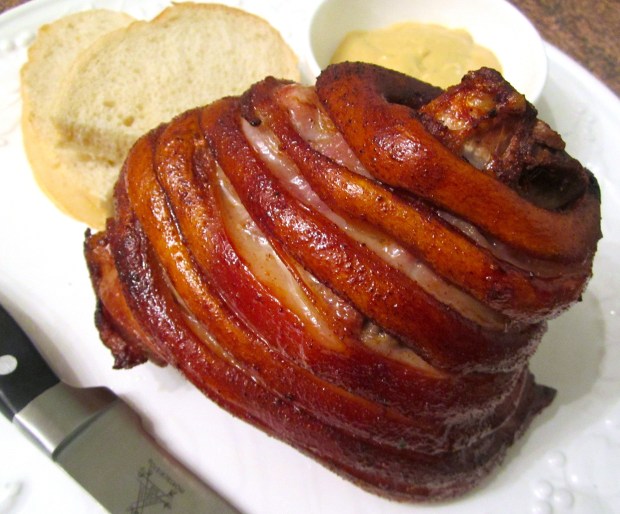
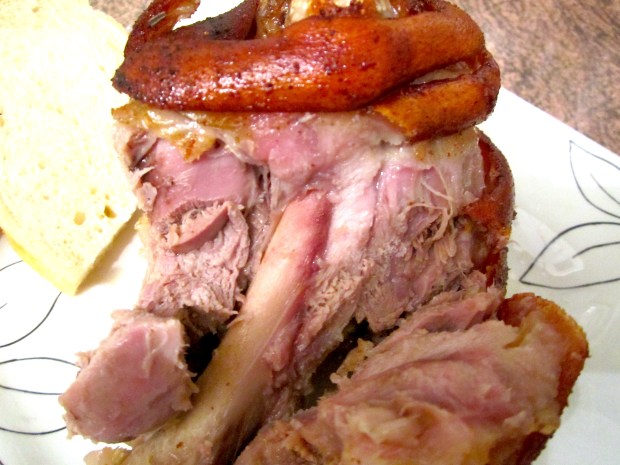
Here is a Picture of Maria attacking her small portion of haxe during that wonderful lunch : . .
Traditionally and ideally, this would be done on a spit roast, which I don’t have.
So I used the alternative method, slowly roasting the knuckle (or ham hog) in the oven.
I brined the meat in a brine of kosher salt, cayenne pepper, cider and red wine
for two day’s. Then I removed it from the brine, padded the meat dry and seasoned
it with more cayenne and a good amount’s of garlic powder and onion powder.
I roasted the knuckle at 420 degrees for 30 minute, then turned the heat to 260 degrees
for 3 hours, after which I turned the heat up to 420 again for 30 minute.
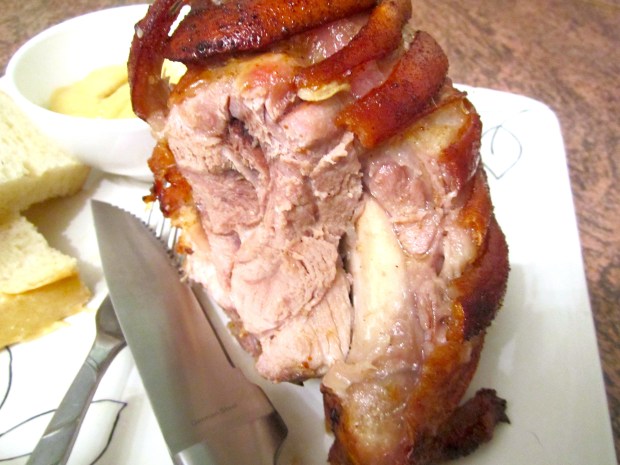
Usually you want a roast to rest for about 20 minutes before you cut into it,
but not this baby. I’d like to see anybody who can resist the temptation to just whack
into this hunk of porkness as soon as it comes out of the oven.
In Germany, we either have this as an elaborate mal with jus, red cabbage or
white cabbage (in the form of sauerkraut, kraut salat or bayrisch kraut) and semmelknoedel (Braed Dumpling), or a potato side dish such as puree, dumplings,
roasted. Most times however, a simple rustic bread and a good mustard on the side
is all that’s needed to achieve culinary bliss 🙂
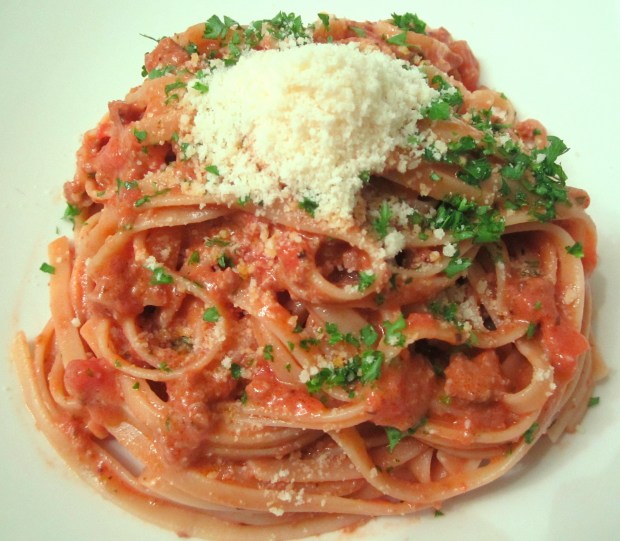
. . This simple dish is something I never get tired of.
I have made this in many different variations but
never straying far from the original, classic “bolognese”
Here are two more variations of the classic, the video tells
you the recipe and gives you additional information about
the dish and it’s background,
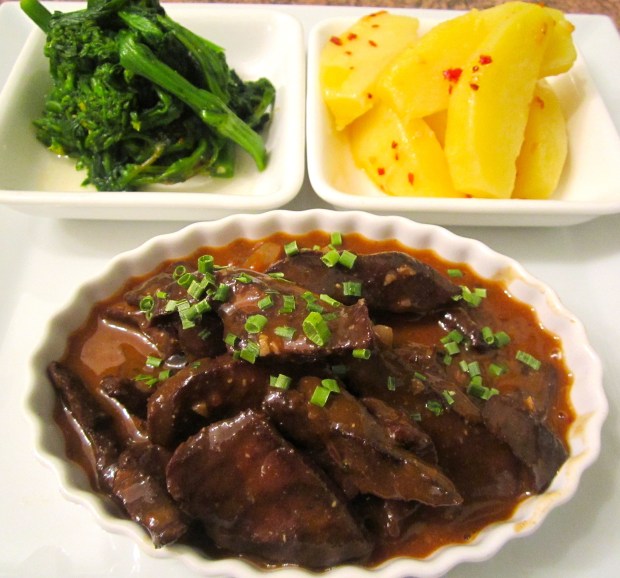
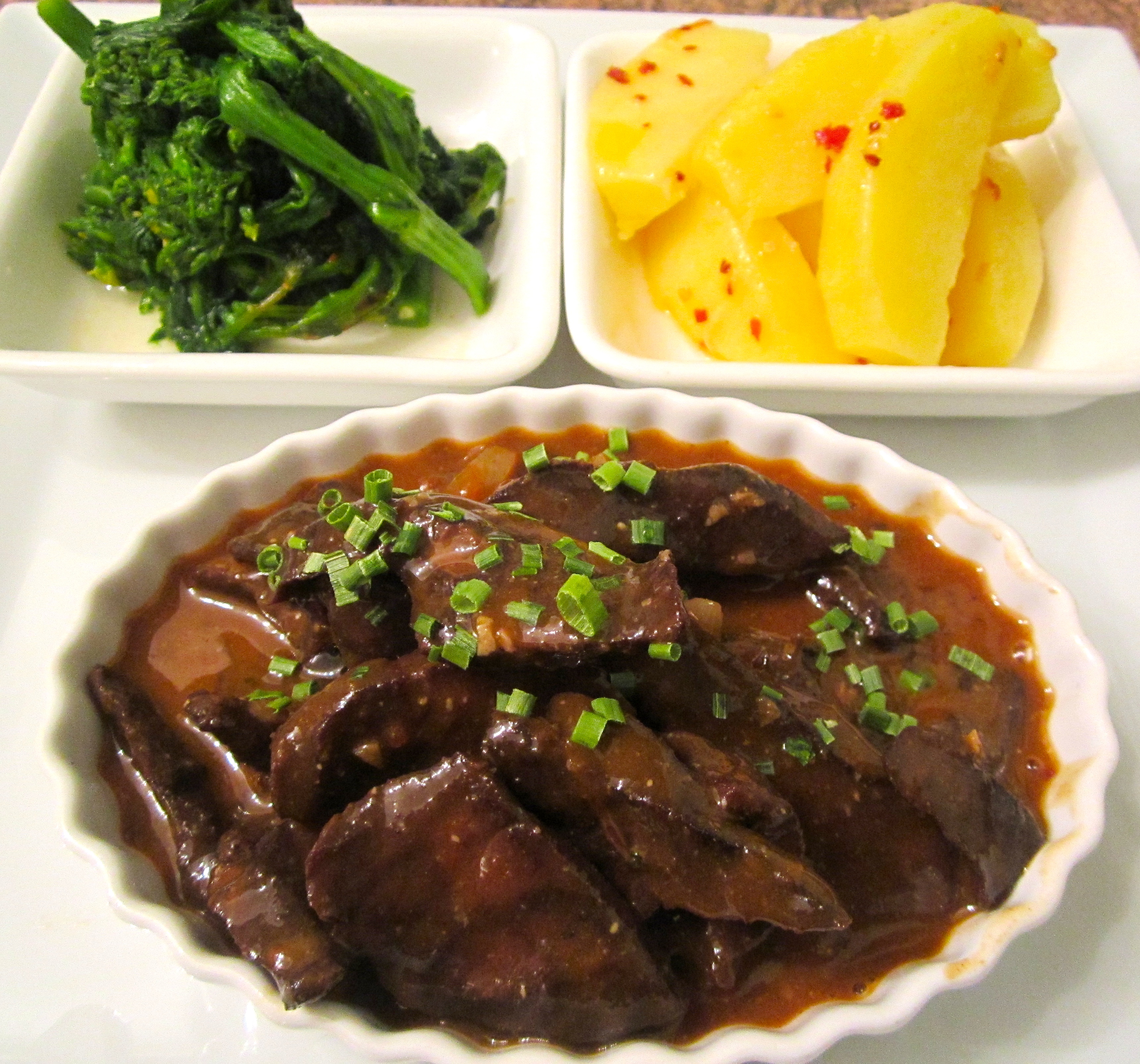
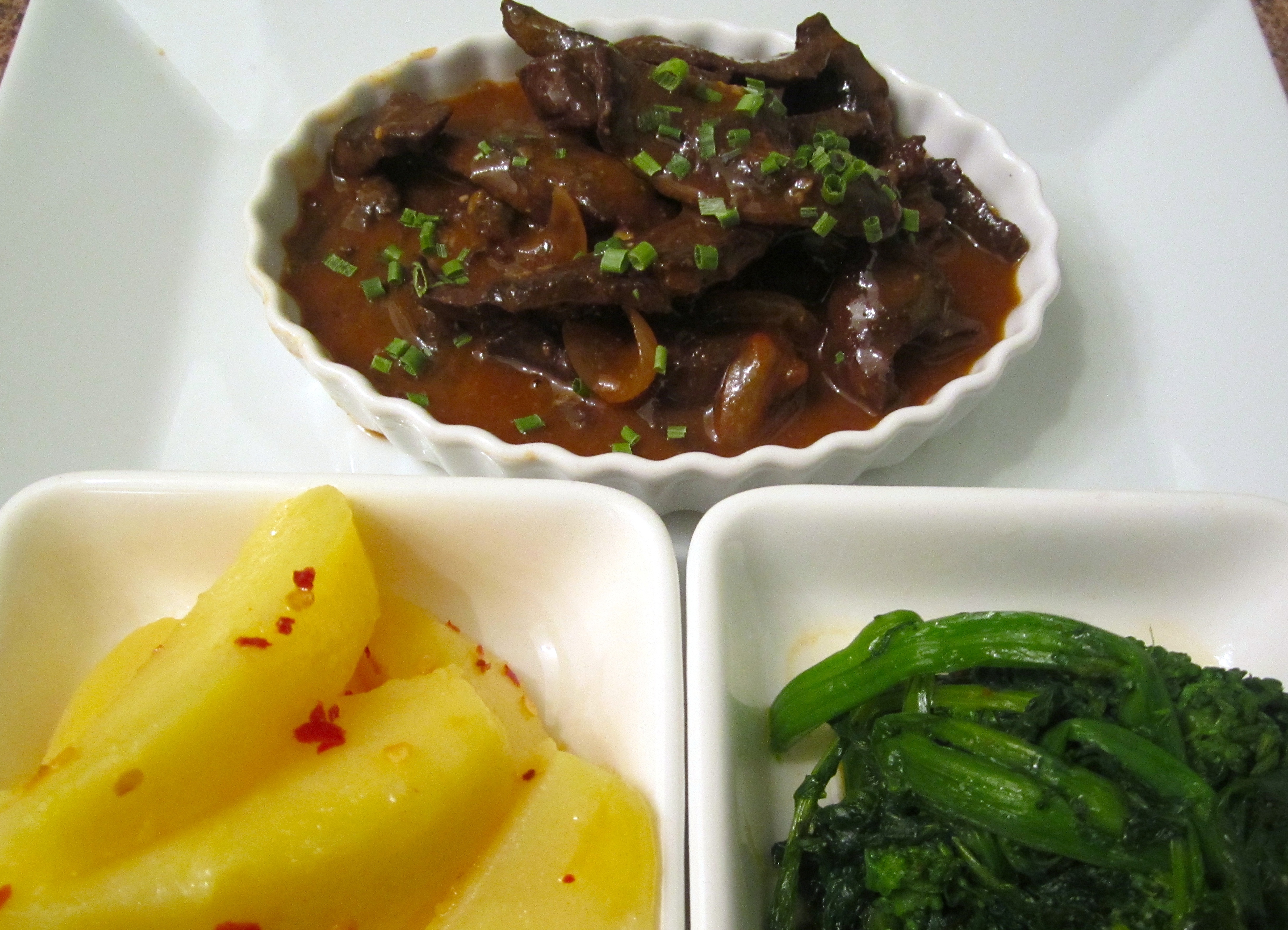
. . TonightI cooked dishtwo of my “Offal Series” :
– Braised beef heart with steamed chili potatoes and garlic broccoli rabe. . .
.
Heart:
Marinate the meat for the the Braised Heart in cider vinegar for 8 hours,
strain and dry the meat. Season with Dijon, soy sauce, garlic powder, onion powder,
and pepper. Sautee on high heat until golden, add onions and garlic and saute
until garlic becomes fragrant. Deglaze with plenty of good merlot, add demi glace
and simmer until meat is tender, about one hour. Adjust seasoning if necessary.
Potatoes :
Peel potatoes, cut into wedges and simmer in salted water until almost done.
Strain. Saute chili flakes in plenty of butter on low heat until fragrant, add potatoes
and salt, cover. Leave on very low heat until heated through and fully done.
Broccoli rabe :
Saute Garlic paste until fragrant, add blanched rabe , salt, cayenne and
maggi seasoning and saute until heated through.
Serve with a good sized glass (or two) of the same merlot you use in the sauce 🙂
. .
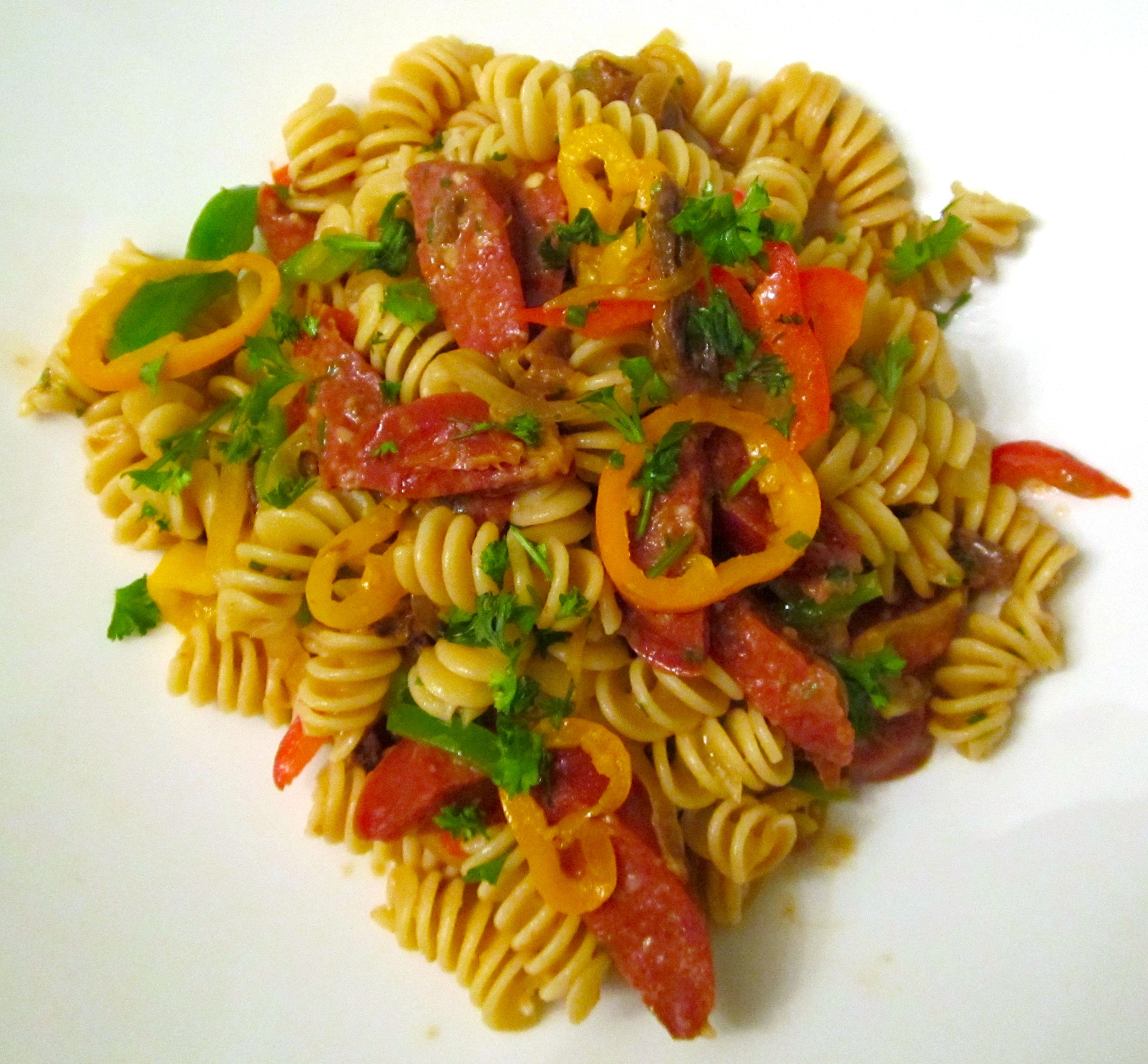
Tonights quick and tasty dinner :
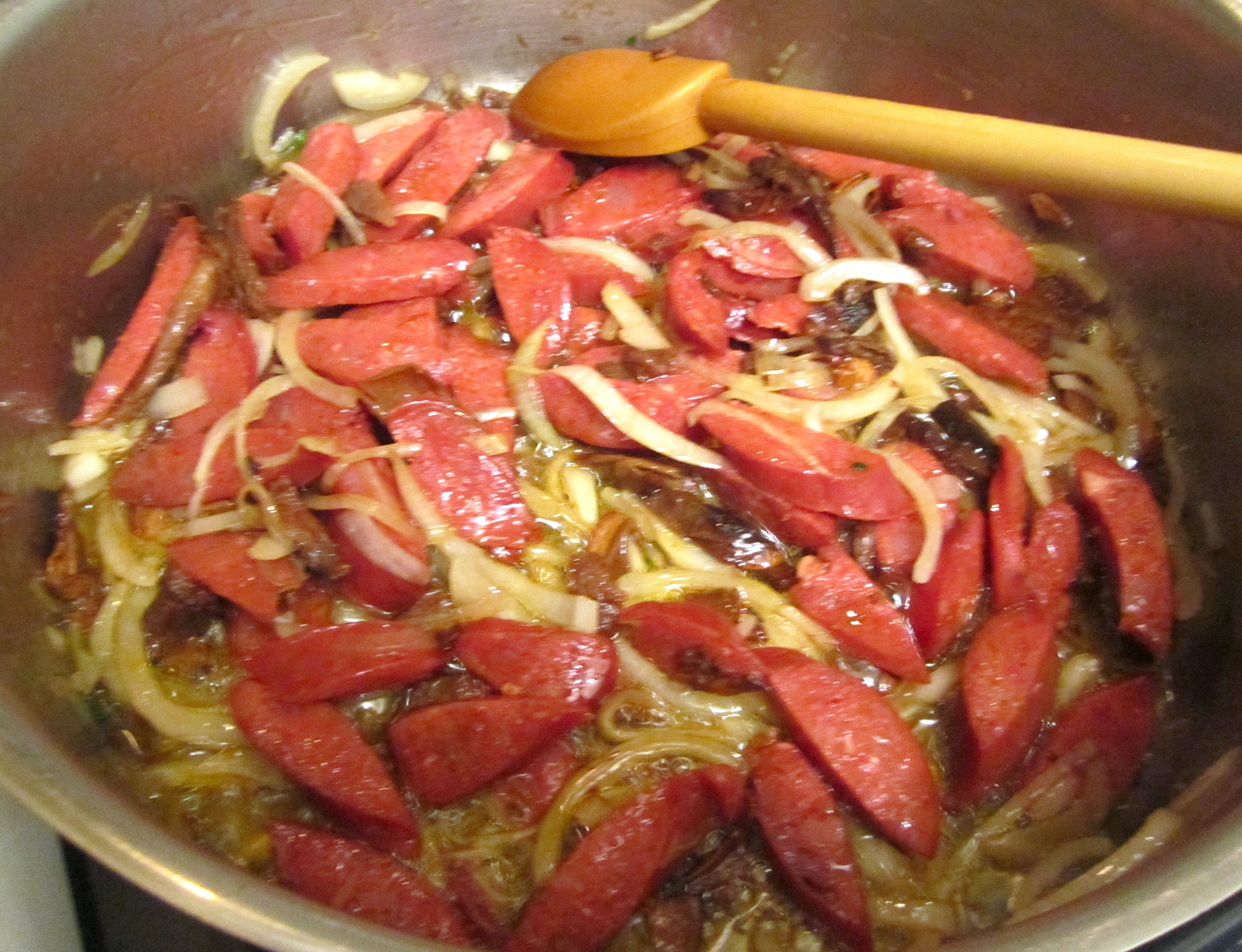
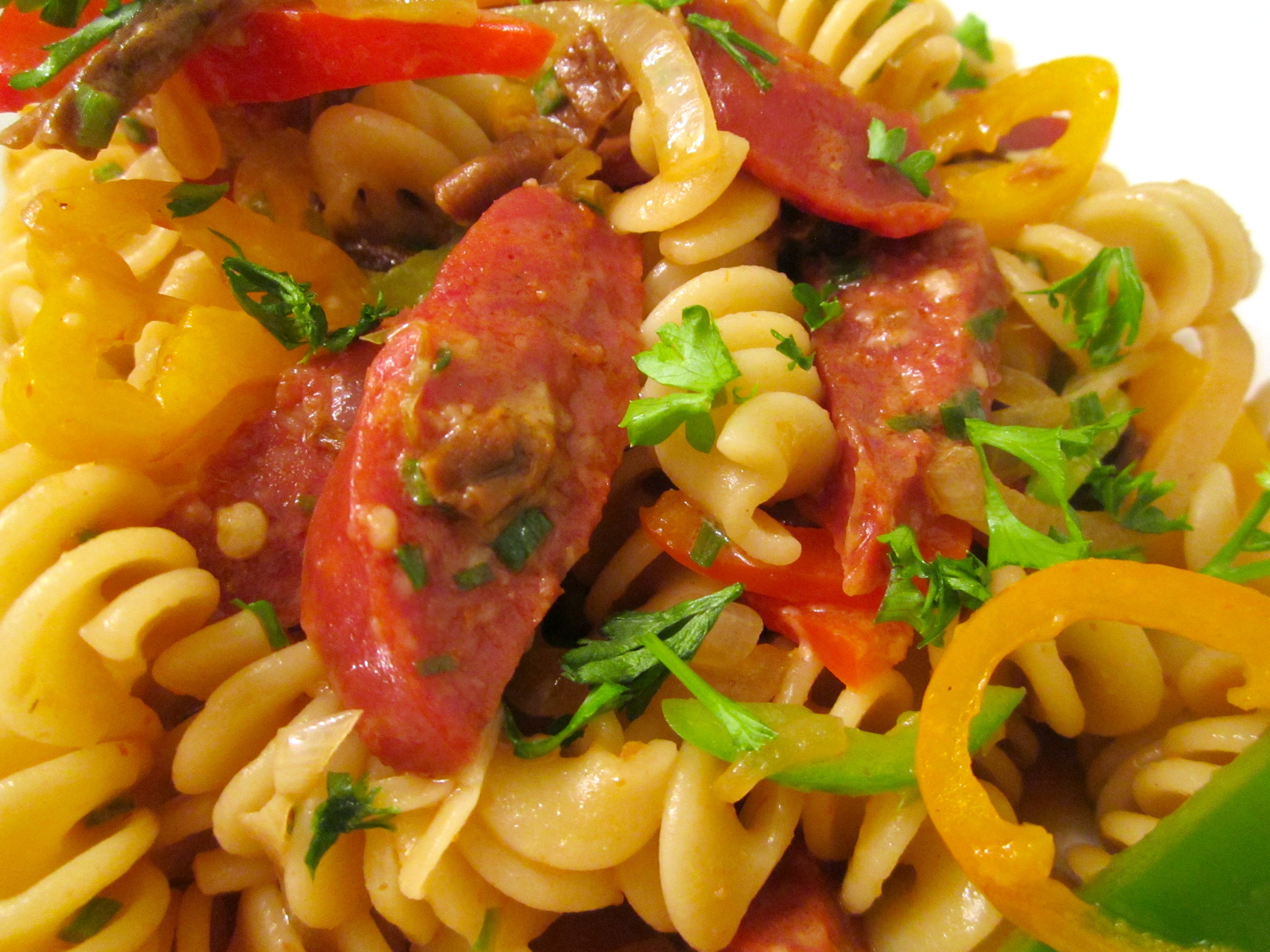
Rotelli, cepes, peppers and chorizo, giving non- offal lovers a break today .
( Offal will be back tomorrow, three dishes to go 🙂 . .
. Ingredient’s
Rotelli, cooked al dente, strained, reserve some cooking water Chorizo, sliced
Cepe mushroom, re-hydrated Onions, julienned Chili peppers, julienned Garlic paste, to taste
Kosher salt, to taste Cayenne pepper, to taste Olive oil, to saute Cilantro, coarsley chopped Manchego, finely grated
Butter, whole, not melted
Olive oil, to saute
Method :
Saute onions, garlic and cepes in olive oil, until fragrant,
add chilies, pasta and seasoning, toss well. remove from heat.
Add manchego cheese, butter and a bit of the cooking water from the pasta.
Toss again until the pasta is covered with a thin film of cheese sauce.
(Starch from the pasta, the butter, water and cheese will combine into
this delicious sauce). To serve, sprinkle with cilantro and more manchego cheese.














 ChefsOpinion