great taste

” Sadza ne Nyama ye Huku ” Zimbabwean Porridge with Chicken Stew

.
.
Last night’s Zimbabwean style dinner.

If you don’t read the name of the dish but only the recipe, you might think I was dining on portuguese food. That’s because portugal had a large influence on shaping the traditional Zimbabwean cuisine. I don’t want to go into the political/ historical aspect of that time, so let’s just stick to the food. Chicken stew with tomatoes has been cooked in many countries around the world for centuries,and so has corn, which was introduced to Zimbabwe ( formerlySouthern Rhodesia), by the Portuguese way back then. Fried cornmeal is still a very popular side dish in Portugal and so is chicken stew with tomatoes. Since I did not have white corn meal in my pantry, I used yellow corn meal. Different color, same texture, taste and pleasure  🙂
.

.


.

Excerpts from ifood.tv :
Sadza

” Sadza or sadza re chibage is an African version of porridge produced from cornmeal, mielie meal or maize meal and water. It forms the essential carbohydrate portion of African meals and is consumed in different forms in almost every African region. Due to the large variety of cultures and languages in the African subcontinent, the dish has a variety of names. For example, the local shona name for the porridge is Sadza in Zimbabwe while the local tribal Ndebele name for the same dish is isitshwala. In South Africa, the same dish is referred to as Mielie Pap while the Zambians refer to it as Nshima.  The dish is given another name in Eastern Africa including the states of Kenya and Tanzania where it is named Ugali. In the tiny state of Malawai, it is referred to as Sima. Furthermore, a large variety of cooking techniques are used along with different recipes to make the same dish.

History

Originally, a porridge made from millet formed the essential carbohydrate component of every African meal. Millet was a staple crop in the continent and it was easy to grind to produce millet flour. However, Kenya started actively growing corn which was exported to every state in the African continent. The grain was then ground to produce cornmeal and used to make a thick porridge which slowly replaced millet porridges in meals.

Ingredients and Preparation

White corn meal or mielie meal is now commonly used to produce the sadza but a few versions do use yellow cornmeal too. Yellow cornmeal is commonly referred to as KENYA as it was originally imported from Kenya. If mealie meal cannot be found, cream of wheat, or Pillsbury Farina flour can be used.  The actual method of preparation varies considerably but modern methods add the mielie meal to the water to mix it well. This paste is then poured into boiling water and cooked on a high heat continuously. As the sadza thickens, more mealie meal may be added. The sadza is done when the mixture pulls away from the pot and forms a ball. Traditionally, salt is not used to season the dish.

Serving

Sadza is prepared and served in a communal bowl from which each diner can serve himself. It can also be served in separate individual bowls from where diners pinch up small amounts, roll them into balls and then dip them into meat sauces, gravies, soya chunks, pumpkin leaves, sugar beans, spring beans or vegetable stews for consumption.

Popular Variations

Krummelpap is a South African version of Sadza prepared by ” ……….   Read more HERE
.

Sadza:

4 cups water

1 teaspoon kosher salt

2 1/2 cups white cornmeal

1. Pour three cups water and the salt into a large pot and bring to a boil. Combine 1 1/2 cups of cornmeal with the water, stir well and set aside.

2. Reduce heat of boiling water to medium low and add the cornmeal and water mixture, stirring constantly. Cook for two to three minutes.

3. Slowly shake in the remaining cornmeal, mixing all the while. Stir constantly as the mixture begins to thicken and pull away from the pot, approximately one minute. Immediately transfer to a separate bowl and use a wooden spoon to shape it into a round shape. Allow the sadza to cool slightly, then carefully use your hands (wet them if necessary) to pull off bits of the sadza, shape if desired, and serve with the stew.


Chicken Stew
:

2 yellow onions, diced, divided

2 tablespoons fresh minced ginger, divided

3 cloves garlic, minced

3 pounds vine tomatoes, seeded and chopped

1/4 teaspoon cayenne pepper

1/2 teaspoon black pepper, plus 1/4 teaspoon to season the chicken

1 1/2 teaspoons chili powder, plus 1/4 teaspoon to season the chicken

1 1/2 teaspoons kosher salt, plus 1/2 teaspoon to season the chicken

2 pounds chicken thighs, boneless and skinless, cut into 1″ pieces

1/4 cup chopped fresh parsley

1 bunch scallions, chopped

Vegetable oil

1. Coat a large, shallow pan with about two tablespoons of oil over medium high heat. Once hot, add two-thirds of the garlic to the pan and cook for about one minute. Toss in three-quarters of the onions and two-thirds of the ginger, cooking until the onions turn translucent, approximately 3-5 minutes.

2. Turn the heat up to a high flame and stir in the cayenne, black pepper, chili powder and salt. Cook another 2-3 minutes. Add the tomatoes and cook for 10-15 minutes, mashing them down every once in a while. Reduce the heat to low and simmer another 10-15 minutes, continuing the mash the tomatoes.

3. While the tomatoes cook down, pull out a separate, heavy pot. Coat the bottom with another two tablespoons of oil. Once hot, toss in the remaining onions, ginger and garlic and cook until the onions have turned translucent, approximately 2-3 minutes. As the onions and seasonings cook, season the chicken with the extra black pepper, chili powder and salt. Add the chicken to the pan and brown for approximately 3-4 minutes. Turn off the heat and set aside.

4. After the tomatoes have stewed, carefully scrape them into the cooked chicken. Add one cup of water, turn the heat to low and cover. Simmer for 20-25 minutes. Stir in the parsley and scallions and cook another 5 minutes.
>
Bon Appetit !   Life is Good !

.

.

” What Is A Real BBQ ?! ” Part 1

.
.

In my humble opinion,

these days’ the word BBQ means different things to different people.
I have lately come to the conclusion that to the majority of folk’s BBQ describes a social gathering of one or more people, the main purpose is to cook out in the open, enjoy the weather, food and company. (Even BBQ restaurant’s used to cook their food outside).
Since each region, restaurant, family and grill cook swears that their version (smoking, grilling, open fire, covered grill, etc) is the gospel, describing BBQ as a cooking method seems rather futile to me .
However, I had many a chef getting his / her knickers in a twist discussing what BBQ actually and REALLY means, so I just accept whatever is the explanation of the day.
( Even the origin of the word Barbecue seems to have different proponents ).
If I take my classical french training into consideration, you have the cooking methods :
Grilling (never covered), Smoking (always covered) Jerking ( a combination cooking metod, since we grill, smoke and steam at the same time) and “the way of Life BBQ”, where we use any cooking method traditionally employed in our area and / or backyard, invite a bunch of friend’s and family over and have smoked, grilled, jerked food, maybe a barrel of beer and lot’s of fun.
BBQ – happy cooking outside, whichever way, as long as you are having fun !    🙂
Please give us your opinion in the poll below.

Live is Good !


.

Brussels Grill: Mixed vegetables

Brussels Grill: Mixed vegetables (Photo credit: batigolix)

Beef and Corn on a Charcoal BBQ grill

Beef and Corn on a Charcoal BBQ grill (Photo credit: Wikipedia)

Some chicken, pork and corn in the barbeque

Some chicken, pork and corn in the barbeque (Photo credit: Wikipedia)

English: a typical offset bbq smoker

English: a typical offset bbq smoker (Photo credit: Wikipedia)

English: Image of a propane smoker in use. Dia...

English: Image of a propane smoker in use. Diagrams the elements. (Photo credit: Wikipedia)

English: Preparing grill for grilling, grill w...

English: Preparing grill for grilling, grill with flames and cones. Česky: Příprava grilu pro grilování, gril s plameny a šiškami. (Photo credit: Wikipedia)

English: Chicken wings being cooked slowly ove...

English: Chicken wings being cooked slowly over charcoal ashes. (Photo credit: Wikipedia)

English: "Little Chief" food smoker,...

English: “Little Chief” food smoker, popular in the Pacific Northwest for home smoking of fish and meat (Photo credit: Wikipedia)

Pork steaks cooking over a charcoal fire

Pork steaks cooking over a charcoal fire (Photo credit: Wikipedia)

English: A barbecue on a trailer at a block pa...

English: A barbecue on a trailer at a block party in Kansas City. Pans on the top shelf hold hamburgers and hot dogs that were grilled earlier when the coals were hot. The lower grill is now being used to slowly cook pork ribs and “drunken chicken”. (Photo credit: Wikipedia)

Can't claim credit for this cooking, my friend...

Can’t claim credit for this cooking, my friend Paul was responsible. (Photo credit: Wikipedia)

This is a traditional asado. The picture shows...

This is a traditional asado. The picture shows ribs grilled in the traditional Argentinean way. The meat is on top of the grill and the charcoal or wood at low fire under the grill. (Photo credit: Wikipedia)

Deutsch: Bratwürste auf einem Grill

Deutsch: Bratwürste auf einem Grill (Photo credit: Wikipedia)

Español: Cocinando carne para hamburguesa al g...

Español: Cocinando carne para hamburguesa al grill. (Photo credit: Wikipedia)

Barbecue

Barbecue (Photo credit: Johann Richard)

The smoking setup - left

The smoking setup – left (Photo credit: ntang)

Pork ribs being smoked

Pork ribs being smoked (Photo credit: Wikipedia)

Cooks remove racks of herring from a tradition...

Cooks remove racks of herring from a traditional smokehouse (Heringsräucherei) (Photo credit: drakegoodman)

English: Barbecue grill trailer and church, In...

English: Barbecue grill trailer and church, Index, Washington. (Photo credit: Wikipedia)

.
.


.
.

” Porcini Crusted Pork Chop “

.
.
Yesterday’s dinner – simple,  yet soooo satisfying.
Pork & Porcini, a match made in food lover’s haven
.
.

.
.


.
.
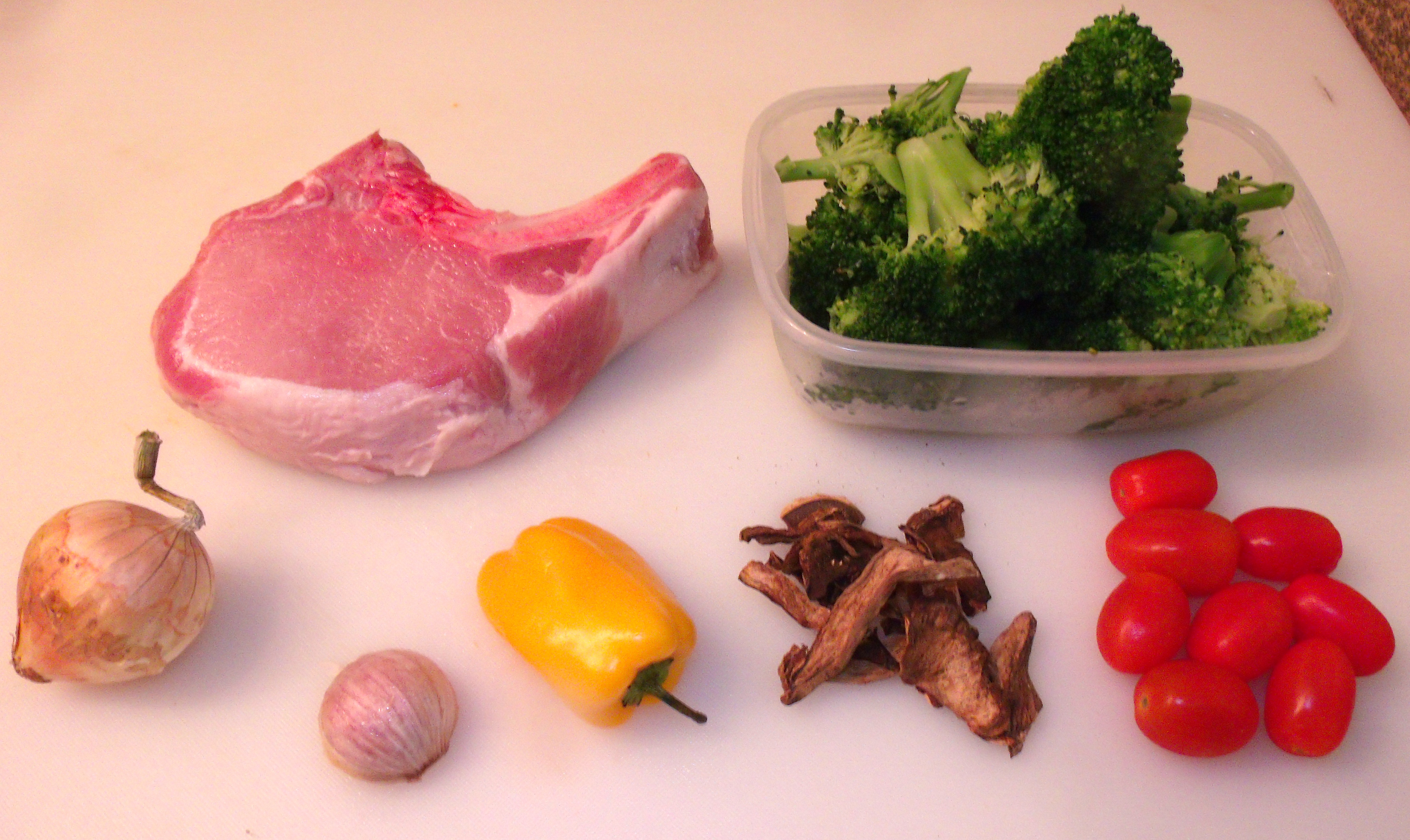
Season pork chop with salt and cayenne pepper,
Dip into finely chopped dry porcini, sautee in olive oil on
low heat until center reaches 162 F.
Let chop rest for five minutes before serving.
Meanwhile, saute onion and garlic in olive oil, add broccoli, tomatoes and chili.
Season with salt, pepper and a dash of Maggi.

.


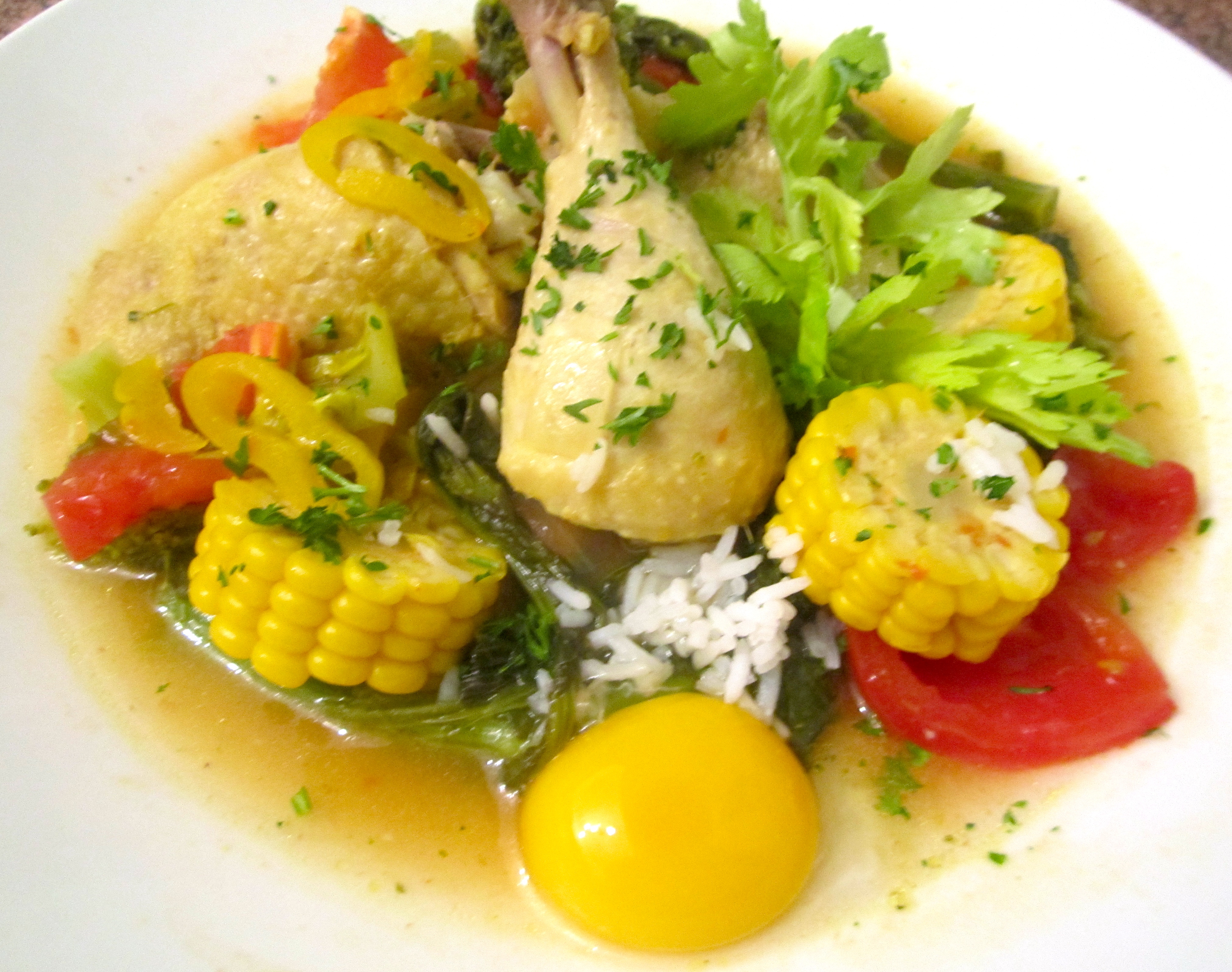
“ Quer durch den Garten “ ( Across the Garden)

.
.
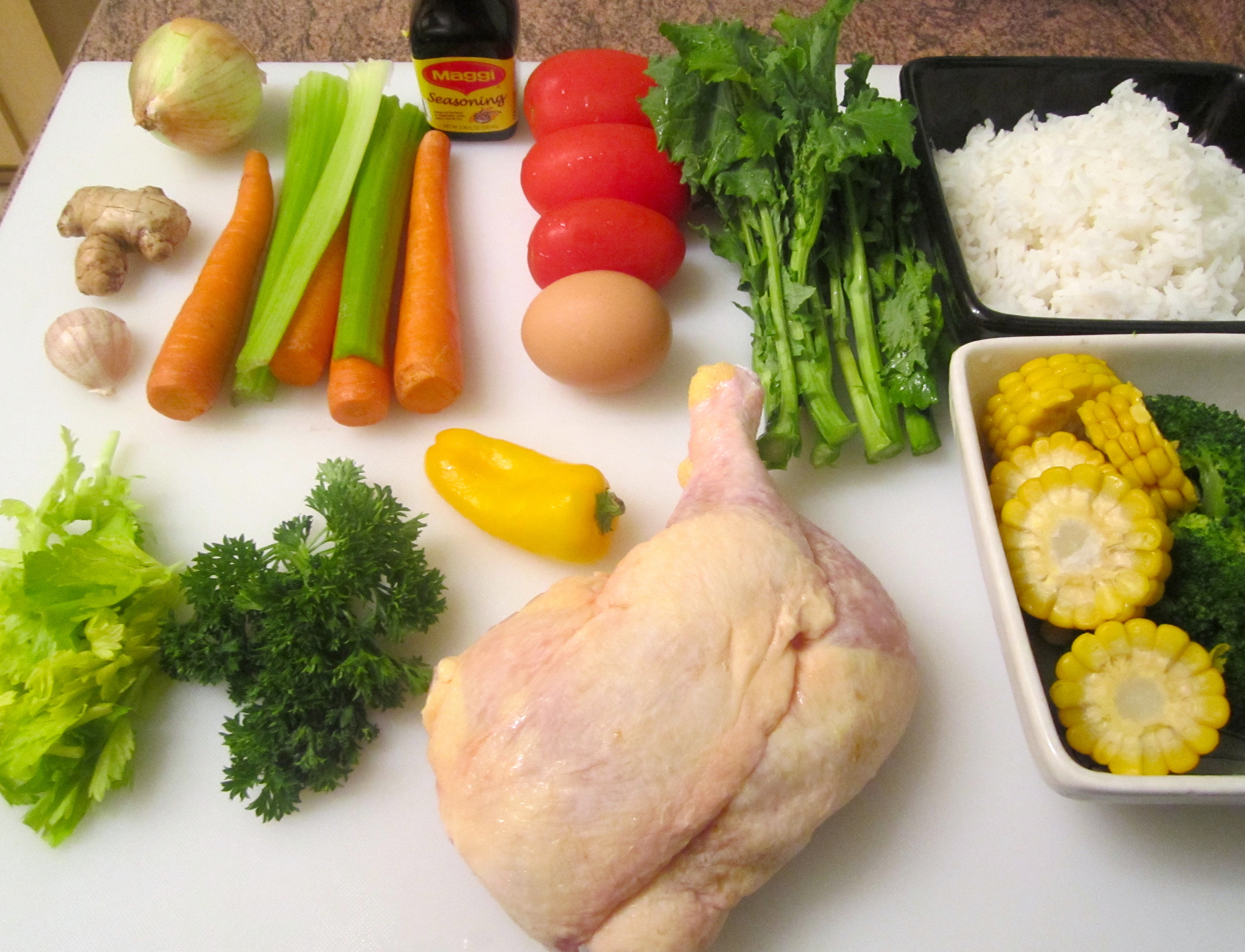
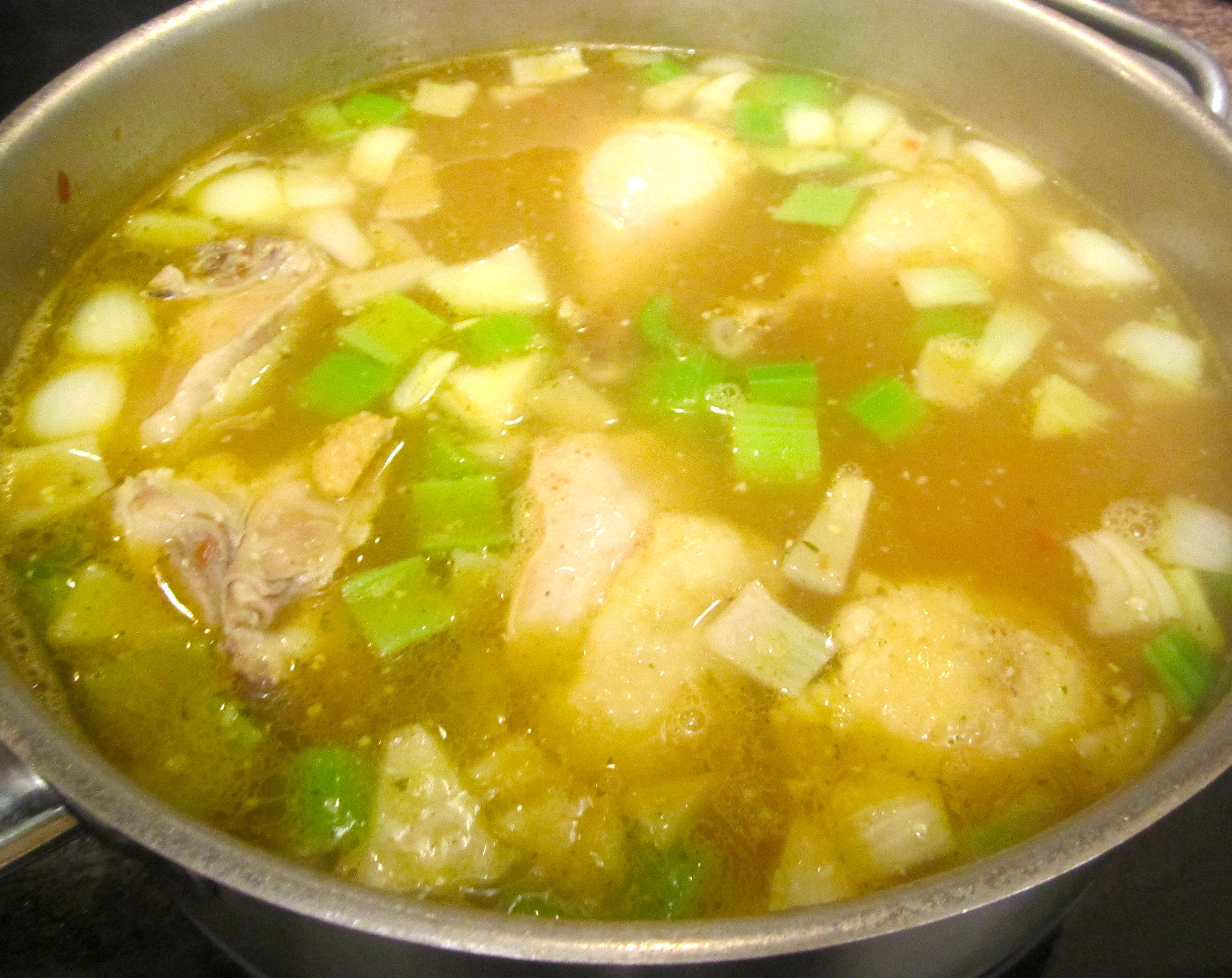
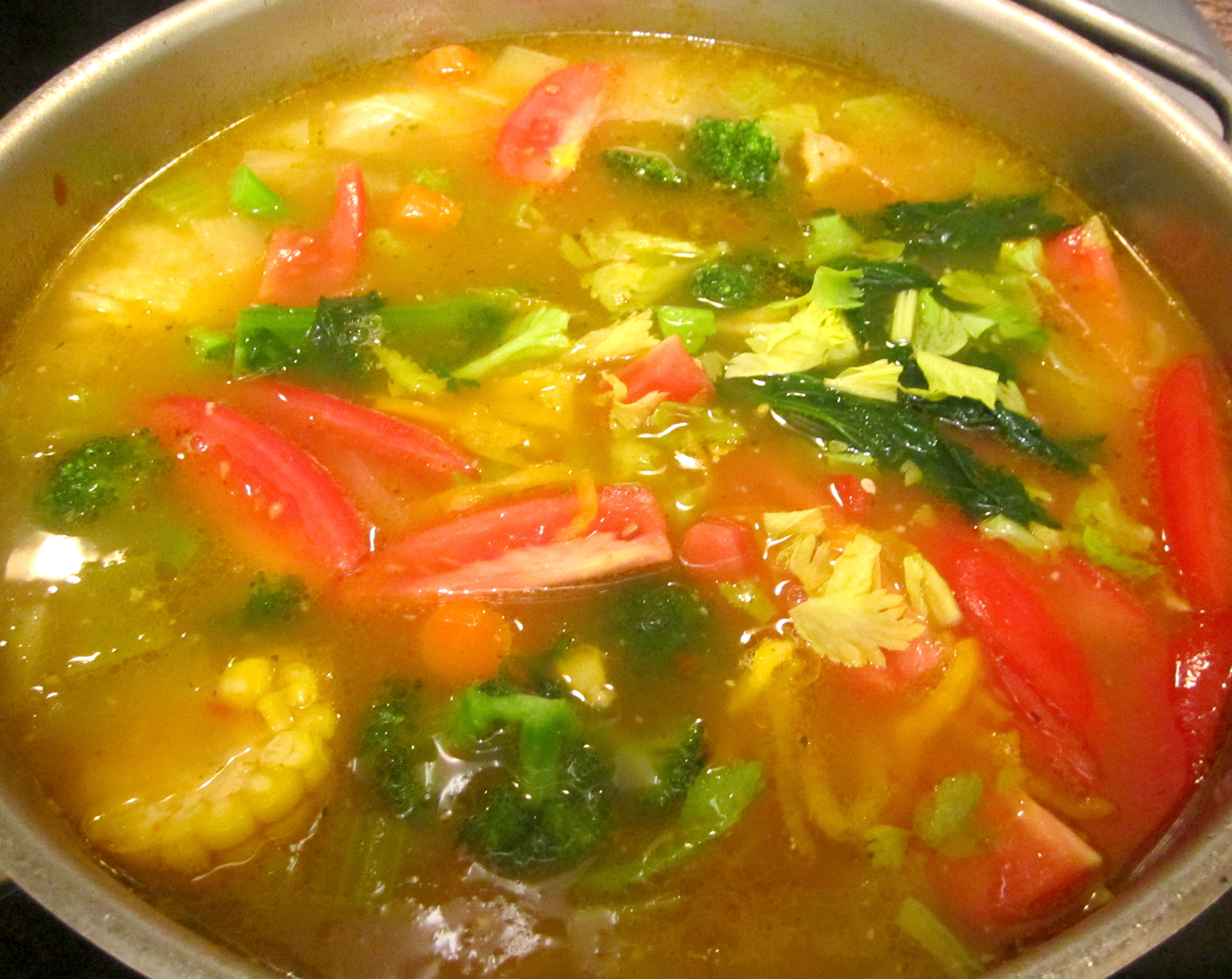
When I was a kid, during the summer and the harvest season my mother, usually at least twice a month on a saturday, made a stew she called “quer durch den garten”, which literally translates into “across the garden”. It was never the exact same stew because she used whatever fresh vegetables were available that day and usually a stew-cut of beef, sometimes sausages or chicken.The starch was either potatoes, pasta or rice, depending on what was leftover in the fridge or readily available from the cupboard. When we sat down to the table we never knew which vegetables, starch or protein to expect. Traditionally, most folk’s  don’t put egg into the stew, but I like the added richness when you mix it with the broth. However, there was always an abundance of fresh vegetables and herbs. I believe this is the dish which has installed  my livelong love for stew’s of any kind in me .


.


.
.
P.S.
The combination of beef, vegetables, spaetzle, herbs and fried onion  is called “ Geisburger Marsch”

Bon Appetit ! Life is Good !
.
.

” No Frikadelle Tonight – It’s Beef Burger Time ! “

>

>

Tonight I will hopefully convince everybody that you can love
both, a good frikadelle and a good beef burger.
As usual, I will put my own twist on it.
Here we go :
.


.
.


.
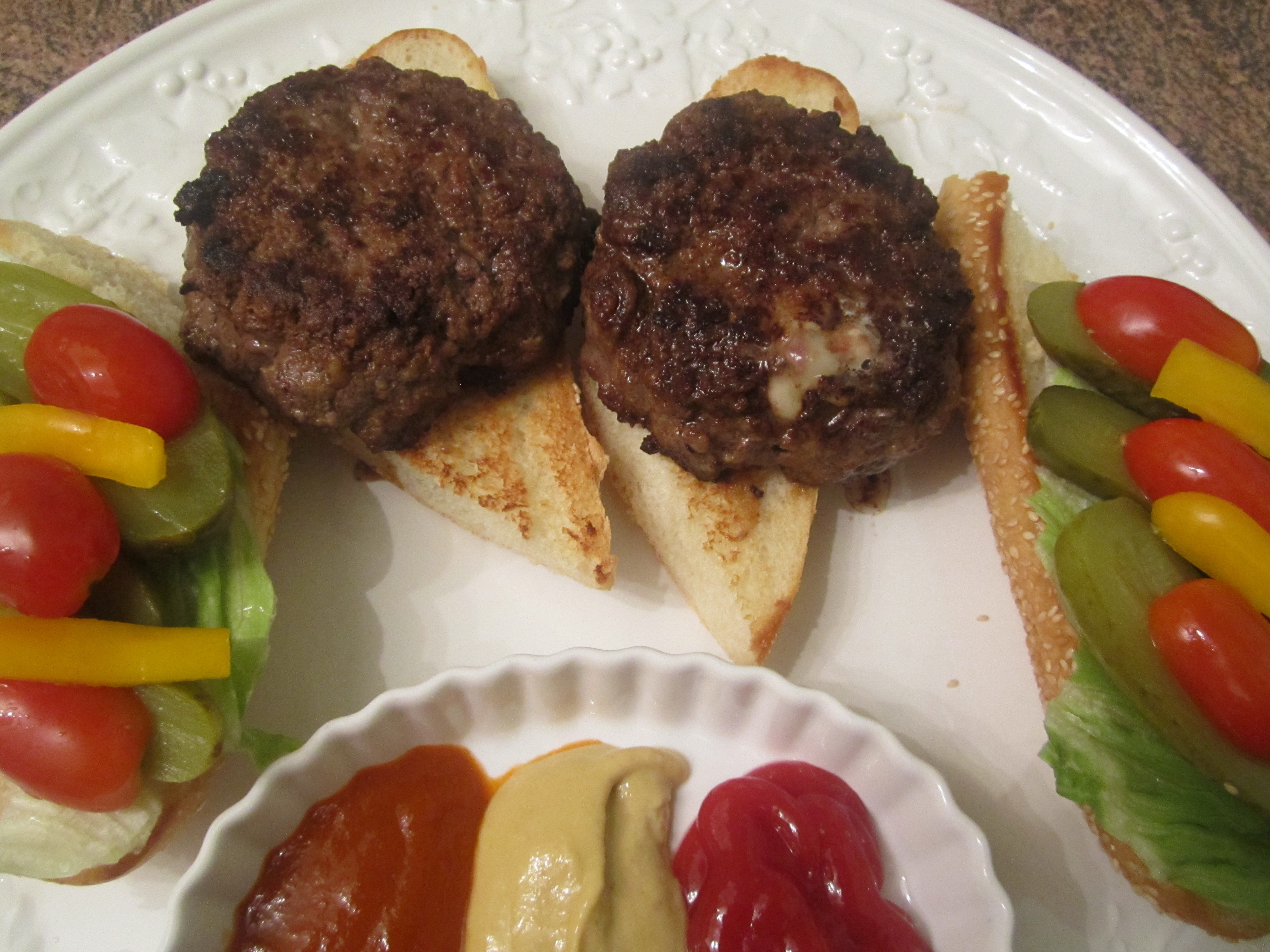
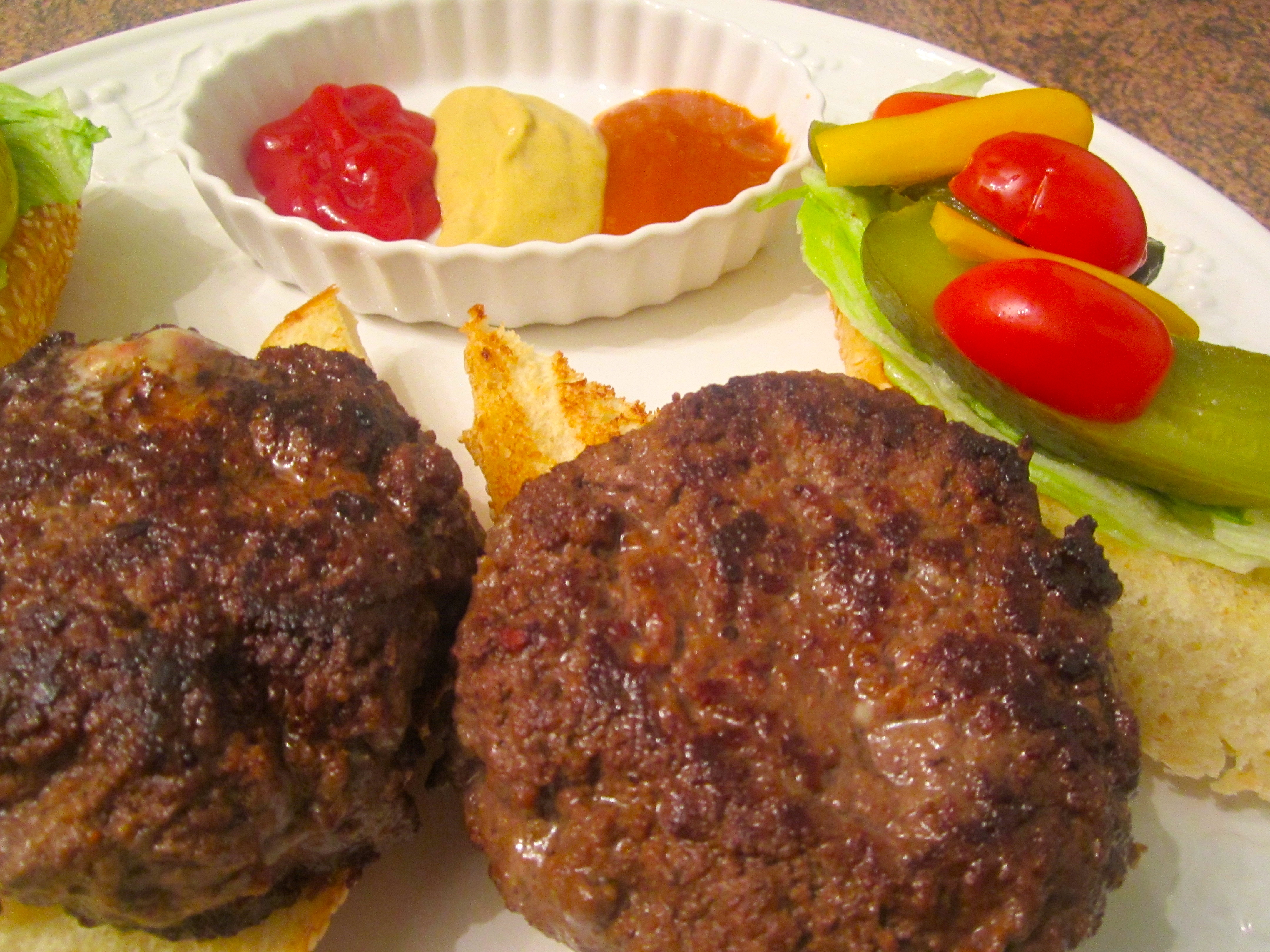
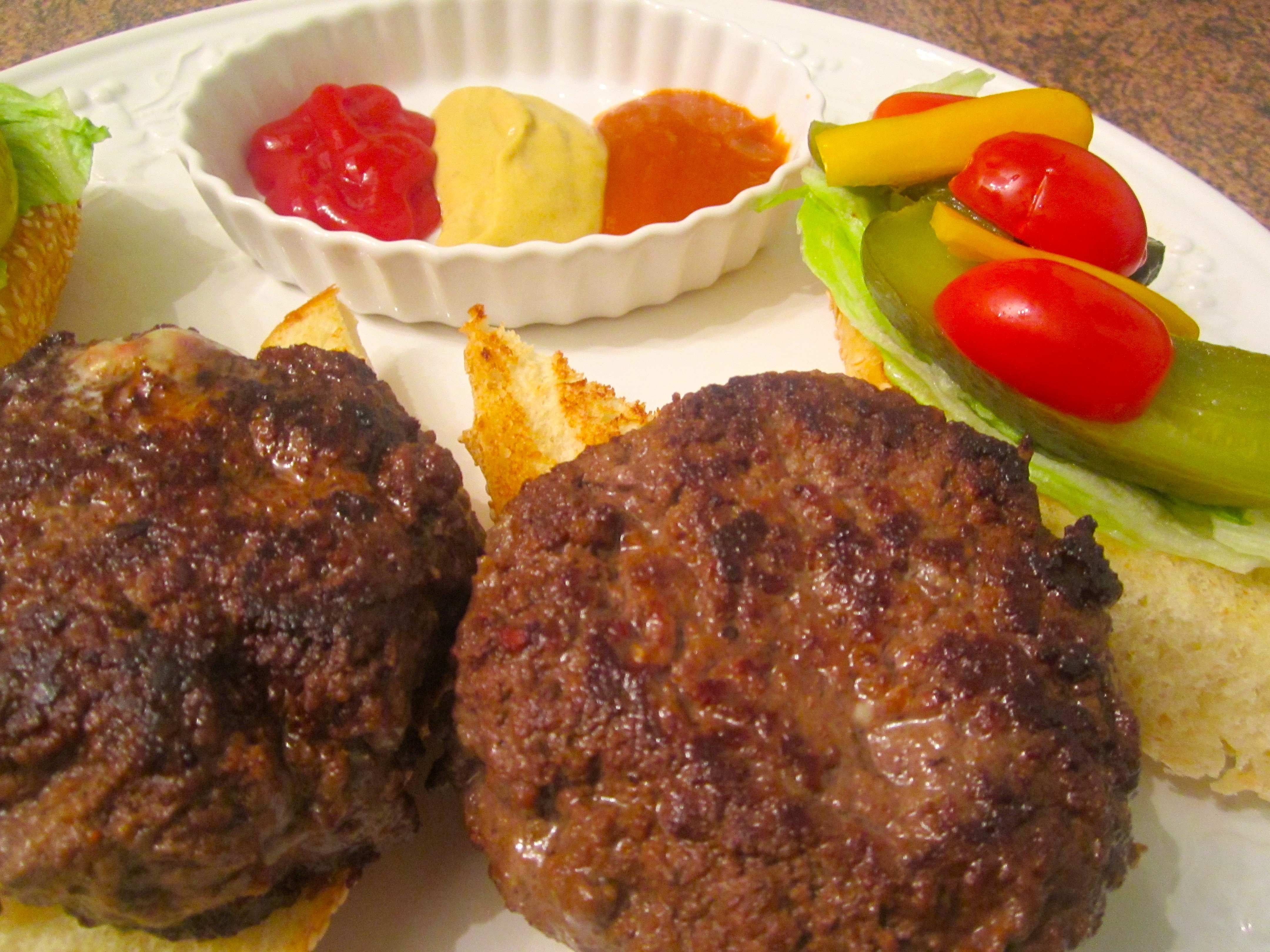
Cheeseburger My Way “
As you know, in order to get all the benefits of good quality ground beef, you must choose the best quality meat and handle it as little as possible. In this case I took two 14 oz striploin and grinded them at home with my cuisine art. In order to keep the meat from drying out, I made a  pepper jack cheese and butter sandwich, which I then encased with the meat and shaped it loosely, avoiding to press it too much as to keep the texture of the meat loose and tender. The flavor added by the melting butter and cheese to the beef while it cooks takes the whole thing up three notches.

.
Cut hoagie rolls or bun of your choice in half, spread generously with Butter and broil cut side until golden. Set aside.
Carefully spread the beef out on a cutting board in a ¾ # layer without squeezing it.
Sprinkle with kosher salt, black pepper and a dash of garlic powder.
Lightly mix without squeezing it.
Divide into four parts.
Put one part of the beef on a cutting board, top with the cheese / butter sandwich,
cover with another part of beef and form a loose patty.
Repeat with rest of ingredient’s.
Sautee in olive oil until it almost reaches the required doneness.
Discard oil, add two tablespoon of butter and sautee until butter starts to brown.
Let rest on absorbent paper for five minutes before serving.
Use garnish of your choice. For dipping I use ketchup, dijon and sriracha.

>

Bon Appetit ! Life is Good !
.

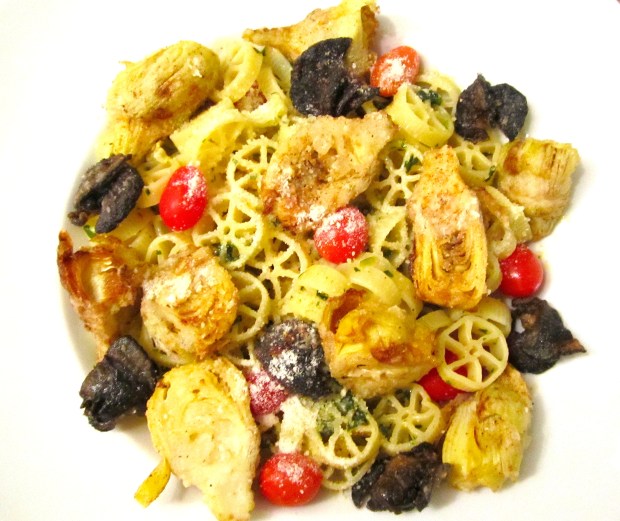
” Rotelle, Artichokes, Snails & Grape Tomatoes “

.
.
A  few months ago I had one of these “whatever is in the cupboard” moment’s.
Low and behold, some of my favorites : Pasta, snails, artichokes.
The wonderful result of this :
.
.
Personally I think it looks great, and best of all, it tastes even better. 
That and the different textures made it an outstanding dish           🙂
.
Boil the rotelle, strain, reserve some of the cooking water.
Make a mixture of cornstarch, flour, salt, garlic powder and lemon-salt.
Dredge the snails in the mix and fry at 375 degrees until crisp on the outside,
but moist and plum on the inside.  Reserve on absorbent paper.
Fry the artichokes and reserve the same way.
Saute finely chopped garlic and onion in olive oil until opaque.
Add rotelle, a good amount of soft (not melted) butter, finely grated
parmesan cheese, tomatoes and some of the cooking water to the pot
and stir until a sauce forms that coats the pasta lightly.
Season with salt and pepper.
To serve, place pasta on bottom of plate or bowl, top with snails and
artichokes and sprinkle with parmesan and chopped parsley.

Bon Appetit !   Live is Good !
.

.

” For Offal Lover’s Only ! “

.
.
Friend’s, by now you have probably realized that some of my recipes and / or pictures
are of food which is a bit outside the mainstream. ( Some of my articles as well ? )
Yesterday I came across this article in the huffpost which reminded me again how
far most of our young “colleagues” and their guest’s / client’s in the culinary world
have moved away from the well rounded professionals we oldtimers were trained to be.
It praised the new generation of inventive and adventurous and oh so clever chef’s for
using the whole animal. WOW!
When I apprenticed in the sixties back in Germany, we were used to getting delivered
the whole animal, or if this was impractical because of it’s size and weight, a half  (veal,
pig, stag, boar) or a quarter (beef). Fresh game was always  dropped off whole by
the village hunter, and two four times a year we slaughtered our own pig’s which we
raised mostly on food scrap’s from the restaurant. So, on most restaurant’s menu’s
you wood find cut’s from ALL part of the animals. From snout to huff and tail and just
about  anything in between was used for a well rounded menu, at small country inn’s
all the way up to five star restaurants.
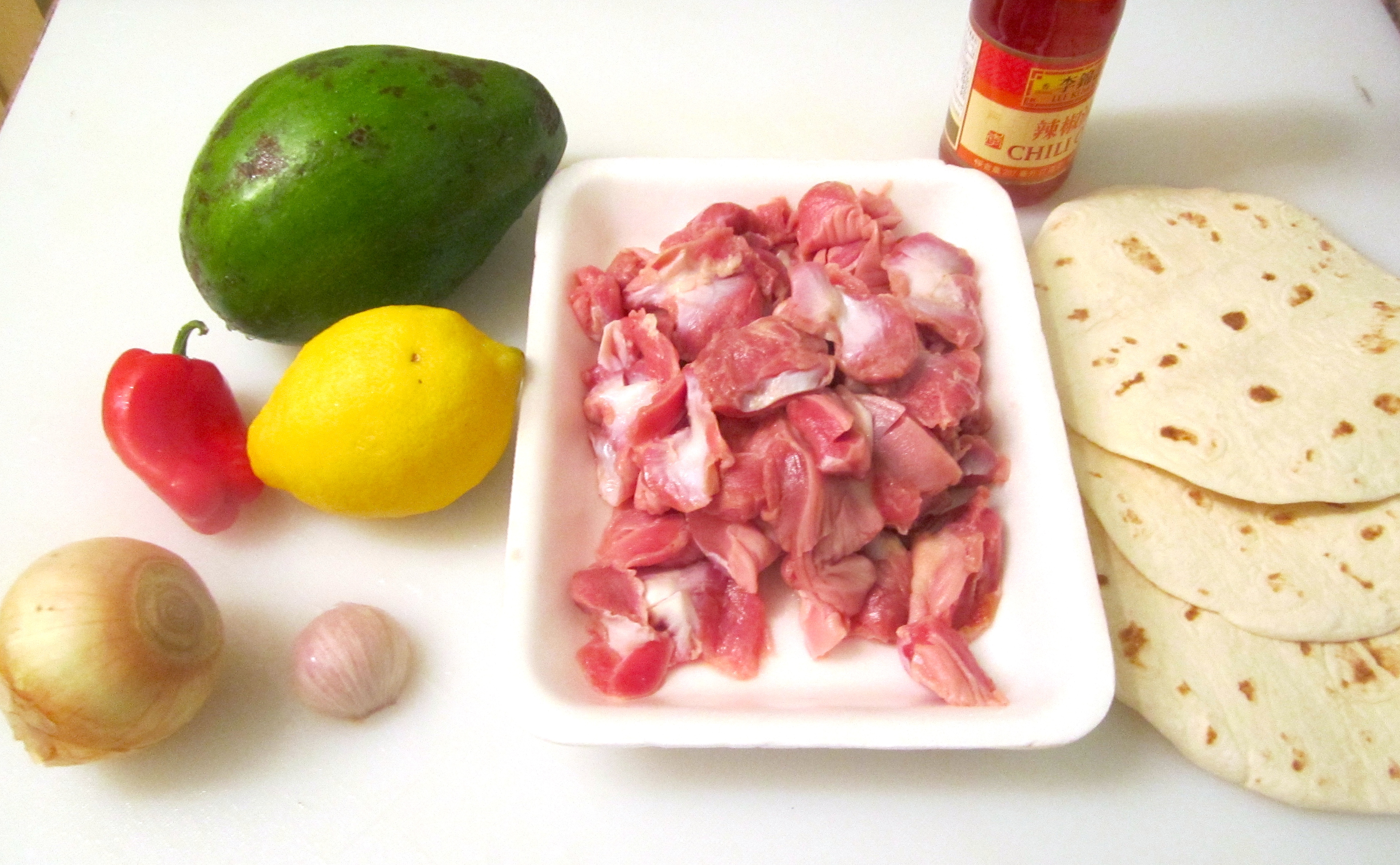
So,  in this spirit, here is my take on Gizzards :

” Fried Spicy Gizzard’s, Guacamole & Totopos ”
.


.
.
Simmer the cleaned gizzards in red wine, garlic, salt and cayenne pepper until tender. Strain, dry.
Season with salt, cayenne pepper and garlic powder and fry until the edges become crisp.
Don’t fry too long or they become dry and tough. Season and fry the onions the same way.
To serve, sprinkle with cilantro and chili flakes.

Because I served these with guacamole, I did not need a dipping sauce .
If you want to use a dipping sauce, try this:
Soy sauce with scallions, lime juice, sriracha and a bit of rice wine and sugar.     🙂
.

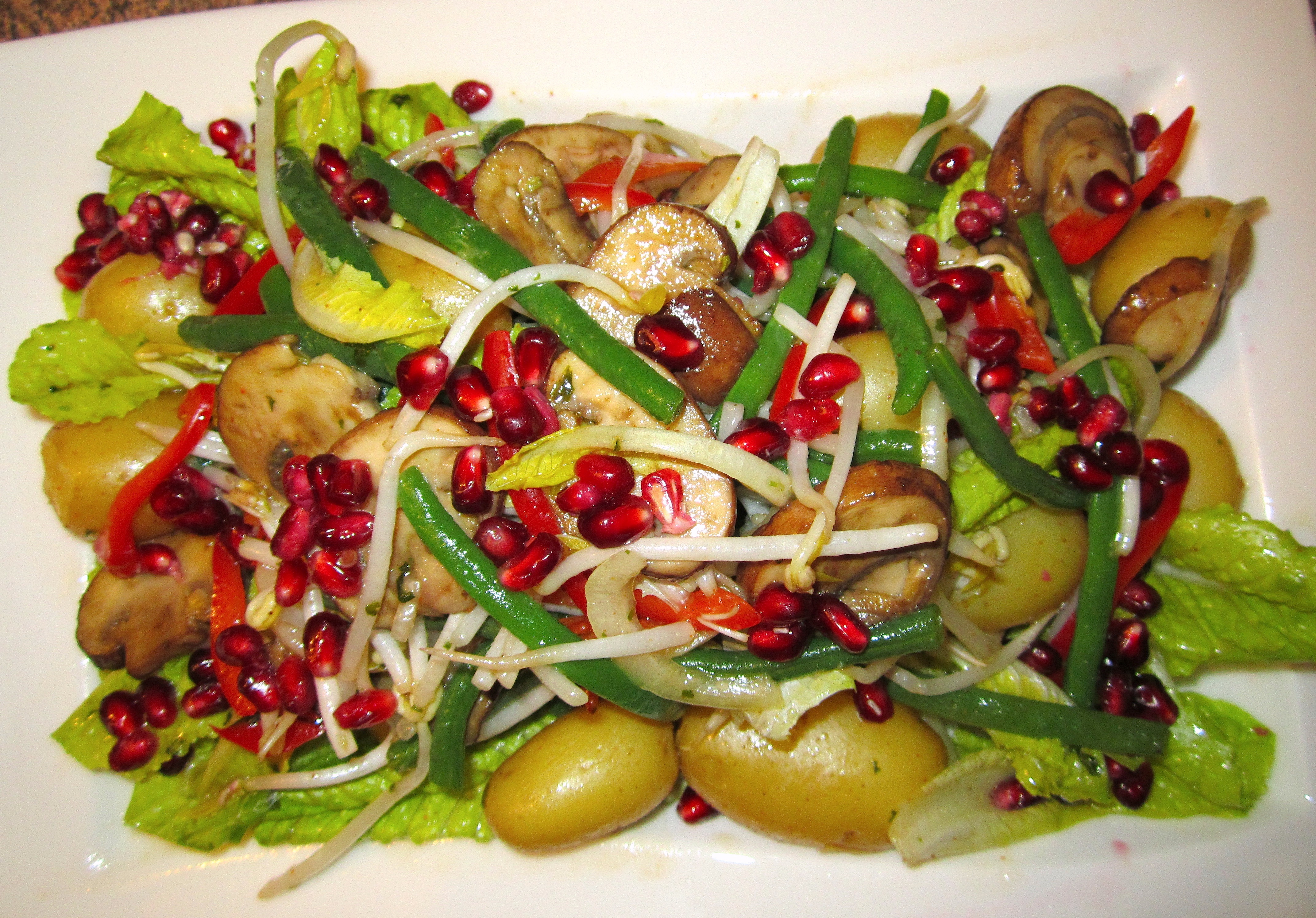
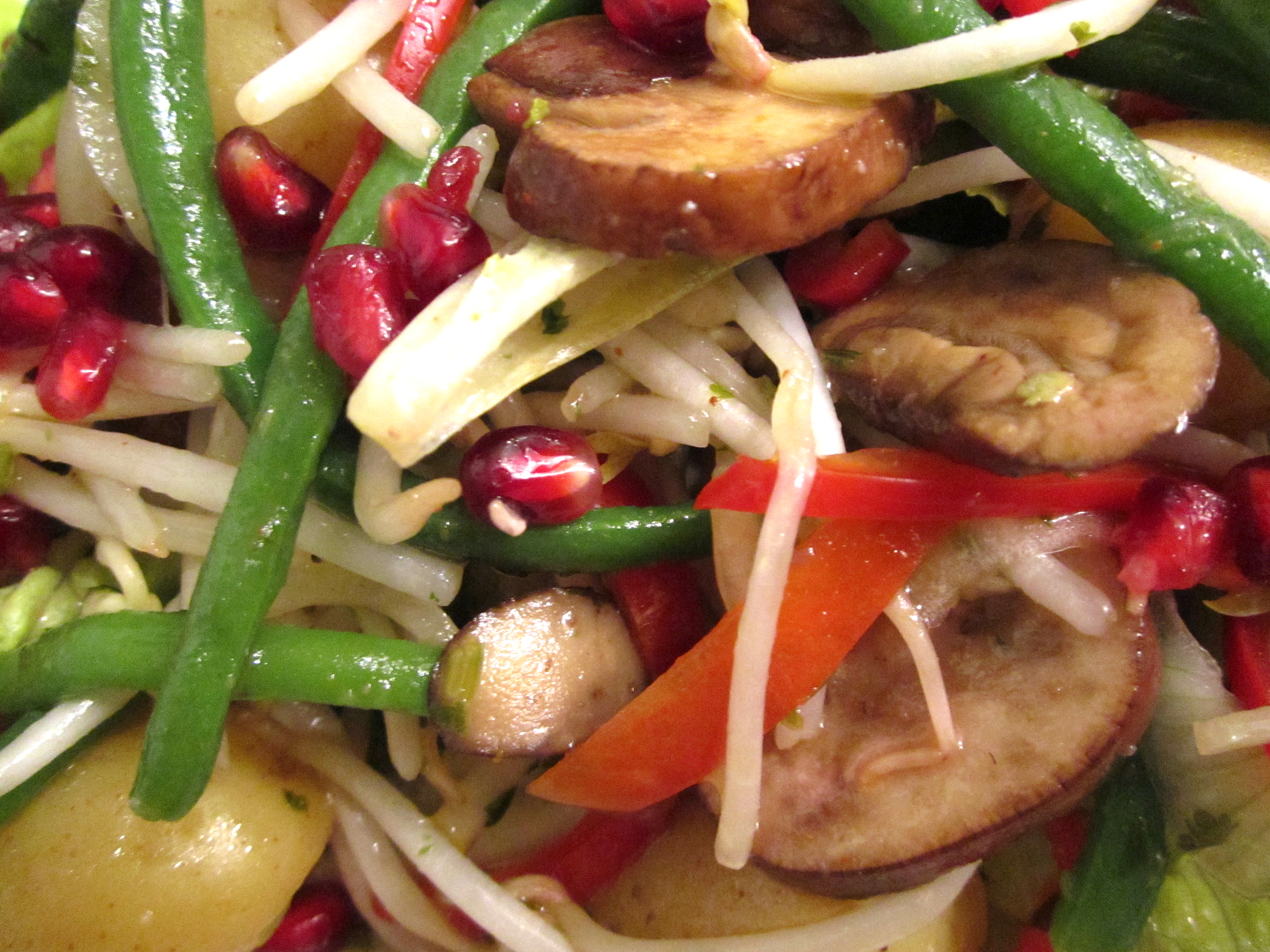
” Salad Of Lettuce, Vegetables & Pomagranate “

.
.
It is sooo damn hot outside !

Lunch in the garden in this heat must be refreshing and light.
If you omit the potatoes, this salad would also be a great,
colorful starter or snack in between meals              🙂
.
Salad:
New or baby potatoes, cooked
String beans, cooked
Romain lettuce
Bean sprouts
Baby porto’s sauteed with garlic in olive oil
Red bell pepper, finely julienned

Dressing:
Pomegranate seeds
Pomegranate juice
Lime juice
Salt
Pepper
Olive oil

Bon Appetit !   Life is Good ! 


.
.

Culinary innovators

“ Red Lentils & Bell Pepper Burgers “

.
.
Red Lentils & Bell Pepper Burgers,
Served With Raita

For one of those meatless, healthy day’s  🙂

Ingredients

2 lbs red lentils, cooked until tender

2 lg egg

½ cup panko breadcrumbs

1 med green bell pepper, diced, sautéed

1 med red bell pepper, diced, sautéed

1 med onion, finely diced, sautéed

Garlic, minced, to taste, sautéed

2 tblsp Cilantro,  coarsely chopped

Cumin, to taste

Curry powder, to taste

Kosher salt, to taste

Cayenne pepper, to taste

Oil to sauté


Method

Mix all ingredients except the tofu and oil. Shape into ball’s, make an indent and fill with tofu.
Sprinkle lightly with additional bread crumb’s and sauté until golden and heated through

Raita

Grated cucumbers greek yoghurt, garlic powder, cilantro, salt, pepper.
Use quantities according to your preferences.

Bon Appetit !   Life is Good !
.
.
 

” Rose Petal Ice Cream “

.
.

 by  on July 5 2012 in DessertsFeaturedRecipe

While not a prevalent flavor in the United States, rose is fairly common elsewhere. Across the Middle East, particularly Iran, it is used to flavor all manner of sweets. Ice cream is the only use of rose in food that I have found palatable. Rose candy tastes like grandma’s perfume to me, and rose scones just taste wrong. But the ice cream gives a nice rounded sweetness that is just right for such a delicate flavor. The rose petals themselves are not really potent enough to stand up to the amount of sugar and cream that ice cream requires, so it’s fleshed out with rose water.
Rose water can be found at most Middle Eastern grocery stores and at specialty stores. The potency of the rose water will vary from brand to brand, so you may want to start of by whisking in one teaspoon at a time until you are satisfied with the flavor. I used Nielson-Massey, which is pretty strong.

Rose petals should be unsprayed, or organic. The best would be from a friend or neighbor, as they would be the freshest. Otherwise try natural foods stores or a florist/nursery specializing in organic flowers.

Rose Petal Ice Cream

Using the method found in Jeni’s Splendid Ice Creams 

Makes about 1 quart

Ingredients

  • 1 cup packed  petals from organic or unsprayed roses (30g)
  • 2 cups milk (475ml)
  • 2/3 cup sugar (150g/5.5oz)
  • 4 tsp corn or tapioca starch
  • 1 tsp beet powder (optional—this will give it a nice light pink color)
  • 3 tbs cream cheese, room temperature (1.5 oz/45g)
  • pinch of salt
  • 2 tbs corn or tapioca syrup (30ml)
  • 1 1/4 cup heavy cream (300 ml)
  • 2-4 tsp rose water (10-20ml)

Method

  1. First, get your bowls ready. In a small bowl, whisk the corn or tapioca starch (and the beet powder if using) with 2 tablespoons of the milk until a smooth slurry is formed. In a medium bowl, whisk the cream cheese and salt until smooth. Fill a large bowl with ice and a small amount of cold water. Place a mesh sieve over an empty medium bowl.
  2. Coarsely chop the rose petals. In large saucepan, toss in the petals, the remaining milk, the cream, sugar, and corn or tapioca syrup. On medium-high heat, bring the mixture to a rolling boil. Set a timer for 4 minutes (timing is very important). After the four minutes, remove from the heat and gradually whisk in the slurry. Bring the mixture back to a boil and cook, stirring frequently, until slightly thickened, about 2 minutes. Remove from the heat. Pour the mixture through the sieve and press against the rose petals to extract as much milk as possible. Discard the petals.
  3. Ladle a bit of the hot milk into the cream cheese and whisk until smooth. Gradually whisk in the rest of the hot milk. Whisk in the rose water one teaspoon at a time, adjusting to taste.
  4. Pour the mixture into a 1-gallon freezer Ziplock bag and seal. Plunge this into the ice water bowl and knead gently until the mixture is well chilled. Churn according to your ice cream maker’s instructions. Spread into a shallow container, cover with plastic wrap, and seal with an air-tight lid. Freeze until firm, about 3 hours. This will keep in the freezer for up to two weeks.