Yesterday’s light and healthy dinner :
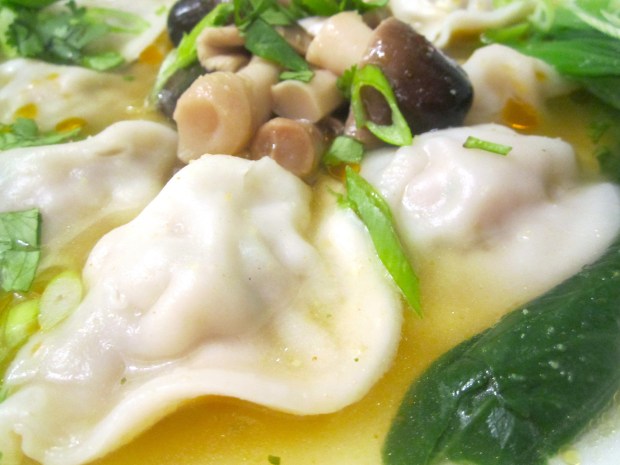
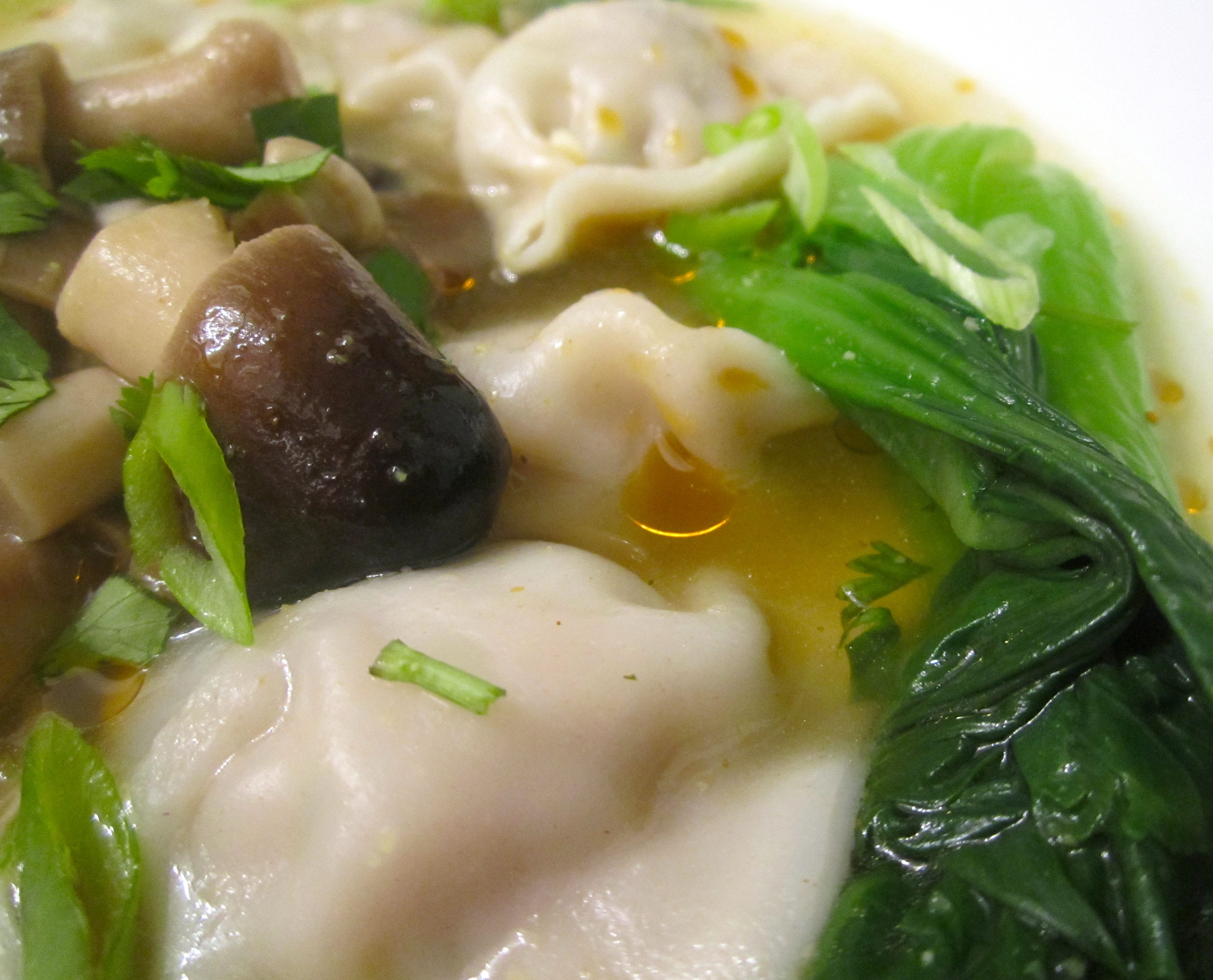
” Vietnamese pork & mushroom dumpling soup “.
I made twenty two dumplings, could not stop eating,
ate all of them at once ( Bella helped a bit. ) . .
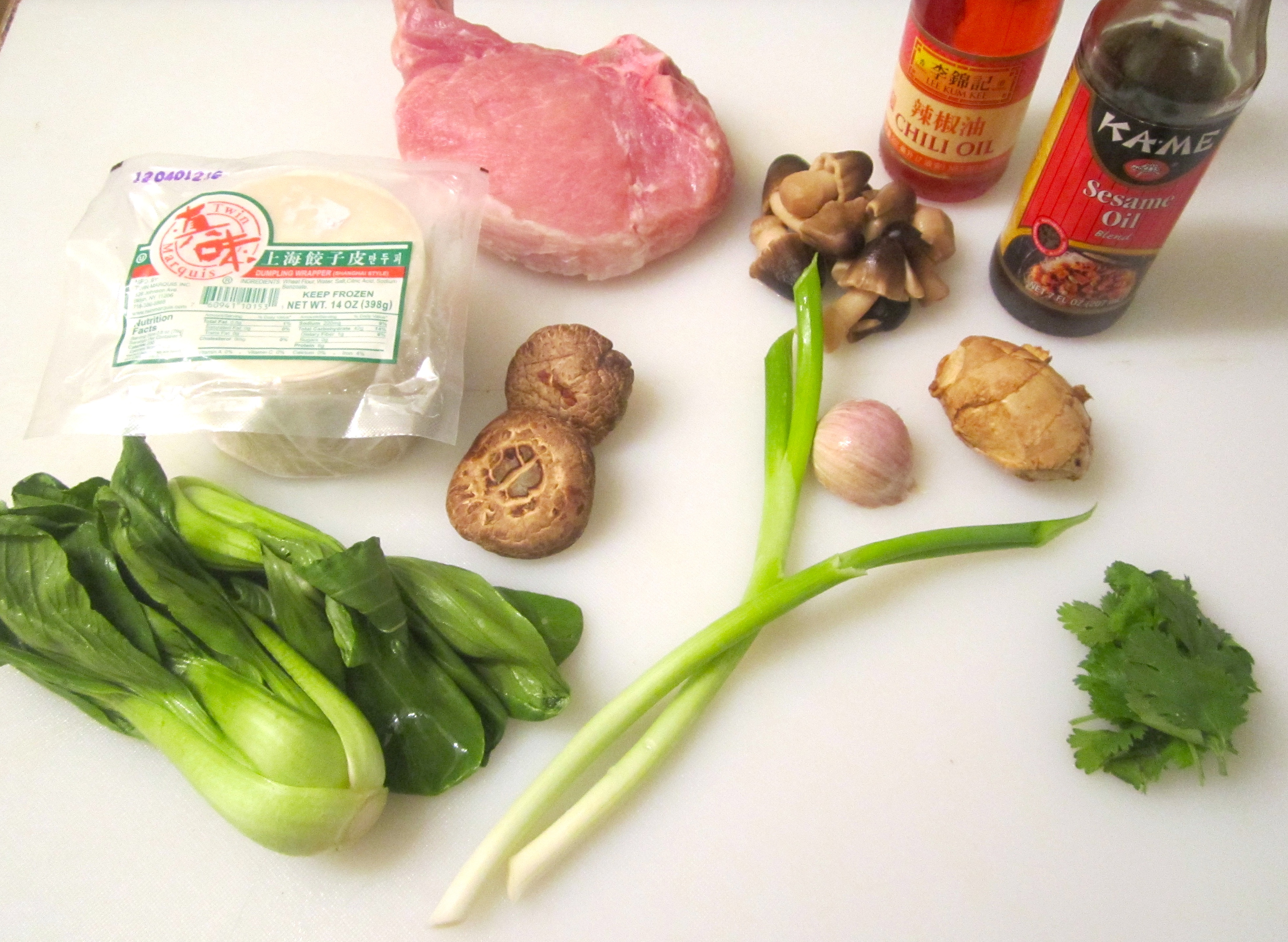
. Dumplings: .
Won ton wrappers, roundPork, very finely chopped or ground Shiitake mushrooms, chopped Scallions, very finely sliced Egg white
Ginger, grated Garlic, grated Sesame oil
Fish sauce (Nuoc Mam)
Salt, cayenne pepper . Soup: . Chicken broth
Baby bok choy, blanched Straw mushrooms
Ginger, grated
garlic, grated
Scallions, sliced
cilantro, coarsely chopped
Fish sauce (Nuoc Mam)
Sesame oil Chili oil
Justsome of the places I worked at over the year’s.
Many places don’t exist anymore and don’t have
any pictures on the net. I can’t even find a picture
of my own restaurant ” Gildenkeller ” I had for
a while in East Germany 😦
If anybody out there who worked with me at any point
can help me with pictures of places which are missing here,
I would highly appreciate it if you would contact me. Thank’s 🙂
Life is Good ! > >
(Hover or click a pic to see the name and location of the place) >
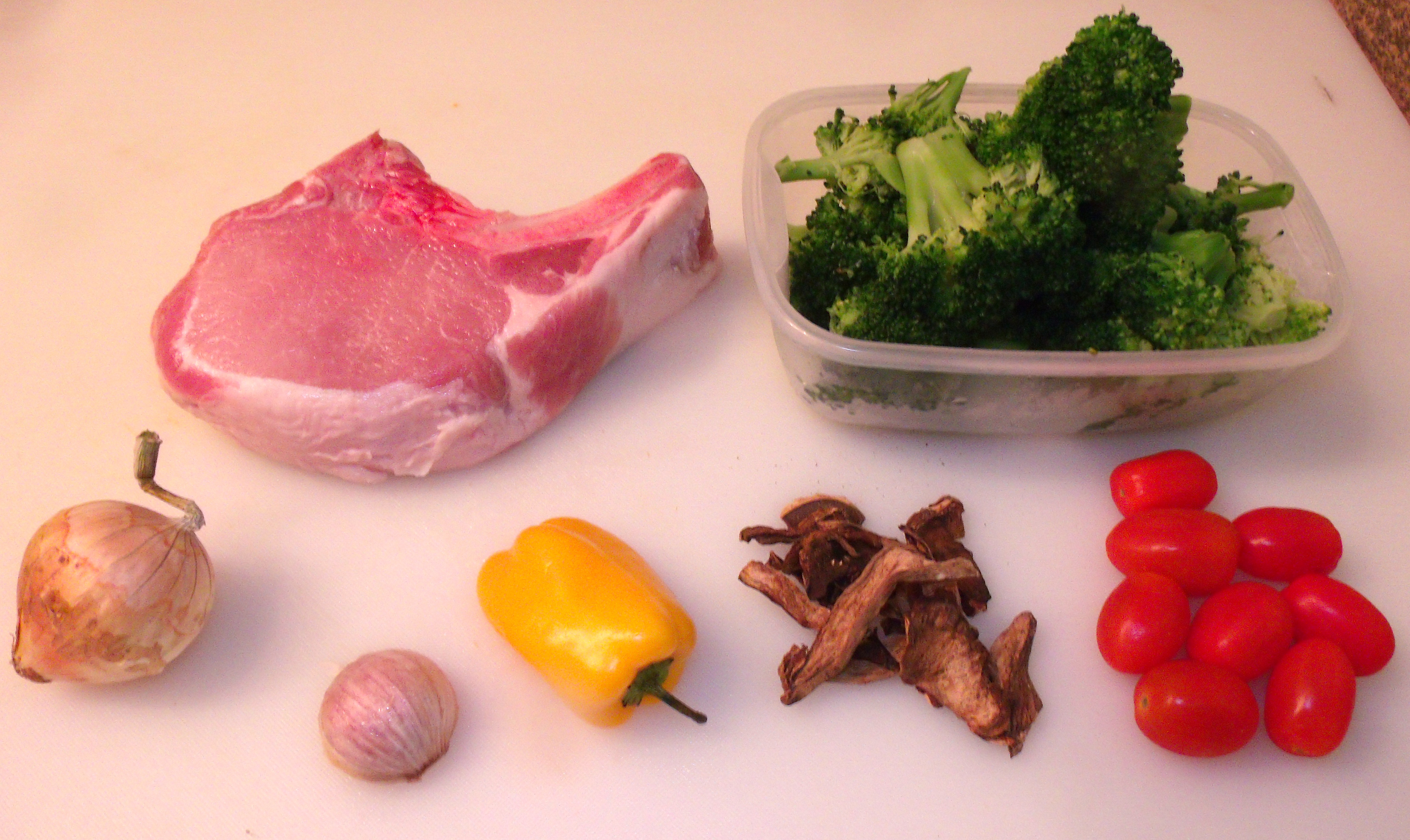
. . Yesterday’s dinner – simple, yet soooo satisfying. Pork & Porcini, a match made in food lover’s haven . . . .
. . Season pork chop with salt and cayenne pepper,
Dip into finely chopped dry porcini, sautee in olive oil on
low heat until center reaches 162 F. Let chop rest for five minutes before serving. Meanwhile, saute onion and garlic in olive oil, add broccoli, tomatoes and chili. Season with salt, pepper and a dash of Maggi.
Below find a few recent comment’s by passionate and no doubt competent chef’s.
Some apparently look at thing’s more flexible then others, some might understand the context of a specific situation better than others (in this case, a lighthearted, food loving Blog by a chef who has probably seen it all and understands that different situations sometimes call for different measures. Because I am so passionate about food, I’d like to hear other folk’s opinion about this, because it comes up quite often across the food world. At this point, it is not important to me if I am right or wrong, I just want to take this opportunity to hear other’s opinions about this important, sometimes so hotly discussed matter. And what about fusion cooking………?
Please share your opinion in the Poll at the bottom of this page. .
Picture source: dreamstime.com
In our LinkedIn group “Master Chefs” ,
esteemed chef George Hill commented on a name I have given to a dish:
“Chefs please keep to the original intent and interpretation of a classical culinary name of a preparation. This is important to all and the profession in a global sense. Bolognaise is meat – I believe Spaghetti Bolognaise needs to be meat based to ensure clients understand this globally no matter where they are. We need to be careful with contradictions in terms.
This is more of a version of a Napolitana but even more accurate would be to name
Spaghetti: Minestra – Verdura – Ortaggio – Olegumi etc or others?”
My response :
Dear George,
I agree with you 100% in the principle of keeping originals original .
However, in light of the many millions of vegetarians who grace our restaurants on a daily basis, they will no doubt ( as I have experienced around the world for decades) understand exactly what is offered : A meatless ragout of vegetables in the Bolognese style.
I believe sometimes we have to serve our guest’s by keeping things simple.
Nowadays, unfortunately, most guests (and many so called chef’s) are not as educated in classic cuisine as we wish they were. I believe to simplify is to help them start their education.
Other examples:
Macadamia nut “pesto”,
Lobster “sausage”
Cauliflower “risotto”
Deconstructed “hummus”
I am not a fan of these names but I can accept them, as well as many others, as long as their stray from the original is clearly expressed in the dish’s name. (Back to ” VEGETARIAN bolognese “)
Hey Hans,
Bolognese is by definition a hearty sauce with meat. Either Italian (ragu) or French (ragout). Just messin’ with ya. LOL. Sounds good!
Larry
My response:
Thank’s Larry.
I think just about everybody interested in food knows that.
I just did a little word game, did not expect this to get all that flag for it
(I published this in 20 groups, found only a few folk’s without humor or tolerance 🙂
Life is to short to be uptight 🙂
Cheers !
Larry wrote:
That is true. If we can’t have a little fun with it why do it….?
My response :
There you have it 🙂
On another dish, “ Coq au Vin“
esteemed chef Patrick Asfaux commented :
bonjour Que d’erreurs !!!!!!!!! le coq au vin se fait avec du coq de 3 a 4kg et non avec un poulet la chair doit être ferme regardez ma recette mise sur votre blog tous les présidents l’ont testé dans notre restaurant parisien translate please best regards Chef Patrick Asfaux 30 ansétoilé Michelin
My response :
Hi Patrick,
I am sure that most chef’s around the world are educated enough to be aware that Coq in French means rooster, therefore classically coq au vin – rooster in wine.
(Literal translation : Coq au vin – Rooster of the wine)
Most chefs around the world use chicken for two reasons :
“Coq au vin” is a very popular dish because of the cooking method, the sauce and the garnish. It is being served at some venues for hundreds and even thousands of guests at the same time. To source this amount of roosters would simply be impractical if not outright impossible.
I have worked in many countries around the world, mostly in five star operations. While at some places it is easy to source roosters, at others it is just too impractical or cost prohibitive. I try to keep my Blog light and practical, so that professional chefs can smile about some of the things I do and suggest, while less experienced cooks, hobby cooks and housewives will be able to easily re-create the recipes, maybe even applying their own twist.
I have been teaching at le cordon bleu for nearly eight years, classical French and international cuisine and when I was teaching about classical French dishes I made always sure that I teach these with the revered respect and quality they deserve. I have always tried to make sure the students understand the difference between a classic dish and one that is prepared ” in the style of ”
And I too have cooked for a # of presidents and royalty over the years, no biggie there.
Anyway, I do appreciate every single comment and critique,
so thank you and please stay with us.
Your input is highly appreciated.
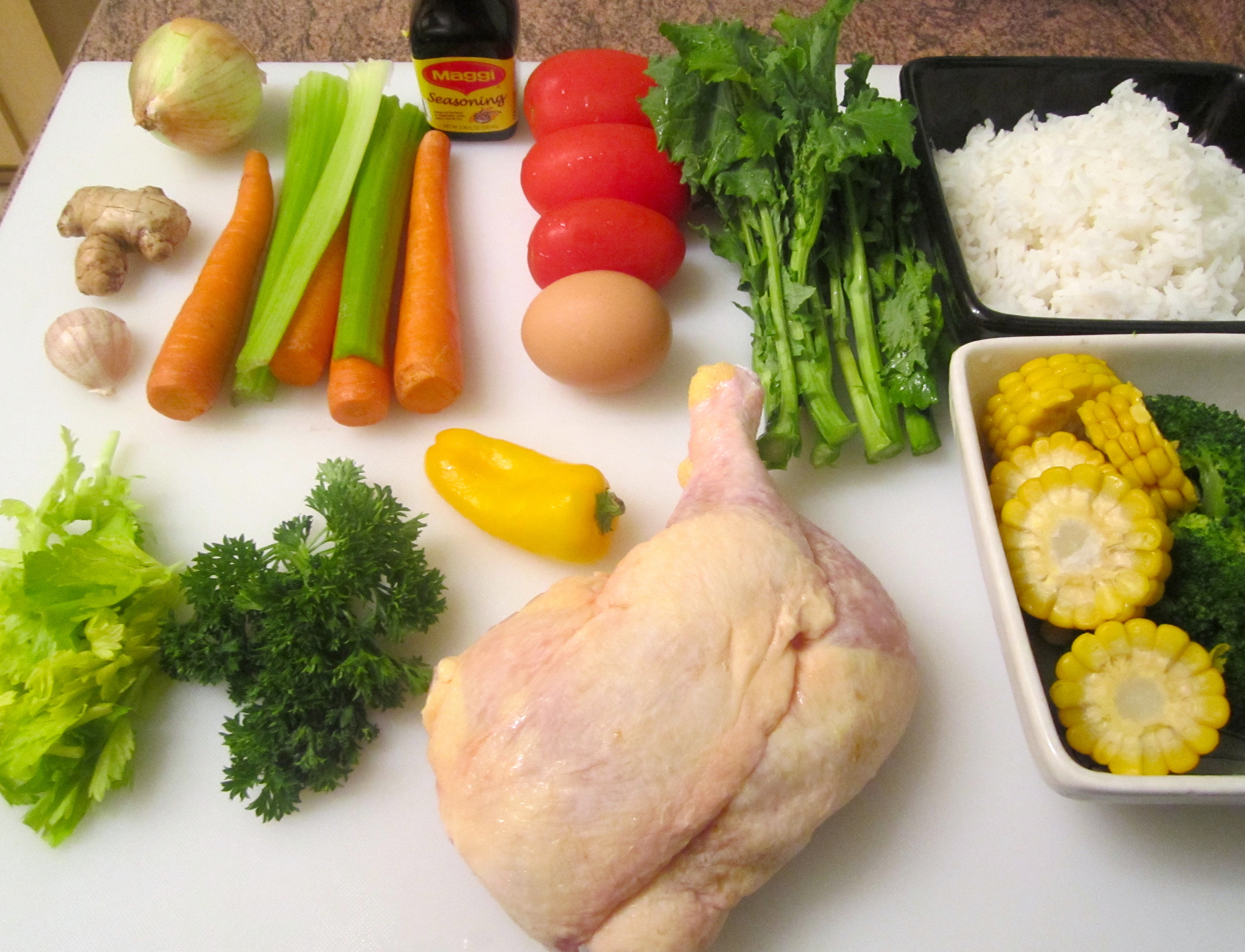
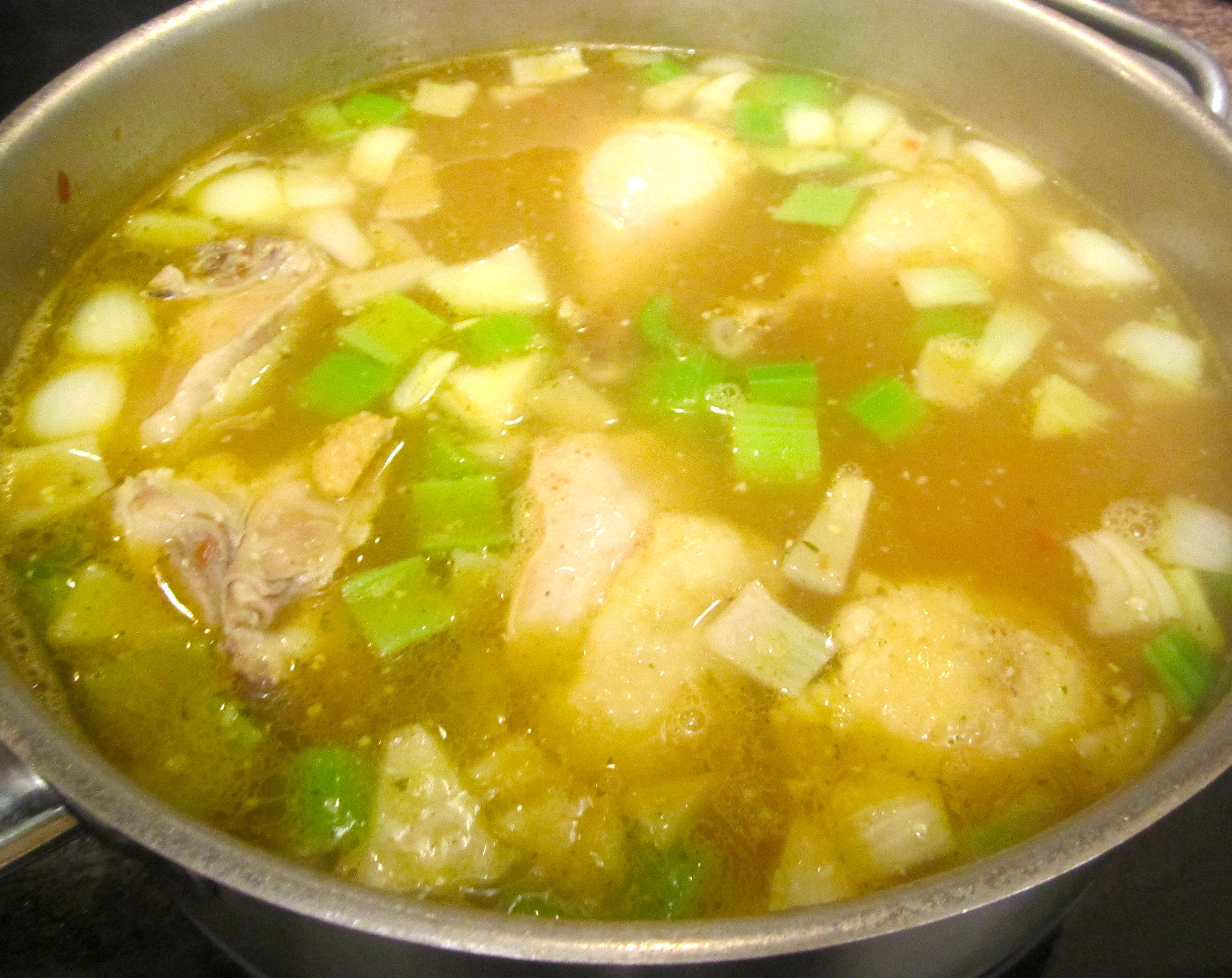
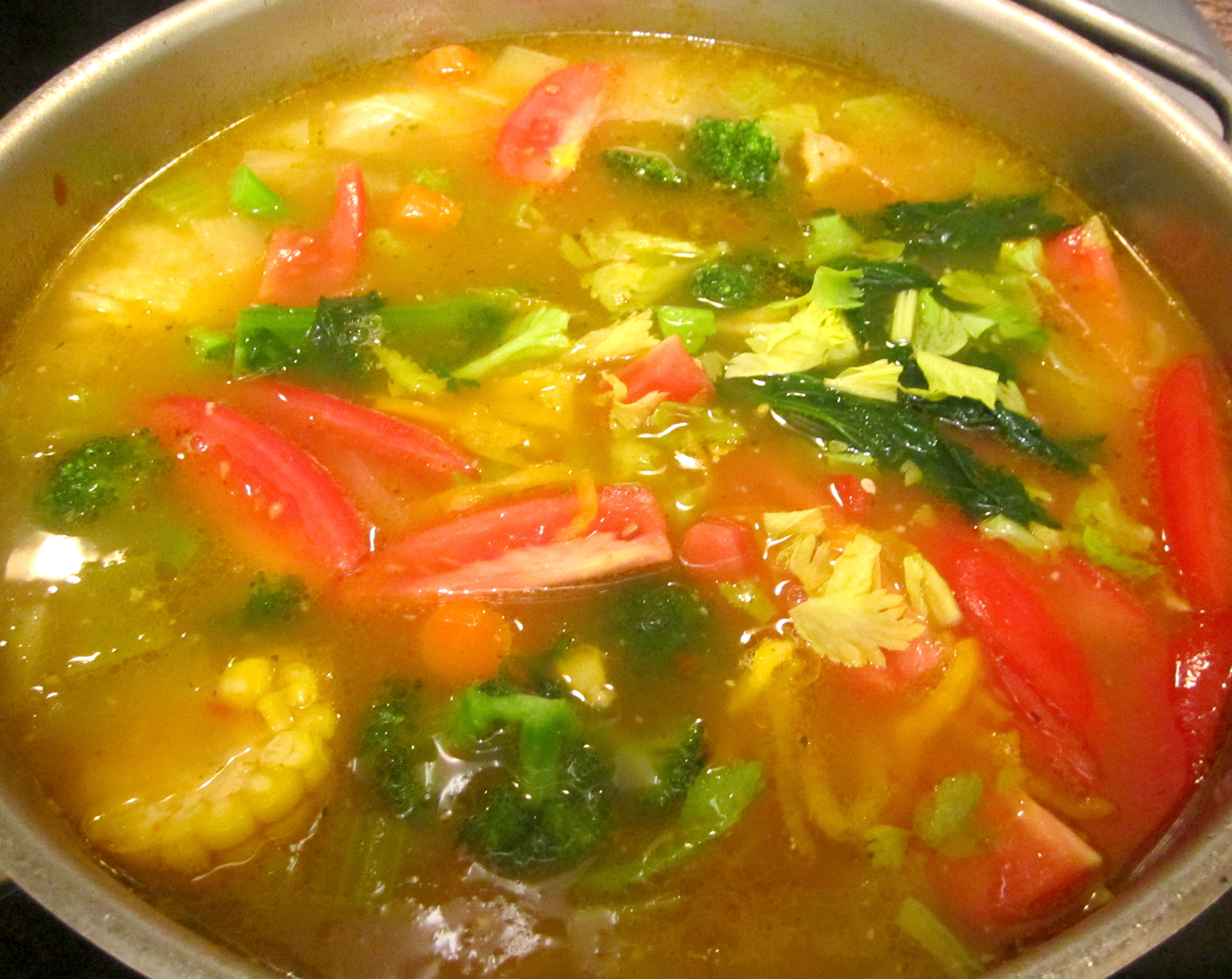
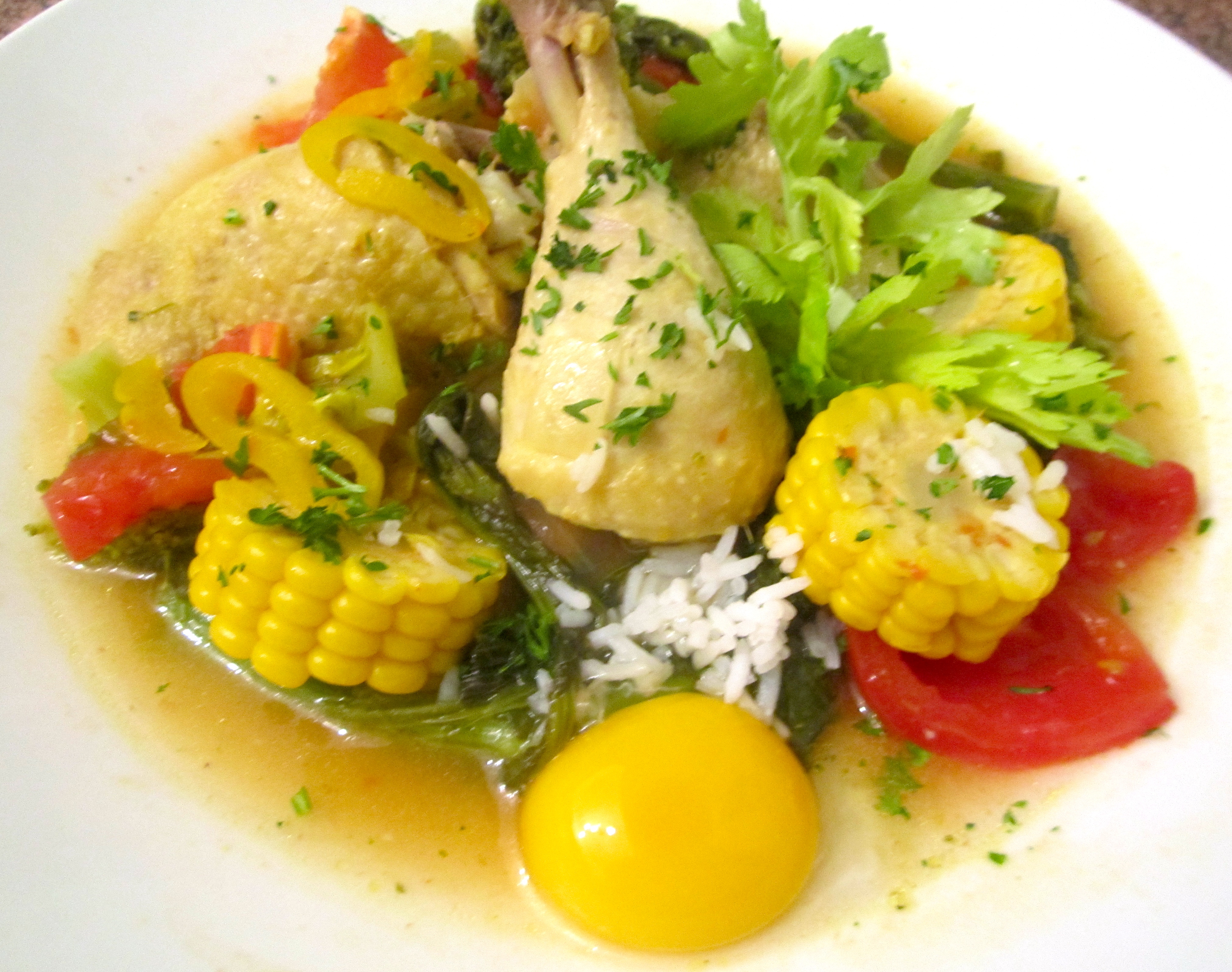
. . When I was a kid, during the summer and the harvest season my mother, usually at least twice a month on a saturday, made a stew she called “quer durch den garten”, which literally translates into “across the garden”. It was never the exact same stew because she used whatever fresh vegetables were available that day and usually a stew-cut of beef, sometimes sausages or chicken.The starch was either potatoes, pasta or rice, depending on what was leftover in the fridge or readily available from the cupboard. When we sat down to the table we never knew which vegetables, starch or protein to expect. Traditionally, most folk’s don’t put egg into the stew, but I like the added richness when you mix it with the broth. However, there was always an abundance of fresh vegetables and herbs. I believe this is the dish which has installed my livelong love for stew’s of any kind in me .
.
. .
P.S.
The combination of beef, vegetables, spaetzle, herbs and fried onion is called “ Geisburger Marsch”
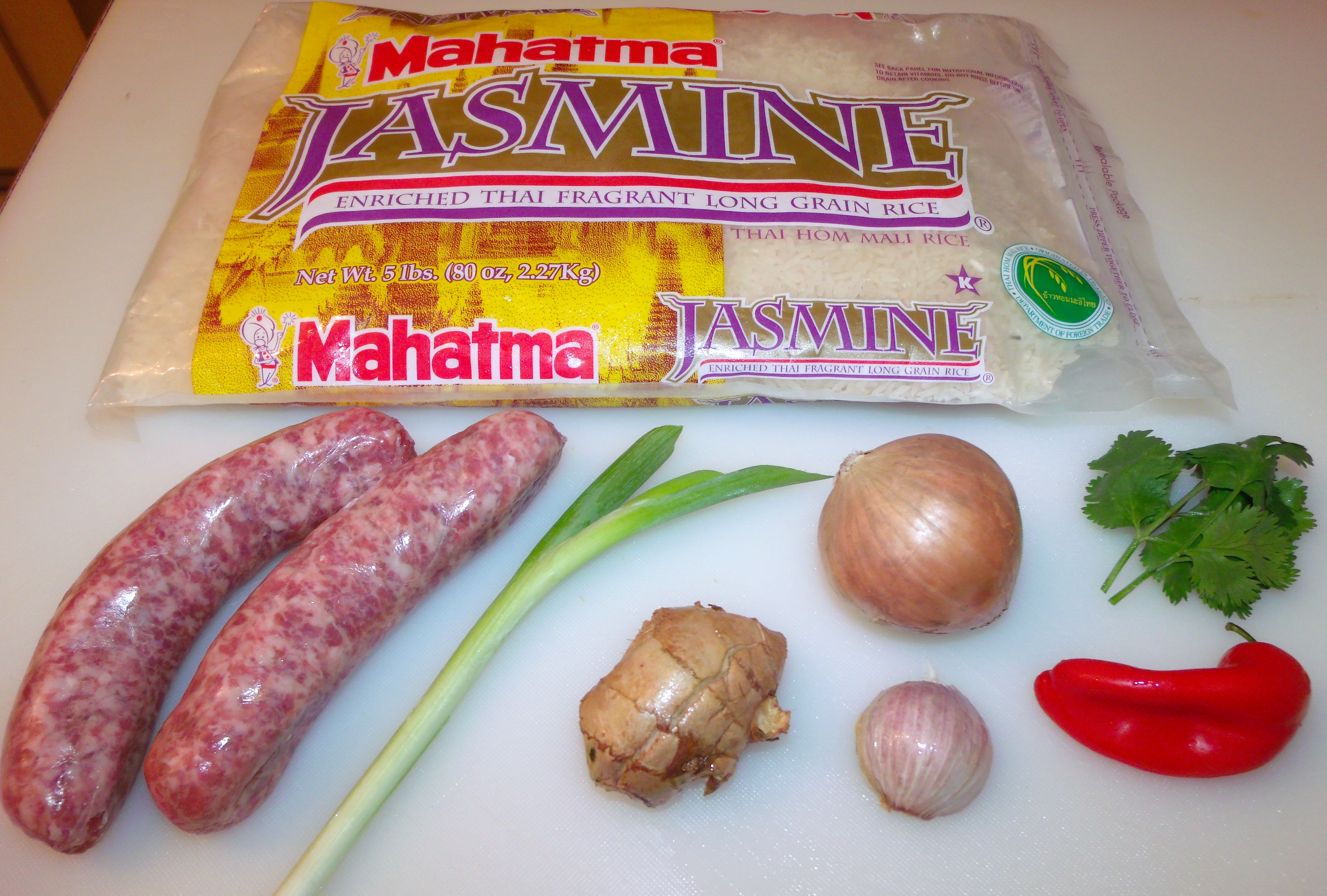
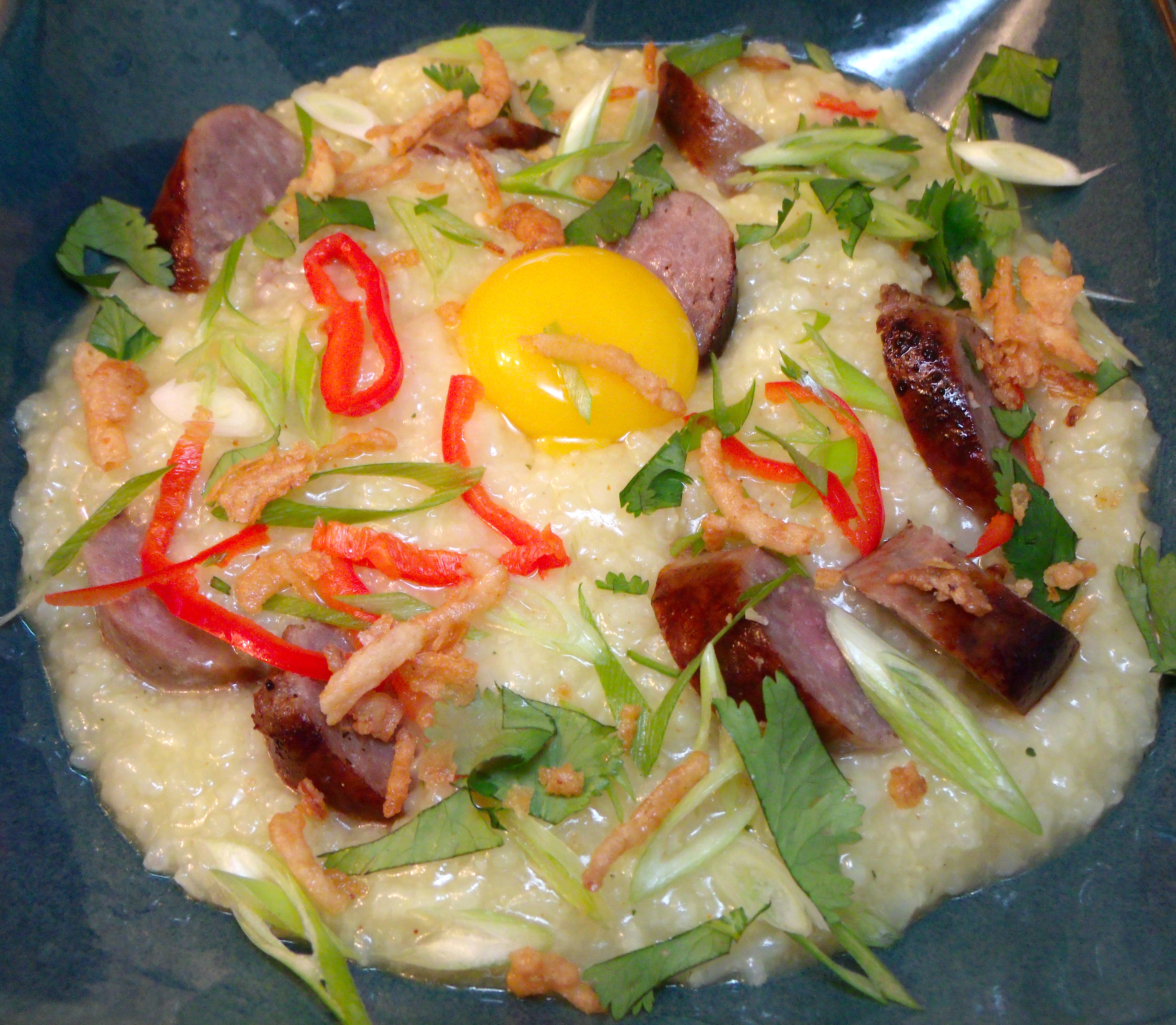
… , ” Congee With Spicy Sausage “ . I just love any type of congee, be it with seafood, meat, vegetables or any combination thereof.
Although is is traditionally eaten for breakfast, I usually make
a big pot so I can snack on it a few times during the day.
Today I used spicy, non-smoked chinese sausage,
which is not only very spicy but also sweet.
If you dont like raw egg, use cooked egg or omit the egg altogether. Good eat’n 🙂 . ‘ . .
. Basic Congee recipe
In a large pot, bring water or stock and rice to a boil. When the rice is boiling, turn the heat down to a slow simmer. Place cover the pot, allowing steam to escape Simmer until the rice has the thick, creamy texture of porridge. Add the salt, taste and other seasonings as desired.
Serve with garnishes such as crushed peanuts, scallions, fried onions, etc.
You can also make this a sweet dish by adding
rock candy, brown sugar, fresh and/ or dried fruits.
Today I did not feel for meat or seafood for lunch, so a vegetarian bolognese over pasta seemed just fine. Pasta and sauce ! What could be wrong ? Nothing 🙂 . . . .
Cook the spaghetti until al dente, strain.
Sautee carrots, celery, onion, garlic and oregano in butter,
add crushed tomato, salt, cayenne pepper, maggi seasoning
and simmer until veggies ar done.
Add pasta, generous amounts of butter and grated parmesan cheese.
mix until a light sauce coats your pasta. The texture should be such
that when you plate your pasta there should be no water separating
from the sauce.
(Alternatively, top pasta with sauce as in picture)
If consistency is too liquid, add parmesan cheese.
If too consistency is too thick, add pasta cooking water.
Below find a link to a cooking video of mine where I cooked “Fusilli Bolognese”
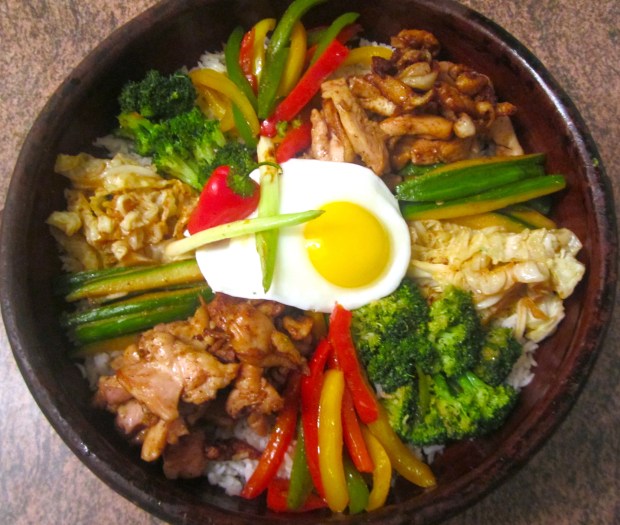
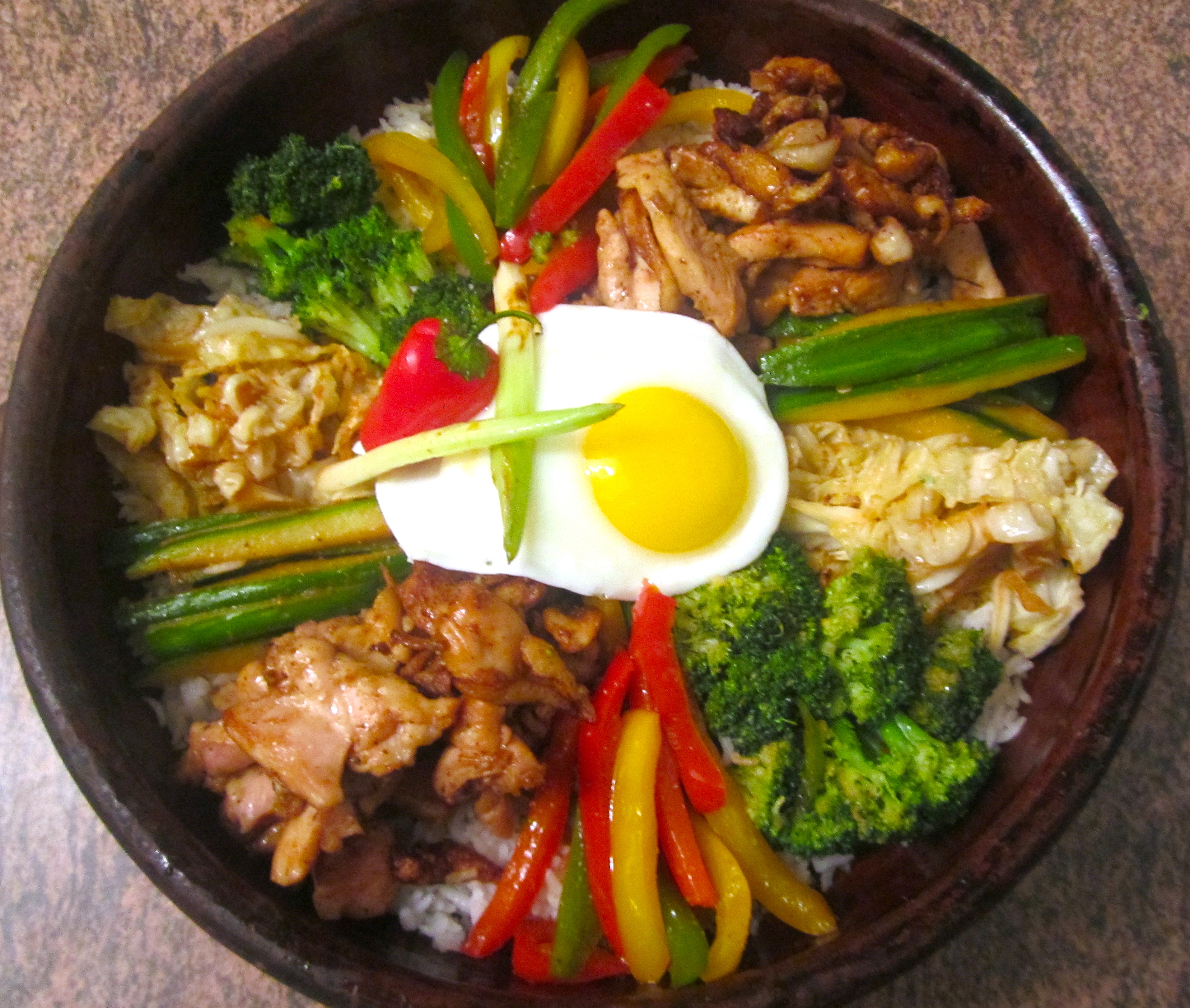
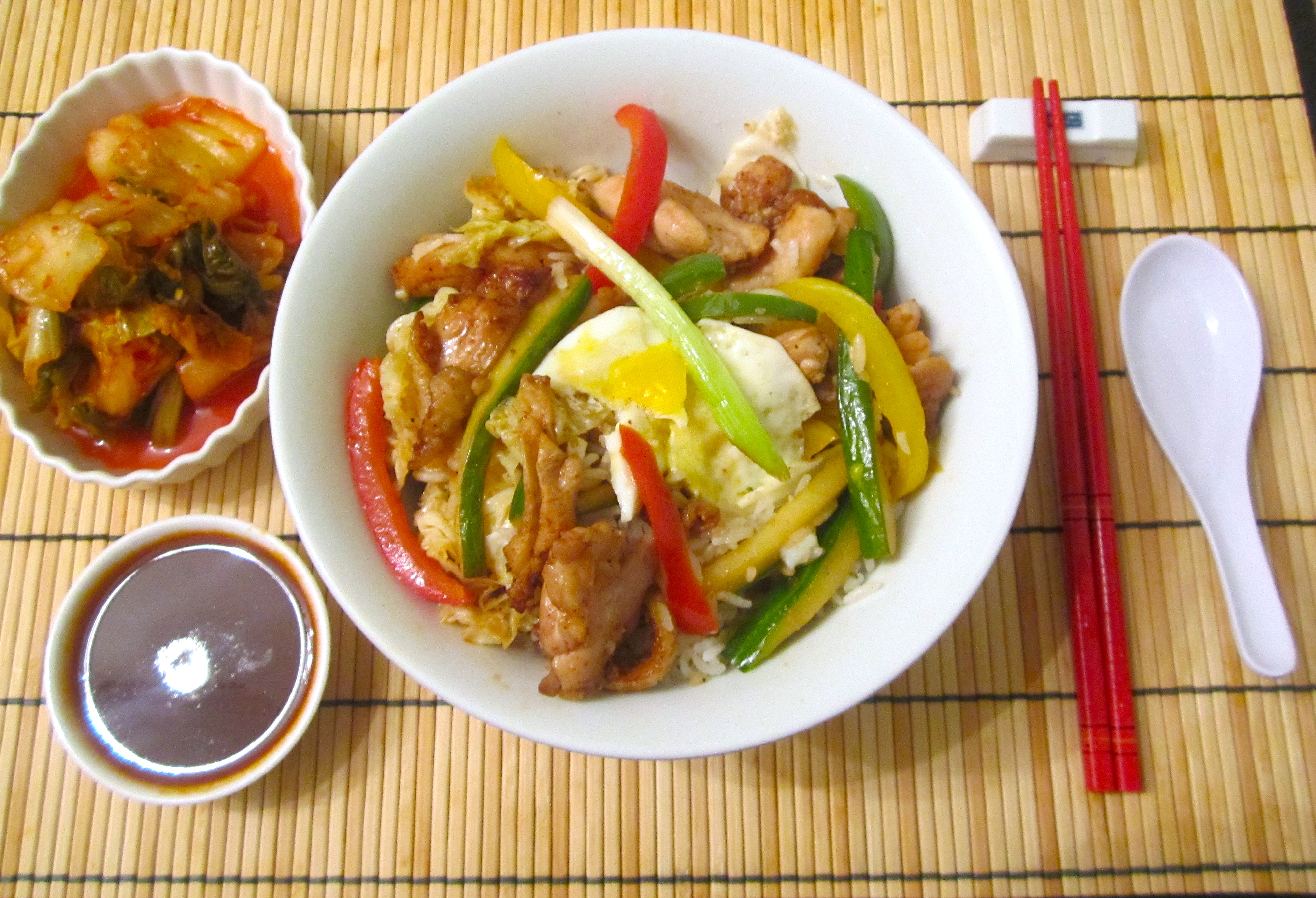
Koreans love bibimbap, and this simple rice dish is often used as a tasty way of
using up leftovers.
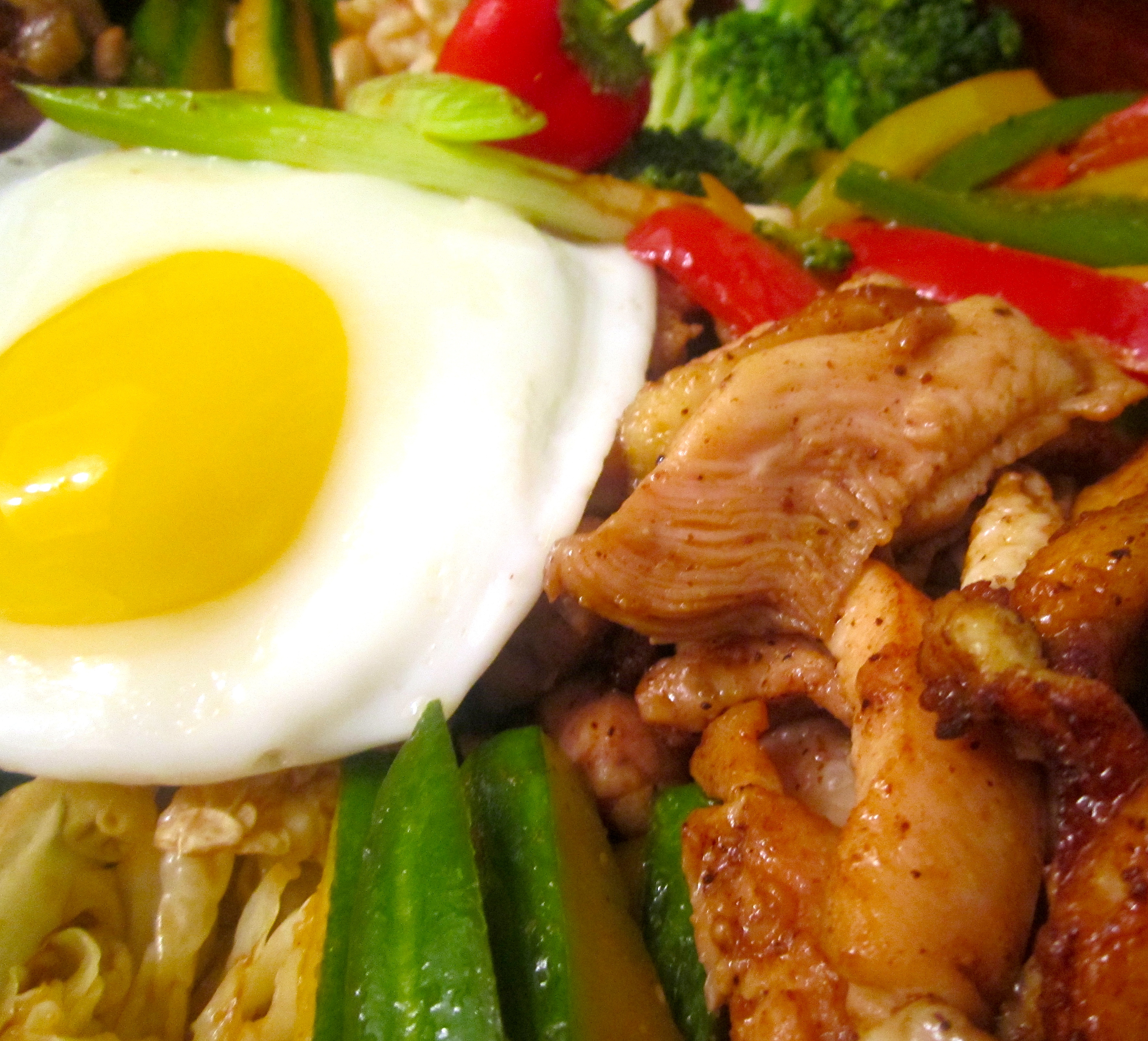
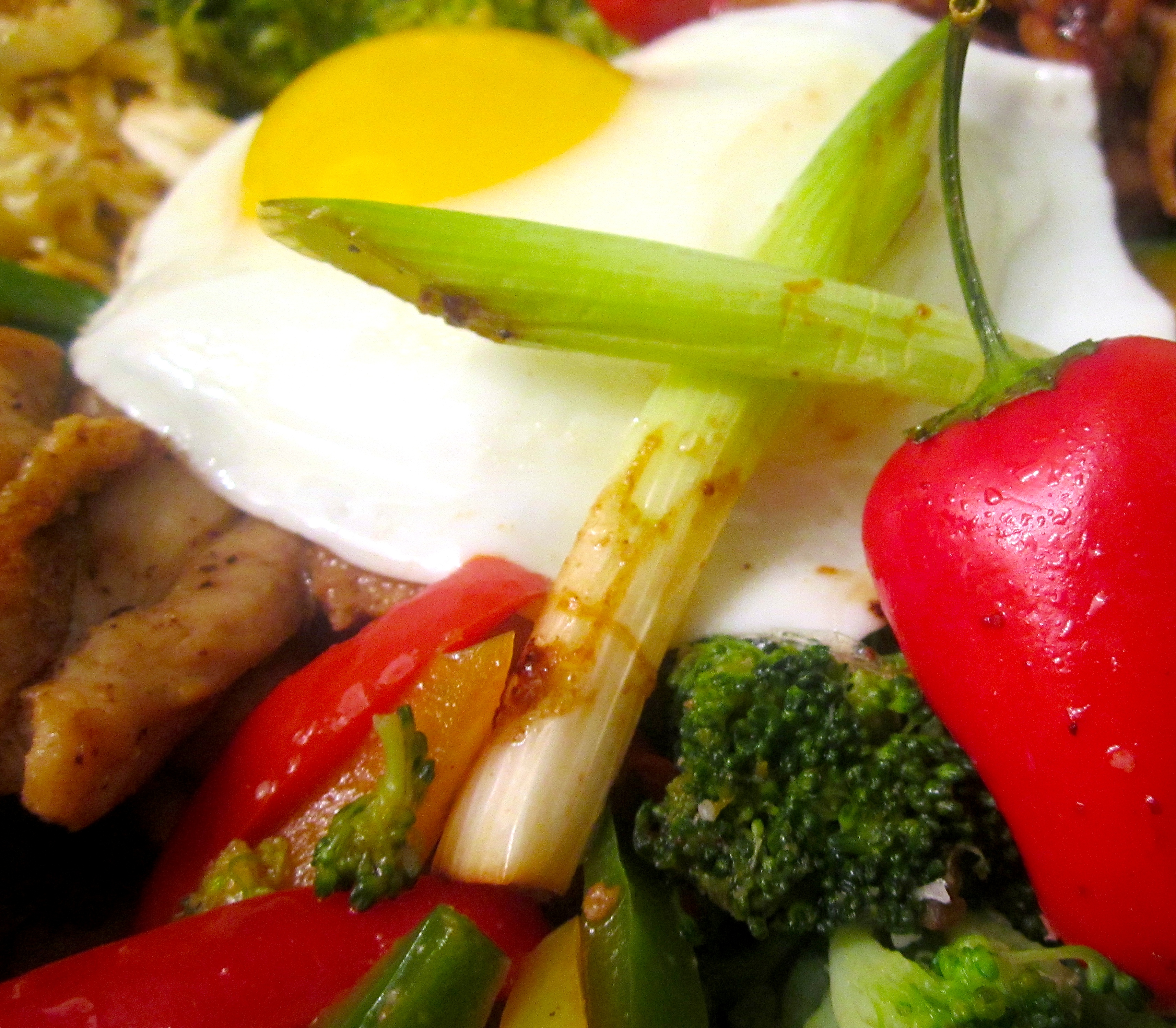
A generous helping of steamed rice is placed in serving bowls, topped with a
variety of meat and vegetables and topped with a strong fermented soybean paste
called gochujang.
Just prior to eating, you mix everything together — bibimbap means roughly “mixed up rice” or ” mixes meal”, and the whole,
wonderful mess is eaten with gusto. Gochujang paste can be found online and in Korean and other Asian markets.
Season with soy sauce if you can’t find gochujang.
.
.
Excerpts from EATER
Wednesday, July 11, 2012, by Gabe Ulla
In recent years, chefs around the world have founded dedicated test kitchens as venues in which to create freely — without the pressures of a normal, working kitchen — and feed their restaurants new dishes, ideas, and techniques. Some of these projects delve into scientific, technological, and academic research (Momofuku, Mugaritz, Moto), while others stick to developing menus and working on food (Relae, ThinkFoodTank). For the most part, these are small kitchens that don’t serve diners or independently produce much or any profit.
The test kitchens of today owe much to Ferran Adrià, who would close his restaurant for half of the year, head to Barcelona, and work in a small space to develop an entirely new menu for the following season. It is, as NYU professor Anne McBride describes it, about “separating the creative process from the productive one.”
And with a good number of food labs or test kitchens popping up in the last three years, is this something many more restaurants will be adopting? According to McBride, the level of resources needed for these operations is simply too high for most chefs and restaurants.” However, she believes “that even without having defined test kitchens, the idea of allowing more space (physical and mental) to the creative process, will trickle down. I think that diners and the profession can only benefit from this push in creativity.”
Here are ten, but stay tuned for a new regular Eater feature highlighting these and more test kitchens around the globe.
 .
.



 >
>







































 ChefsOpinion