Articles

Can A Classical Dish Be Altered If The Name Clearly Indicates That The Dish Is ” In The Style Of… “

.
.
Dear Friend’s,

Below find a few recent comment’s by passionate and no doubt competent chef’s.
Some apparently look at thing’s more flexible then others, some might understand the context of a specific situation better than others (in this case, a lighthearted, food loving Blog by a chef who has probably seen it all and understands that different situations sometimes call for different measures. Because I am so passionate about food, I’d like to hear other folk’s opinion about this, because it comes up quite often across the food world. At this point, it is not important to me if I am right or wrong, I just want to take this opportunity to hear other’s opinions about this important, sometimes so hotly discussed matter. And what about fusion cooking………?
Please share your opinion in the Poll at the bottom of this page.
.

Picture source: dreamstime.com

In our LinkedIn group “Master Chefs” ,

esteemed chef George Hill commented on a name I have given to a dish:

” Vegetarian Spaghetti Bolognese “

“Chefs please keep to the original intent and interpretation of a classical culinary name of a preparation. This is important to all and the profession in a global sense. Bolognaise is meat – I believe Spaghetti Bolognaise needs to be meat based to ensure clients understand this globally no matter where they are. We need to be careful with contradictions in terms.

This is more of a version of a Napolitana but even more accurate would be to name
Spaghetti: Minestra – Verdura – Ortaggio – Olegumi etc or others?”

My response :

Dear George,

I agree with you 100% in the principle of keeping originals original .
However, in light of the many millions of vegetarians who grace our  restaurants on a daily basis, they will no doubt ( as I have experienced around the world for decades) understand exactly what is offered :
A meatless ragout of vegetables in the Bolognese style.

I believe sometimes we have to serve our guest’s by keeping things simple.

Nowadays, unfortunately, most guests (and many so called chef’s) are not as educated in classic cuisine as we wish they were. I believe to simplify is to help them start their education.

Other examples:

Macadamia nut “pesto”,

Lobster “sausage”

Cauliflower “risotto”

Deconstructed “hummus”

I am not a fan of these names but I can accept them, as well as many others, as long as their stray from the original is clearly expressed in the dish’s name. (Back to ” VEGETARIAN bolognese “)

In the group American Culinary Federation,
esteemed chef Larry Dann commented on the same dish dish:

Hey Hans,
Bolognese is by definition a hearty sauce with meat. Either Italian (ragu) or French (ragout). Just messin’ with ya. LOL. Sounds good!
Larry

My response:

Thank’s Larry.

I think just about everybody interested in food knows that.
I just did a little word game, did not expect this to get all that flag for it
(I published this in 20 groups, found only a few folk’s without humor or tolerance  🙂
Life is to short to be uptight 🙂
Cheers !

Larry wrote:

That is true. If we can’t have a little fun with it why do it….?

My response :

There you have it 🙂

On another dish, “ Coq au Vin 
esteemed chef Patrick Asfaux commented :

bonjour
Que d’erreurs !!!!!!!!!
le coq au vin se fait avec du coq de 3 a 4kg et non avec un poulet la chair doit être ferme regardez ma recette mise sur votre blog tous les présidents l’ont testé dans notre restaurant parisien
translate please
best regards
Chef Patrick Asfaux 30 ansétoilé Michelin

My response :

Hi Patrick,

I am sure that most chef’s around the world are educated enough to be aware that Coq in French means rooster, therefore classically coq au vin – rooster in wine.

(Literal translation : Coq au vin – Rooster of the wine)

Most chefs around the world use chicken for two reasons :
“Coq au vin” is a very popular dish because of the cooking method, the sauce and the garnish. It is being served at some venues for hundreds and even thousands of guests at the same time. To source this amount of roosters would simply be impractical if not outright impossible.
I have worked in many countries around the world, mostly in five star operations. While at some places it is easy to source roosters, at others it is just too impractical or cost prohibitive. I try to keep my Blog light and practical, so that professional chefs can smile about some of the things I do and suggest, while less experienced cooks, hobby cooks and housewives will be able to easily re-create the recipes, maybe even applying their own twist.
I have been teaching at le cordon bleu for nearly eight years, classical French and international cuisine and when I was teaching about classical French dishes I made always sure that I teach these with the revered respect and quality they deserve. I have always tried to make sure the students understand the difference between a classic dish and one that is prepared ” in the style of ”
And I too have cooked for a # of presidents and royalty over the years, no biggie there.
Anyway, I do appreciate every single comment and critique,
so thank you and please stay with us.
Your input is highly appreciated.

Happy Bastille Day !   (Try 🙂
.
.


 .
.

” The Future of Food: Ten Cutting-Edge Restaurant Test Kitchens Around the World “

.
.
Excerpts from  EATER
Wednesday, July 11, 2012, by Gabe Ulla

ten-test-kitchens.jpg

In recent years, chefs around the world have founded dedicated test kitchens as venues in which to create freely — without the pressures of a normal, working kitchen — and feed their restaurants new dishes, ideas, and techniques. Some of these projects delve into scientific, technological, and academic research (MomofukuMugaritzMoto), while others stick to developing menus and working on food (RelaeThinkFoodTank). For the most part, these are small kitchens that don’t serve diners or independently produce much or any profit.

The test kitchens of today owe much to Ferran Adrià, who would close his restaurant for half of the year, head to Barcelona, and work in a small space to develop an entirely new menu for the following season. It is, as NYU professor Anne McBride describes it, about “separating the creative process from the productive one.”

And with a good number of food labs or test kitchens popping up in the last three years, is this something many more restaurants will be adopting? According to McBride, the level of resources needed for these operations is simply too high for most chefs and restaurants.” However, she believes “that even without having defined test kitchens, the idea of allowing more space (physical and mental) to the creative process, will trickle down. I think that diners and the profession can only benefit from this push in creativity.”

Here are ten, but stay tuned for a new regular Eater feature highlighting these and more test kitchens around the globe.

Read and see all  HERE
.
.

” Eatcyclopedia “

 .
.
Here is a great

Encyclopedia on food related word’s / phrases

I’d like to share with you all. 

Enjoy !  Life is Good !

(Source Eatcyclopedia: eatocracy.cnn.com)
.
.

Picture Source : CheggBlog


.
.


” Healthy Food: 50 Of The Best In The World “

.
.

.

Originally posted by:
The Huffington Post
By 

Each month at HuffPost Healthy Living, we compile lists of the most in-season, fresh superfoods — this June, for instance, we celebrated figs, zucchini and apricots, among others. But these monthly articles got us thinking — what are some of the healthiest foods generally, despite the season?

And so we turned to some of our favorite medical and nutritional experts to come up with this list of 50 of the healthiest foods, presented alphabetically. Pad your grocery list with these and you’ll be on your way to a healthier, more vibrant diet. Of course, even as we editors finished the list, we started thinking of more (“How could carrots not be on the list?” “What about black pepper?”). So we plan to follow up with a second list of healthy foods. Let us know in the comments which of your favorites we skipped and they could appear soon.

Read more and see a slideshow of all 50 food’s HERE
.
.

.
.

” Cook The Opossum, Spare The Bear “

.
.
I usually don’t like to re-post other folk’s stuff, but this one deserves to be shared  🙂
.


.
.
From : eatocracy, CNN

Barbecue Digest: Cook the opossum, spare the bear

Editor’s note: All summer long, the Southern Foodways Alliance will be delving deep in the history, tradition, heroes and plain old deliciousness of barbecue across the United StatesDig in.

Today’s barbecue joints tend to serve just one or two kinds of meats, with pork predominate in the Carolinas and Georgia and beef the star out in Texas and Kansas City. Not so in the old days.

Back when barbecues were large-scale community affairs, the meat served was whatever people had on hand and could donate to the cause. Lists like the following, from a description of an 1868 barbecue in Spartanburg, South Carolina, were par for the course: “beef, mutton, pork, and fowls were provided in superabundance.”

At the largest events, the menus could be eye-popping. Perhaps the most extensive is the selection served at the 1923 inauguration of Oklahoma governor Jack Walton. The event was held in January, and just before Christmas, Walton sent out a call to Oklahoma farmers to donate animals for the event.

And donate they did. The final tally, as printed in the Dallas Morning News, included thousands of cows, hogs, sheep, and chickens plus 103 turkeys, 1,363 rabbits, 26 squirrels, 134 opossums, 113 geese, 34 ducks, 15 deer, 2 buffalo, and 2 reindeer that had been “shipped in from the North.”

A man from Sayre, Oklahoma, captured a live bear and offered him to the cause, too. But the bear won the sympathy of Oklahoma school children, who pooled their pocket change, bought him for $119.66, and donated him to the Wheeler Park Zoo. The bear was a crowd favorite for more than a decade.

The rest of the animals weren’t so lucky.

Today’s installment comes courtesy of Robert Moss, a food writer and restaurant critic for the Charleston City Paper and author of “Barbecue: the History of an American Institution”. Follow him on Twitter at @mossr.

Delve into more barbecue goodness from the Southern Foodways Alliance blog

Previously – In praise of pork rinds and Give squirrel a whirl and Burgoo with a smidge of squirrel
.

Happy Bastille Day France ! (Coq au Vin )

.
.
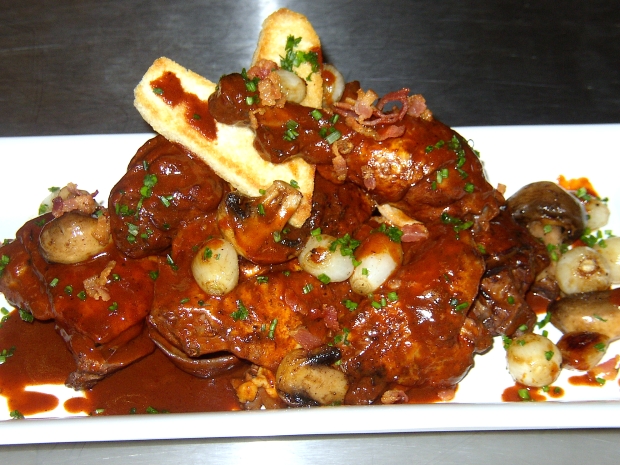
Let’s celebrate the day with a classic  ” Coq Au Vin “.
But first :

.
” Bastille Day is the name given in English-speaking countries to the French National Day, which is celebrated on the 14th of July each year. In France, it is formally called La Fête Nationale (The National Celebration) and commonly Le quatorze juillet (the fourteenth of July). It commemorates the 1790 Fête de la Fédération, held on the first anniversary of the storming of the Bastille on 14 July 1789; the anniversary of the storming of the Bastille fortress-prison was seen as a symbol of the uprising of the modern nation, and of the reconciliation of all the French inside the constitutional monarchy which preceded the First Republic, during the French Revolution. Festivities and official ceremonies are held all over France. The oldest and largest regular military parade in Europe is held on the morning of 14 July, on the Champs-Élysées avenue in Paris in front of the President of the Republic, French officials and foreign guests.”
.
.
To help you celebrate at home (or just to have a great meal because it is saturday
or whatever day     🙂 ,
here is one of my old standby’s for a hearty meal.  And just because there is a lot
of wine in the marinade and sauce does not mean you should not make the meal
even better with another bottle of grat red wine.
.
.
                                                          Photo Credit: Hans D. Susser

.

. 

Marinade :

Chicken 1200 gr , 8 cut, Bone in
Bay Leaves                                    5 ea
Thyme Sprig                                 2 ea
Rosemary Sprig                           1 ea
Cloves                                            5 ea
Mirepoix                                       1 lb
Garlic chopped                            5 Gloves
Burgundy Red                              1 ½ qt

Preperation:

Olive Oil                                       2 oz
Tomato Paste                              2 oz
Sweet  Paprika Powder             1 oz
AP Flour                                       3 oz
Salt & Black Pepper                   to Taste

For the Garnish :

Butter                                             1 oz
Bacon                                             3 oz
Button Mushrooms                     5 oz
Silver Onions, parboiled           3 oz
Parsley, chopped                         1 oz
Salt & Black Pepper                     to Taste
Heart shaped toasted bread wedges

Method :

In a stainless steel container combine the chicken and the marinade
ingredients for 24 hours.
Remove the chicken, pat dry and season liberally with salt and freshly
ground black pepper.
In a heavy cast iron pan, sauté the chicken in the olive oil until mahagony brown.
Remove the chicken, add flour and sauté until dark brown roux forms.
Return the chicken together with the stock, mirepoix , cloves, bay leaves, herbs and cover.
Place in a 300* oven until chicken is tender, approx. 30-40 minutes.
Remove chicken and strain the sauce in a saucepan. If necessary,
simmer and reduce the sauce until it reaches the desired consistency.

Garnish:

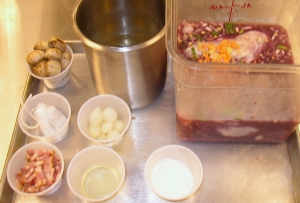
Render the bacon until crispy. Remove the bacon , add the butter, mushroom and onion and sauté for one minute. Add parsley, salt and pepper to taste.

To serve :

Place the chicken on a platter, cover with sauce , garnish with mushroom and onion and top with toast’s.
.
.

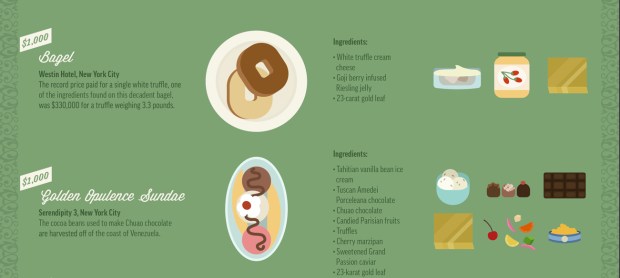
” 10 Of The Worlds Most Expensive Dishes “

.
.
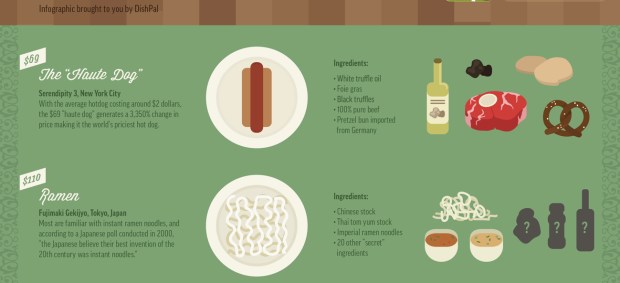
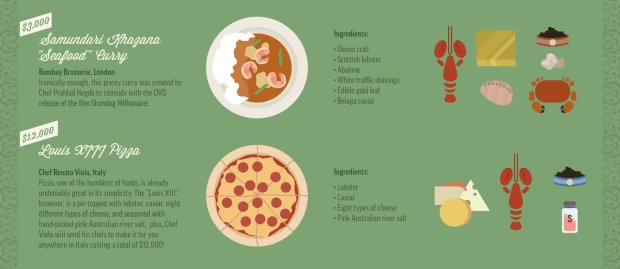
Is it possible some folks are just plain rediculous ?    😦
You judge for yourself :
.
.
To enlarge picture, click on it !


.

” For Offal Lover’s Only ! “

.
.
Friend’s, by now you have probably realized that some of my recipes and / or pictures
are of food which is a bit outside the mainstream. ( Some of my articles as well ? )
Yesterday I came across this article in the huffpost which reminded me again how
far most of our young “colleagues” and their guest’s / client’s in the culinary world
have moved away from the well rounded professionals we oldtimers were trained to be.
It praised the new generation of inventive and adventurous and oh so clever chef’s for
using the whole animal. WOW!
When I apprenticed in the sixties back in Germany, we were used to getting delivered
the whole animal, or if this was impractical because of it’s size and weight, a half  (veal,
pig, stag, boar) or a quarter (beef). Fresh game was always  dropped off whole by
the village hunter, and two four times a year we slaughtered our own pig’s which we
raised mostly on food scrap’s from the restaurant. So, on most restaurant’s menu’s
you wood find cut’s from ALL part of the animals. From snout to huff and tail and just
about  anything in between was used for a well rounded menu, at small country inn’s
all the way up to five star restaurants.
So,  in this spirit, here is my take on Gizzards :

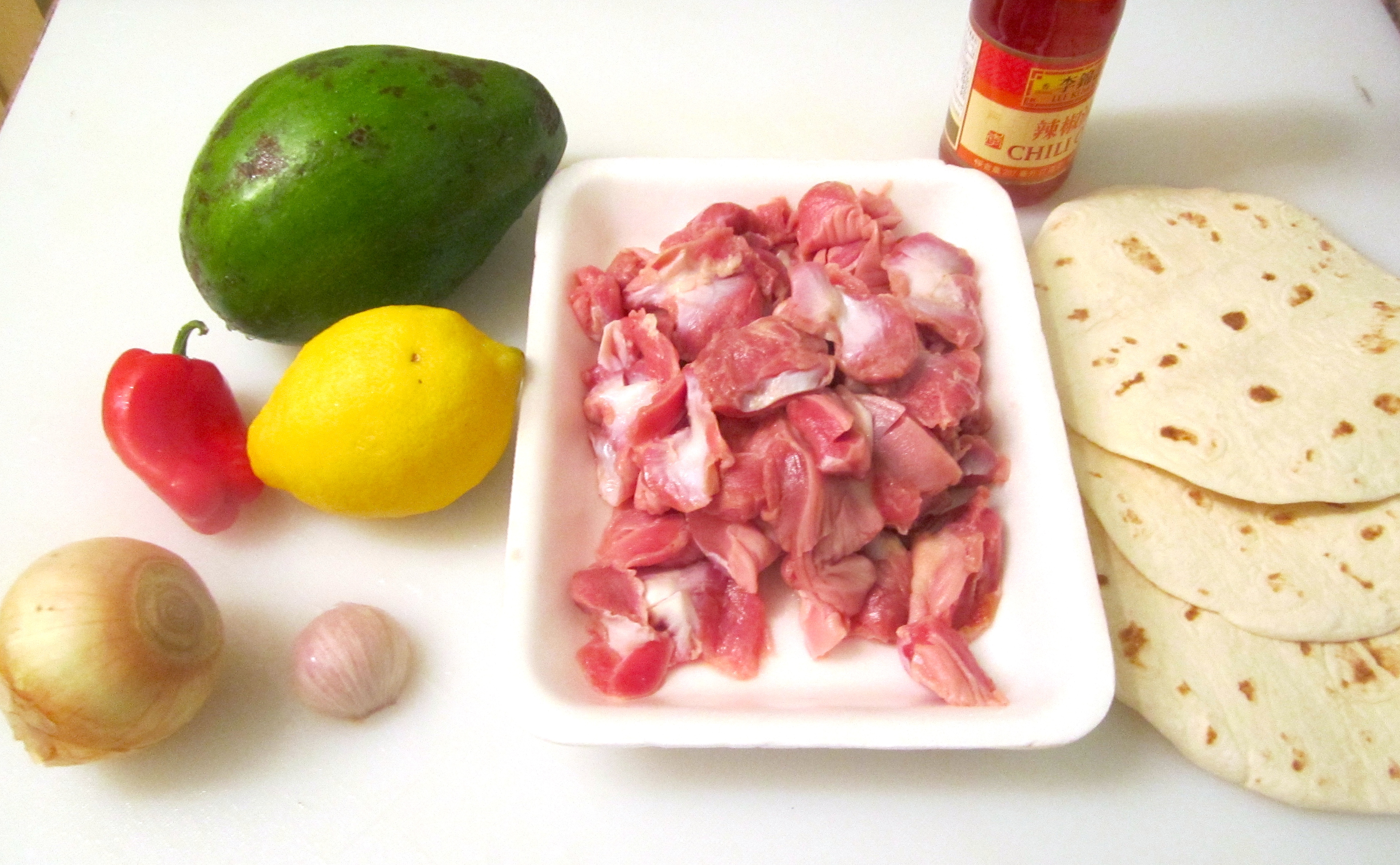
” Fried Spicy Gizzard’s, Guacamole & Totopos ”
.


.
.
Simmer the cleaned gizzards in red wine, garlic, salt and cayenne pepper until tender. Strain, dry.
Season with salt, cayenne pepper and garlic powder and fry until the edges become crisp.
Don’t fry too long or they become dry and tough. Season and fry the onions the same way.
To serve, sprinkle with cilantro and chili flakes.

Because I served these with guacamole, I did not need a dipping sauce .
If you want to use a dipping sauce, try this:
Soy sauce with scallions, lime juice, sriracha and a bit of rice wine and sugar.     🙂
.

” When A Cook Makes A Mistake…..Culinary Quotes “

.
Culinary Wisdom at it’s finest  🙂
.


.
.
” If an architect makes a mistake,  he grows ivy to cover it. If a doctor makes a mistake, he covers it with soil. If a cook makes a mistake, he covers it with some sauce and say’s it is a new recipe.”
Paul Bocuse

“All the best cooking is simple. There is really nothing new in it. I have 4,000 cookbooks dating back to 1503, and everything that is in nouvelle cuisine was there 200 years ago.”
Anton Mosimann

“All of Bavaria can be divided into a small group of butchers and a larger group of people who look like butchers.”
Heimito von Doderer

“After all the trouble you go to, you get about as much actual ‘food’ out of eating an artichoke as you would from licking 30 or 40 postage stamps.”
Miss Piggy

“A nickel will get you on the subway, but garlic will get you a seat.”
Old New York Proverb

“…the key dietary messages are stunningly simple: Eat less, move more, eat more fruits and vegetables, and don’t eat too much junk food. It’s no more complicated than that.”
Marion Nestle

“A house where neither wine nor welcome is served to friends, soon will have none.”
Rob Hutchison

“A converted cannibal is one who, on Friday, eats only fishermen.”
Emily Lotney

“A diet is when you watch what you eat and wish you could eat what you watch.”
Hermione Gingold
.
.                                                                                                                                                                
                                                                                                                                                                                                                                                                                                 Source unknown

..

” A Bunch Of Funny Cooking & Food Videos “

>

Wanted to share a bit of fun with my readers  🙂


ooodd.com


.
soul food crab cooking

ethiopian cooking lesson

how to cook an egg

first day on the job

extra energy

charlie sheen cooking

mr.bean eats steak tartar

fawlty towers / the prawns are off

lettuce eats wendy

beautiful meatloaf

fire in the kitchen

james brown & kenny rogers cooking

master chef final

steamer explodes

dog complaints about food

screaming eggs

bang bang chicken
.
.
Enjoy ! Life is Good !
.