texture

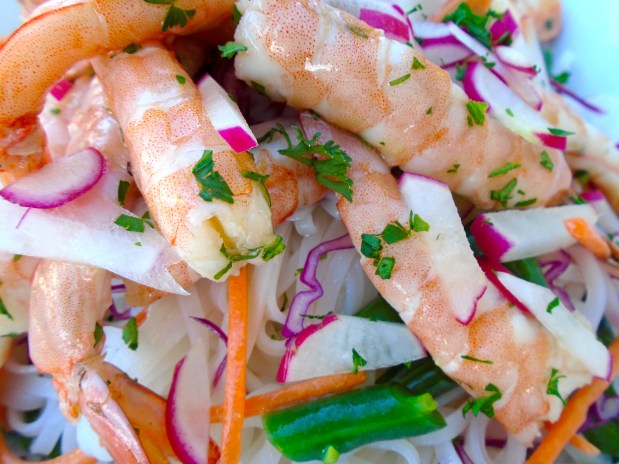
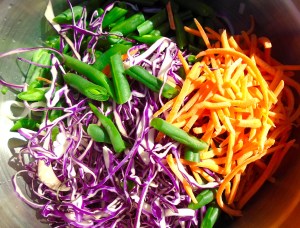
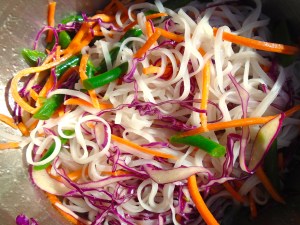
Shrimp & Glass Noodle – Salad

>
>
Glass noodles are the ideal canvas for pasta salad. They keep their texture even when kept as leftovers for a few days, which is perfect when you live alone and usually cook way too much for one meal, (as I do), even with a dog who will eat it’s fair share of whatever I cook 🙂
I like to prepare glass noodle salad with a dressing of kosher salt, cayenne pepper or sriracha, rice-vinegar, peanut oil, sesame oil, garlic paste, grated ginger, a tiny amount of sugar, cilantro and/or scallions. As for other ingredients, I sometimes add chicken, seafood, beef or duck, as well as any vegetables hanging-out in my fridge.
>
Bon Appetit !   Life is Good !
>
All about  Glass Noodles
>
More Glass Noodles on ChefsOpinion
>
>

Shrimp & Glass Noodle - Salad

Shrimp & Glass Noodle – Salad

>

Shrimp & Glass Noodle - Salad

Shrimp & Glass Noodle – Salad

>
>
>
Preparation :
To read instructions, hover over pictures
To enlarge pictures and read instructions, click on pictures

>
>
>


>
>
>
>

Best Snack – Ever !?

>
>
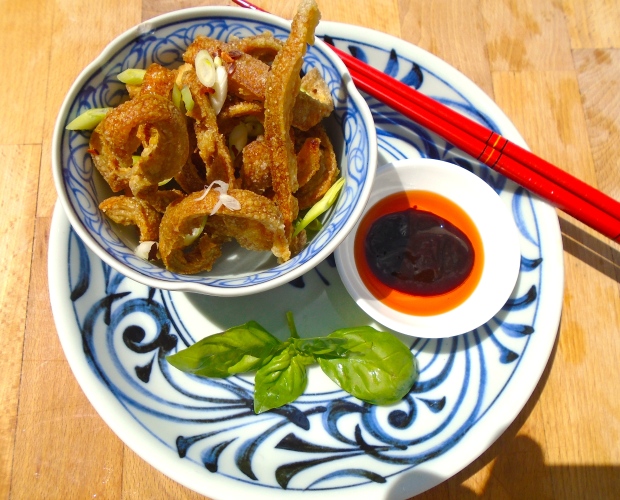
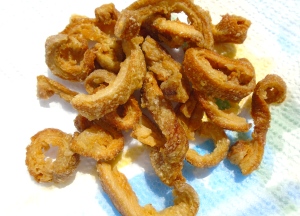
Pork Rinds, Pork Skins, Pork Scratchings, Pork Crackling, Chicharrones, Scrunchions, Oreilles de Christ, Chicharrón, chicharrón con Gordo, Gratons, Khaep Mu,  Tóp Mỡ, škvarky,  Grieben, Griaba, Torresmos,  Couratos,  Knabbelspek, Flæskesvæ, etc, etc, etc.
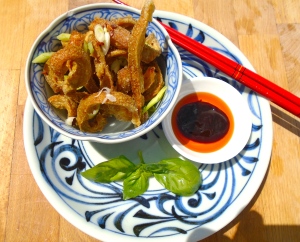
Fried pork skin is eaten in most if not all areas around the world where pork is consumed. (Many other animal skins, ears and intestines are also used to make cracklings, but today I just want to talk about pork skins, most widely known as Chicharrones, but also by the many other names listed at the beginning of this post.
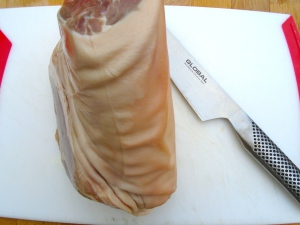
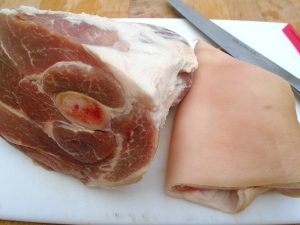
I sometimes buy them ready-made in bags and have found a few very good brands in the supermarkets around here, especially in the Latin-Markets. But nothing comes close to the freshly made homemade stuff, still warm and with a texture, flavor and aroma which you just don’t get from a bag. I happened to have some pork skin in the fridge which I removed from a pork butt I cooked yesterday, anticipating the chicharrones I wanted to prepare today. (I usually cook the butt skin-on).
However, pork skin is widely available from butchers and markets so you should have no problem sourcing it.
The process is very simple :
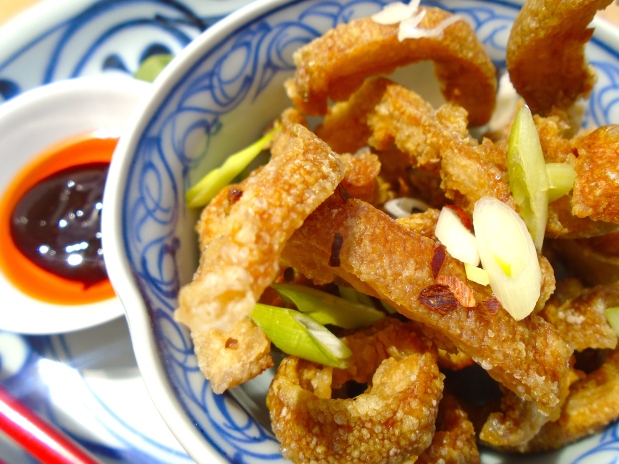
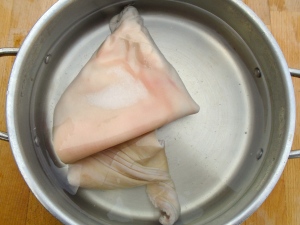
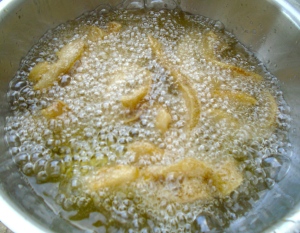
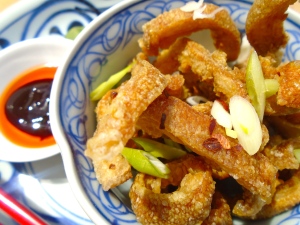
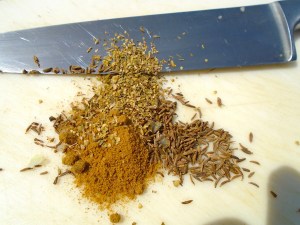
To fry the skins, use duck fat, pork fat or peanut oil. Simmer the skin in salted water until very tender, drain, let dry for a couple of hours. Cut into strips or cubes and fry at low temperature until very crisp. Remove to absorbent paper and season to your liking. Just plain kosher salt will do, but you can experiment with additional seasoning, such as cayenne pepper, smoked paprika, curry powder, za-atar, old bay seasoning, or my favorite,  five spice powder, which I have used in today’s dish. I also like to sprinkle finely sliced scallions and chili flakes over the cracklings and use a dipping sauce of chili oil and hoi sin sauce.
WARNING !!!!
I recommend to cook the chicharrones outside in the open air; splattering of fat WILL occur !
In any case, no matter if you cook the chicharrones inside or outside, cover the fryer 3/4 with a lid while frying to minimize the fat going all over the place and possibly ignite on the hot stove.

To sum it up – making chicharrones at home is like making love :
– if you know what you are doing, the rewards can be wonderful 🙂
– if you don’t know what you’re doing, you might get burned 😦
>
Bon Appetit !   Life is Good !
>
>

Chicharrones

Chicharrones

>

Chicharrones

Chicharrones

>
>
>


>
>
>
>
>

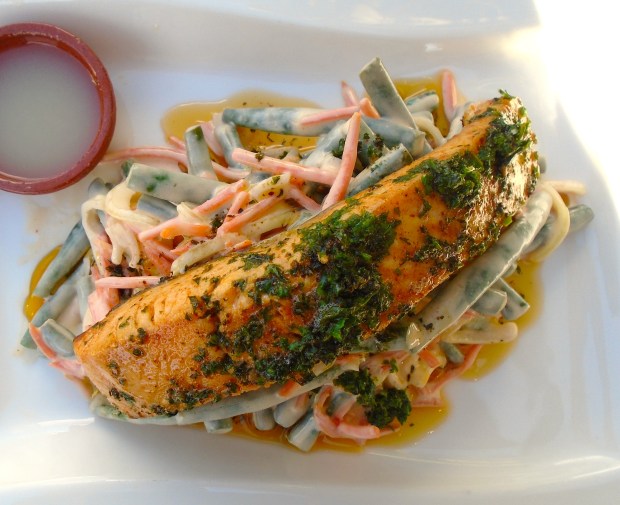
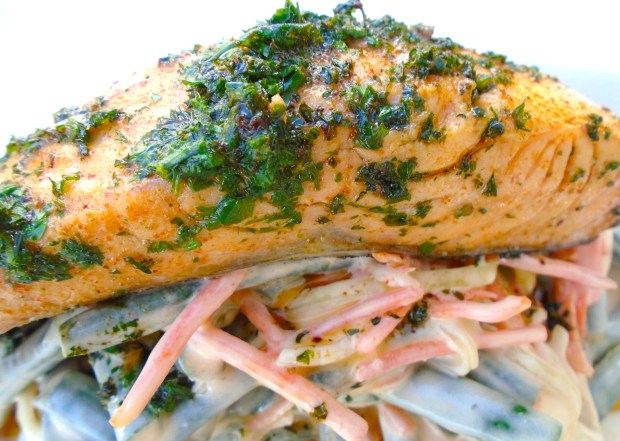
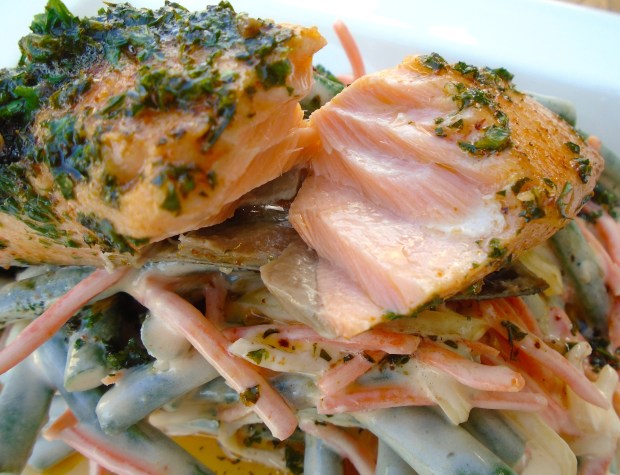
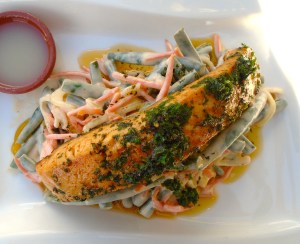
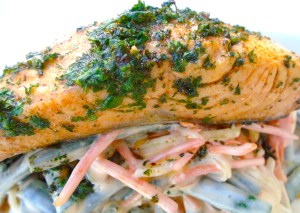
Salmon In Beurre Noisette With Beans & Carrots In Honey-Mustard Dressing

>
>
I pity  the folks who’ll never taste a properly cooked salmon 😦
What a shame to miss-out on he texture of salmon (as well as most other fish and seafood) which has been cooked the old-fashioned way:
Au Pointe”  – to the point (of being done) , perfect doneness.
I have written about this a hundred times and I don’t get tired to repeat myself again –  just because you are being served by a lousy cook who does not know the finer points of cooking should not mean that you get denied the best of the best. If, on the other hand, you have really had a chance to compare the texture and taste of a half-cooked piece of fish to that of a properly cooked piece and you still prefer the “seared only” version, than I’ll back off and say thank’s God most of us have a choice to eat what we like, and how we like it, no matter what 🙂

(I will also leave it to you to take the enormous risk of consuming certain under-cooked proteins in a less than perfectly controlled environment (from source to preparing and handling); after all, what can a few extra worms in your body do to you…….. 😦

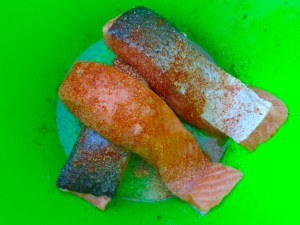
But on to happier thoughts and this wonderful dish which features a great salad, properly cooked salmon and that magic taste & texture-enhancer – brown butter (Beurre Noisette).
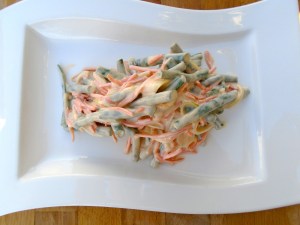
While hot brown butter is not a typical addition to salad, in the case of this beans and carrot salad in honey-mustard dressing it provides the perfect final touch.
>
Bon Appetit !   Life is good !
>
>
P.S.
This salmon has been cooked slowly in whole butter, resulting in a soft skin, not recommended for human enjoyment. However, if you have a dog or cat living with you, they will most likely be ecstatic about this treat (Bella always is) 🙂
>
>
Click here for : Honey-Mustard Dressing
>
Pls read :  The Hidden Dangers Of Uncooked Salmon
>
Pls read :   The Dangers Of Eating Raw Or Under-Cooked Fish And Mammals
>
>
>

Salmon In Brown Butter With Bean & Carrots In Honey-Mustard Dressing

Salmon In Brown Butter With Beans & Carrots In Honey-Mustard Dressing

>

Salmon In Brown Butter With Bean & Carrots In Honey-Mustard Dressing

Salmon In Brown Butter With Beans & Carrots In Honey-Mustard Dressing

>

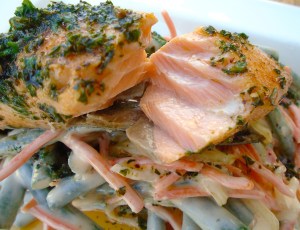
notice how juicy the inside of the fish, even minutes after plating

notice how juicy the inside of the fish, even minutes after plating

>
>
>
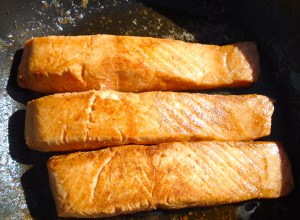
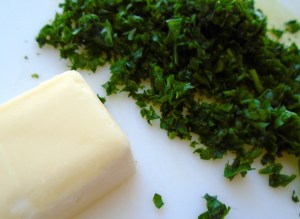
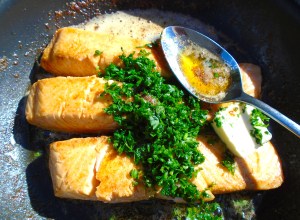
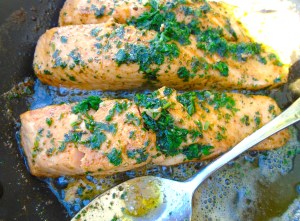
Preparation :
To read instructions, hover over pictures
To enlarge pictures and read instructions, click on pictures
>
>
>


>
>
>
>

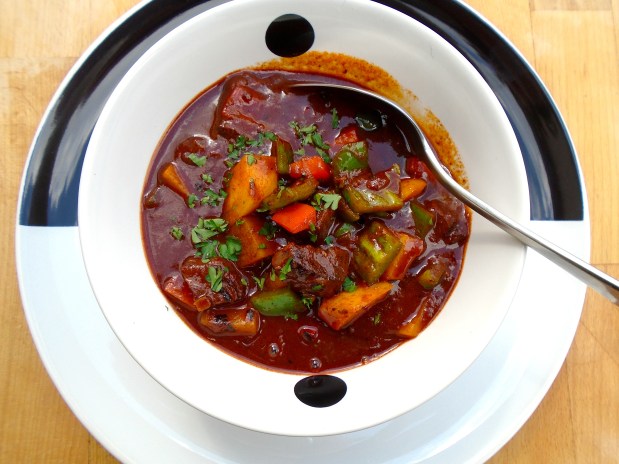
Gulyásleves (Hungarian Goulash Soup) (Hungarische Gulaschsuppe)

>
>
As  I get older, I sadly realize that many of the dishes I took for granted and did not appreciate in my younger years only continue to exist in my memory and are forever gone in my daily life. Many dishes I remember from my years growing-up in Germany have vanished from my surroundings. Especially here in the USA, where food tradition is not something widely honored, especially when it comes to labor-intensive food. Too many cooks have never been introduced to the classics, and if they have, they have not been able nor interested to master them.
When was the last time you have seen a menu featuring “Potage Tortue Lady Curzon”,  “Escargot Bourguignonne”, “Filet Café de Paris”, “Truite Au Bleu”, “Quenelles De Poisson Nantua”, “Consomme Royal”, etc, etc. Or Hungarian Goulash Soup, for that matter.
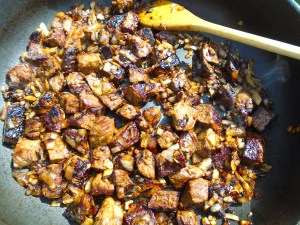
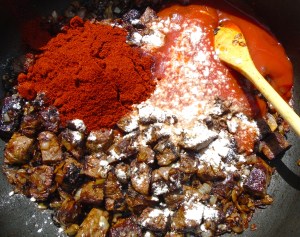
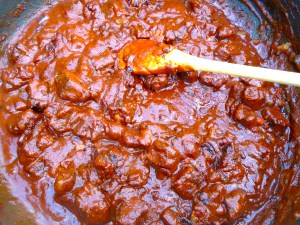
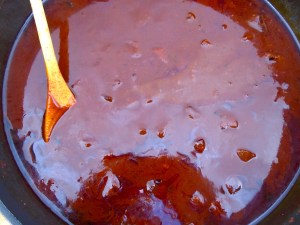
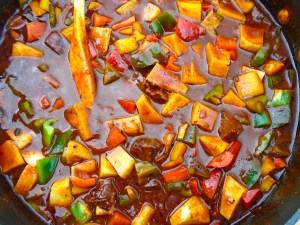
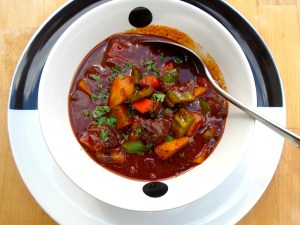
This is a dish which at one point in time was omnipresent in Germany and Austria, being featured in any type of restaurant. Usually it was served as an “in-between meal”, or during a break while hiking or skiing, or as a snack late mornings or late nights. Usually you could choose between regular or spicy. The spicy version usually differed from the regular one only by the addition of a few dashes of Tabasco, although some cooks took pride in preparing a spicy version from scratch by adding hot paprika powder to the sweet paprika powder which gives Hungarian Goulash Soup its signature reddish color. Like many other “original” dishes, ingredients such as vegetables, the type of meat as well as the seasoning can vary significantly, yet the final product should always be full of flavor, chuck-full of meat and vegetables and pleasantly red hued from a generous amount of good quality paprika.
If you want to make your Hungarian Goulash Soup into a more substantial meal, it is perfectly acceptable (and yummy) to add some hearty pasta to the soup.
>
Bon Appetit !   Life is Good !
>
>
All about  Goulash
>
>
>

Gulyásleves (Hungarian Goulash Soup) (Gulaschsuppe)

Gulyásleves (Hungarian Goulash Soup) (Ungarische Gulaschsuppe)

>

Gulyásleves (Hungarian Goulash Soup) (Gulaschsuppe)

Gulyásleves (Hungarian Goulash Soup) (Ungarische Gulaschsuppe)

>

Gulyásleves (Hungarian Goulash Soup) (Gulaschsuppe)

Gulyásleves (Hungarian Goulash Soup) (Ungarische Gulaschsuppe)

>
>
>
Preparation :
To read instructions, hover over pictures
To enlarge pictures and read instructions, click on pictures
>
>
>


>
>
>
>
>

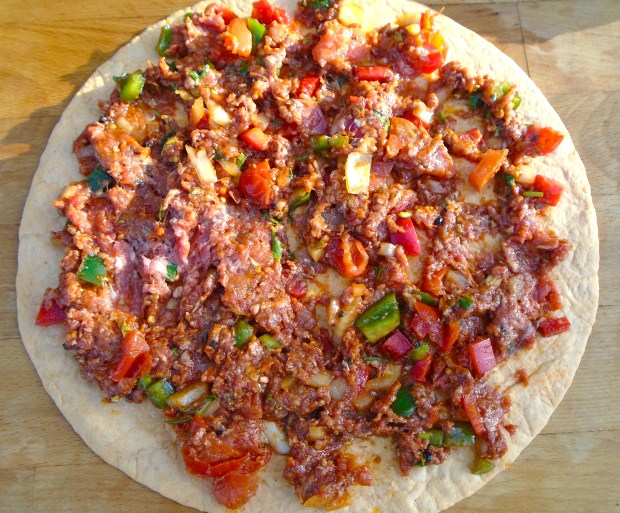
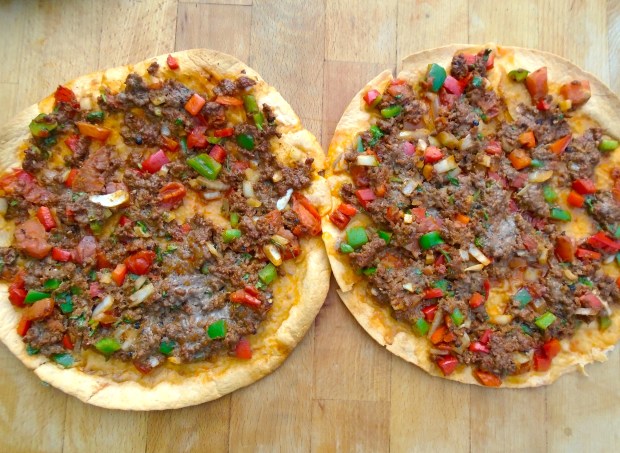
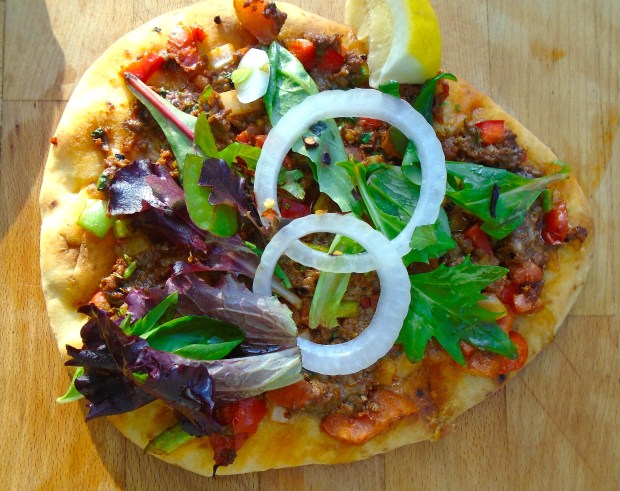
Lahmacun

>
>
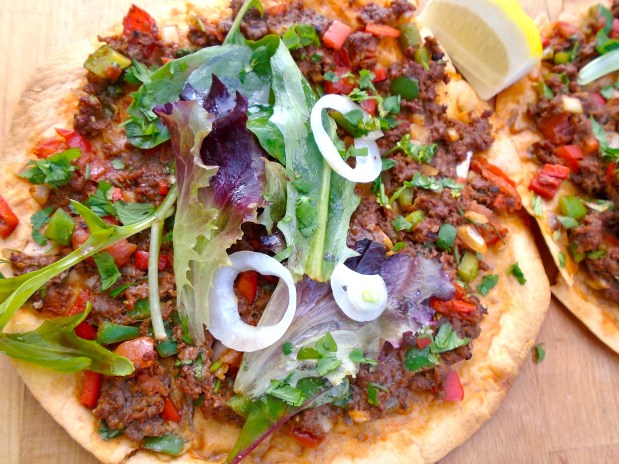
Lahmacun,  (Armenian: լահմաջու lahmaǰu or լահմաջո lahmaǰo; Turkish: Lahmacun, Arabic: لحم عجين‎, laḥm ʿajīnلحم بعجين‎, laḥm biʿajīn,  “meat with dough”
>
Pizza …………
Is there anybody who does not like pizza ? I am sure there are a few people who don’t, but then, you can’t please everybody . 😦
I love pizza a lot, but I love pizza the way I remember having it when I was very young and I ate a slice or two almost daily. You see, when I was working in Munich for the first time, during the 1972 Olympic Games, money was tight, so cheap street food at night was the usual dinner. The new and very “IN” thing at the time and place was the new craze of pizza by the slice, sold for 1.00 DM through reach-through windows at pizzerias in  Schwabing, which was the “It” place in Munich and probably the hippest place in all of Germany during the 70’s. One slice was big enough to satisfy the hunger of a normal person, two slices if you had the munchies, which was a normal thing to have at 2.00 am after a night of dancing, drinking and a few puffs of the good stuff 🙂
Anyway, what was so great about this pizza was its absolute simplicity. Great, thin and crispy crust, a bit of cheese and a bit of tomato sauce, and if you wanted to splurge, a few slices of salami. Heaven, right there !
Not at all like the over-sauced, cheese-laden, multi-topping loaded “pies” you get served in most places nowadays.
To this day, if I order a pizza in a restaurant, I always ask for “easy on the cheese and sauce”.
When I make pizza at home, I usually prepare the “pizza” which hails from middle eastern countries as well as some countries which are situated in the area that used to be the Soviet Union. I was first introduced to these meat pies while travelling in Russia, Turkey and Israel, back in the 70’s when traveling meant an introduction to local, ethnic food on an almost daily basis, because at that time the McDonald’s and the KFC’s and such had not yet permeated every street corner around the globe and if you wanted to have reasonable priced nourishment, you had to eat what the locals ate. Good stuff, good times !
Most of these pies were made with a variation of a simple yeast dough, usually very thin, spread with meat paste, baked until crisp, topped with some kind of salad leaves and raw onions, cut into wedges and drizzled with lemon juice. The meat was usually lamb, but sometimes beef (and some mystery meats we don’t want to get into here). The only major variation I encountered was in Turkey, where sometimes the dough was much thicker and not crispy and the pie was rolled into a döner kebap-like concoction, (Döner kebap / Gyro / Shawarma) when it is served as street food and therefore rolled into a tight roll so it can be eaten without utensils.
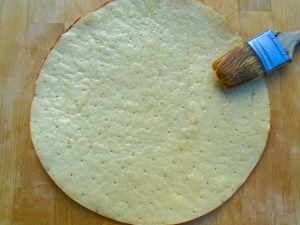
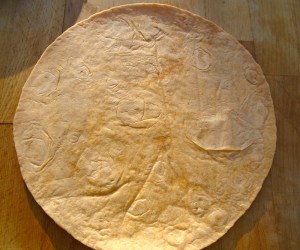
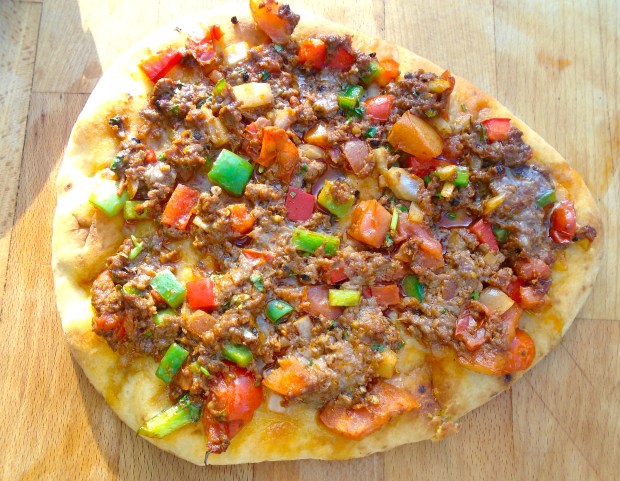
When I prepare these “pies”, I usually don’t go to the length of making my own dough. I either buy ready made fresh pizza dough and roll it myself, or I buy pre-baked thin crust pizza. Sometimes I also use lavash, flour tortillas or naan. In my experience, all of these work fine and I love them all. Remember, the main ingredient is the meat paste, not the dough. Below, you can see three different dough’s I used. All of them are great and non of them are inferior to the others, just different.
>
Bon Appetit !   Life is Good ! 
>
>
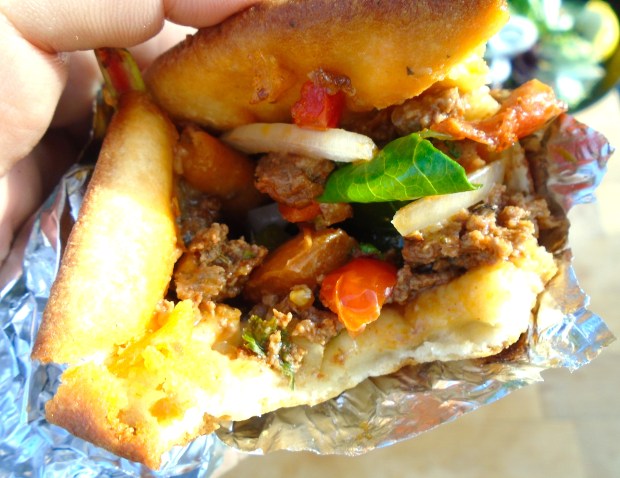
Lahmacun (sun dried tomato wrap-base)

Lahmacun (sun-dried tomato tortilla-base)

>
17

Lahmacun (naan base)

>

13

Lahmacun (pre-baked thin pizza dough-base)

>
>
>
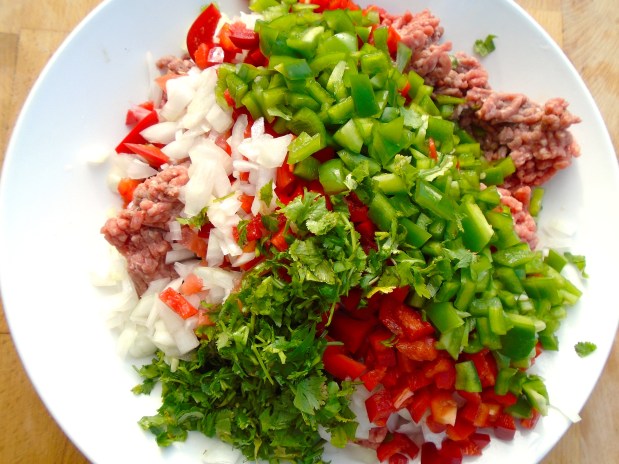
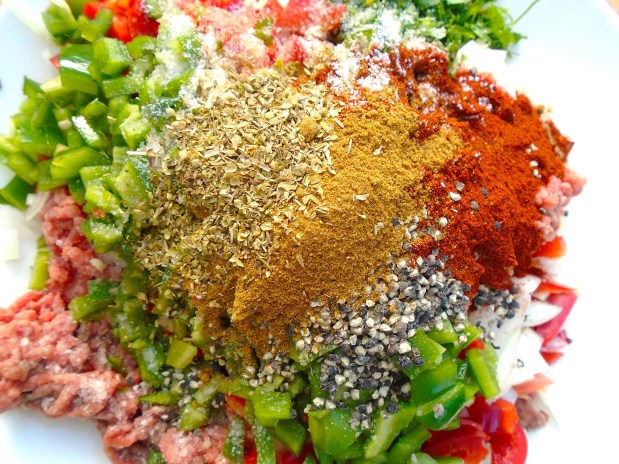
For the meat paste, use either ground lamb or ground beef. Add diced peppers, onions, tomatoes with its pulp, and chopped parsley or cilantro.
Then season with garlic paste, oregano, freshly ground black pepper, cumin, kosher salt, paprika powder and a dash of olive oil.
The paste should be fairly moist – if too dry, add more chopped tomatoes. Mix all ingredients without overworking the paste.
Spread meat paste thinly on the dough, bake at 400F until meat is cooked and dough is crisp.

To serve, top with salad and onions, drizzle with lemon juice, cut into wedges or roll into sandwich

>
>


>
>
Brush the pie base with a good extra virgin olive oil
>
>


>
>
For the salad topping, drizzle fresh leaves and onions with extra virgin olive oil, sprinkle with chili pepper flakes and kosher salt
>
>

8
>
>
Pre-baked pizza dough – Base
>
>


>
>
Naan – Base  (cut into wedges or roll tight after baking for a one-handed sandwich)
>
>


>
>
Sun-dried tomato tortilla – Base
>
>


>
>
>
>

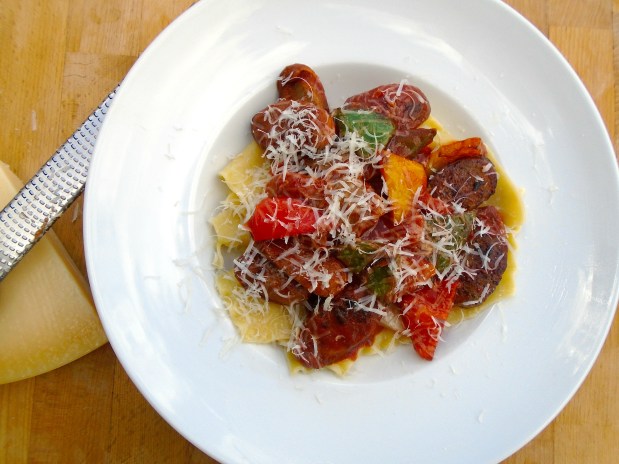
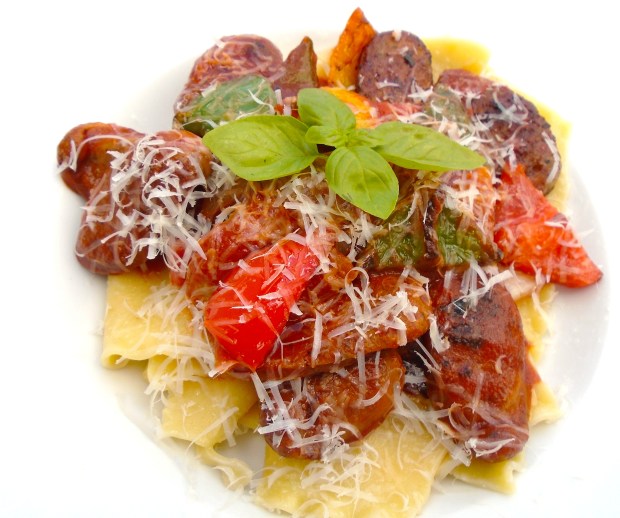
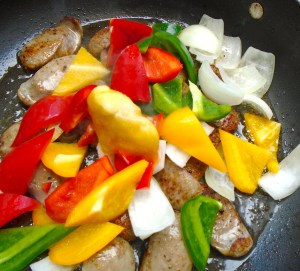
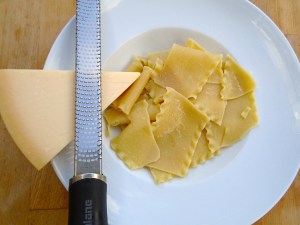
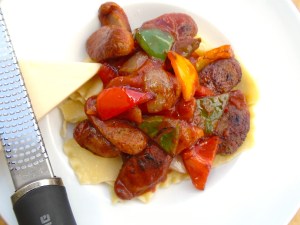
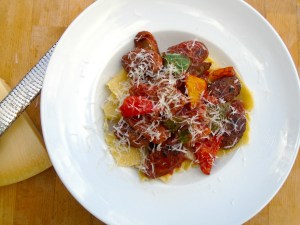
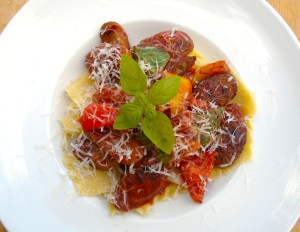
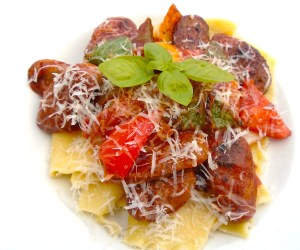
Easy Does It # 32 – Italian-Style Sausage and Peppers

>
>
This  dish proves once more that the simple things in live can give us great pleasure. Unfortunately, it can also proof that even the simplest thing can easily be screwed up.
I have never ordered this in an Italian restaurant, but I remember well that Maria used to order it often and that half the time when the food arrived she was bitterly disappointed by the lackluster mess which was set in front of her.
It is my humble opinion that if a chef feels that to serve such a simple dish is below his or her culinary honor and dignity, he/she should just leave it off the menu. But, if one decides to feature it on ones menu, one might as well does ones best !
(To see what I mean, pls  click on this link  and see what some folks deem good enough to serve in their restaurant or on their dinner table – while there are of course praiseworthy exceptions, the majority looks like the disappointing stuff I remember Maria got served too many times) 😦
As for the all-important taste, use the best ingredients which are available to you, season and execute with love and you can’t go wrong 🙂
Oops,  a bit of venting here, so let’s get back to the task at hand, which is to show you how I like to prepare Italian-Style Sausage and Peppers. If done right, and with love and gusto, it is like so many simple dishes – a pleasure to look at, and most of all, a pleasure to eat.
It will be equally gratifying when served with pasta, rice, potatoes or just a hearty sour dough bread.
So, here it goes :
>
Bon Appetit !   Life is Good !
>
>
Recipe for Easy Tomato Sauce
>
>
More dishes with tomato sauce on  ChefsOpinion
>
>

Easy Does It # 32 - Italian-Style Sausage and Peppers

Easy Does It # 32 – Italian-Style Sausage and Peppers

>

Easy Does It # 32 - Italian-Style Sausage and Peppers

Easy Does It # 32 – Italian-Style Sausage and Peppers

>
>
>
Preparation :
To read instructions, hover over pictures
To enlarge pictures and read instructions, click on pictures
>
>
>


>
>
>
>
>>

Pho

>
>
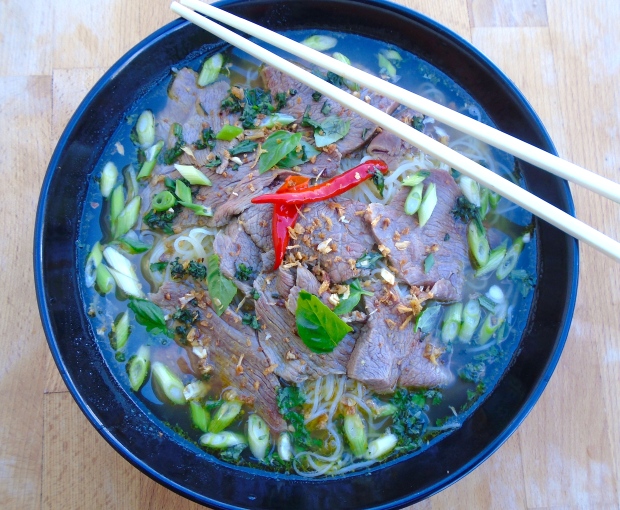
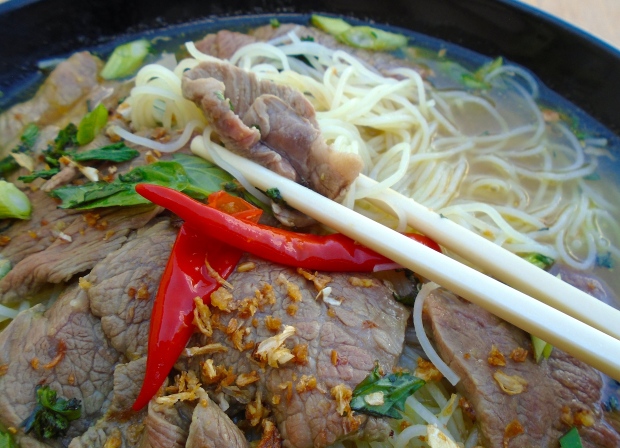
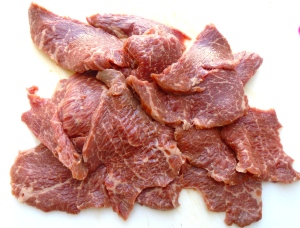
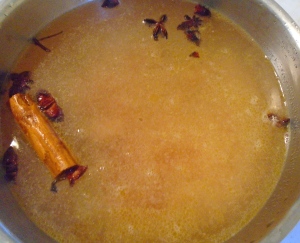
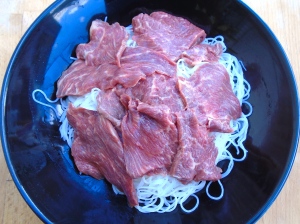
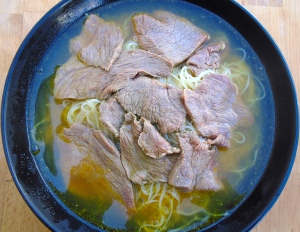
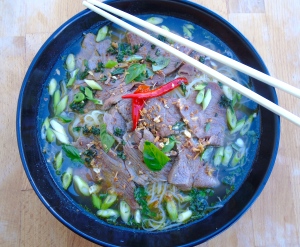
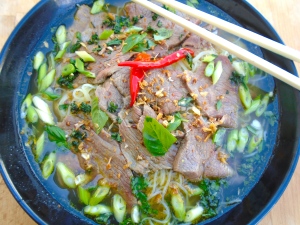
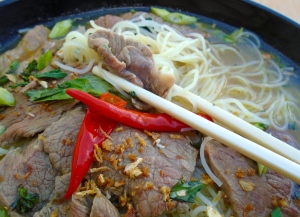
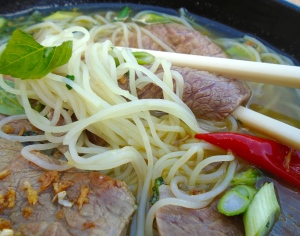
While  Pho comes in many variations and can be served with a plethora of sides, such as finely sliced onions, chili peppers, culantro, lime, bean sprouts, Thai basil, etc, I kept today’s lunch relatively simple but nevertheless very rich and delicious. Preparation was lightning quick, since I had a strong beef stock leftover from yesterday’s “beef and vegetable stew”.
If you prefer your beef paper-thin, you might want to put it in the freezer for a few hours before slicing, but I prefer the texture of the beef the way I sliced it, slightly thicker than usual and thus with a bit more bite to it. Certainly not “original”, but, in my kitchen, cooking for myself and Bella – anything goes. (Well, almost anything 🙂 )
>
Bon Appetit !    Life is Good !
>
All about  Pho
>
More Pho on ChefsOpinion
>
>
>

Pho

Pho

>

Pho

Pho

>
>
>
Preparation :
To read instructions, hover over pictures
To enlarge pictures and read instructions, click on pictures
>
>
>


>
>
>
>

Chicken In Salt Crust

>
>
One  of (culinary) life’s great mysteries for me is that so many people are buying roasted chicken at the supermarket.
Wrapping that chicken in a bag and eat it much later (sometimes hours) ruins both the texture and the flavor. I just don’t get it……… 😦
Yet, to buy a raw chicken, season it with salt, pepper,garlic and a bit of soy sauce, then roasting it in the oven is the most simple yet rewarding way to enjoy chicken.
Actual prep time is a few minutes, and nothing can beat the smell, flavor, crispy skin and moist flesh of a freshly roasted chicken 🙂
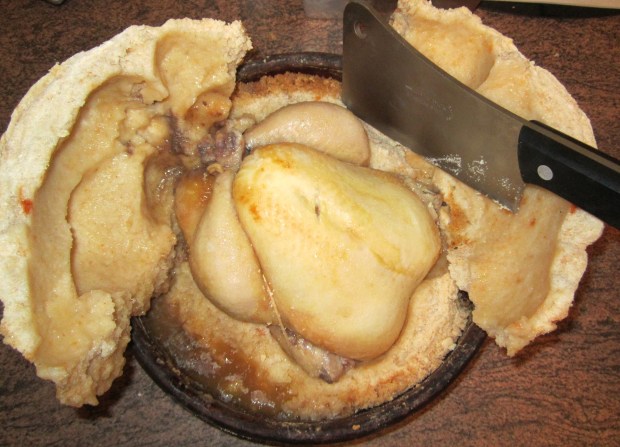
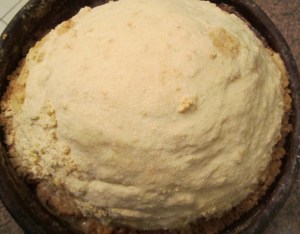
Sometimes I treat myself to an even more exquisite chicken, chicken baked in a salt crust. This preparation will not provide a crispy skin, but the divine flavor and moistness of the meat will more than make up for that. And if you have guests, the dramatic presentation and cracking open of the salt crust is most spectacular and well worth the extra effort to prep the crust.
So, either just as a special treat for yourself or when hosting guests, Chicken In Salt Crust  will surely be appreciated.
>
Bon Appetit !   Life is Good !
>
P.S.
I prepared and enjoyed this dish again last night at a friend’s house. Because of the amount of guests, I actually prepared four whole chicken and the meal was a great success.
My friend documented the whole process with her camera so I could use the pics for this post today, but as bad luck would have it, her camera ended up floating in the ice box – kaputt 😦
Therefore, the pictures and text below are from a previous post on ChefsOpinion from 2012 .
>

“This is one of my favorite chicken recipes.
Season the inside with sriracha and salt, season the inside with sriracha and chopped cilantro, stuff chicken with orange quarters,lots of garlic and scallions. Then make the salt dough by combining egg whites,salt and flour, pack the chicken in it and bake it until the meat has reached a temperature of of 158. remove the chicken and let rest another 20 minutes before opening the crust. The carry-over heat will take it to a safe 165 temperature.
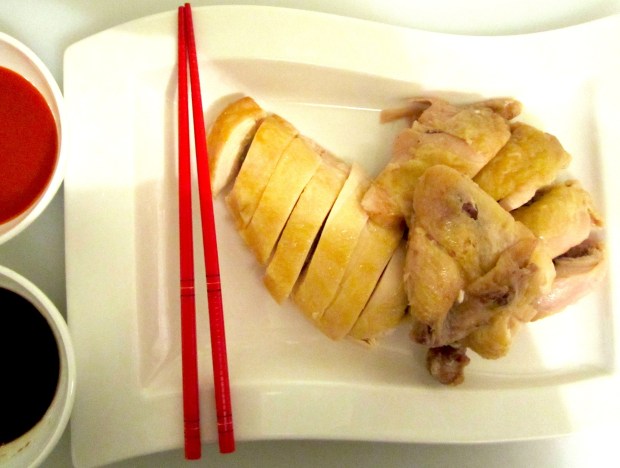
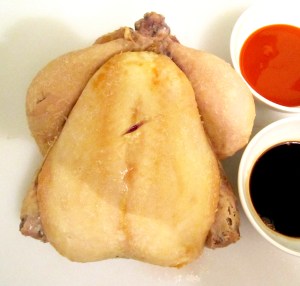
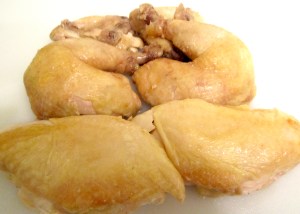
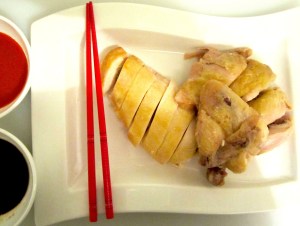
For most effect, crack and open the  crust table side. For  condiments and sides, you can go Chinese or western. Because the texture and taste reminds me so much of the time I used to live in Singapore and enjoyed “Singapore Hainanese Chicken Rice”, I usually go Chinese, but  just condiments, no rice or vegetables because together with
Bella we usually eat the whole thing in one sitting ! You can of course accompany it with steamed rice and maybe bok choy, or you can go western style and serve a western style vegetable and maybe mashed potatoes or noodles, in which case you probably serve it with a veloute to keep it all moist and tasty.”
>
>

Chicken In Salt Crust

Chicken In Salt Crust

>

Chicken In Salt Crust

Chicken In Salt Crust

>

Chicken In Salt Crust

Chicken In Salt Crust

>
>
>


>
>
>
>
>

Faux Lasagna

>
>
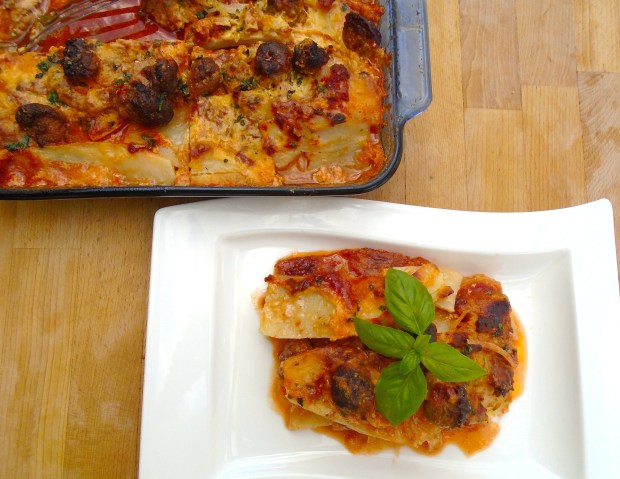
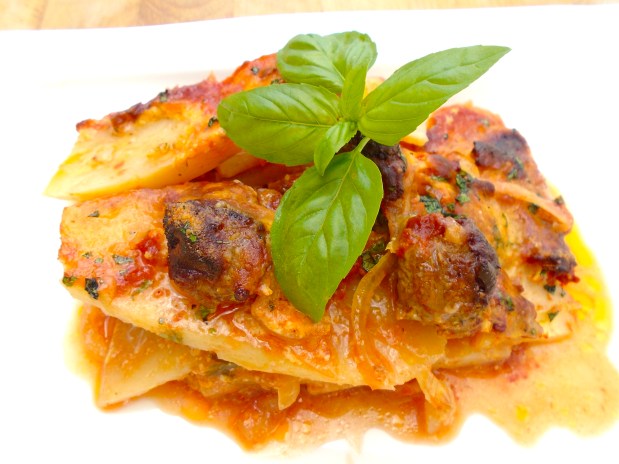
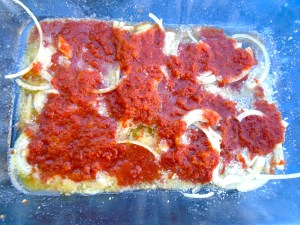
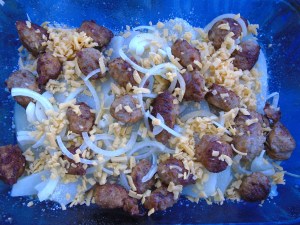
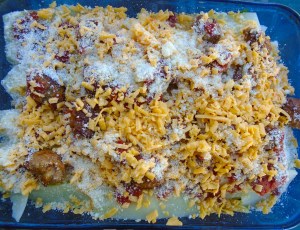
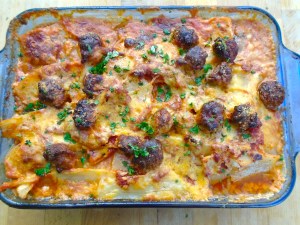
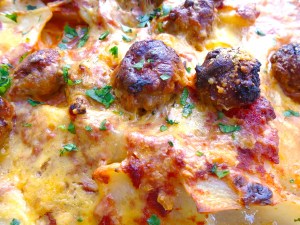
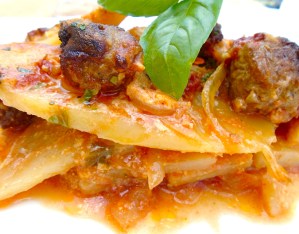
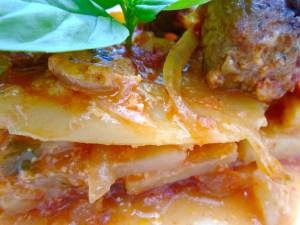
A good Lasagna is a wonderful dish. Ideally it is very flavorful and dripping with the goodness of rich ingredients. It is a sumptuous and satisfying dish that usually leaves nothing to be desired – unless you are looking for texture. After all, besides the crispy corners of the baked marvel, there is just one texture in lasagna – SOFT.
Now, while there is nothing wrong with soft, as a singular texture of a meal it can be a bit boring. So I decided to try something a bit different today for lunch and boy! was I happy I did.
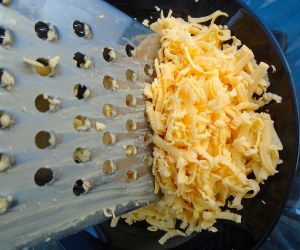
Although not real meatballs (I used spicy Italian sausage) nor real lasagna (which by definition contains sheets of pasta) nor ricotta (I used cheddar instead), this dish knocked it out of the park and although I am a certified pasta lover, I would substitute this one for a real lasagna at any time, hands down 🙂
While the taste ranked with the best I ever had, the texture and taste of the potatoes was something else again and made this the very best “(Faux) Lasagna” I ever had 🙂
>
Bon Appetit !   Life is Good !
>
>

Potato And Meatballs "Lasagna"

Faux Lasagna

>

Faux Lasagna

Faux Lasagna

>
>
>
Preparation :
To read instructions, hover over pictures
To enlarge pictures and read instructions, click on pictures
>
>
>


>
>
>
>

Beef And Glass Noodles In Coconut Soup

>
>
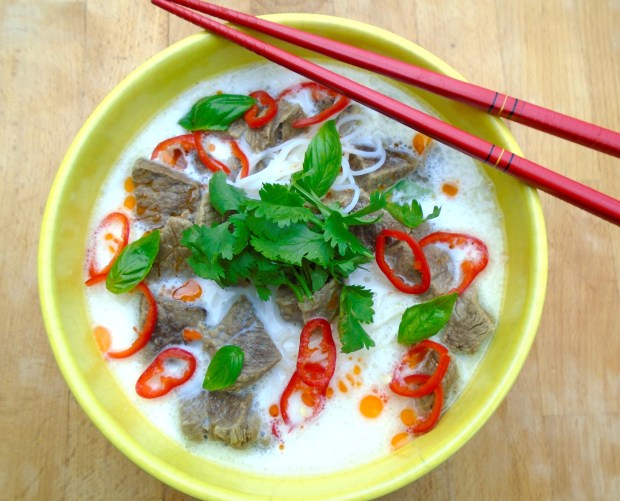
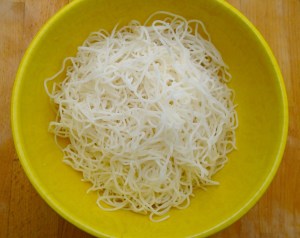
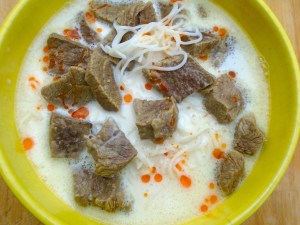
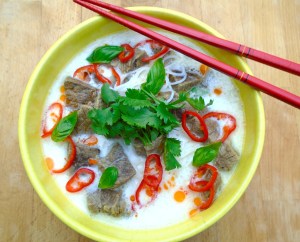
Coconut  milk is a common ingredient in many tropical cuisines, such as Burmese, Cambodian, Filipino, Indian, Indonesian, Malaysian, Singaporean, Sri Lankan, Thai, Vietnamese, Peranakan and southern Chinese, as well as Brazilian, Caribbean, Polynesian, and Pacific islands cuisines. Even in non-tropical cuisines around the world, thanks to canning, dehydrating and freezing, coconut milk has become a widely used ingredient in a myriad of dishes, both sweet and savory.  I use coconut milk mostly for curries and soups, as well as the occasional dessert. When using it for soups, I usually prepare a Thai or Thai-inspired soup. Today however, I did not make my usual tom-kha-gai (Thai chicken/coconut soup), but rather a simple, tasty beef/coconut soup. No fancy herbs, seasoning or other hard-to find ingredients, just simple items which you’ll regularly find in my cupboard and chiller.
Nevertheless, the strong beef flavor combined beautifully with the coconut milk and made for a great lunch 🙂
>
>
Bon Appetit !   Live is Good !
>
>
P.S.
Although I usually don’t find it necessary to strain soups through a fine paper or cheese cloth when cooking for one-self at home, I recommend it in this case. If you don’t, the  coagulated impurities from the broth show up clearly as dark spots in the light-colored soup once you have added the coconut milk.
While not a flavor or textural problem, it just looks better when strained 🙂
>
>

Beef And Glass Noodles In Coconut Soup

Beef And Glass Noodles In Coconut Soup

>

Beef And Glass Noodles In Coconut Soup

Beef And Glass Noodles In Coconut Soup

>
>
>
Preparation :
To read instructions, hover over pictures
To enlarge pictures and read instructions, click on pictures
>
>
>
Click here for more  Noodle Soups on ChefsOpinion
>
>


>
>
>
>
>
>
>