:
:
Watch Mike Monahan explore the belly of a bluefish
“
“
“
“
“
“
“
“
“
“
:
“
“
“
“
“
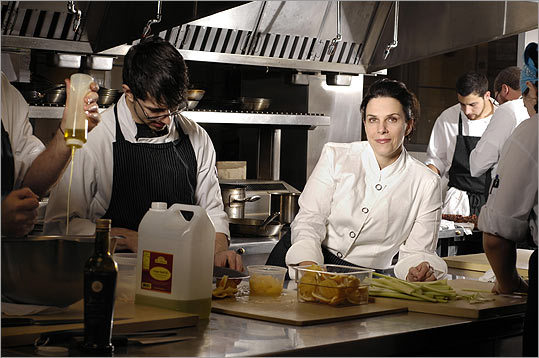
Image Source: Boston Globe Sunday Magazine
“
“
Click here to watch interview
“
“
ChefsOpinion :
Has there been any point made during this “discussion” ?
I love a good chef / cook in the kitchen and respect any gender if you are good at what you are doing. Our industry is not “male dominated” besides the fact that the majority of cooks and chefs ARE male. The vast majority of cooks / chefs are male because until fairly recently, our job required 14/16 hour workdays, 6 or seven days a week, you sweat like an animal, no time to eat, the pay sucked, after work you stink like a pig because of all the sweat, smoke, steam and stuff splattered all over you. Those are just a few of the negatives we had to deal with on a daily basis. Being a chef was never a dream profession, almost everybody became a cook apprentice because of practical reasons (maybe the family owned a restaurant, maybe there was nothing else in the region so the kid had to go somewhere with room and board provided, etc. Most woman were lucky enough to be able to avoid these circumstances. It seems everybody has forgotten the “good old times. These day’s, all workers, male or female, are protected by labor laws and (most of the time) by the good manners of their male colleagues. Don’t forget, MOST young cooks gave up their profession at an early stage back in the 50’s, 60’s and 70’s because they could not handle it for a life time. It’s all in the numbers ladies and gentlemen – have the majority of professional chefs and cooks be female and THEY will dominate the business 🙂 Some of the greatest chefs were and are women but there are just not enough numbers ( yet? ) for you all to project anything else but a minority status, YOU need to change that !
“
“
Life is Good ! Don’t waste it with crap !
“
“
“
“
“
‘”
“
ChefsOpinion on this topic : Decadent Morons 😦
Nothing wrong with the idea in general for a decent price, but in my opinion, anybody who is dumb enough to pay $ 2,ooo.oo per person for a (hopefully) good meal, elevator music and a crappy light show deserves to pay even more, how about $ 20,000.00. There seems to be an endless supply of idiots out there to which you can sell anything as long as few other people buy it (I wonder why), ….but, just watch the video and decide for yourself.
“
Please click the link below to see a video and read about the article by Hillary Dixler on Eater.com
“
‘

Foto Source: Sublimotion. Eater.com
“
“
>
>
This years moderate spring in Switzerland resulted in a record-breaking harvest of spaghetti.
For details, click here to watch the video.
Bon Appetit ! Have Fun !
>
>

photo courtesy – spaghetti forever
>
>
>
>
For your spaghetti supersite, click here
>
>\
>
>
Type 1 or type 2 ?
– Which of the two pictures represent’s your kind of food porn?
– If you had a choice,which one of the food types would you go for right now?
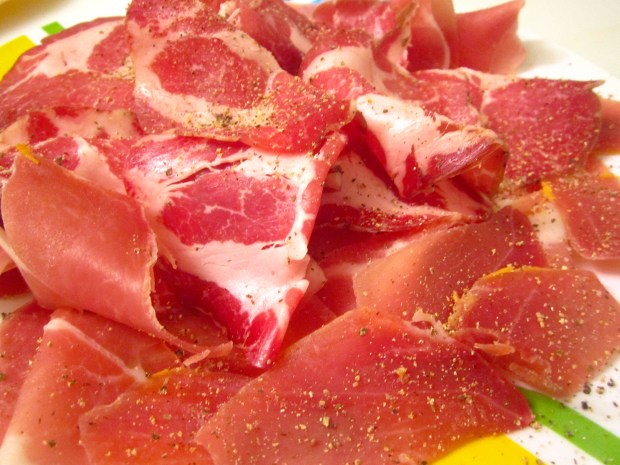
The one on the left is lentil hummus, the one on the right is coppa, prosciutto and lingue de suocera.
Please participate in the poll below 🙂
( Guess which one of the two I prefer and had for dinner a little while ago ? ) 🙂


>
Bon Appetit ! Life is God !
>
>
>
>
Below is tonight’s dinner at my house 🙂
>

Coppa Ham, Prosciutto Ham & Lingue Di Suocera (Mother In Law Tongues)
>
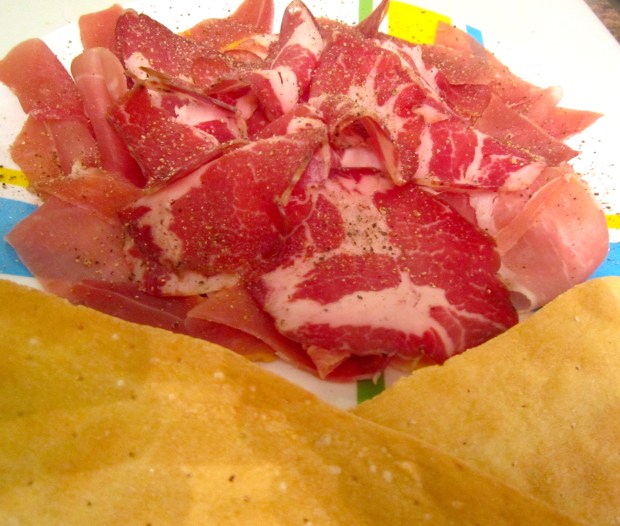
Coppa Ham, Prosciutto Ham & Lingue Di Suocera (Mother In Law Tongues)
>
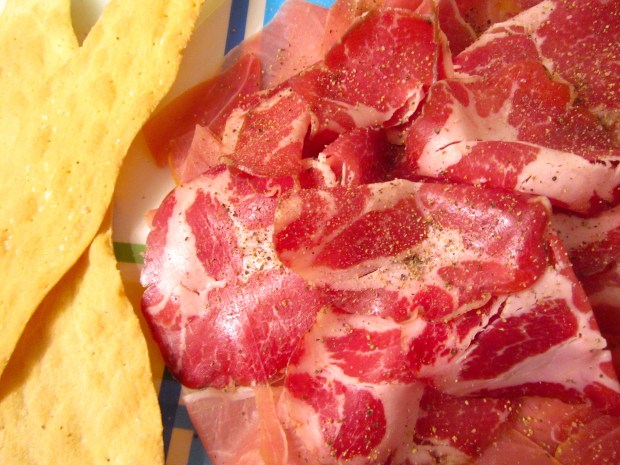
Coppa Ham, Prosciutto Ham & Lingue Di Suocera (Mother In Law Tongues)
>

Coppa Ham, Prosciutto Ham & Lingue Di Suocera (Mother In Law Tongues)
>
>
>
Lentil Hummus – Image property of foodieahh
Coppa, prosciutto & lingue di suocera – Image property of ChefsOpinion
>
>
>
>
>
>
>
I found this at MensHealth.com and thought I should share it with y’all 🙂
Stay Healthy ! Life is Good !


The FDA allows certain “defects” to slide by. Have a look at what your food can carry:
• Canned pineapple can pack in up to 20% moldy fruit.
• Berries can harbor up to 4 larvae per 100 grams.
• Oregano can legally contain up to 1,250 insect fragments per 10 grams.
• Cinnamon can carry up to 1 milligram of animal excrement per pound.
• Ocean perch can harbor small numbers of copepods, parasites that create pus pockets.
 19. 2. Nutritious food costs 10 times as much as junk food. :
University of Washington researchers calculated the cost discrepancy between healthy food and junk foods and found that 2,000 calories of junk food rings up at a measly $3.52 a day. Yet for 2,000 calories of nutritious grub, the researchers plunked down $36. To add insult to fiscal injury, out of every dollar you spend on food, only 19 cents goes toward the stuff you eat. The other 81 percent goes toward marketing, manufacturing, and packaging. Think about that the next time your grocery bill jumps into triple-digit dollars.

With fresh fruits and vegetables, supermarkets must tell you the country of origin, but with dried fruit and mixed produce, the law isn’t so strict. That means a mixed bag of salads isn’t required to disclose its location, and that can create problems if there’s a bacterial outbreak. News reports might warn you about E. Coli-tainted spinach coming from a certain country, but if your spinach is packaged with other greens, you’ll have no way of knowing if it’s in your bag. That’s a huge problem considering leafy greens top the CDC’s list of foods most commonly associated with food borne illness.

According to the USDA, the fruits and vegetables we eat today may contain significantly fewer nutrients than those our grandparents ate. Researchers looked at 43 produce items and discovered drops in protein (6 percent), calcium (16 percent), iron (15 percent), riboflavin (38 percent), and vitamin C (20 percent). Your move: Eat more fruits and vegetables.

Researchers at Tufts University recently analyzed 269 food items from 42 national sit-down and fast-food restaurant chains, and they found that nearly 20 percent of samples contained 100 or more calories than reported by the restaurants. Think about it like this: If every meal you eat has 100 more calories than you need, you’ll gain more than 30 pounds this year.

What’s more, today’s chicken also has 33 percent less protein, according to a study from the Institute of Brain Chemistry and Human Nutrition at London Metropolitan University. The problem is modern farming practices. Cramped environments and unnatural diets produce birds that have the same weight problems as the humans who eat them.

In 1970, a typical dairy cow could produce about 10,000 pounds of milk per year. Today, that same cow produces roughly 20,000 pounds. So did cows change? Nope. It’s their feed that’s different. Today’s cows are routinely fed a hormone called recombinant bovine somatotropin, or rBST. Problem is, studies have linked rBST to a multitude of cancers, including those of the prostate, breast, and colon. And while milk from rBST-treated cows is ubiquitous in America’s supermarkets, some of the biggest players are getting wise. Stores like Whole Foods, Wal-Mart, and Kroger only carry rBST-free dairy.

Because peaches are prone to bruising, blemishing, and insect takeover, they’re routinely soaked in chemicals in the weeks before being shipped off to the supermarket. That’s why the Environmental Working Group rates peaches among the dirtiest conventional fruits in America. Also on that list: apples, celery, strawberries, and spinach. As a general rule, unless the produce has a thick, impermeable skin, assume it’s soaked in pesticides. Now wash it with water and mild soap before you eat it.

Slack FDA regulations allow food processors to claim zero trans fats even if the food contains .49 grams. To be clear, that’s .49 grams per serving. That means by the time you finish, say, an entire bag of Cheetos, you might be ingesting nearly 5 grams of trans fat. Sure the bag says “0 GRAMS TRANS FAT” right on the front, but if you look at the ingredient statement, you’ll see partially hydrogenated oil, the primary source of trans fat.

USDA data shows that the food industry supplies 2,700 calories to every man, woman and child in America. In 1970, that number was 2,200. That increase translates into 52 extra pounds of fat per person, per year.

Researchers at the University of Southampton found that colors such as Yellow #5, Yellow #6, and Red #40 could cause hyperactivity in children. Ironically, foods marketed to children are often the most heavily dyed foods in the supermarket.

The Centers for Disease Control and Prevention estimates that every year, 48,000 Americans receives food poisoning from contaminated food, and that puts a $152 billion strain on the economy. What’s worse, an astonishing 3,000 of those people die. Where’s the problem? Click ahead to find out.

In a study by Consumers Union, the driving force behind Consumer Reports, 12 percent of tested chickens were infected with Salmonella, and nearly half carried Campylobacter. Campylobacteriosis is one of the most common causes of food poisoning in America.

When researchers from Arizona tested Gulf Shore oysters, they found E. coli in every single sample. As filter-feeders, oysters naturally sift through the pollutants in the water, increasing their risk of contamination by pathogens. If you’re buying oysters from anything less than a highly trusted source, make sure you cook them through.

The typical fast-food burger is made with slaughterhouse trimmings, fatty cuts of beef typically reserved for pet food and cooking oil. What’s more, these burgers contain pieces of hundreds, potentially even thousands, of different cows. This creates an environment where bacteria thrive, so to clean the meat, the USDA allows a company called Beef Products to pipe the raw beef through pipes and expose it to ammonia gas. Never mind that ammonia is a poison or that evidence suggests the process may not be fully effective. The USDA deems it safe enough, and it allows the meat to be sold without any indication that it received the gas treatment.

Bisphenol A, or BPA, is the chemical found in plastic bottles, glass jar lids, and the lining of food-containing tins and cans. In your body, BPA acts similar to estrogen, and it has been linked to behavioral problems, reproductive issues, and obesity. The industry has been slow to find a replacement, so limit exposure by switching to glass containers or plastic bottles labeled BPA-free.

When the Food and Drug Administration set bottled-water regulations, it left in one gaping loophole: The regulations apply only to bottled waters sold across state or country borders. Bottles packaged and sold within a single state don’t have to comply with national standards. Although many states do have their own set of (nationally unregulated and unrecognized) regulations in place, one in five have none. Furthermore, government and industry estimates figure that 25 percent of water bottles sold in the US contain mere tap water. You should be so lucky as to end up with one of those; the FDA’s rules are far more lax than the tap water standards set by the EPA.

The average American drinks 450 liquid calories every day, according to a study from the University of North Carolina. And booze isn’t the problem. Blame the bigger bottles of soda, the sugar-loaded coffee drinks, and the barrel-sized smoothies.

A study published last year in Psychological Science reveals that the mere sight of a fast-food sign on the side of the road is enough to make people feel rushed, which can lead to impulsive decisions—and dangerous nutritional choices. Sidestep your impulses the next time you eat out: Plan your order before you walk through the door and then stick with it.

Carmine, a vibrant red food colorant, is actually the crushed abdomen of the female Dactylopius coccus, a beetle-like African insect. Not only is the thought of eating bug juice gross, but it also poses an ethical issue for some vegetarians and vegans. Look for it in red-colored candies and juices.
Thanks for reading!
Go to MensHealth.com
Beware of these: The 20 Worst Drinks in America!
>
>
>
>
>
*
*
As part of a promotion for the Sydney International Food Festival, the advertising agency WHYBIN\TBWA designed 18 national flags using foods each country is commonly associated with and that would also match the colors of the flag.
Wow !
Such a simple, logic idea that has taken so long for somebody to visualize and promote. I stumbled across this by chance and was amazed that it did not get more attention world-wide, considering that everybody and their dog is now into creative food presentation and expressing themself through food. I hope that I can inspire to follow suit and that I can get many submissions from my readers with their own creation of a country flag of their choice. If there are more than one of the same country, we will vote which one to publish. If you’d like to submit, please use a white background and a similar rectangular plate as in the originals.
Life is Good ! Let’s do this ! 🙂
Should your your picture appear here, you will of course get the proper credits !
Below find the originals pictures and on the bottom of the page the appropriate credits.
>

Thailand –
sweet chilli sauce, shredded coconut and blue swimmer crab
>
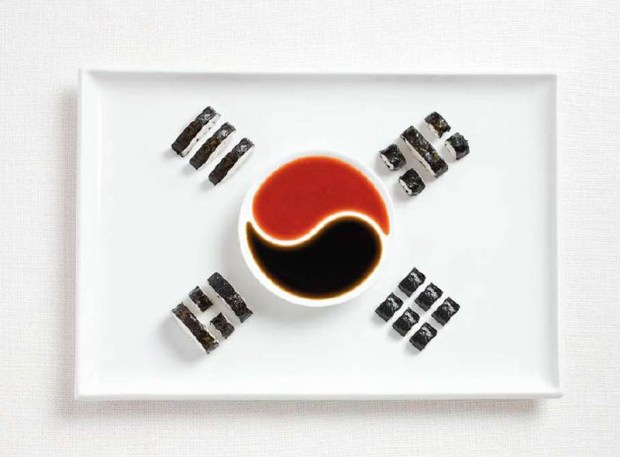
South Korea –
kimbap and sauces
>

Vietnam –
rambutan, lychee and starfruit
>

United States –
hot dogs, ketchup and mustard
>

United Kingdom –
scone, cream and jams
>

Turkey –
Turkish Delight
>

Switzerland –
charcuteries and swiss cheese
>

Spain –
chorizo and rice
>

Japan –
tuna and rice
>
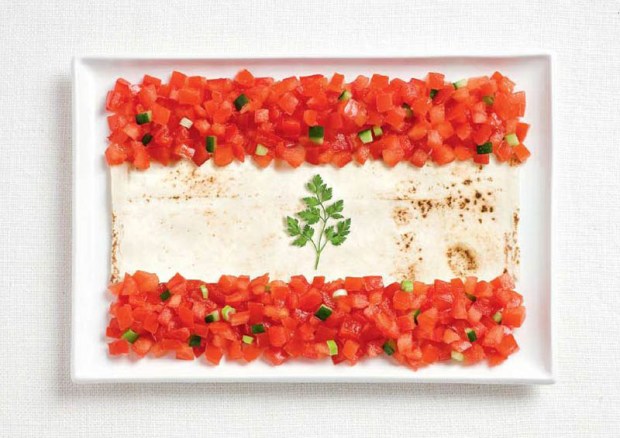
Lebanon –
tomatoes, pita bread and parsley
>

Indonesia –
spicy curries and rice
>

India –
curry chicken, rice, cheera thoran and papadum wafer
>
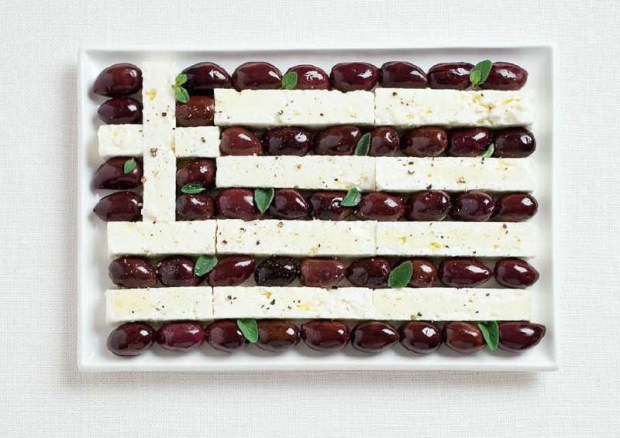
Greece –
olives and feta cheese
>
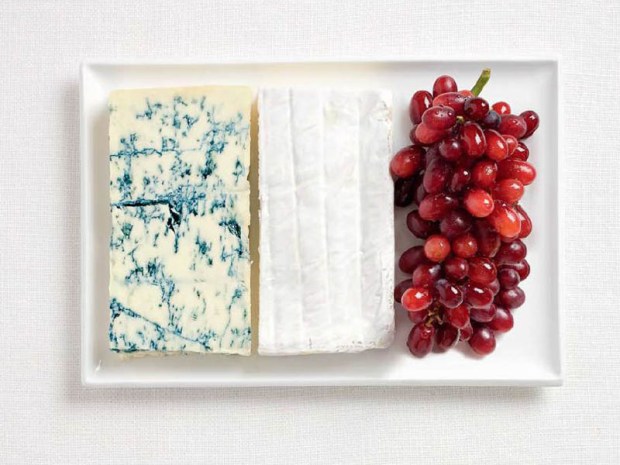
France –
blue cheese, brie cheese and grapes
>
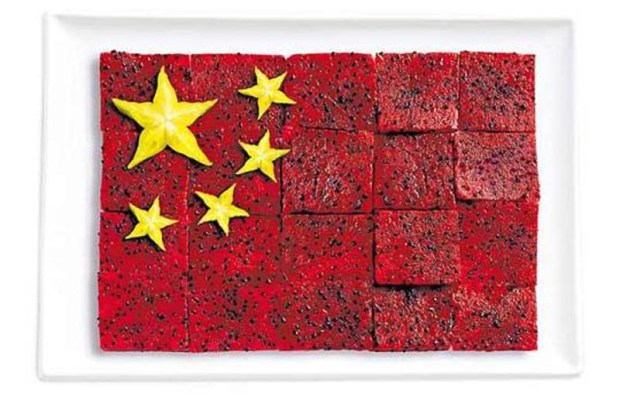
China –
dragon fruit and star fruit
>

Brazil –
banana leaf, limes, pineapple and passion fruit
>

Australia –
meat pie and sauce
>
>
Dear Friend’s,
I would like to take this opportunity to thank
you all for your continued support of
ChefsOpinion
I wish you all a wonderful holiday season
and a happy, healthy and prosperous new year.
Hans Susser
>
>
>
>
>
>
>
>
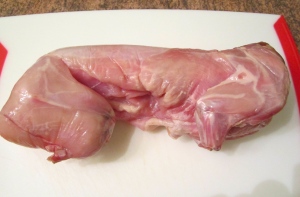
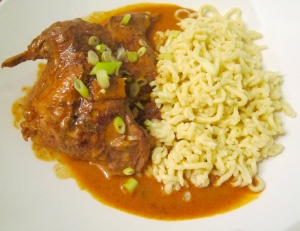
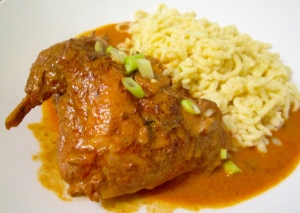
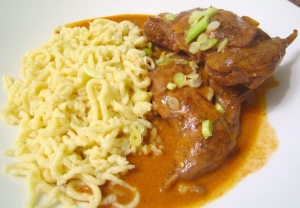
Last week I bought myself a rabbit at my neighborhood supermarket. As I was about to prepare it, I started to think about the animal in my hand’s and about how we humans love and respect some animals, while we disregard the majority of most species as soulless, feelingless Beings, which have no other purpose in life as to serve us in any which way we want.
We humans like to think of ourself as getting tougher as we get older. For the first 50 years of my life this was mostly true for me. However, for the past few year’s I have realized that the process has started to reverse itself, at least when it comes to being tough to other beings. Truth is, I have gotten very tough to myself as life and circumstances have hardened me over the years, but when it comes to the way I treat and feel towards others, I’ve become a soft pussycat. To illustrate my point, here is a little story from my past, triggered by this little rabbit:
When I was about nine years old, I begged my dad to allow me to breed rabbit’s in our back yard, so I could sell them to our neighbors as sunday roast for 10 german marks a pop. My dad gave me permission under the condition that once he build the cages for me, the rest of the operation was to be my complete responsibility. This meant purchasing the first pair, gathering the food (cutting clover from behind our house) and feeding them, keeping the cages clean and – butchering the animals. In these day’s, the way to do this was to hold the animal by it’s ear’s and whacking them in the neck with a honing steel to break the neck. Growing up in the country side, we kid’s saw animals being butchered up close all the time, so there was nothing unusual about it, no second thought’s. So I had this little business going for about a year, after which I became interested in other stuff and had no more time for my rabbit’s, which by that time had grown to a population of about 40, as they multiplied faster than I could sell them :-).
Later in life as a professional cook, butchering animals was a common task while I was younger, so again, not many second thought’s about it. However, during the past few year’s I have become a different person, with different feelings and opinions. Although I am still an advocate of the practice of eating meat and seafood, I am horrified of the way the livestock industry has developed. The way animals are raised, kept and butchered is for the most part a shameful, horrifying, mind boggling heartless, soul-less affair, for which everybody involved should be deeply ashamed.
So here is my point: While I had no problem as a kid to slaughter an animal with my bare hand’s, this would be completely out of the question now. I would sooner cry my eyes out before I could harm a helpless animal for my own gain. I have no illusions that I will give up meat and seafood consumption at this time in my life, but I pray everyday that the circumstances of breeding and butchering animals will improve to a level where we as humans don’t have to be ashamed anymore of the way we treat livestock, from it’s birth and trough it’s life until it’s (hopefully) merciful death.
I would appreciate some of your comments and opinions about this. If you do comment, please do so directly on the comment part of my blog, not trough Linkedin, FB or other links, so we can all share our thought’s in this important matter.
>
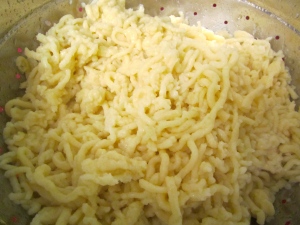
Click here for “Hausgemachte Spätzle” recipe
<
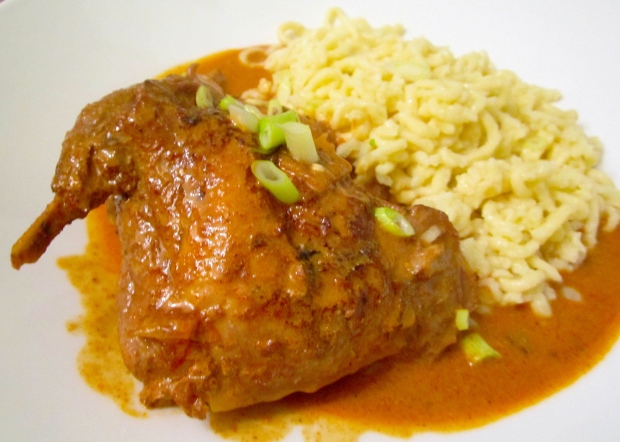
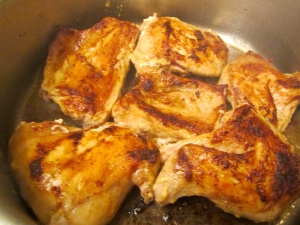
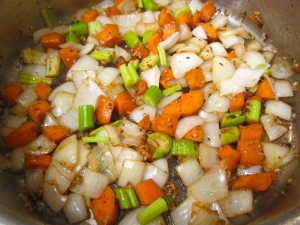
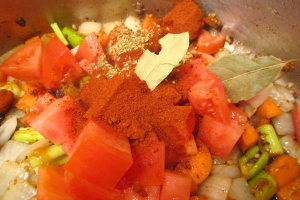
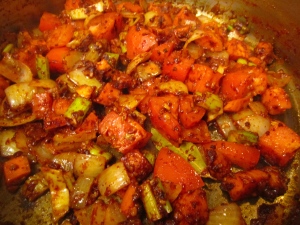
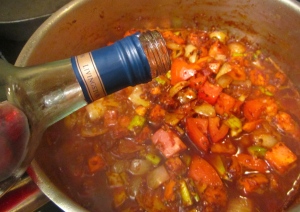
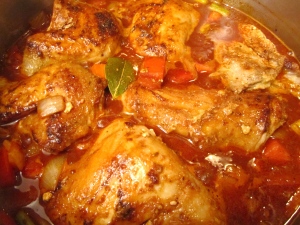
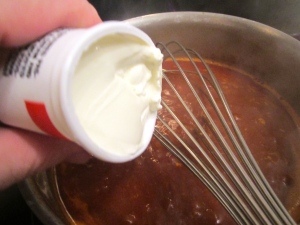
Braised Rabbit In Merlot/Sour Cream Sauce With Homemade Schwäbische Spätzle
>

 ChefsOpinion