Articles

” Can you learn to cook online? “

Can you learn to cook online ?
The Escoffier School thinks so.

Excerpts from an article on “GigaOM” :
By Kevin Fitchard

“The Escoffier School for Culinary Arts has one hell of a namesake to live up to. Auguste Escoffier is the closest thing the cooking world has to a deity. He established the brigade system that governs all modern day professional kitchens. His pivotal Le Guide Culinairecodified French cuisine’s five mother sauces — from which all other sauces derive. The Escoffier School’s owners believe they can now impart some of the grand master’s wisdom on a new generation of cooks through an intensive online course.

Triumph Higher Education, which licenses the school’s name from the Escoffier Foundation, already has two brick-and-mortar professional cooking schools in Austin, Texas, and Boulder. Co. But this week it launched its online curriculum, modeling it after the online degree programs such as those offered by the University of Phoenix. The course costs $5,000, and while half its new enrollment is comprised of enthusiasts looking to learn the basics of cooking, the school’s core objective is to train the professional cooks that make up the rank and file of every restaurant kitchen.

At this point I should mention that I worked as a prep and line cook for several years in college. I had no formal training, and I’m certainly no chef, but I make a decent vinaigrette, can debone a chicken and have developed an unhealthy indifference toward open flame. I also carry the same baggage anyone who has learned to cook in a restaurant accrues.

Sure, your grandma can teach you to cook, but to learn how to cook professionally, there is no substitute for a hairy man in sweat-drenched chef whites bellowing in your ear, demanding to know how you could f#@k up a carrot brunoise.

Auguste Escoffier

I expressed my skepticism to Jeffrey Larson, Triumph’s director of admissions marketing and Brian Sherrill, its vice president technology – and they said they get that a lot. Cooking is such a hands-on profession, an entirely online curriculum seems counter-intuitive, said Sherrill said.

But Sherrill said no one is going to graduate from school’s two-to-four-month program and open their own restaurant. The idea is to teach the rudiments of cooking along with a healthy dose of French culinary theory and kitchen science to students wanting to start out a restaurant career, Sherrill said. Triumph expects its Escoffier graduates will develop the basic knowledge needed to…………”

Read the whole story  HERE 
” So, Are You A Sucker Too ? “

.
.
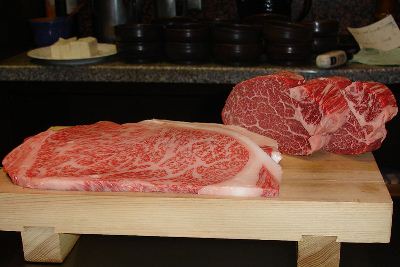
Food’s Biggest Scam : The Great Kobe Beef Lie !
By Larry Olmsted on Forbes
.

These are cuts of the famous Kobe beef from Hyogo prefecture in Japan.
Note the exquisite marbling of fat throughout.
To see it in person, you need to go to Japan,
because real Kobe beef cannot be found in the U.S.
Photo: Wikipedia
.

.

Think you’ve tasted the famous Japanese Kobe beef ?   Think again !

Of course, there are a small number of you out there who have tried it –
I did, in Tokyo, and it is delicious. If you ever go to Japan I heartily recommend
you splurge, because while it is expensive, it is unique, and you cannot get it in
the United States. Not as steaks, not as burgers, certainly not as the ubiquitous
“Kobe sliders” at your trendy neighborhood “bistro.”That’s right. You heard me.
I did not misspeak. I am not confused like most of the American food media.
I will state this as clearly as possible:
You cannot buy Japanese Kobe beef in this country. Not in stores, not by mail,
and certainly not in restaurants. No matter how much you have spent, how fancy
a steakhouse you went to, or which of the many celebrity chefs who regularly
feature “Kobe beef” on their menus you believed, you were duped.
I’m really sorry to have to be the one telling you this, but no matter how much you
would like to believe you have tasted it, if it wasn’t in Asia you almost certainly
have never had Japan’s famous Kobe beef.You may have had an imitation from
the Midwest, Great Plains, South America or Australia, where they produce a
lot of what I call “Faux-be” beef.
You may have even had a Kobe imposter from Japan……….

Read the whole article HERE


” LinkedIn Messed Up? “

.
.
Que Lastima !

I truly believe that nowadays most content on LinkedIn consists of spam of
one kind or another,most of it offering jobs which in many cases don’t exist;
they are merely a vehicle to transport people to the respective company web pages
and to earn them “clicks”.

Networking? – very little !
Crap? – a lot !

What a shame !
.

” Overcooked “

.
.
I love braised meat.

However, I hate it when folk’s say
” It was so good, it fell of the bone “.

If it  ” fall’s off the bone  ”  it is OVERCOOKED.   😦
.
.
.
,

.
.
 

” I read this half- assed article by a very prominent and famous TV chef…”

>
.
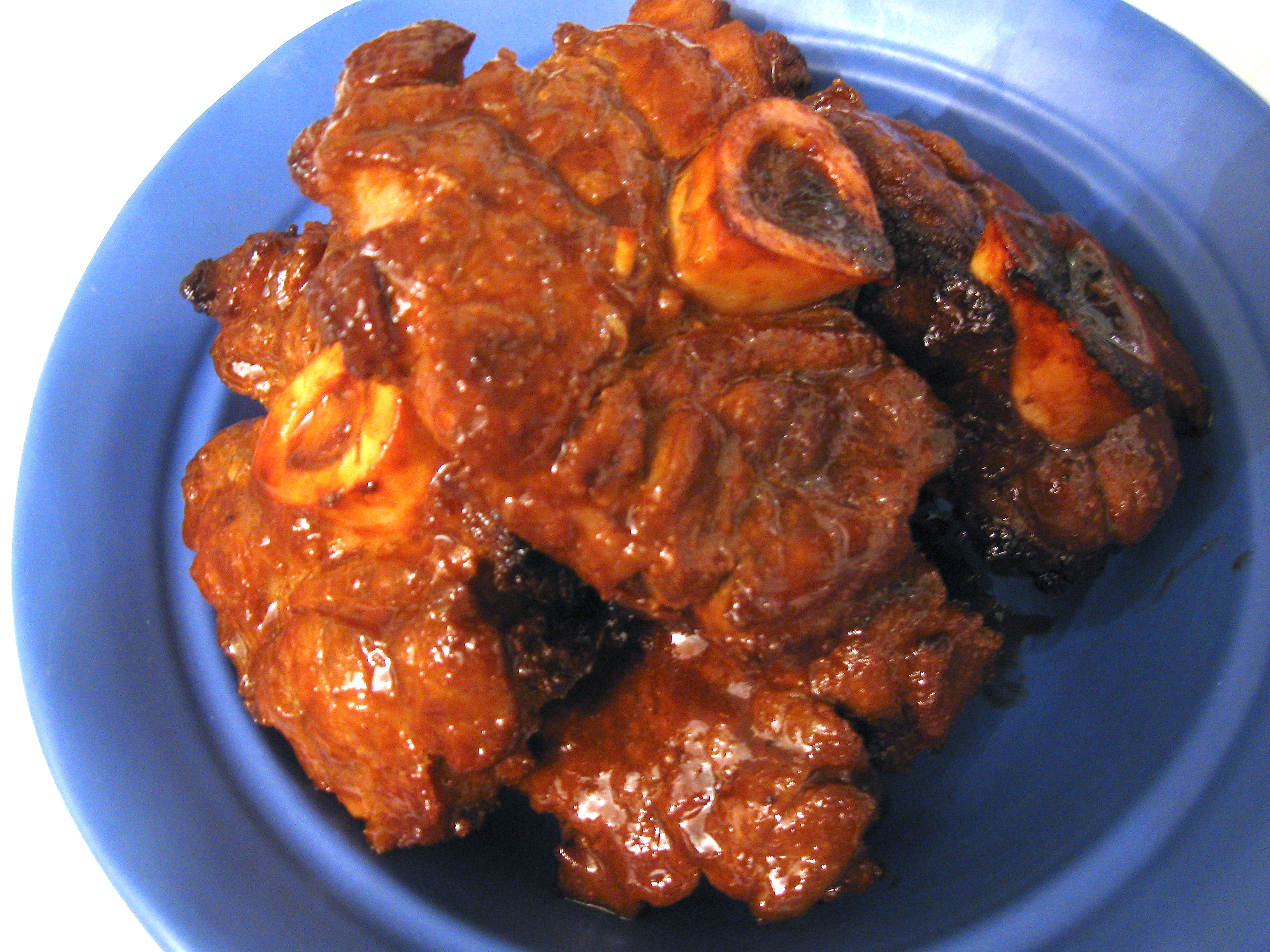
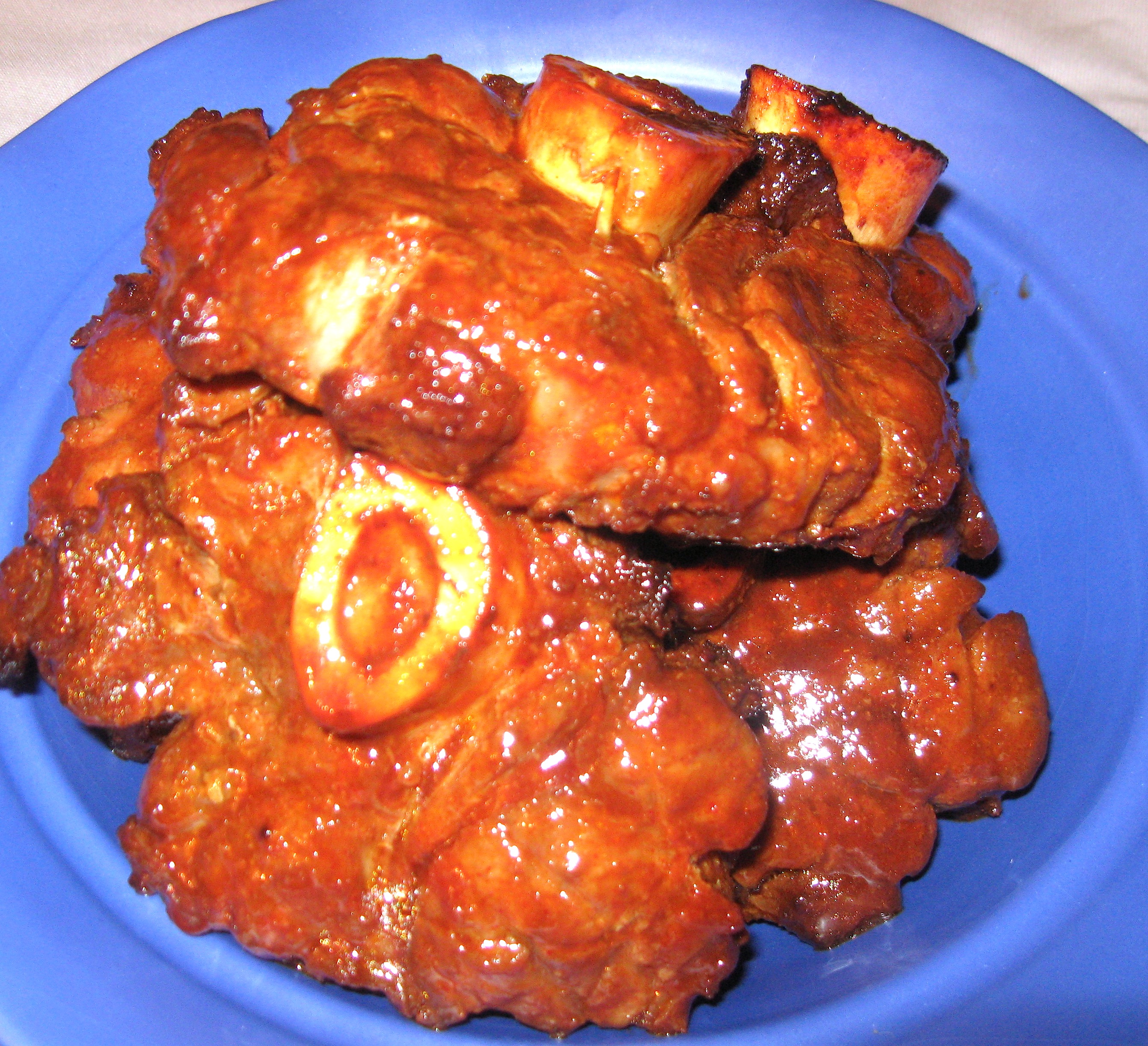
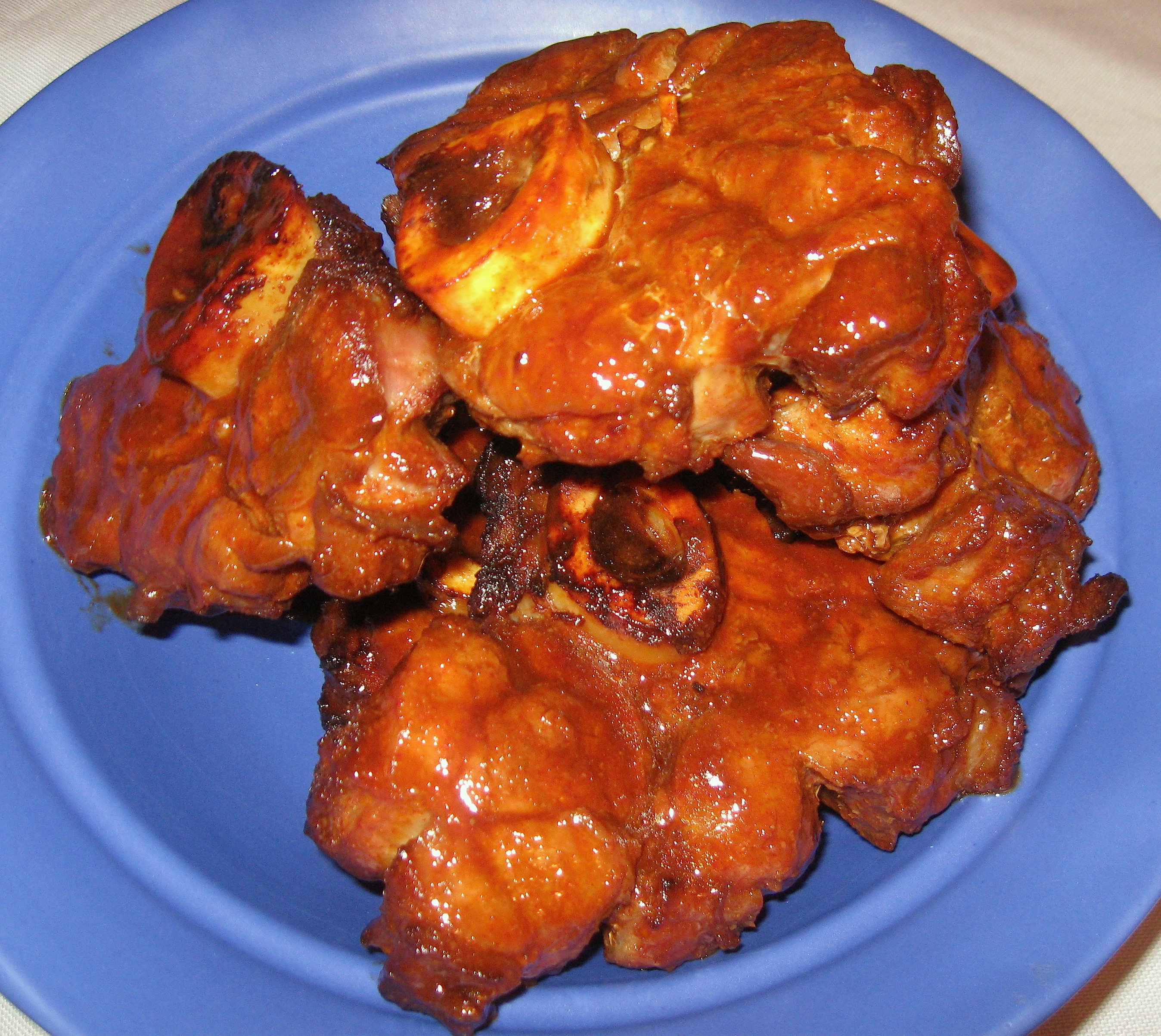
Slow Roasted Teriyaki  “ Osso Buco ”

Here is what I cooked for myself (& Bella) after I read this half- assed article by a very prominent and famous TV chef/ judge on iron chef , that you have to braise veal shanks for a long time to make them edible.
What a load of crap, as usual, from one of our “recipe chefs ” on TV, most of which have no clue how to cook or be a “chef” in the real world.
Yes, a good traditionally braised Osso Buco can be a wonderful dish, but you lose most of the beautiful texture of the shank. In southern Germany and Austria we have a dish called   “Gebratene Kalbshaxe”  (usually and ideally spit roast ). Just season with salt and pepper, then SLOWLY !!! roast (whole shank or thickly sliced)  until the connective tissues break down (at least 2.5 hours, often up to 4 hours) and you will have the most succulent, tasty, satisfying dish imaginable. During the last 15 minutes, baste liberally with teriyaki sauce.
Just goes to show that if you know and understand only part of something, to pass that on as the full truth will screw up the knowledge of the person who asked you for advise. Happens all the time with non-experienced so called “Chefs” and “Teachers”,  who get all their knowledge and skills by sitting on a school bench instead of learning and, most important, experiencing, the facts, beauty and excitement of cooking  in the real world, through observing and learning from REAL chefs in a REAL kitchen and soaking  up the knowledge and skills offered to them with the passion of a real chef.


Bon Appetit !    Life is Good !
. .  

>

>

” Are Rare Steaks Really Better? A Butcher’s View “

.
.

I found this interesting story on “Huffpost”

Are Rare Steaks Really Better?: A Butcher’s View

Plus: A guide to different cuts’ ideal doneness

by Tom Mylan  June 19, 2012

In the game of food dork one-upsmanship, the rarer you order your steak, the more of a real gastronome you are—it means you like your meat good and a little dangerous, like it was meant to be. I always took this carnal orthodoxy as gospel; I mean, people who order their steak well-done deserve their own circle of hell. But…as much it pains my old, snobby self, I’ve started to prefer some of my steaks a little more towards the medium end of the spectrum than I’m completely comfortable with.

But why? Aren’t rare steaks juicier and more tender? Well, not necessarily. I started doing some experimenting—I’m no scientist, but even a knuckle-dragging son of a construction worker like me can learn a thing or two—and it turns out in some cases, cooking your meat a little more can make for better texture and flavor. Blame fat, collagen, and chemistry.

Ribeyes, for example, are downright gross when cooked black-and-bleu. I know there are probably a lot of old French guys rotating in their graves right now, but hold on—ultra-rare ribeyes are gross because all that luscious fat that rims the meat, the best part of the steak, doesn’t really render when barely cooked, making it weird and pasty.

In contrast, the prime ribs of my Reno, NV youth were slow roasted………. Read more HERE
.
.

” I was once asked what I could cook and I told them: everything! “

Russ Orford • @ Shelley, most “good Exec Chef” starts just there on the line. We have the burns the cuts to prove it. At 52, I can still give the young ones a run for their money, and not because I am fast but because I get it right and I know. However as A Exec chef the job has taken me elsewhere in the kitchen to oversee the prep the ordering, the following of health codes, OHSA, Inventories, and Training, costing of menus. The endless meeting that management feels I need to be at. The fixing the mixer and fridge door Because there is no money left in the R&M budget, and over a 100 other things that come up every day to keep the kitchen running, and yes I still get time to do the thing I got into this job for TO COOK on the line working one or two meal parts per day like breakfast, lunch and dinner. Really if I took my wage and divided it by the hours I work you would see a Slave wage, after all most cooks are on an hourly rate and when their shift is up it is up and they go home. Unlike a exec chef who stays until the job is done. I am first in and most time last out of my kitchen. I do not have a degree I did my Apprenticeship of 3 years working under hard talking hard drinking 1st and 2nd cooks , being trained my exec chefs who knew how to train cooks and chef and also had no degree , I have had many a “ young Chef “ who has come to my kitchen with a degree and they could not even cook an egg ! Why you may ask well as one young degreed chef told me “we were only shown how to do that one or two times before we moved on to more interesting food items!” I cannot tell you the amount of eggs I cooked before the chef would allow them to be serve to the guest, and until I could do that I was not allowed to “move on to the more interesting food items “and that in a nutshell is why we as chef are paid poorly, as most of these young chefs with degrees cannot do the basis things and so we all get batched in to one happy group. I was once asked what I could cook and I told them: everything! The person asked me how I could cook everything and that was impossible! I told him I had good training from the first day I walked into a kitchen I was taught the basis again and again until I got them right and was not allowed to move on until I got them right. Most line cooks know the food they are cooking the menu they are working on, repetition builds speed not knowledge Take a line cook off the menu he is working on and give him a new menu and he is like a duck out of water. I have seen many a “bull cook” have the wind taken out of his or her sails with a “new menu “

Read more HERE 

” It’s safer to make a salad on a toilet seat than it is to make one on a cutting board “

.
.

“In most cases, it’s safer to make a salad on a toilet seat than it is to make one on a cutting board,” says Dr. Charles Gerba (a.k.a. Dr. Germ), a microbiologist and professor at the University of Arizona in Tucson. “People disinfect their toilet seats all the time, but they don’t realize that they really need to pay attention in the kitchen too.” Since 1973, he’s been studying the hidden bacteria lurking in American homes, and his findings should influence your behavior when it comes to storing a toothbrush (in the medicine cabinet) and how to flush a toilet (lid down). Here, Dr. Germ identifies the top five dirtiest spots in the kitchen and gives advice on how to banish nasty germs.
By Alessandra Bulow, Food & Wine

.
.


1. Sponges and Dishcloths

“We did a survey collecting 1,000 sponges and dishcloths in kitchens, and about 10 percent had salmonella. They get wet and stay moist, so bacteria grow like crazy. The most E. coli and other fecal-based bacteria in the average home are on a sponge or cleaning cloth.”

DR. GERM’S ADVICE: “Replace dishcloths every week and throw the sponge into the dishwasher or microwave it on high for 30 seconds.”

2. Sink

“There’s more E. coli in a kitchen sink than in a toilet after you flush it. The sink is a great place for E. coli to live and grow since it’s wet and moist. Bacteria feed on the food that people put down the drain and what’s left on dishes in the sink. That’s probably why dogs drink out of the toilet — because there’s less E. coli in it,” says Dr. Germ.

DR. GERM’S ADVICE: “Clean the sink basin with a disinfectant product made for the kitchen. Vinegar and lemon juice can clean some bacteria, but they can’t clean really bad pathogens, so the Environmental Protection Agency doesn’t recommend using them as an alternative.”

3. Cutting Board

“In most cases, it’s safer to make a salad on a toilet seat than it is to make one on a cutting board. There’re 200 times more fecal bacteria from raw meat on the average cutting board in a home than a toilet seat. Most people just rinse their cutting board, but poultry and raw meat can leave behind salmonella and campylobacter.” The latter bacteria, which can come from eating raw meat, is one of the most common causes of food-borne illness, according to the FDA.

DR. GERM’S ADVICE: “Use one cutting board for meats and another one for vegetables, so you don’t get cross-contamination. Boards can be cleaned with a kitchen disinfectant or put it in a dishwasher.” As to whether you should buy a wood or plastic cutting board: “We used to always recommend using plastic cutting boards, but wood seems to have antimicrobial resins, so it’s a toss-up.”

4. Bottom Shelf of the Refrigerator

“When we looked at refrigerators, the bottom shelf tends to have the most bacteria, because moisture and condensation drip down from the upper shelves. People often put produce on a bottom shelf and defrost a meat product above it.”

DR. GERM’S ADVICE: “Wipe down the bottom shelf every two or three weeks with a disinfectant cleaner that’s made for the kitchen. To avoid cross-contamination, put raw meat on the bottom shelf and tuck raw produce into a drawer away from everything else.”

5. Kitchen Countertops

“Kitchen countertops tend to be the dirtiest near the sink area because people wipe them down with sponges and cleaning cloths that have E. coli and other bacteria. The sponges and cloths just spread the germs all over the countertops.”

DR. GERM’S ADVICE: “Use a disinfectant kitchen cleaner and finish off by drying the countertop with a disposable paper towel. Paper towels are great because they absorb a lot of the moisture and bacteria and you can just throw them away.”

.
.
.
.

Working for the government sounds better :-(

Halleluja !!!     I’ve got just two years to retirement   🙂
I LOVE my profession (Cook) but thank’s God it’s over soon.
I worked my butt off most of my life, but there were great rewards
as those of you who have traveled the world as executive chef know.
But now ?
Working for the government sounds better 😦

Read the whole story HERE 

WOWWW ! No ” good eat’n ” here :-(

Worst Meal Ever: 21 Tales of Disastrous Dinners

Excerpt’s from Zagat:

A Funky Asian Disaster

As a food writer it’s a bit embarrassing to admit that I’ve never been a fan of, well…stinky ingredients. (I’m just being honest.) I mean I’m not the kind of person who’s going to sit there and pretend I snack on durian and fermented fish paste just because it sounds cool. One night I was eating dinner at a hot spot known for its inventive Asian fare. The dishes sounded really good on the menu so we ordered close to an entire menu’s worth of the goods. Basically, if you want to stink worse than a batch of hard-boiled eggs dipped in vinegar, you should eat here. I watched in shock as my dining companions ooh-ed and ahh-ed at the “deliciousness” of the meal, which had actually made me physically nauseated. Also the desserts were some of the worst things I’ve ever put in my mouth and included flavor combos that while inventive, did not work in the slightest. One dish tasted like spiced gravel doused with orange marmalade. I’ll say no more, but I can tell you that I won’t be returning to this joint ever again.

-Kelly Dobkin is an editor for the Zagat Blog

20 more dinner diaster’s HERE