restaurants

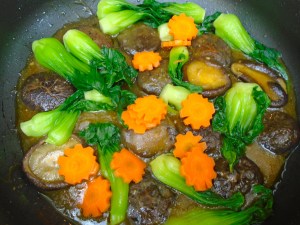
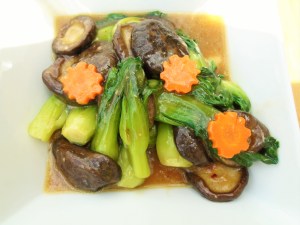
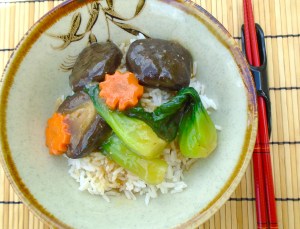
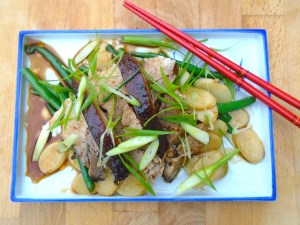
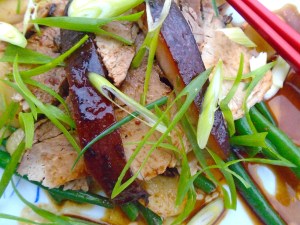
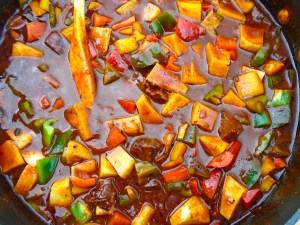
Stir Fried Flower Mushrooms, Bok Choy And Carrots In Hoi Sin Sauce

>
>
This  is my all-time favorite meatless entrée. I used to special-order this in Chinese restaurants which Maria and I frequented, but now I hardly go out anymore, so special orders are not something I want to bother the chefs with in places where I only show up once in a blue moon.
So, I prepare it for myself at home and usually it is at least as good as I could hope for in a restaurant 🙂
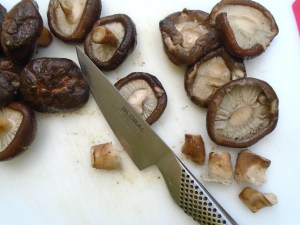
I don’t normally plan this in advance, but when I am at my neighborhood Asian market and see fresh Shiitake , also called Chinese mushroom or black mushroom, this dish is on the table the next day. (Especially if the “Flower Mushroom”, xiang-gu or huāgū (花菇) is available).
Today I had vegetable stock at hand from vegetables I prepped, blanched and froze in the morning for the coming week, so I used that instead of the chicken stock I usually use, which actually made it suitable for vegetarians to enjoy.
So, if you are looking for a great meat-less or vegetarian dish, this delicious beauty will serve you well 🙂
>
Bon Appétit !   Life is Good !
>
>
>
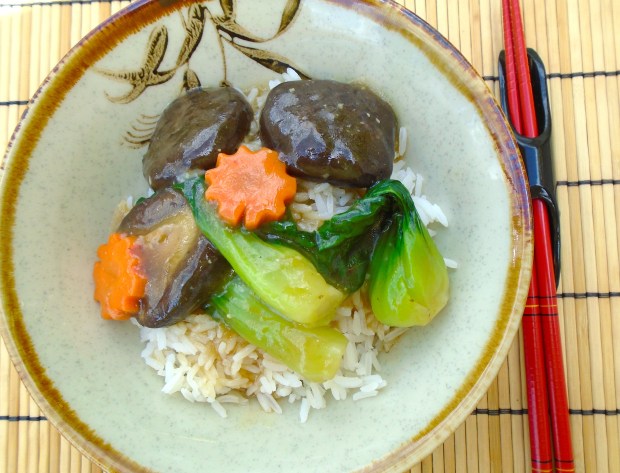
Stir Fried Flower Mushroomes, Bok Choi And Carrots In Hoi Sin Sauce

Stir Fried Flower Mushrooms, Bok Choy And Carrots In Hoi Sin Sauce

>
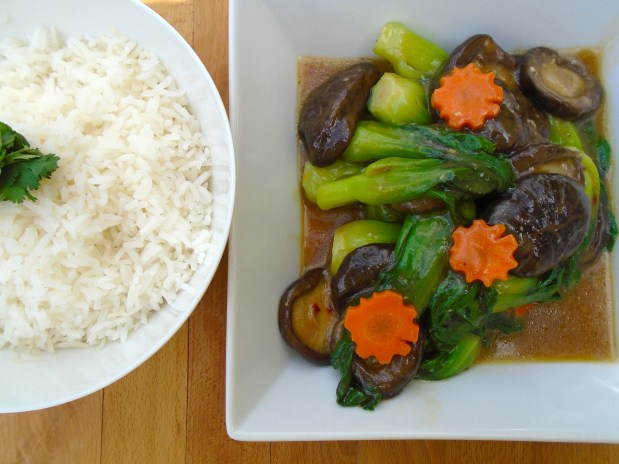
Stir Fried Flower Mushroomes, Bok Choi And Carrots In Hoi Sin Sauce

Stir Fried Flower Mushrooms, Bok Choy And Carrots In Hoi Sin Sauce

>
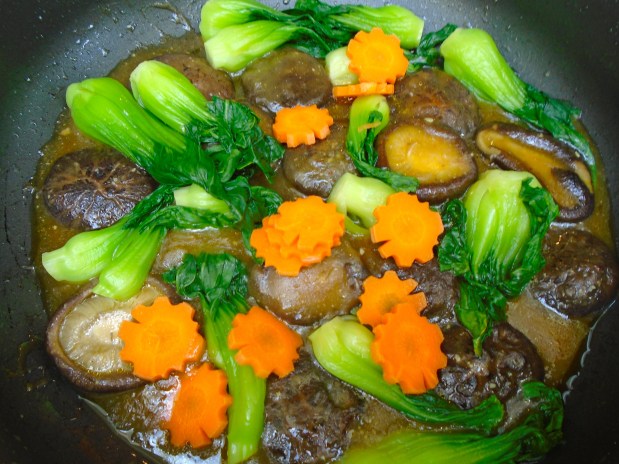
Stir Fried Flower Mushroomes, Bok Choi And Carrots In Hoi Sin Sauce

Stir Fried Flower Mushrooms, Bok Choy And Carrots In Hoi Sin Sauce

>
>
>
Preparation :
To read instructions, hover over pictures
To enlarge pictures and read instructions, click on pictures
>
>
>


>
>
>
>

Soufflé Chocolate Cheese Cake

>
>
Way  back when I was a chef and young cooks asked me for suggestions and advise what to cook during competitions or job-interviews, the most difficult suggestion was usually the dessert course.
Most young cooks (and many old chefs) are not very skilled in pastry, so a quick, easy, foolproof, yet impressing and delicious dessert is usually a problem.
(When I was judging applicants both for sous chef positions and for chef instructor positions, 99 out of 100 desserts presented was  crème brûlée) 😦
As for myself, although during my 3.5 year apprentice ship I was schooled for 6 months in classic french pastry, preparing the stuff was never something I enjoyed a lot.
(On the other hand, eating it is a whole different story) 🙂
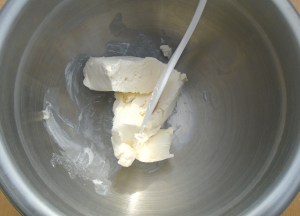
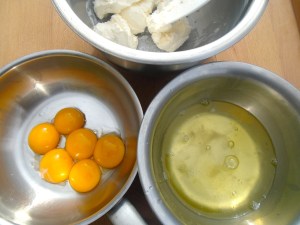
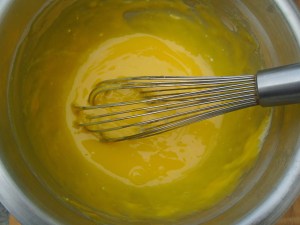
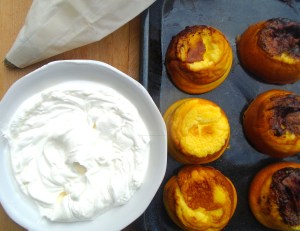
The following little gem – Soufflé Chocolate Cheese Cake is a wonderful solution to the dilemma and it helped many of the cooks I mentored to be able to serve a dessert that could stand up to the rest of their presentation. It is so simple and quick to prepare that to this day I prepare it often for myself at home. Besides being easy to prepare, it also lends itself to variations, such as adding fruit, dark chocolate instead of white, or eliminating the chocolate altogether and replacing it with condensed milk. You can also use a spring mold instead of muffin cups to make it into a super-light, regular-sized cake. Because I had a bit of leftover chocolate pudding in the fridge from yesterday, I added it to 3 of the 6 mini-cakes.
>
Bon Appétit !   Life is Good !
>
>

Souffle Chocolate Cheese Cake

Souffle Chocolate Cheese Cake

>

Souffle Chocolate Cheese Cake

Souffle Chocolate Cheese Cake

>

Souffle Chocolate Cheese Cake

Souffle Chocolate Cheese Cake

>
>
>
Preparation :
To read instructions, hover over pictures
To enlarge pictures and read instructions, click on pictures
>
>
>


>
>
>
.

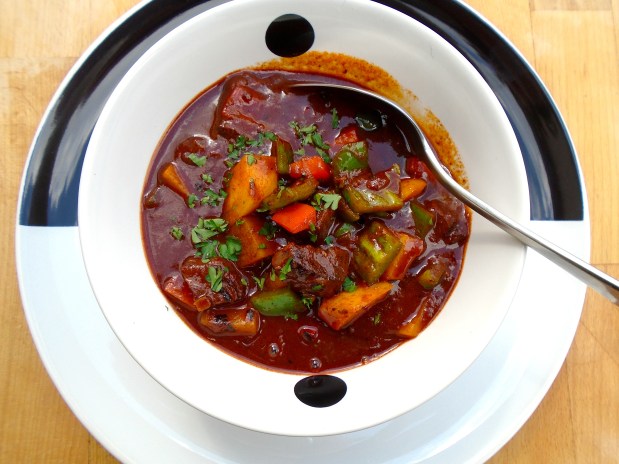
Gulyásleves (Hungarian Goulash Soup) (Hungarische Gulaschsuppe)

>
>
As  I get older, I sadly realize that many of the dishes I took for granted and did not appreciate in my younger years only continue to exist in my memory and are forever gone in my daily life. Many dishes I remember from my years growing-up in Germany have vanished from my surroundings. Especially here in the USA, where food tradition is not something widely honored, especially when it comes to labor-intensive food. Too many cooks have never been introduced to the classics, and if they have, they have not been able nor interested to master them.
When was the last time you have seen a menu featuring “Potage Tortue Lady Curzon”,  “Escargot Bourguignonne”, “Filet Café de Paris”, “Truite Au Bleu”, “Quenelles De Poisson Nantua”, “Consomme Royal”, etc, etc. Or Hungarian Goulash Soup, for that matter.
This is a dish which at one point in time was omnipresent in Germany and Austria, being featured in any type of restaurant. Usually it was served as an “in-between meal”, or during a break while hiking or skiing, or as a snack late mornings or late nights. Usually you could choose between regular or spicy. The spicy version usually differed from the regular one only by the addition of a few dashes of Tabasco, although some cooks took pride in preparing a spicy version from scratch by adding hot paprika powder to the sweet paprika powder which gives Hungarian Goulash Soup its signature reddish color. Like many other “original” dishes, ingredients such as vegetables, the type of meat as well as the seasoning can vary significantly, yet the final product should always be full of flavor, chuck-full of meat and vegetables and pleasantly red hued from a generous amount of good quality paprika.
If you want to make your Hungarian Goulash Soup into a more substantial meal, it is perfectly acceptable (and yummy) to add some hearty pasta to the soup.
>
Bon Appetit !   Life is Good !
>
>
All about  Goulash
>
>
>

Gulyásleves (Hungarian Goulash Soup) (Gulaschsuppe)

Gulyásleves (Hungarian Goulash Soup) (Ungarische Gulaschsuppe)

>

Gulyásleves (Hungarian Goulash Soup) (Gulaschsuppe)

Gulyásleves (Hungarian Goulash Soup) (Ungarische Gulaschsuppe)

>

Gulyásleves (Hungarian Goulash Soup) (Gulaschsuppe)

Gulyásleves (Hungarian Goulash Soup) (Ungarische Gulaschsuppe)

>
>
>
Preparation :
To read instructions, hover over pictures
To enlarge pictures and read instructions, click on pictures
>
>
>


>
>
>
>
>

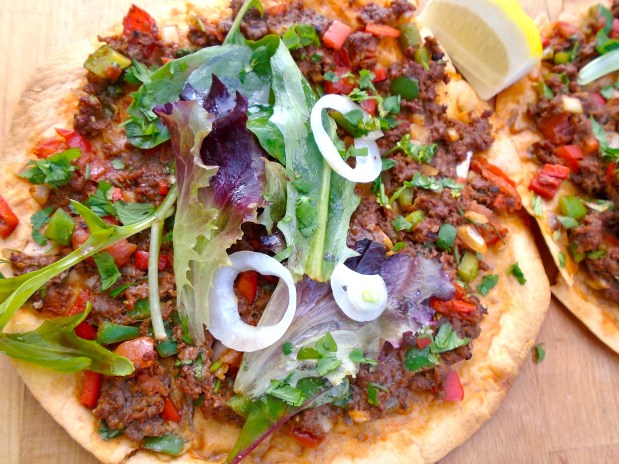
Lahmacun

>
>
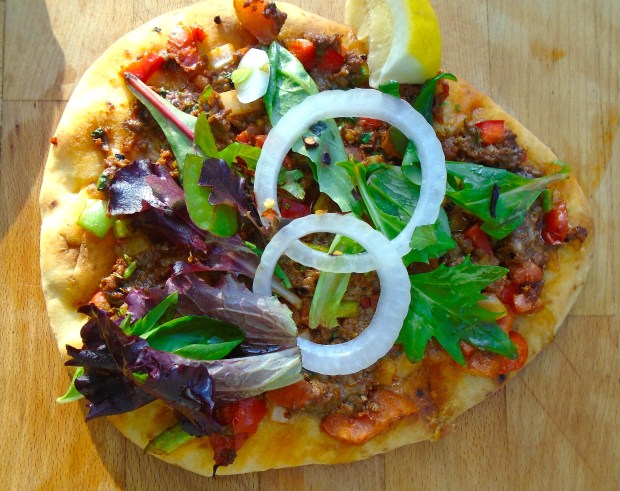
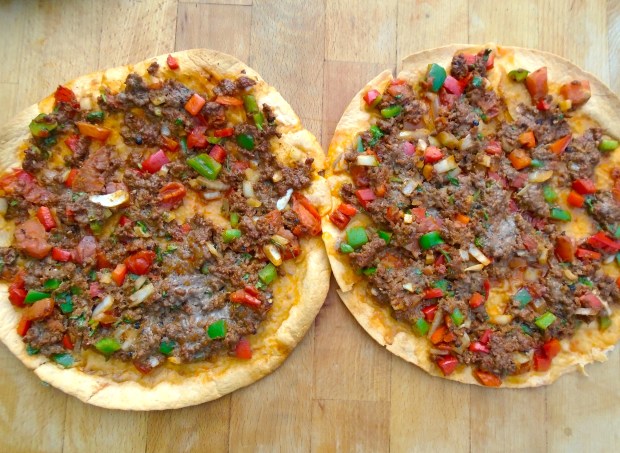
Lahmacun,  (Armenian: լահմաջու lahmaǰu or լահմաջո lahmaǰo; Turkish: Lahmacun, Arabic: لحم عجين‎, laḥm ʿajīnلحم بعجين‎, laḥm biʿajīn,  “meat with dough”
>
Pizza …………
Is there anybody who does not like pizza ? I am sure there are a few people who don’t, but then, you can’t please everybody . 😦
I love pizza a lot, but I love pizza the way I remember having it when I was very young and I ate a slice or two almost daily. You see, when I was working in Munich for the first time, during the 1972 Olympic Games, money was tight, so cheap street food at night was the usual dinner. The new and very “IN” thing at the time and place was the new craze of pizza by the slice, sold for 1.00 DM through reach-through windows at pizzerias in  Schwabing, which was the “It” place in Munich and probably the hippest place in all of Germany during the 70’s. One slice was big enough to satisfy the hunger of a normal person, two slices if you had the munchies, which was a normal thing to have at 2.00 am after a night of dancing, drinking and a few puffs of the good stuff 🙂
Anyway, what was so great about this pizza was its absolute simplicity. Great, thin and crispy crust, a bit of cheese and a bit of tomato sauce, and if you wanted to splurge, a few slices of salami. Heaven, right there !
Not at all like the over-sauced, cheese-laden, multi-topping loaded “pies” you get served in most places nowadays.
To this day, if I order a pizza in a restaurant, I always ask for “easy on the cheese and sauce”.
When I make pizza at home, I usually prepare the “pizza” which hails from middle eastern countries as well as some countries which are situated in the area that used to be the Soviet Union. I was first introduced to these meat pies while travelling in Russia, Turkey and Israel, back in the 70’s when traveling meant an introduction to local, ethnic food on an almost daily basis, because at that time the McDonald’s and the KFC’s and such had not yet permeated every street corner around the globe and if you wanted to have reasonable priced nourishment, you had to eat what the locals ate. Good stuff, good times !
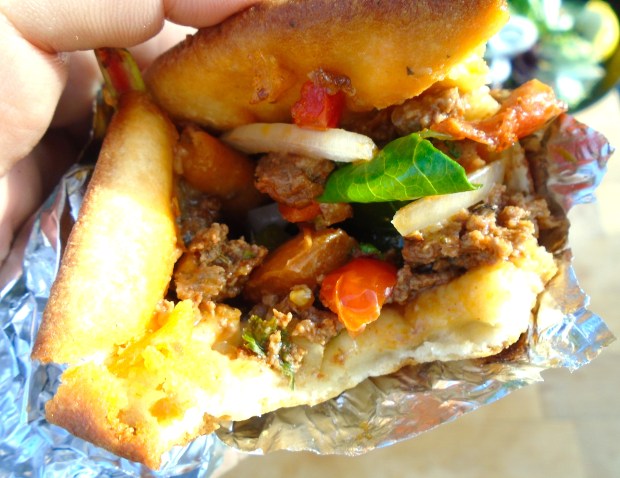
Most of these pies were made with a variation of a simple yeast dough, usually very thin, spread with meat paste, baked until crisp, topped with some kind of salad leaves and raw onions, cut into wedges and drizzled with lemon juice. The meat was usually lamb, but sometimes beef (and some mystery meats we don’t want to get into here). The only major variation I encountered was in Turkey, where sometimes the dough was much thicker and not crispy and the pie was rolled into a döner kebap-like concoction, (Döner kebap / Gyro / Shawarma) when it is served as street food and therefore rolled into a tight roll so it can be eaten without utensils.
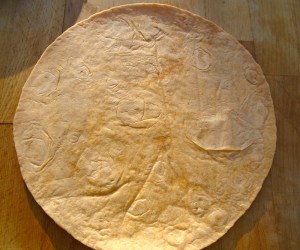
When I prepare these “pies”, I usually don’t go to the length of making my own dough. I either buy ready made fresh pizza dough and roll it myself, or I buy pre-baked thin crust pizza. Sometimes I also use lavash, flour tortillas or naan. In my experience, all of these work fine and I love them all. Remember, the main ingredient is the meat paste, not the dough. Below, you can see three different dough’s I used. All of them are great and non of them are inferior to the others, just different.
>
Bon Appetit !   Life is Good ! 
>
>

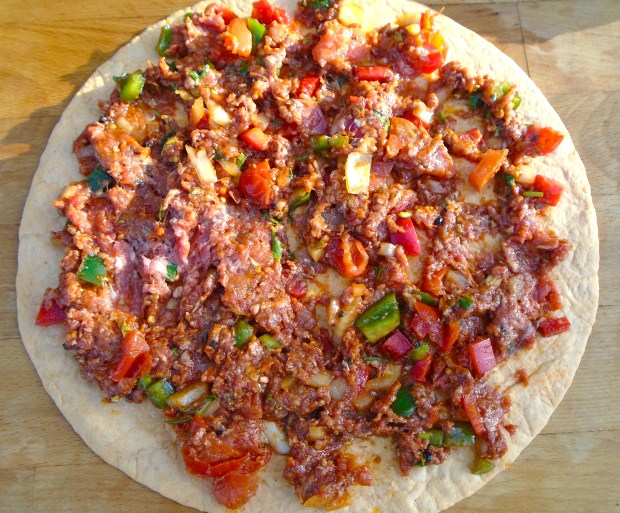
Lahmacun (sun dried tomato wrap-base)

Lahmacun (sun-dried tomato tortilla-base)

>

17

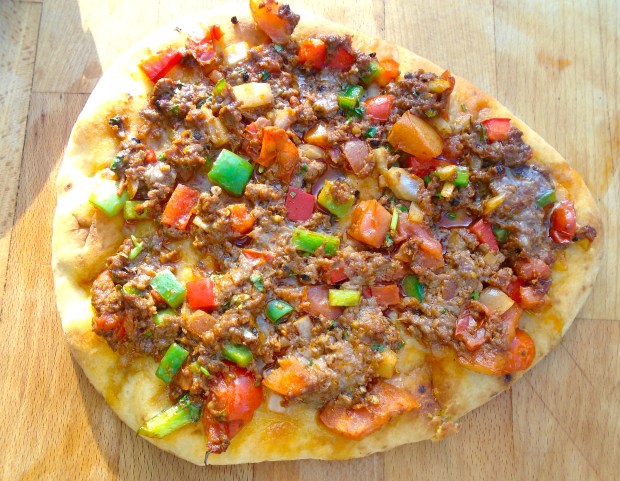
Lahmacun (naan base)

>

13

Lahmacun (pre-baked thin pizza dough-base)

>
>
>
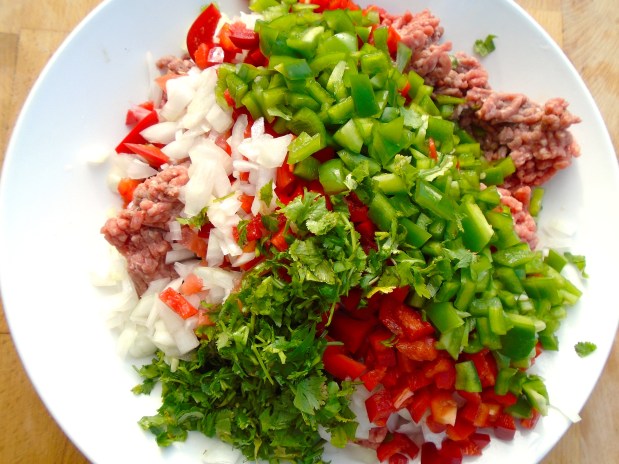
For the meat paste, use either ground lamb or ground beef. Add diced peppers, onions, tomatoes with its pulp, and chopped parsley or cilantro.
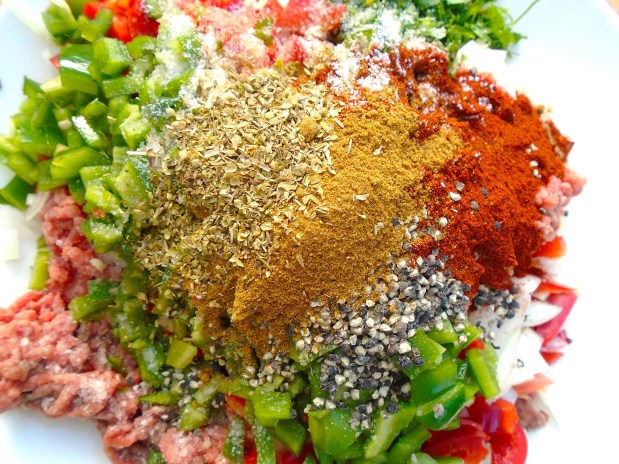
Then season with garlic paste, oregano, freshly ground black pepper, cumin, kosher salt, paprika powder and a dash of olive oil.
The paste should be fairly moist – if too dry, add more chopped tomatoes. Mix all ingredients without overworking the paste.
Spread meat paste thinly on the dough, bake at 400F until meat is cooked and dough is crisp.

To serve, top with salad and onions, drizzle with lemon juice, cut into wedges or roll into sandwich

>
>


>
>
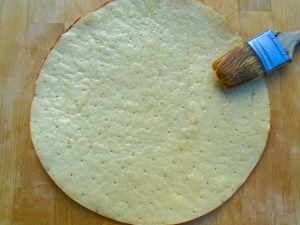
Brush the pie base with a good extra virgin olive oil
>
>


>
>
For the salad topping, drizzle fresh leaves and onions with extra virgin olive oil, sprinkle with chili pepper flakes and kosher salt
>
>

8
>
>
Pre-baked pizza dough – Base
>
>


>
>
Naan – Base  (cut into wedges or roll tight after baking for a one-handed sandwich)
>
>


>
>
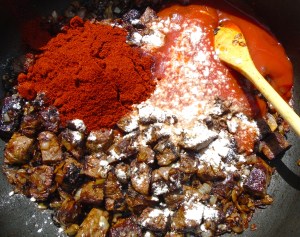
Sun-dried tomato tortilla – Base
>
>


>
>
>
>
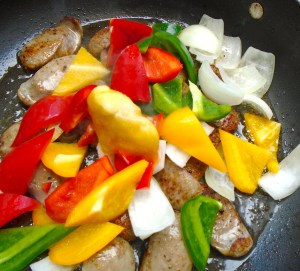
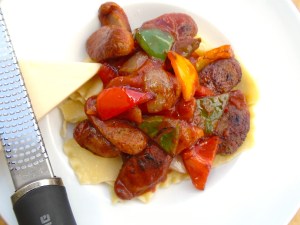
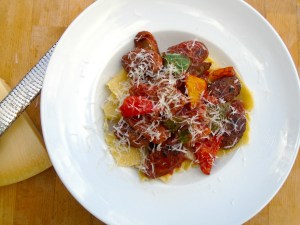
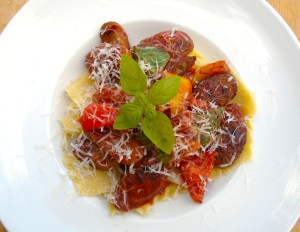
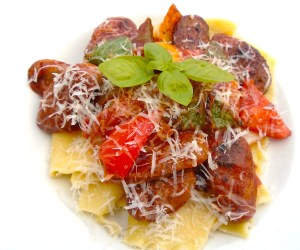
Easy Does It # 32 – Italian-Style Sausage and Peppers

>
>
This  dish proves once more that the simple things in live can give us great pleasure. Unfortunately, it can also proof that even the simplest thing can easily be screwed up.
I have never ordered this in an Italian restaurant, but I remember well that Maria used to order it often and that half the time when the food arrived she was bitterly disappointed by the lackluster mess which was set in front of her.
It is my humble opinion that if a chef feels that to serve such a simple dish is below his or her culinary honor and dignity, he/she should just leave it off the menu. But, if one decides to feature it on ones menu, one might as well does ones best !
(To see what I mean, pls  click on this link  and see what some folks deem good enough to serve in their restaurant or on their dinner table – while there are of course praiseworthy exceptions, the majority looks like the disappointing stuff I remember Maria got served too many times) 😦
As for the all-important taste, use the best ingredients which are available to you, season and execute with love and you can’t go wrong 🙂
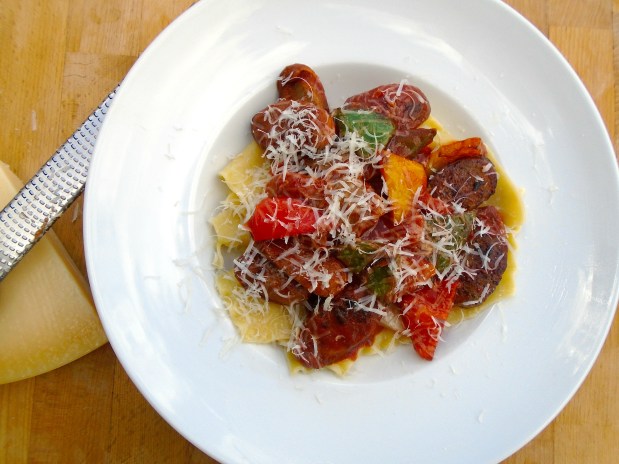
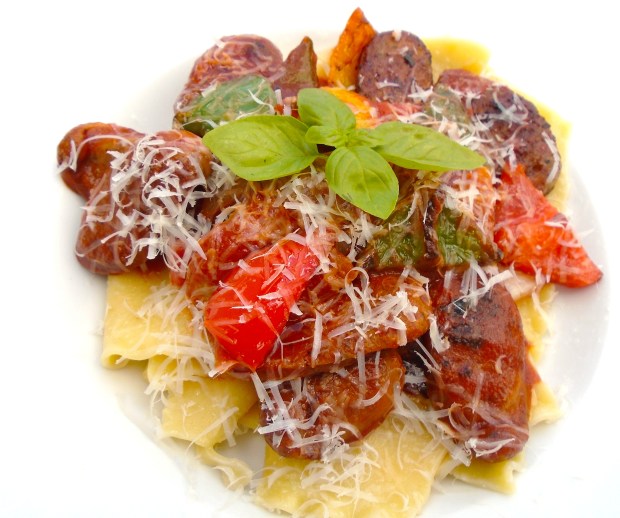
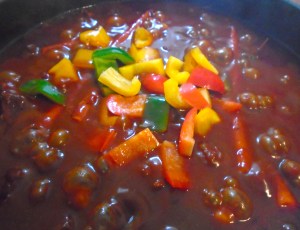
Oops,  a bit of venting here, so let’s get back to the task at hand, which is to show you how I like to prepare Italian-Style Sausage and Peppers. If done right, and with love and gusto, it is like so many simple dishes – a pleasure to look at, and most of all, a pleasure to eat.
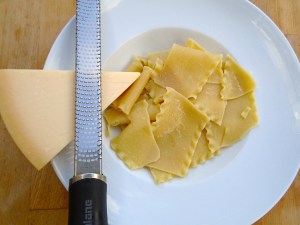
It will be equally gratifying when served with pasta, rice, potatoes or just a hearty sour dough bread.
So, here it goes :
>
Bon Appetit !   Life is Good !
>
>
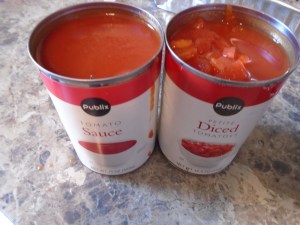
Recipe for Easy Tomato Sauce
>
>
More dishes with tomato sauce on  ChefsOpinion
>
>

Easy Does It # 32 - Italian-Style Sausage and Peppers

Easy Does It # 32 – Italian-Style Sausage and Peppers

>

Easy Does It # 32 - Italian-Style Sausage and Peppers

Easy Does It # 32 – Italian-Style Sausage and Peppers

>
>
>
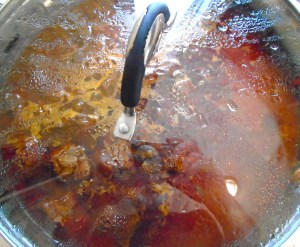
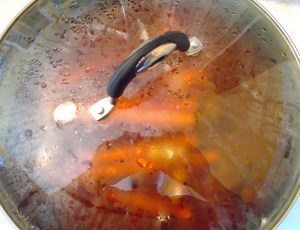
Preparation :
To read instructions, hover over pictures
To enlarge pictures and read instructions, click on pictures
>
>
>


>
>
>
>

>>

Beef And Bean Burrito

>
>
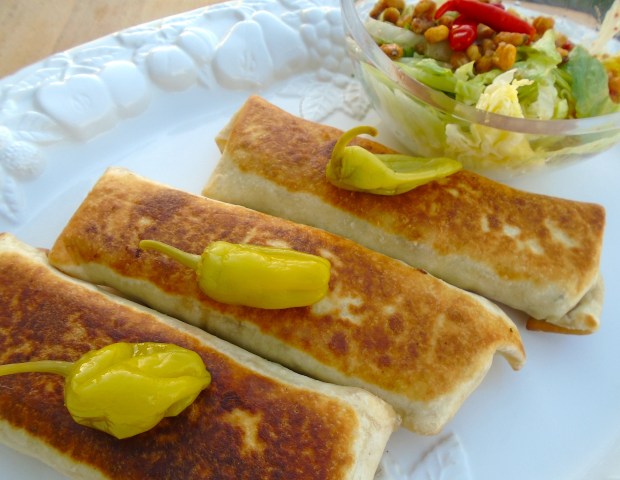
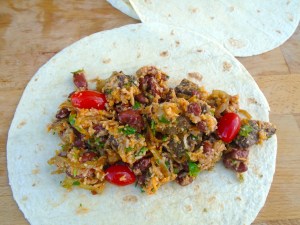
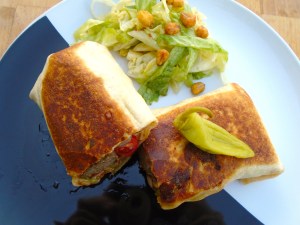
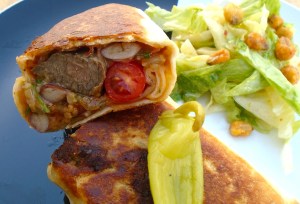
Nowadays,  most folks are familiar with burritos. International cuisine with its many variations has come to the farthest corners of the world and that’s a great thing. Not so great is the fact that most of the ethnic food has been bastardized to the point of no return. I am not talking about changing and improving the originals, which is fine as long as you can still figure out the origin behind the dish. No,  I am talking about replacing good, simple, honest ingredients with cheap crap, third-rate fillers which have the sole purpose to make a buck. When it comes to burritos, I have come across some incredible bad, tasteless excuses for the real thing lately in a variety of “Mexican” eateries here in South Florida. The filling usually has consisted of mainly rice and shredded lettuce wrapped in a tortilla, then re-heated in an oven and served with the usual condiments for laughable prices. Seems that instead of burritos on the plate, there are burros in the kitchen ? ! 😦
I prepare burritos often at home and the one thing they all have in common is the quality of ingredients I use for the filling and the fact that I cook them on a  Comal  or cast-iron pan to get that great crispy outside so essential to a great burrito (In my Opinion, anyway :-).
As long as you use a great filling, burritos are easy, quick and they ROCK 🙂
>
Bon Appetit !   Life is Good !
>
>
More Beef Burritos Here

>
>
Beef And Bean Burrito

Beef And Bean Burrito

>

Beef And Bean Burrito

Beef And Bean Burrito

>
>
>
Preparation :
To read instructions, hover over pictures
To enlarge pictures and read instructions, click on pictures
>
>
>


>
>
>
>

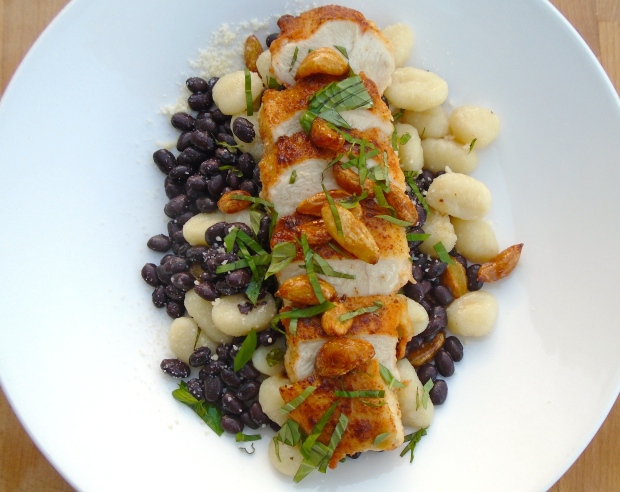
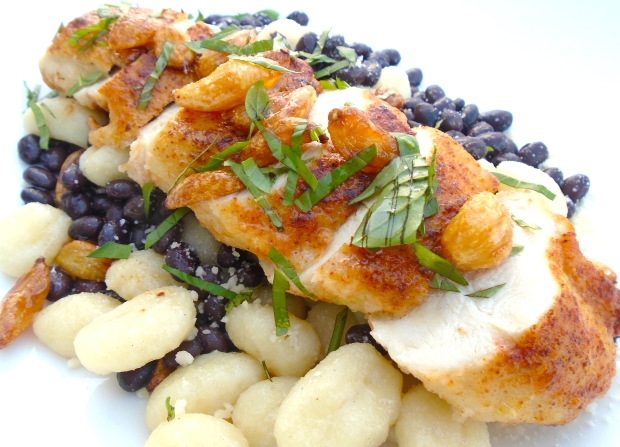
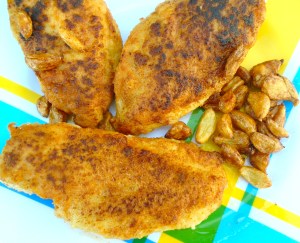
Poulet Beaucoup D’Ail


>
>
Chicken  breast has gotten a bad rap for a long time.
However, you can safely say that’s not the chicken breast’s fault, but the fault of the cooks who do not know how to properly prepare it.
(It is the same dilemma with fish, veal, pork and most other protein besides red meat – the taste and texture of properly cooked protein is so wonderful yet so elusive in most restaurants these days).
I remember when I was a teacher and I showed my students how incredibly juicy and tasty a breast of chicken can be when cooked in a professional manner. Before the demo, I always asked “why do we prefer chicken leg over chicken breast” and the answer was always: “because breast are dry and tasteless”. How very surprised they all were when I proved them wrong. 🙂
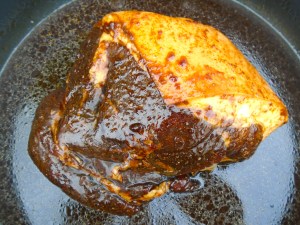
So, the way to do it is to cook it to 160F to 162 F depending on the type and thickness of the protein, then let the carry-over heat do its magic; after a short rest, the protein should reach between 164F and 165F the moment it reaches the guest, but it must never exceed that temperature or it will be dry !!! During my time and before that, cooks would never think of using a thermometer to check the doneness of food – everything was dictated by the experience we garnered over many years of real cooking. Now imagine, some of our successors are not even able to find the center of the protein to get the temperature right (no kidding). And of course, if cooked too fast, protein will also end up less than stellar.
Having said all that, you might understand that I would never order a chicken breast in a restaurant these days, because the absolute majority of cooks nowadays does not know how to do a chicken breast justice. (Again, the same holds true with pork, fish and other protein which are so wonderful tasty, tender and juicy when handled with expertise).
Unfortunately, because of lack of cooking skills, the new “experts” will make you believe that only protein which is under-cooked or raw will be juicy 😦
Ok, ok,  so I vented a bit, I beg your pardon…..
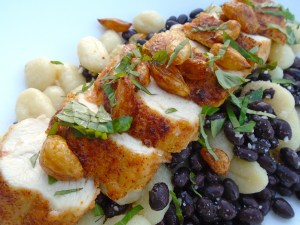
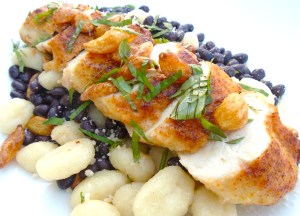
As of today’s dish, I resorted sheepishly to the habit of naming the dish in french, since “Poulet Beaucoup D’Ail” sounds so much better than “Chicken With Lot’s Of Garlic“. ( Or maybe “Pollo Con Un Monton De Ajo” anyone ?) 🙂
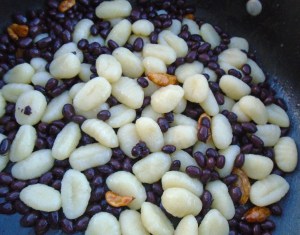
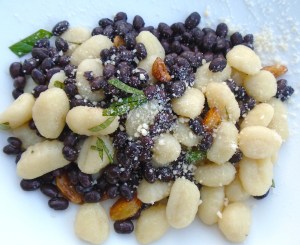
And for those of you who do not believe in lots of garlic, just replace the garlic with botton-mushrooms. As for the gnocchi with black beans, lately I have prepared that combination often and in many different variations – gnocchi with butter beans, gnocchi with chick peas, gnocchi with edamame etc, all sautéed in herb butter, pesto, tomato sauce, chili oil, cheese sauce and so forth. The added texture of the beans make the gnocchi even more enjoyable than just plain with butter or sauce.
>
Bon Appetit !   Life is Good !
>
>

Poulet Beaucoup D'Ail

Poulet Beaucoup D’Ail


>

Poulet Beaucoup D'Ail

Poulet Beaucoup D’Ail

>
>
>
Preparation :
To read instructions, hover over pictures
To enlarge pictures and read instructions, click on pictures
>
>
>


>
>
>
>
>

Japanese Pork, Korean Rice Cakes And French Beans (Teriyaki Feast)

>
>
While  the ingredients for this dish (and the cooking methods) are not exactly a traditional combination, for my personal palette they compliment each other perfectly. They are typical for the dishes I prepare for myself at home. On the other hand, would I still cater to guests at a restaurant or at home, I would not hesitate to serve this kind of food as a course in a multi-course menu. (As I have done many times).
Having been trained in and practiced for most of my career classic French cuisine, as well as garnering experience in local cuisines around the globe, this type of “fusion cuisine” has become  my personal cooking style. Nowadays, cooking mostly for myself, a few close friends and the occasional high-end private gig, I don’t have to confirm to traditional cuisines anymore; – my food has become truly a fusion of dishes, methods and ingredients from around the world. Mind you, I don’t try to make my food appear haphazardly strange or exotic on purpose, but sometimes that’s the result when mixing without restraint 🙂
>
Bon Appetit !   Life is Good !
>
P.S.
“Teriyaki” in this dish refers to the teriyaki sauce as part of the dish, not the traditional cooking method.     Click for  Teriyaki
>
>
>

Japanese Pork, Korean Rice Cakes And French Beans

Japanese Pork, Korean Rice Cakes And French Beans

>

Japanese Pork, Korean Rice Cakes And French Beans

Japanese Pork, Korean Rice Cakes And French Beans

>
>
>
Preparation :
To read instructions, hover over pictures
To enlarge pictures and read instructions, click on pictures
>
>
>

Standard cup board items in my kitchen:
>


>
>


>
>
>
>

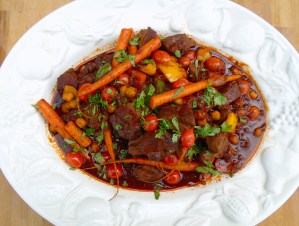
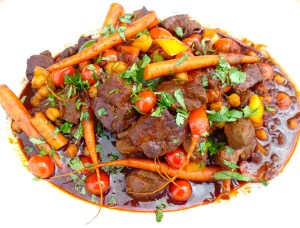
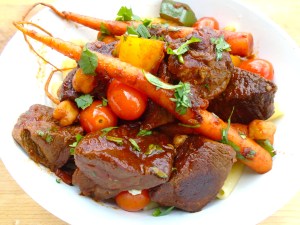
Lamb Stew “Wiedenfelsen”

>
>

Image - Property of Panoramio

Image: Property of Panoramio

>
Click here for a short Video of Hotel Wiedenfelsen
>
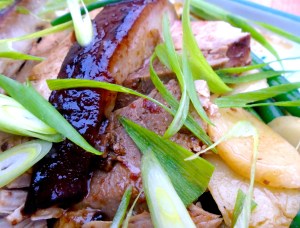
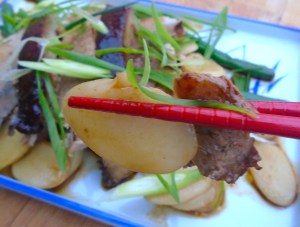
It  seems about time that I dedicate a dish and name it for the place which started it all for me, the wonderful, elegant and classy “Hotel Wiedenfelsen” in the  Black Forrest  in  Germany.
Before and during the time I was lucky to be am apprentice in this gem of a hotel, the tourist industry in Germany was dominated by hotels like this.
Medium in size, family-owned hotels and restaurants which were the pride of families which, in many cases, had operated these hotels and restaurants for generations. Sadly, because of changing demands, the industry took a sharp turn during the 70’s and many of these wonderful places became obsolete in a fast changing landscape of mostly chain-operated hotels. Only the strongest and the luckiest survived, while the rest gave way to cookie-cutter operations without charm and soul, or they just ceased to exist (including Hotel Wiedenfelsen). It has since seen various attempts to re-invent itself under different ownership, but has never managed to come even near it’s former glory).
Things were of course very different during the hotels heydays, the time during which I had the fortune to be accepted for a three-year apprenticeship under the tight and competent leadership of the Executive Chef (and son in law of the then-owners) Karl Mueller. Karl was a generous and warm person, taking care of us apprentices as if we were family. He was also extremely professional, strict and a severe applier of high culinary standards.
Although ours was a relatively small hotel (about 70 rooms, two restaurants and one banquet space), the standards with which our hotel operated were very high and impeccable indeed.
It was mostly because of these high standards of the whole family who owned and operated “Hotel Wiedenfelsen” that I have become the person I am and the chef I was for nearly five decades. Admittedly, it took an iron hand,  a (seemingly at the time) short leash and not a few “fresh ones” to shape me (and a bunch of other apprentices) into the professional I became, but, looking back today, I am grateful to the Mehr family and the Mueller family to have never given up on me and guided me into the right professional and personal direction.
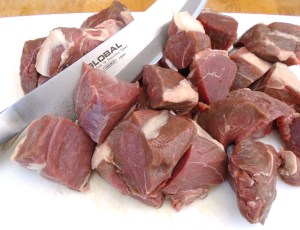
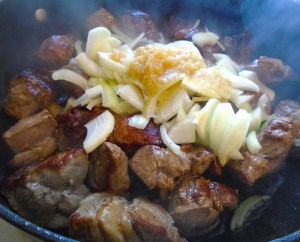
All of this (and more) went through my head yesterday while I was cooking this dish which was the first lamb dish Chef Mueller taught me so many years ago………..
>
Thanks Karl, Uschi, Herr und Frau Mehr. God Bless ! 🙂
>
>

Lamb Stew

Lamb Stew “Wiedenfelsen”

>

Lamb Stew

Lamb Stew “Wiedenfelsen”

>
>
>
Preparation :
To read instructions, hover over pictures
To enlarge pictures and read instructions, click on pictures
>
>
>


>
>
>
>
>

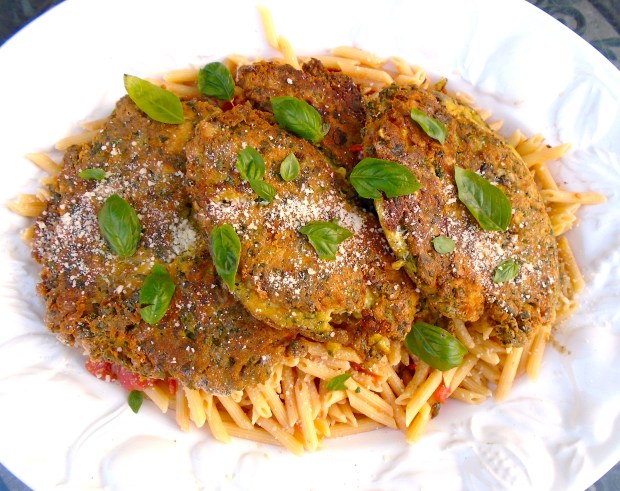
Petti Di Pollo Alla Fiorentina

>
>
Quote from Ciao Italia :
“Anything  alla fiorentina,  meaning Florentine style, usually signifies that spinach is in the dish”.
.
If  you wonder why I put this quote at the beginning of this post, the answer is simple:
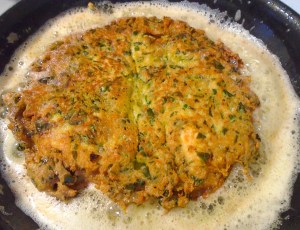
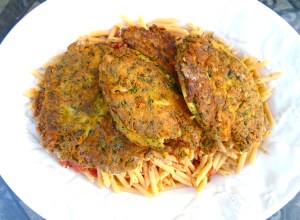
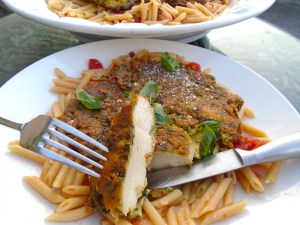
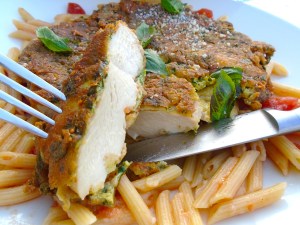
Petti Di Pollo Alla Fiorentina” is traditionally (originally?) prepared by stuffing a chicken breast with a mixture of chopped blanched spinach and grated cheese, then sauteed in fat or baked in the oven.
While this can be a very enjoyable variation, I have seen many other ones, some even just grilled, served with or without any spinach. This was actually in  Florence  some years back, when Maria and I visited a fancy restaurant off the beaten track and I ordered a  “Bistecca Alla Fiorentina”  for myself (beef-heaven on earth) and Maria ordered the “Pollo Alla Fiorentina”, which was presented as a simple grilled chicken breast served on a bed of spinach.
As for the reason I prepare my version the way I do is simply because I feel it is a far more tasty and juicy version of the widely touted as  original version  of “Petti Di Pollo Alla Fiorentina”.
Coating the chicken allows the breast to stay very most while you can cook the meat to just being done, while if you stuff the breast and then cook it, by the time the stuffing is heated to a safe temperature, the breast will be much too dry.
So, as usual, while I don’t claim that my version is the “Original”,  I strongly believe that it is the improved version of a venerable, classic dish 🙂
>
Bon Appetit !   Life is Good !
(Controversial, sometimes) 😦 🙂
>
>

Petti Di Pollo Alla Fiorentina

Petti Di Pollo Alla Fiorentina

>

Petti Di Pollo Alla Fiorentina

Petti Di Pollo Alla Fiorentina

>
>
>
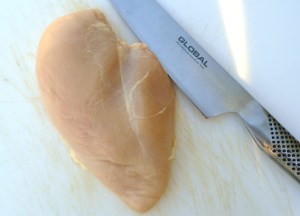
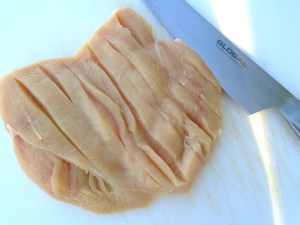
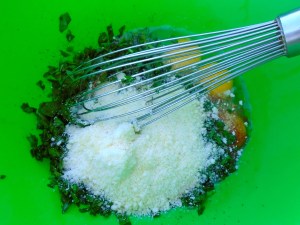
Preparation :
To read instructions, hover over pictures
To enlarge pictures and read instructions, click on pictures
>
>
>


>
>
>
>
>
>