.
.
Is it possible some folks are just plain rediculous ? 😦
You judge for yourself :
.
.
To enlarge picture, click on it !
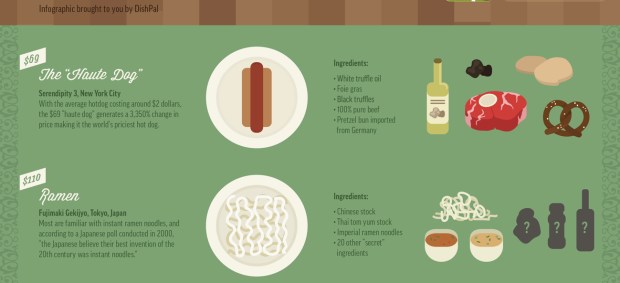




.
.
schocking
” Are These 5 Foods Trying To Kill You? “
.
.
The perils of fugu, cassava and bitter almonds
by Naa Ako -Adjei
.
.
.

Furibond on Flickr
The deadly fugu, also known as pufferfish. Sorta cute, really..
We all know that eating anything that is wrapped in bacon or craziness like this macaroni and cheese sandwich (!) is going to kill you. Eventually. As will a hundred or so trips to KFC. The real KFC, that is. But then there are those foods that will immediately remove you from the gene pool with the flick of a fork. Here are 5 foods that, when consumed improperly, will likely send you to the grave. Captain Obvious warning: DON’T EAT THESE FOODS.
- Fugu
Widely known as the fish that nearly killed Homer Simpson, one pufferfish has enough tetrodotoxin in its liver, ovaries, intestines and skin to kill 30 people. Ingesting very small amounts of tetrodotoxin can cause a pleasant tingling sensation, but tetrodotoxin poisoning causes dizziness, weakness and nausea. Victims usually remain conscious while the tetrodotoxin causes the paralysis of the muscles of the lungs and heart. None of this has stopped the edible flesh of the pufferfish (also known as fugu) from becoming a delicacy in Japan. Even though chefs who prepare fugu are highly trained and licensed to serve it, deaths have still occurred. Thirty-one fugu-related deaths were reported in Tokyo between 1996 and 2005. - Bitter Almonds
Don’t worry, that box of Honey Bunches of Oats with Almonds is safe. (The roasted almonds you are used to munching on are sweet almonds, which are safe for humans to eat.) However, bitter almonds, which are used to make products like almond extract and amaretto, contain hydrogen cyanide. Eating just a handful of raw bitter almonds could lead to dizziness, difficulty breathing and even death. The only way to remove the cyanide in the almonds is to crush, soak and wash them in water. - Ackee
If you’re looking for something a little more exciting than jerk chicken on your next Jamaican vacation, you might want to try ackee, which is the official fruit of the country. Consuming the wrinkly yellow fruit can lead to vomiting, seizures, coma or death if the hypoglycin found in under-ripe or overripe seeds contaminates the edible flesh of the fruit. - Cassava
Primarily used in the production of tapioca in the United States, cassava (sometimes known as yucca) is a tuberous root vegetable that also produces toxic hydrogen cyanide. If cassava is not prepared properly, cyanide poisoning can occur — leading to asphyxiation. The cyanide in sweet cassava is only located in the skin, so it is safe to eat once the skin has been peeled and the tuber boiled. However, bitter cassava requires that you soak it in water before boiling it to make it safe to eat. - Potatoes (that have turned green)
Potatoes? Yes, potatoes produce a toxin called solanine as a natural repellant from insects. In small amounts, solanine is perfectly safe for humans. But when potatoes turn green, it is a sign that the levels of solanine in your potatoes are unsafe. Consuming too much solanine can lead to nausea, diarrhea and in extreme cases numbness, hallucinations, paralysis and death. So if your potatoes turn green? Don’t eat them, dummy.
>
>
“ America’s 8 Worst Food Trends “
.
.
Americas 8 worst food trend’s
by Larry Olmsted on “Forbes”
.
Having covered food, wine and spirits for more than 15 years, I’ve seen a lot of trends come and go. Some recent developments have been great, like the increased availability and usage of natural meats and grass fed beefs, and the increased reliance on seasonality, rather than using bland out of season fruits and vegetables that are shipped vast distances and bred to have long shelf lives.
But not every food trend is good, and not every food trend lasts. I remember the rise and fall of nouvelle cuisine, and the short but rabid preoccupation among chefs with food layered into towers on the plate.
The changing face of media has made food trends more pronounced than ever, for better or worse. This includes the bevy of food-related television shows, and the new need to fill specialized channels with hours of vapid programming. Ditto for social media that brings other people’s meals to your phones and desktops and the dramatic rise of food blogs and chat rooms dissecting every aspect of food culture. Nonetheless, despite increased attention to what, where, and how we eat, and increased social criticism, some astonishingly stupid trends have thrived. Here are the worst offenders:
1. Food Trucks: There is nothing wrong with the individual food truck per se, but the overall trend is both ridiculous and in some cases, morally reprehensible. The food media continues to treat these as a new form of cuisine and some sort of breakthrough invention when they are nothing more than a way to deliver food to consumers, akin to the “invention” of home delivery, takeout containers or the drive through. When grouped together in lots, as is the case in Austin and Portland, food trucks become an outdoor version of a longstanding American culinary tradition – the shopping mall food court, and nothing more. Food-wise, there is nothing new about trucks, which serve foods you can already get in countless restaurants, albeit it with much more limited menus. People act as if tacos, dumplings, or brick oven pizza have somehow been “discovered” by food truck cooks. One major magazine recently suggested that food trucks had brought affordable ethnic cuisine to the people of Los Angeles – seriously? LA has always had hundreds of brick and mortar eateries serving exactly this kind of ………….
Read more HERE
.

Some artisanal house cured meats, like these from Salume Beddu in St. Louis, are delicious. But most are not.
.
.
” To All Fellow >LinkedIn Groups<
.
.
Dear Friend’s
Unfortunately, yesterday >LinkedIn< has decided to remove the >Share With Groups< link from it’s site.
I am sure they had a good reason for that and don’t want to be critical about it.
However, all of the comments and discussions which pertained to articles, opinions, recipes & pictures about food and the hospitality industry originated from
links I posted in various groups on >LinkedIn< originated on my own blog, >ChefsOpinion<
If you would like to continue to participate and be part of our lively and interesting Food & Hospitality community, you must now go directly
to the website >ChefsOpinion< since there will be no more links from >LinkedIn Groups> to >ChefsOpinion<
Thank you all for your participation in the past.
I hope to see you in the future as well on >ChefsOpinion<
Life is Good!
.
.
” So, Are You A Sucker Too ? “
.
.
Food’s Biggest Scam : The Great Kobe Beef Lie !
By Larry Olmsted on Forbes
.
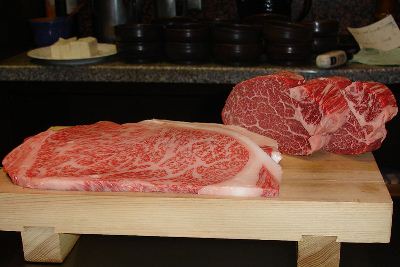
These are cuts of the famous Kobe beef from Hyogo prefecture in Japan.
Note the exquisite marbling of fat throughout.
To see it in person, you need to go to Japan,
because real Kobe beef cannot be found in the U.S.
Photo: Wikipedia
.
.
Think you’ve tasted the famous Japanese Kobe beef ? Think again !
Of course, there are a small number of you out there who have tried it –
I did, in Tokyo, and it is delicious. If you ever go to Japan I heartily recommend
you splurge, because while it is expensive, it is unique, and you cannot get it in
the United States. Not as steaks, not as burgers, certainly not as the ubiquitous
“Kobe sliders” at your trendy neighborhood “bistro.”That’s right. You heard me.
I did not misspeak. I am not confused like most of the American food media.
I will state this as clearly as possible:
You cannot buy Japanese Kobe beef in this country. Not in stores, not by mail,
and certainly not in restaurants. No matter how much you have spent, how fancy
a steakhouse you went to, or which of the many celebrity chefs who regularly
feature “Kobe beef” on their menus you believed, you were duped.
I’m really sorry to have to be the one telling you this, but no matter how much you
would like to believe you have tasted it, if it wasn’t in Asia you almost certainly
have never had Japan’s famous Kobe beef.You may have had an imitation from
the Midwest, Great Plains, South America or Australia, where they produce a
lot of what I call “Faux-be” beef.
You may have even had a Kobe imposter from Japan……….
Read the whole article HERE
” I was once asked what I could cook and I told them: everything! “
Russ Orford • @ Shelley, most “good Exec Chef” starts just there on the line. We have the burns the cuts to prove it. At 52, I can still give the young ones a run for their money, and not because I am fast but because I get it right and I know. However as A Exec chef the job has taken me elsewhere in the kitchen to oversee the prep the ordering, the following of health codes, OHSA, Inventories, and Training, costing of menus. The endless meeting that management feels I need to be at. The fixing the mixer and fridge door Because there is no money left in the R&M budget, and over a 100 other things that come up every day to keep the kitchen running, and yes I still get time to do the thing I got into this job for TO COOK on the line working one or two meal parts per day like breakfast, lunch and dinner. Really if I took my wage and divided it by the hours I work you would see a Slave wage, after all most cooks are on an hourly rate and when their shift is up it is up and they go home. Unlike a exec chef who stays until the job is done. I am first in and most time last out of my kitchen. I do not have a degree I did my Apprenticeship of 3 years working under hard talking hard drinking 1st and 2nd cooks , being trained my exec chefs who knew how to train cooks and chef and also had no degree , I have had many a “ young Chef “ who has come to my kitchen with a degree and they could not even cook an egg ! Why you may ask well as one young degreed chef told me “we were only shown how to do that one or two times before we moved on to more interesting food items!” I cannot tell you the amount of eggs I cooked before the chef would allow them to be serve to the guest, and until I could do that I was not allowed to “move on to the more interesting food items “and that in a nutshell is why we as chef are paid poorly, as most of these young chefs with degrees cannot do the basis things and so we all get batched in to one happy group. I was once asked what I could cook and I told them: everything! The person asked me how I could cook everything and that was impossible! I told him I had good training from the first day I walked into a kitchen I was taught the basis again and again until I got them right and was not allowed to move on until I got them right. Most line cooks know the food they are cooking the menu they are working on, repetition builds speed not knowledge Take a line cook off the menu he is working on and give him a new menu and he is like a duck out of water. I have seen many a “bull cook” have the wind taken out of his or her sails with a “new menu “
Read more HERE
” It’s safer to make a salad on a toilet seat than it is to make one on a cutting board “
.
.
“In most cases, it’s safer to make a salad on a toilet seat than it is to make one on a cutting board,” says Dr. Charles Gerba (a.k.a. Dr. Germ), a microbiologist and professor at the University of Arizona in Tucson. “People disinfect their toilet seats all the time, but they don’t realize that they really need to pay attention in the kitchen too.” Since 1973, he’s been studying the hidden bacteria lurking in American homes, and his findings should influence your behavior when it comes to storing a toothbrush (in the medicine cabinet) and how to flush a toilet (lid down). Here, Dr. Germ identifies the top five dirtiest spots in the kitchen and gives advice on how to banish nasty germs.
By Alessandra Bulow, Food & Wine
.
.
1. Sponges and Dishcloths
“We did a survey collecting 1,000 sponges and dishcloths in kitchens, and about 10 percent had salmonella. They get wet and stay moist, so bacteria grow like crazy. The most E. coli and other fecal-based bacteria in the average home are on a sponge or cleaning cloth.”
DR. GERM’S ADVICE: “Replace dishcloths every week and throw the sponge into the dishwasher or microwave it on high for 30 seconds.”
2. Sink
“There’s more E. coli in a kitchen sink than in a toilet after you flush it. The sink is a great place for E. coli to live and grow since it’s wet and moist. Bacteria feed on the food that people put down the drain and what’s left on dishes in the sink. That’s probably why dogs drink out of the toilet — because there’s less E. coli in it,” says Dr. Germ.
DR. GERM’S ADVICE: “Clean the sink basin with a disinfectant product made for the kitchen. Vinegar and lemon juice can clean some bacteria, but they can’t clean really bad pathogens, so the Environmental Protection Agency doesn’t recommend using them as an alternative.”
3. Cutting Board
“In most cases, it’s safer to make a salad on a toilet seat than it is to make one on a cutting board. There’re 200 times more fecal bacteria from raw meat on the average cutting board in a home than a toilet seat. Most people just rinse their cutting board, but poultry and raw meat can leave behind salmonella and campylobacter.” The latter bacteria, which can come from eating raw meat, is one of the most common causes of food-borne illness, according to the FDA.
DR. GERM’S ADVICE: “Use one cutting board for meats and another one for vegetables, so you don’t get cross-contamination. Boards can be cleaned with a kitchen disinfectant or put it in a dishwasher.” As to whether you should buy a wood or plastic cutting board: “We used to always recommend using plastic cutting boards, but wood seems to have antimicrobial resins, so it’s a toss-up.”
4. Bottom Shelf of the Refrigerator
“When we looked at refrigerators, the bottom shelf tends to have the most bacteria, because moisture and condensation drip down from the upper shelves. People often put produce on a bottom shelf and defrost a meat product above it.”
DR. GERM’S ADVICE: “Wipe down the bottom shelf every two or three weeks with a disinfectant cleaner that’s made for the kitchen. To avoid cross-contamination, put raw meat on the bottom shelf and tuck raw produce into a drawer away from everything else.”
5. Kitchen Countertops
“Kitchen countertops tend to be the dirtiest near the sink area because people wipe them down with sponges and cleaning cloths that have E. coli and other bacteria. The sponges and cloths just spread the germs all over the countertops.”
DR. GERM’S ADVICE: “Use a disinfectant kitchen cleaner and finish off by drying the countertop with a disposable paper towel. Paper towels are great because they absorb a lot of the moisture and bacteria and you can just throw them away.”

WOWWW ! No ” good eat’n ” here :-(

Worst Meal Ever: 21 Tales of Disastrous Dinners
Excerpt’s from Zagat:
A Funky Asian Disaster
As a food writer it’s a bit embarrassing to admit that I’ve never been a fan of, well…stinky ingredients. (I’m just being honest.) I mean I’m not the kind of person who’s going to sit there and pretend I snack on durian and fermented fish paste just because it sounds cool. One night I was eating dinner at a hot spot known for its inventive Asian fare. The dishes sounded really good on the menu so we ordered close to an entire menu’s worth of the goods. Basically, if you want to stink worse than a batch of hard-boiled eggs dipped in vinegar, you should eat here. I watched in shock as my dining companions ooh-ed and ahh-ed at the “deliciousness” of the meal, which had actually made me physically nauseated. Also the desserts were some of the worst things I’ve ever put in my mouth and included flavor combos that while inventive, did not work in the slightest. One dish tasted like spiced gravel doused with orange marmalade. I’ll say no more, but I can tell you that I won’t be returning to this joint ever again.
-Kelly Dobkin is an editor for the Zagat Blog
” Dirty Dozen: EWG Reveals List Of Pesticide-Heavy Fruits And Veggies “
An Apple A Day……..

Excerpt from the HUFFPOST :
….. And while the list is comprehensive, the ranking doesn’t capture all information:
For example, though apples were ranked as the most contaminated overall,
imported nectarines had the unique distinction of having a full 100 percent
rate of positive pesticide test results, above any other product. Bell peppers
and grapes were both commonly contaminated with 15 different pesticides
in a single sample — the highest overall diversity of contamination.
Still, even the researchers who conducted the pesticide exposure studies
don’t recommend giving up the “Dirty Dozen” outright.
Read more HERE
” Sharpsville, Pennsylvania, Cafeteria Workers Win Right To Eat Free Expired Food “
Excerpt from an article in the Huff Post :
“Under the agreement, food items that are past their expiration date
or reheated in a way that they can no longer be served to students
may still be eaten for free by the cafeteria workers.”
This raises so many questions for me ! How about you ?
What’s wrong in a country where this can even be considered an issue ?
To read the full article, click HERE

 ChefsOpinion