Articles

” Why are chefs so poorly compensated? “ 2


Why are chef’s so poorly compensated ?
Click HERE  to read original post !

Comment by John Rodriguez

“I remember in the 80’s and 90’s, Executive Chefs at top hotels were paid around
110,000 – 125,000 USD,now the same chef is making, well you guys know
(65,000- 85,000 USD)! so yes there are some truths in this! With all the young
talent fresh out of school our 20 some odd year professionals
salary caps have gone down “.

Seems to me the same thing is going on in other industries as well.  
In this age of  ” everything cookie cutter style “,
who need’s experienced managers anymore ?

For those who do not agree ask yourself
when is the last time
you got a substantial raise ?

” Dirty Dozen: EWG Reveals List Of Pesticide-Heavy Fruits And Veggies “

An Apple A Day……..

Excerpt from the HUFFPOST :

….. And while the list is comprehensive, the ranking doesn’t capture all information:
For example, though apples were ranked as the most contaminated overall,
imported nectarines had the unique distinction of having a full 100 percent
rate of positive pesticide test results, above any other product. Bell peppers
and grapes were both commonly contaminated with 15 different pesticides
in a single sample — the highest overall diversity of contamination.

Still, even the researchers who conducted the pesticide exposure studies
don’t recommend giving up the “Dirty Dozen” outright.

Read more HERE 

” The Art Of The Snack, One Illustration At A Time “

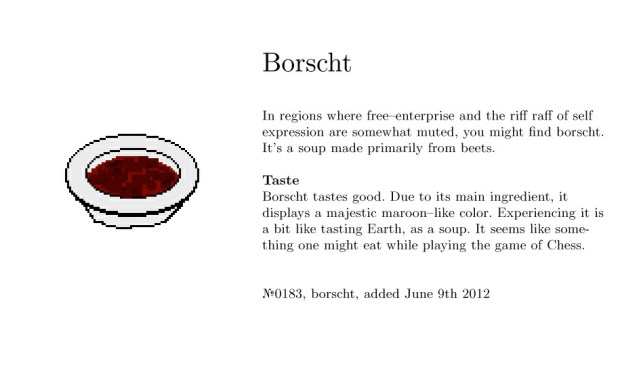
I came across this today on  “http://www.npr.org/”  and I just had to share it.

In a food world which takes itself sometimes too serious and forget’s the pleasure
that food is supposed to give us besides nutrition, this comes across as witty,
funny, wonderfully quirky.
I just love it. Hans   🙂

Take the link to SNACK DATA and have a few (or more) moments of food delight.

Excerpt from “http://www.npr.org/” :
Next time you need some help deciding what to pick for a midday munch,
try Snack Data, a quirky, illustrated catalogue of foods. Part reference guide,
part art project, it’s the latest idiosyncratic creation of Los Angeles-based
web developer Beau Johnson. The entries are arranged by flavor, cuisine, and
type of food, making it easy to find whatever kind of snack you desire. And for foods
with more than one ingredient, the components are cross-listed to reveal
connections between foods (e.g. Spaghetti & Meatballs – see also: Spaghetti, Meatball).

As an art project, Snack Data has a primal, throw-back feel. Accompanying the
pixelated images arebits of questionable trivia and highly subjective tasting notes —
kind of like a clever middle school kid’s book report on foods from around the world,
not an authoritative reference.Johnson creates the illustrations
using Photoshop, in the blocky style of early-1990s computer games like King’s Quest.
But Johnson, 27, says it wasn’t meant to be retro.”I know it has those associations,”
he says. It’s also meant as a departure from the food photography that saturates the
Internet, he adds. For the text, Johnson pulls facts from Wikipedia or simply invents
his own, like “the hot dog bun can be thought of as an edible glove” and “taco salad
is something that happened when people in the United States got tired of eating
regular taco.” “I try to give a little bit of real background,” Johnson says,
but admits,”I don’t spend too long researching them.”Johnson has added to the
database regularly since its creation in mid-April. He’s almost done with the
primary entries, and he takesrequests through email.None of the entries are
brand-name products, although some doresemble well-known brands.
Johnson felt it was important to focus on the foods themselves.
“If you’re writing about an orange or an apple or a scallop,there’s no one to answer
for it,”he says. “You’re just kind of commenting on this thing that’s always been there.”
We’ve selected a few of Johnson’s favorites to feature in our Snack Data slideshow
above, as well as a few of our own.Naturally, we’ve included the entry on salt.

To explore the entire collection, visit snackdata.com.

” 10 Festivals that Celebrate Local Produce “

Excerpt from “www.bootsnall.com” :

Whether you’re looking to support local communities, broaden your cultural horizons,
or simply soak up the party atmosphere, there are hundreds of local festivals that offer
an entertaining insight into your travel destination.

From sampling witchetty grubs at New Zealand’s Wildfood Festival to mud sliding in
South Korea or munching on oyster tacos to celebrate the Californian oyster harvest,
these 10 festivals are some of the world’s most unique celebrations of local produce.

1. Wildfoods Festival, New Zealand

Fancy munching on worm truffles or slurping some chocolate-coated Huhu beetles?
Hokitika’s world-famous Wildfoods Festival is not just about forcing the weird and
wonderful onto camera-wielding tourists, it’s an important celebration of New Zealand
culture and pays homage to some of the historic foodstuffs once consumed by the island’s
inhabitants (with a creative twist, of course). There are few things not on offer here,
and culinary adventurers can line their guts with all number of bizarre delicacies from
lamb’s testicles and sheep’s brains to roasted earthworms or wasp larvae ice cream.
Wash it all down with a cup of Gorse Flower wine or Stallion’s Semen (yes, really).
For the less daring, try a whitebait patty – a regional favorite – or opt for more appealing
offerings like wild pork or whiskey sausages.

Held in March each year on the South Island’s west coast, the Wildfoods Festival draws in
some 15,000 visitors to the small town, offering an unbeatable opportunity for local
businesses to present their creations to an international audience. For best results bring
your camera, a few try-anything mates, and an empty stomach.

For 9 more festivals, click HERE

” Sharpsville, Pennsylvania, Cafeteria Workers Win Right To Eat Free Expired Food “

Excerpt from an article in the Huff Post :

“Under the agreement, food items that are past their expiration date
or reheated in a way that they can no longer be served to students
may still be eaten for free by the cafeteria workers.”

This raises so many questions for me ! How about you ?
What’s wrong in a country where this can even be considered an issue ?

To read the full article, click HERE


” Useless – Or Worth The Trouble ? “

Useless – or worth the trouble?  
– trying to keep the “flame of excellence” going
for the next generation of cooks!

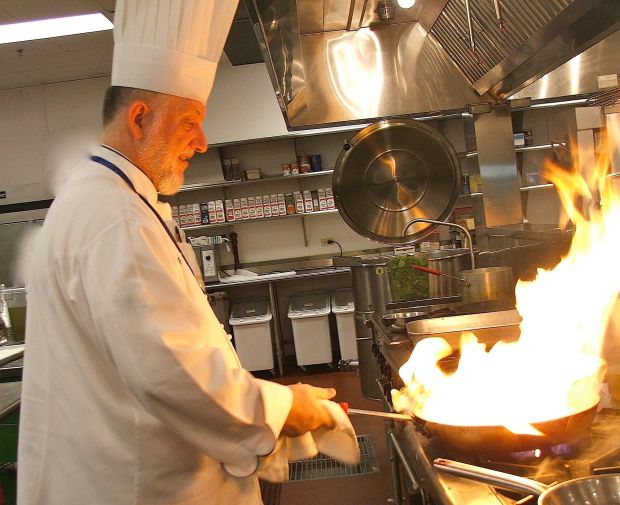
By Chef Hans Susser, CEC . CHE

Lately that’s a question that pops up, both in my head and during conversations with other experienced chefs, more and more frequently. Why do we do it and for what? Obviously the general impression of many old timer’s is that the younger generations “just don’t give a hood” anymore. While this might be increasingly true due to circumstances, I am happy to report that when we really look, we still see the diamonds in the rough being there, right under our eyes. Yes, they might be harder to spot because of the circumstances surrounding them (and sometimes us), but they are certainly out there. Maybe their numbers have been dwindling, but maybe this happened partially because we have stopped looking? If you need an expert about frustration, you found him right here. But then again, who are we to judge others when we fall into the same category. So, colleagues, both educators and especially professionals out there in the “real world” – keep on searching. We are getting paid to do so, but we should really be doing more because that is what set’s us apart from the mediocre rest that we so wholeheartedly criticize. The flame is still burning under our guard, so let’s keep it going, never to give up. Let the fuel be our knowledge, skills and care for our beloved profession. No flame can burn on hot air alone as so many wannabe “chefs” out there believe. One of the many sources of joy and satisfaction in our culinary profession is to discover that there are enough kids out there to carry on the flame in the future.
But for now, dear fellow chefs, don’t let the flame of excellence of culinary standards extinguish.

We, the REAL CHEFS, who possess the experience, knowledge and care, are still in charge to keep the flame burning – while we still can and care !

” Grilling Season Is Upon Us “

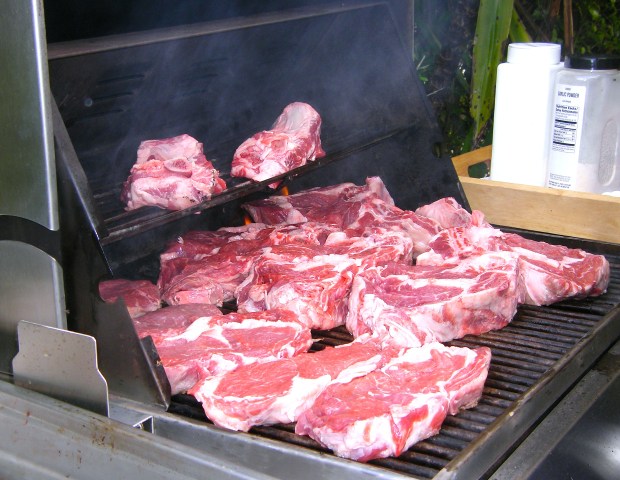
Grilling Season Is Upon Us ! ☺

Here are a few useful tips to increase your culinary satisfaction

1. It’s important to completely thaw the food that will be cooked. If it’s not thawed completely, the food will not cook evenly. Ideally, leave the food in the refrigerator until it has completely thawed.

2. Keeping what you are going to barbecue cold, and thoroughly cooking through are essential to healthy barbecue eating. Before cooking, the food should be kept at 40 degrees Fahrenheit or below, according to the United States Department of Agriculture (USDA). Meat should then be cooked to a minimum internal temperature of 145 degrees Fahrenheit, ground meats to 160 degrees, and poultry to 165 degrees. Using a food thermometer is essential.

3. Foods that will be barbecued should always be marinated in the refrigerator, rather than on the counter. And when reusing the marinade, it needs to be brought to a boil first, in order to kill bacteria.

4. The healthiest way to barbecue your food, according to the USDA, is to place it in the center of the grill, and put the coals off to the side. This will keep the juices from the food from dripping onto the coals. Also, any charred portions of meat should be removed and discarded.

5. During the summer it is easy to cook and leave food sitting around outside, but it can be dangerous to do so. A good rule of thumb is not to let the food sit out longer than one hour if the temperature is at or above 90 degrees Fahrenheit.

6. Cut the vegetables to allow for maximum surface area on the grill; this allows for easy turning and flipping with minimal slip through the grill grate. You can cut the vegetable down to a smaller size if needed when removed from grill.

7. Use the smallest amount of oil when tossing vegetables with oil spices before grilling. The oil coating the vegetables is what causes flash fire and leaves a black soot residue on your grilled vegetables.

8. Avoid oil and use a light marinade after the grilling; once grilled toss with your oil spice blend and hold until ready to serve.

9. Try and arrange/divide the heat whether that’s gas or charcoal into two separate sections of the grill providing both a direct (over heat) and indirect heat source (nothing under but just the warm heat under the grill cover.) This allows you to move your food to a cooking section and resting section.

10. Providing a rest is a secret key that is mostly overlooked. Allow for 5-8 minutes before cutting into any meats or vegetable when they come off the grill. Allow time for the natural juices to redistribute to the interior of the grilled item. When cooking those natural juices travel to the outside of the grilling item, you need to give those same juices time to return and re-hydrate before cutting into the vegetables or meats.

It’s also important to be patient and not overturn or move food. Once you place it on the grill, you should just let the grill do its magic, only turning vegetables and meat just once, twice at the most. Also, never press down on the food, which will squeeze the moisture out of it.

Bon Appetit ! Life is Good !
” Your opinions and suggestions please ! “

Yes you!
Readers of  “ChefsOpinion”

Dear Friend’s,
At this point of my short journey with “ChefsOpinion”,  I would welcome your opinion and suggestions about my blog in order to make it even more entertaining and informative.
All input from you will be appreciated and considered for upcoming posts.
Your’s truly,
Hans.

p.s.
If you find “ChefsOpinion” to your liking, please subscribe.
Thanks  🙂

” Why are chefs so poorly compensated? “

Wow folks, this discussion is really heating up !

Arno Wilson says :

Hi Patrick, maybe I come across a bit severe. But this is my feeling. Cooking food throughout history has been a low level activity and whilst everybody since we can tell has always enjoyed a “good feed” it remains a fact that the kitchen has been relegated “out the back” downstairs” or otherwise “out of sight”. As much as people these modern times try to glorify cooking it remains an act of applying heat to dead things – usually animals or other creatures. It is the art of transforming dead animal flesh and in some cases organs into something else that appeals to the modern sense of beauty.
I am a chef myself and have worked in many different arenas of food production. I have been Executive chef, Head chef, and all other positions in Australian kitchens. I have acted as a restaurant consultant and am versed in management techniques and financial aspects. In the course of my work I see many chefs I now run a chefs agency finding work for other chefs. Many chefs are pretty clueless and some are downright dumb. A smattering are excellent and could be successful in any occupation. A small number are outstanding individuals with admirable skills and ability and intelligence. I am sorry but the average run of the mill chef that crosses my radar is more commonly described in less flattering terms.
If you have any specific questions I would be happy to answer them.

Follow / participate in  the discussion  Here:

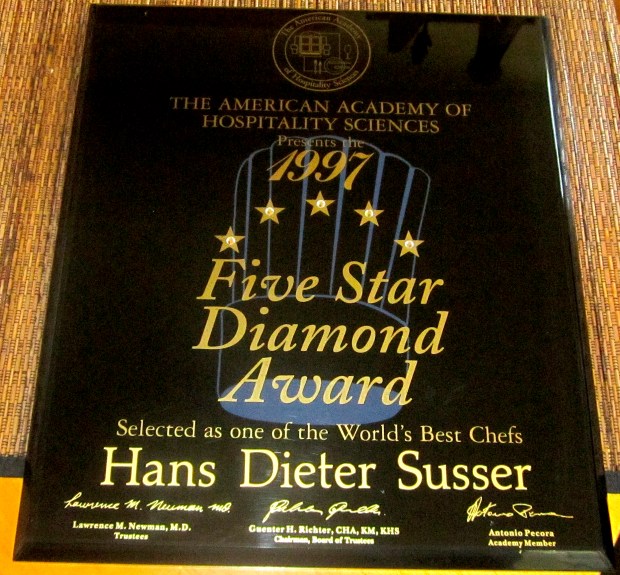
” 5 Star Diamond Award ” – my proudest professional moment

One of the World’s Best Hotel’s :
Caesar Park Hotel, Buenos Aires

One of the World’s BestRestaurants :
Il Caesare,  Caesar Park Hotel, Buenos Aires

One of the World’s Best Chef’s :
Hans Dieter Susser, Executive Chef, Caesar Park Hotel, Buenos Aires